GSTA4 Rekombinanter Antikörper
GSTA4 Rekombinant Antikörper für WB, ELISA
Wirt / Isotyp
Kaninchen / IgG
Getestete Reaktivität
human
Anwendung
WB, ELISA
Konjugation
Unkonjugiert
CloneNo.
250352E2
Kat-Nr. : 85954-2-RR
Synonyme
Filter:
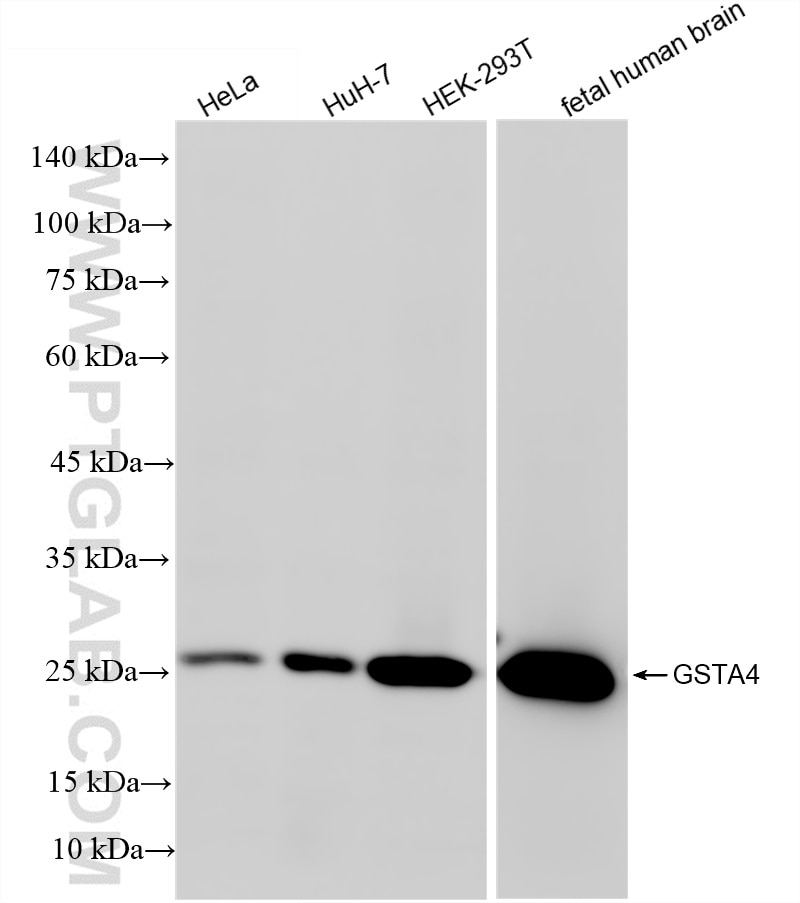

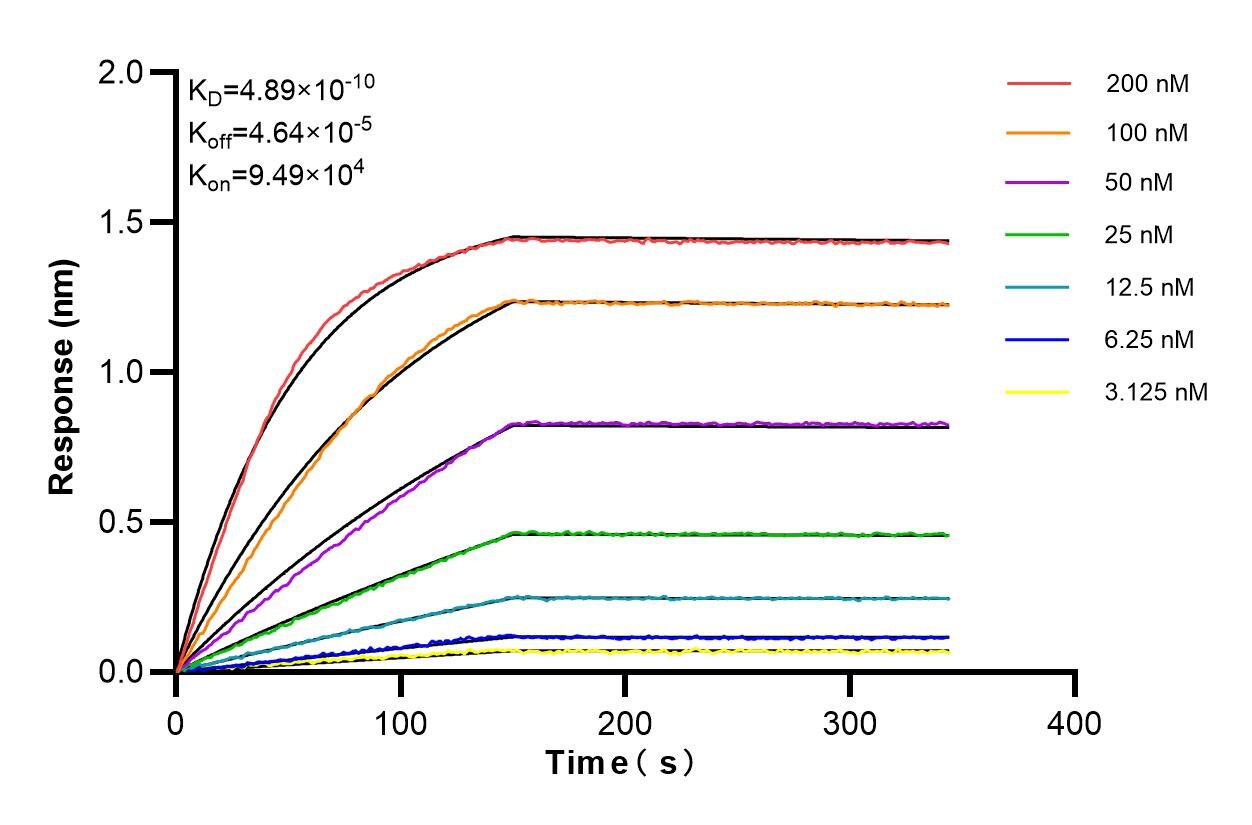
Geprüfte Anwendungen
| Erfolgreiche Detektion in WB | HeLa-Zellen, fetales humanes Hirngewebe, HEK-293T-Zellen, HuH-7-Zellen |
Empfohlene Verdünnung
| Anwendung | Verdünnung |
|---|---|
| Western Blot (WB) | WB : 1:5000-1:50000 |
| It is recommended that this reagent should be titrated in each testing system to obtain optimal results. | |
| Sample-dependent, check data in validation data gallery | |
Produktinformation
85954-2-RR bindet in WB, ELISA GSTA4 und zeigt Reaktivität mit human
| Getestete Reaktivität | human |
| Wirt / Isotyp | Kaninchen / IgG |
| Klonalität | Rekombinant |
| Typ | Antikörper |
| Immunogen | GSTA4 fusion protein Ag11028 |
| Vollständiger Name | glutathione S-transferase alpha 4 |
| Berechnetes Molekulargewicht | 222 aa, 27 kDa |
| Beobachtetes Molekulargewicht | 25 kDa |
| GenBank-Zugangsnummer | BC015523 |
| Gene symbol | GSTA4 |
| Gene ID (NCBI) | 2941 |
| Konjugation | Unkonjugiert |
| Form | Liquid |
| Reinigungsmethode | Protein-A-Reinigung |
| Lagerungspuffer | PBS with 0.02% sodium azide and 50% glycerol |
| Lagerungsbedingungen | Bei -20°C lagern. Nach dem Versand ein Jahr lang stabil Aliquotieren ist bei -20oC Lagerung nicht notwendig. 20ul Größen enthalten 0,1% BSA. |
Hintergrundinformationen
GSTA4 (Glutathione S-Transferase Alpha 4) is an enzyme that plays a key role in detoxification and antioxidant defense. Its structure includes a GSH-binding site and a hydrophobic substrate-binding domain, functioning as a dimer. Dysregulation of GSTA4 is linked to diseases like cancer, neurodegeneration, and diabetes.
Protokolle
| PRODUKTSPEZIFISCHE PROTOKOLLE | |
|---|---|
| WB protocol for GSTA4 antibody 85954-2-RR | Protokoll herunterladen |
| IF protocol for GSTA4 antibody 85954-2-RR | Protokoll herunterladen |
| STANDARD-PROTOKOLLE | |
|---|---|
| Klicken Sie hier, um unsere Standardprotokolle anzuzeigen |


