H6PD Rekombinanter Antikörper
H6PD Rekombinant Antikörper für WB, Indirect ELISA
Wirt / Isotyp
Kaninchen / IgG
Getestete Reaktivität
human, Ratte
Anwendung
WB, Indirect ELISA
Konjugation
Unkonjugiert
CloneNo.
3C14
Kat-Nr. : 82819-2-PBS
Synonyme
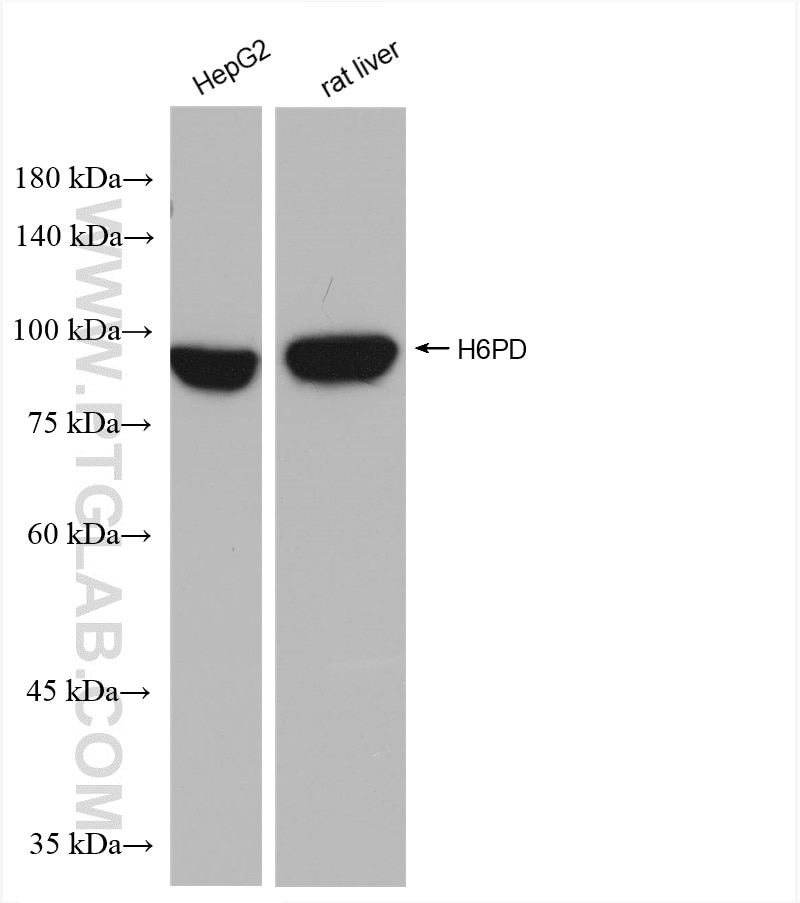
Geprüfte Anwendungen
Produktinformation
82819-2-PBS bindet in WB, Indirect ELISA H6PD und zeigt Reaktivität mit human, Ratten
| Getestete Reaktivität | human, Ratte |
| Wirt / Isotyp | Kaninchen / IgG |
| Klonalität | Rekombinant |
| Typ | Antikörper |
| Immunogen | H6PD fusion protein Ag7109 |
| Vollständiger Name | hexose-6-phosphate dehydrogenase (glucose 1-dehydrogenase) |
| Berechnetes Molekulargewicht | 89 kDa |
| Beobachtetes Molekulargewicht | 89-95 kDa |
| GenBank-Zugangsnummer | BC081559 |
| Gene symbol | H6PD |
| Gene ID (NCBI) | 9563 |
| Konjugation | Unkonjugiert |
| Form | Liquid |
| Reinigungsmethode | Protein-A-Reinigung |
| Lagerungspuffer | PBS only |
| Lagerungsbedingungen | Store at -80°C. 20ul Größen enthalten 0,1% BSA. |
Hintergrundinformationen
Hexose-6-phosphate dehydrogenase (H6PD) is also named as GDH,6PGL. It is the main NADPH generating enzyme in the lumen of the endoplasmic reticulum. H6PD is regarded as an ancillary enzyme in prereceptorial glucocorticoid activation and probably acts as a nutrient sensor and as a prosurvival factor(PMID:21620971). H6PD is a glycoprotein and has been shown tissue differences in glycosylation status might explain both the difference in migration on SDS-PAGE gels as well as in activity. Defects in H6PD are a cause of cortisone reductase deficiency (CRD).


