HAP1 Polyklonaler Antikörper
HAP1 Polyklonal Antikörper für WB, IHC, IF/ICC, Indirect ELISA
Wirt / Isotyp
Kaninchen / IgG
Getestete Reaktivität
human, Maus
Anwendung
WB, IHC, IF/ICC, Indirect ELISA
Konjugation
Unkonjugiert
Kat-Nr. : 25133-1-PBS
Synonyme
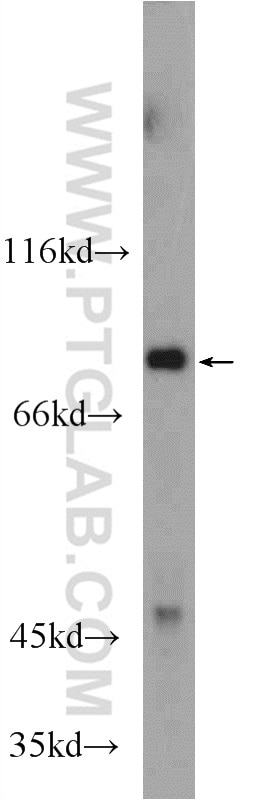
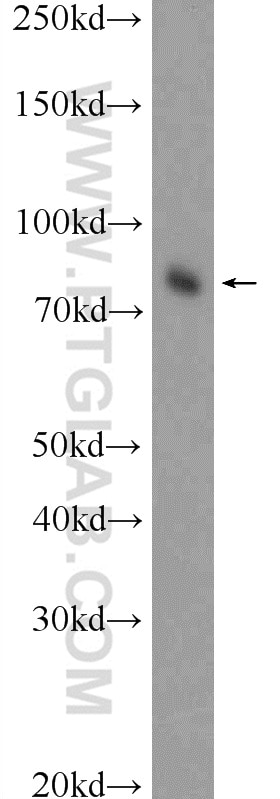
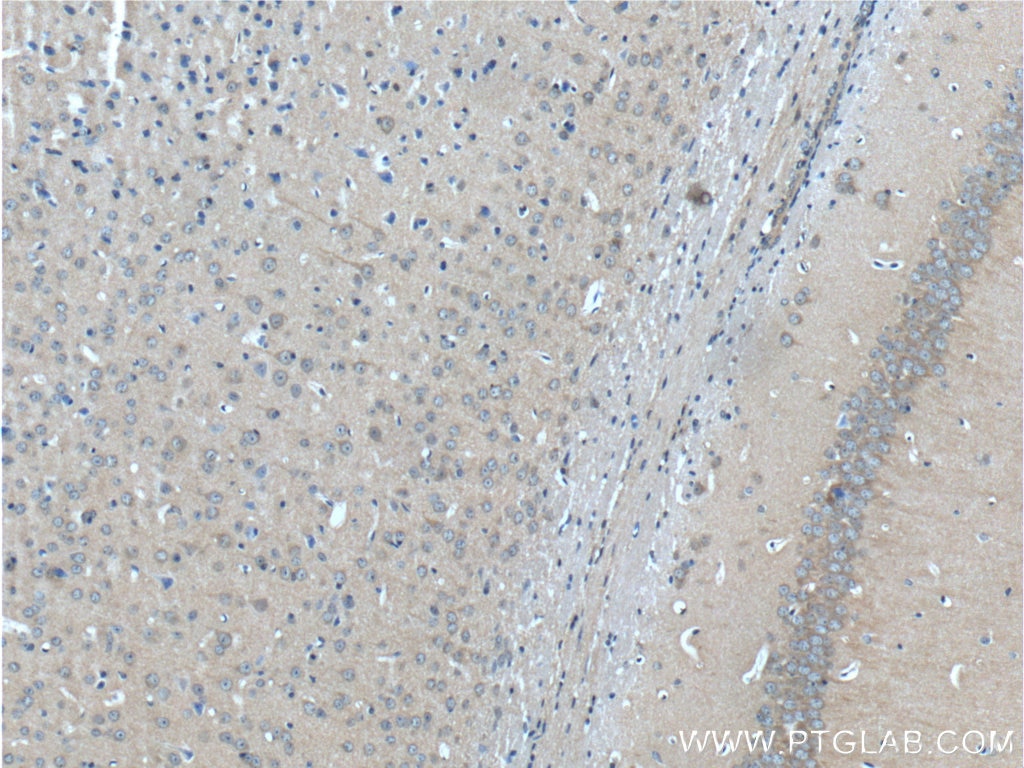
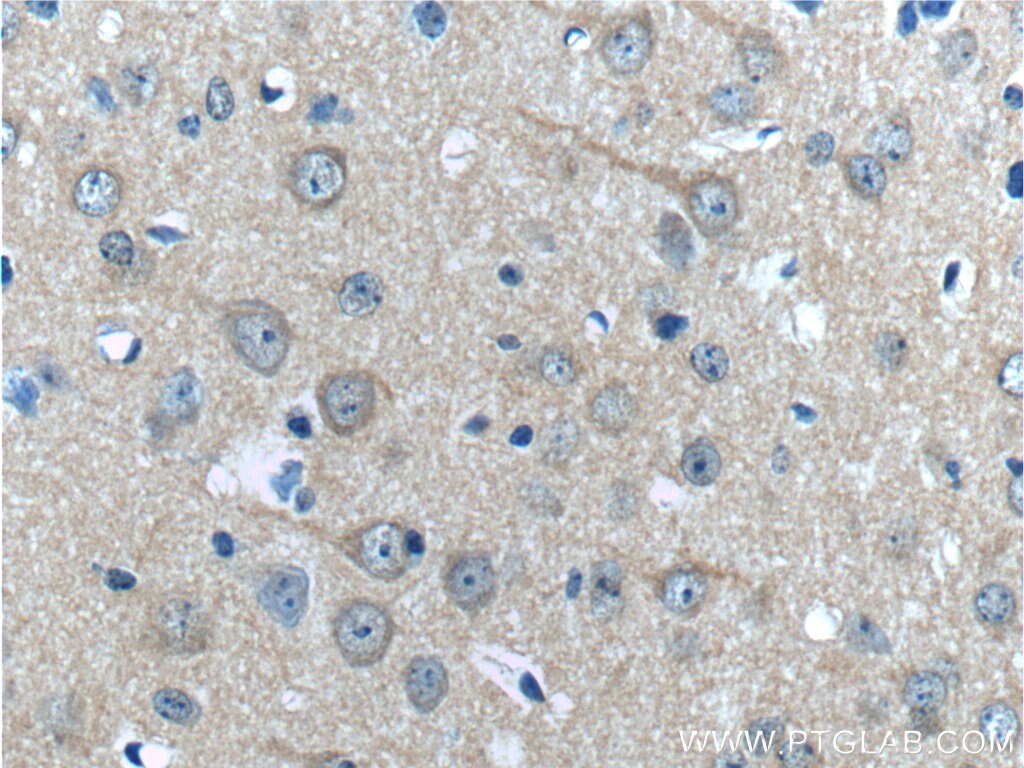
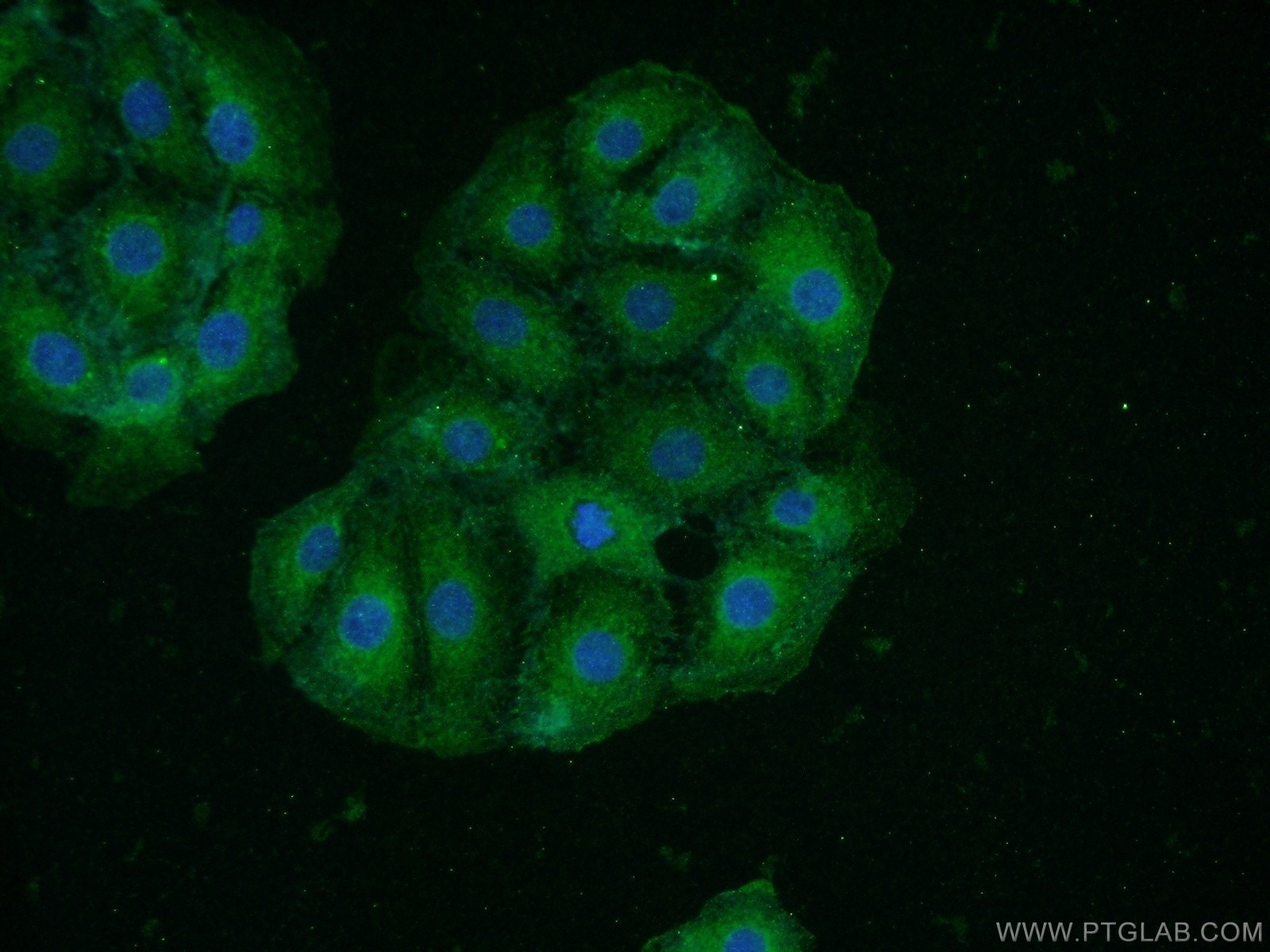
Geprüfte Anwendungen
Produktinformation
25133-1-PBS bindet in WB, IHC, IF/ICC, Indirect ELISA HAP1 und zeigt Reaktivität mit human, Maus
| Getestete Reaktivität | human, Maus |
| Wirt / Isotyp | Kaninchen / IgG |
| Klonalität | Polyklonal |
| Typ | Antikörper |
| Immunogen | HAP1 fusion protein Ag17705 |
| Vollständiger Name | huntingtin-associated protein 1 |
| Berechnetes Molekulargewicht | 671 aa, 76 kDa |
| Beobachtetes Molekulargewicht | 75-80 kDa |
| GenBank-Zugangsnummer | BC156728 |
| Gene symbol | HAP1 |
| Gene ID (NCBI) | 9001 |
| Konjugation | Unkonjugiert |
| Form | Liquid |
| Reinigungsmethode | Antigen-Affinitätsreinigung |
| Lagerungspuffer | PBS only |
| Lagerungsbedingungen | Store at -80°C. 20ul Größen enthalten 0,1% BSA. |
Hintergrundinformationen
HAP1 (Huntingtin-associated protein 1) was originally identified as neuronal protein that specifically associates with HTT/huntingtin and the binding is enhanced by an expanded polyglutamine repeat within HTT. HTT is expressed ubiquitously, while HAP1 is expressed predominantly in the central nervous system (CNS). Both HTT and HAP1 participate in intracellular trafficking. HAP1 is involved in the vesicular transport, gene transcription regulation, membrane receptor trafficking and other functions such as calcium release and protein aggregation (PMID: 19262167).


