HERPUD1 Rekombinanter Antikörper
HERPUD1 Rekombinant Antikörper für WB, IHC, Indirect ELISA
Wirt / Isotyp
Kaninchen / IgG
Getestete Reaktivität
human
Anwendung
WB, IHC, Indirect ELISA
Konjugation
Unkonjugiert
CloneNo.
243054E4
Kat-Nr. : 85627-1-PBS
Synonyme
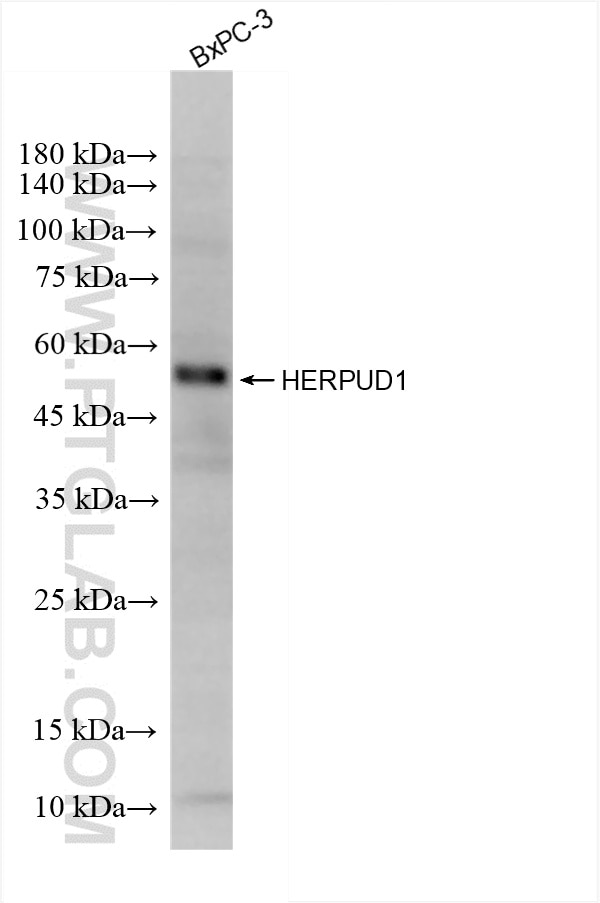
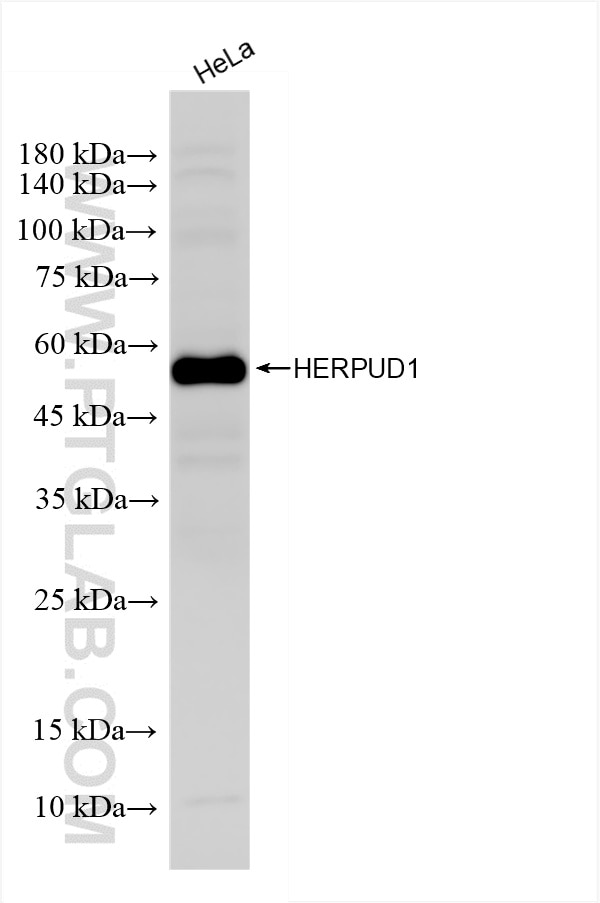
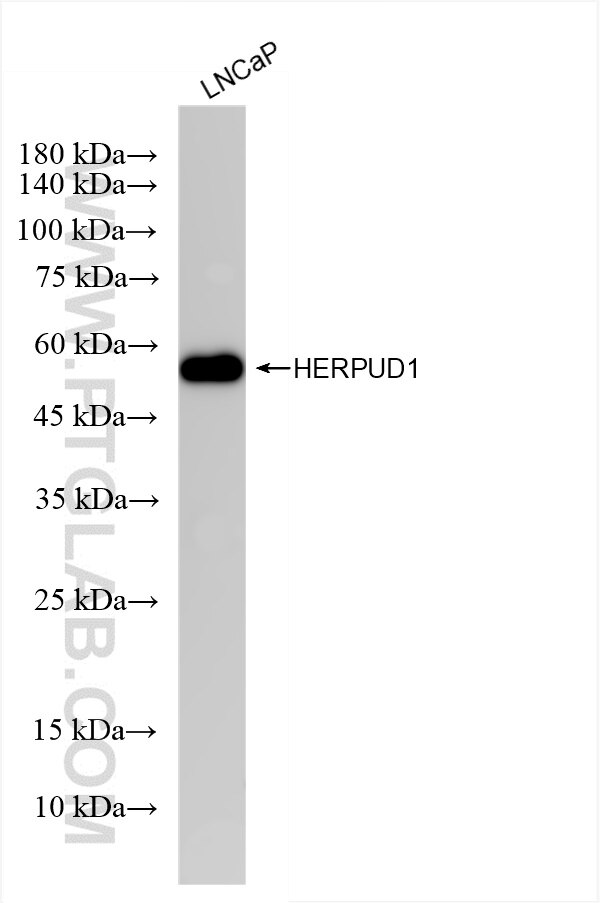
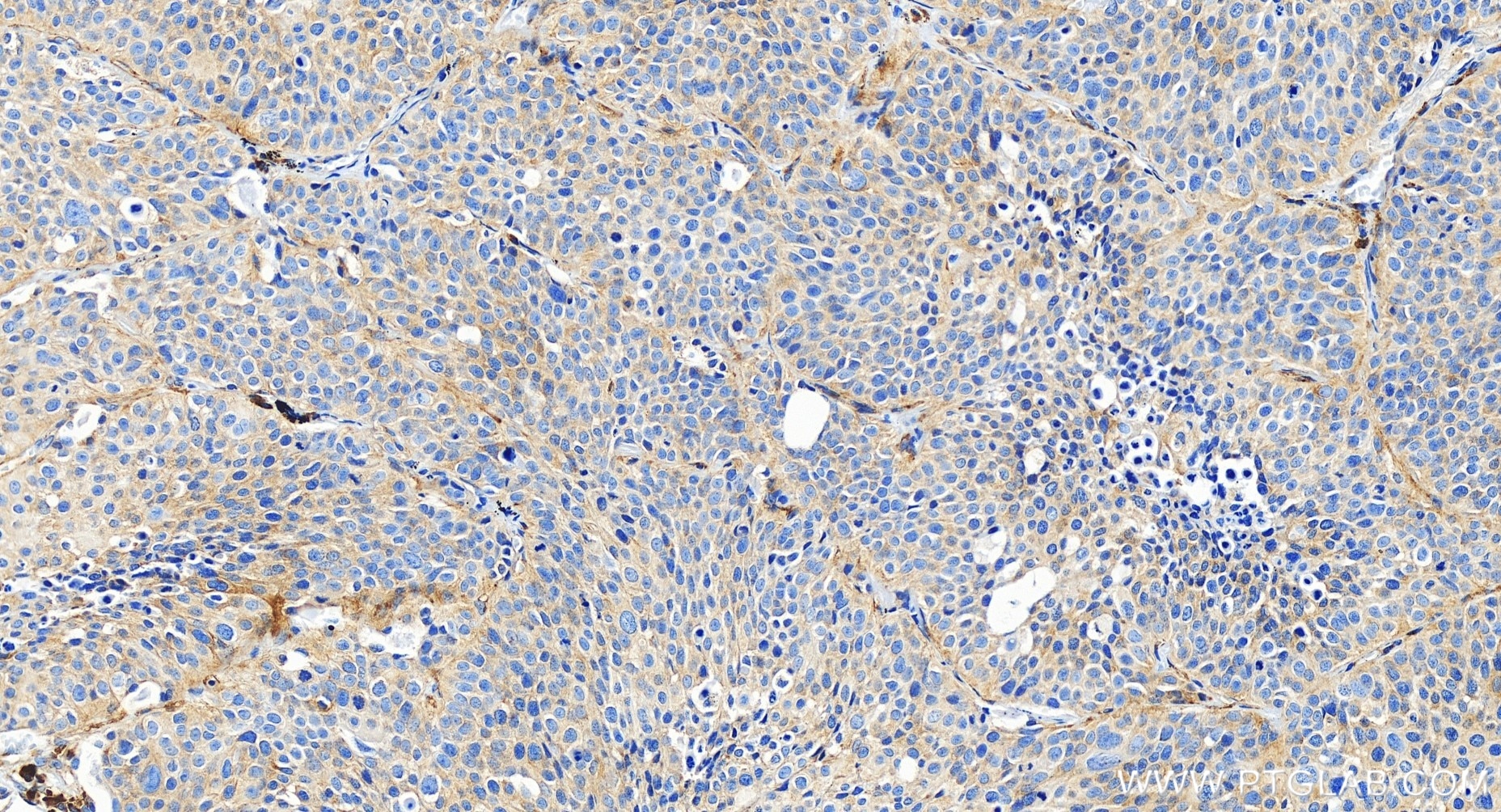
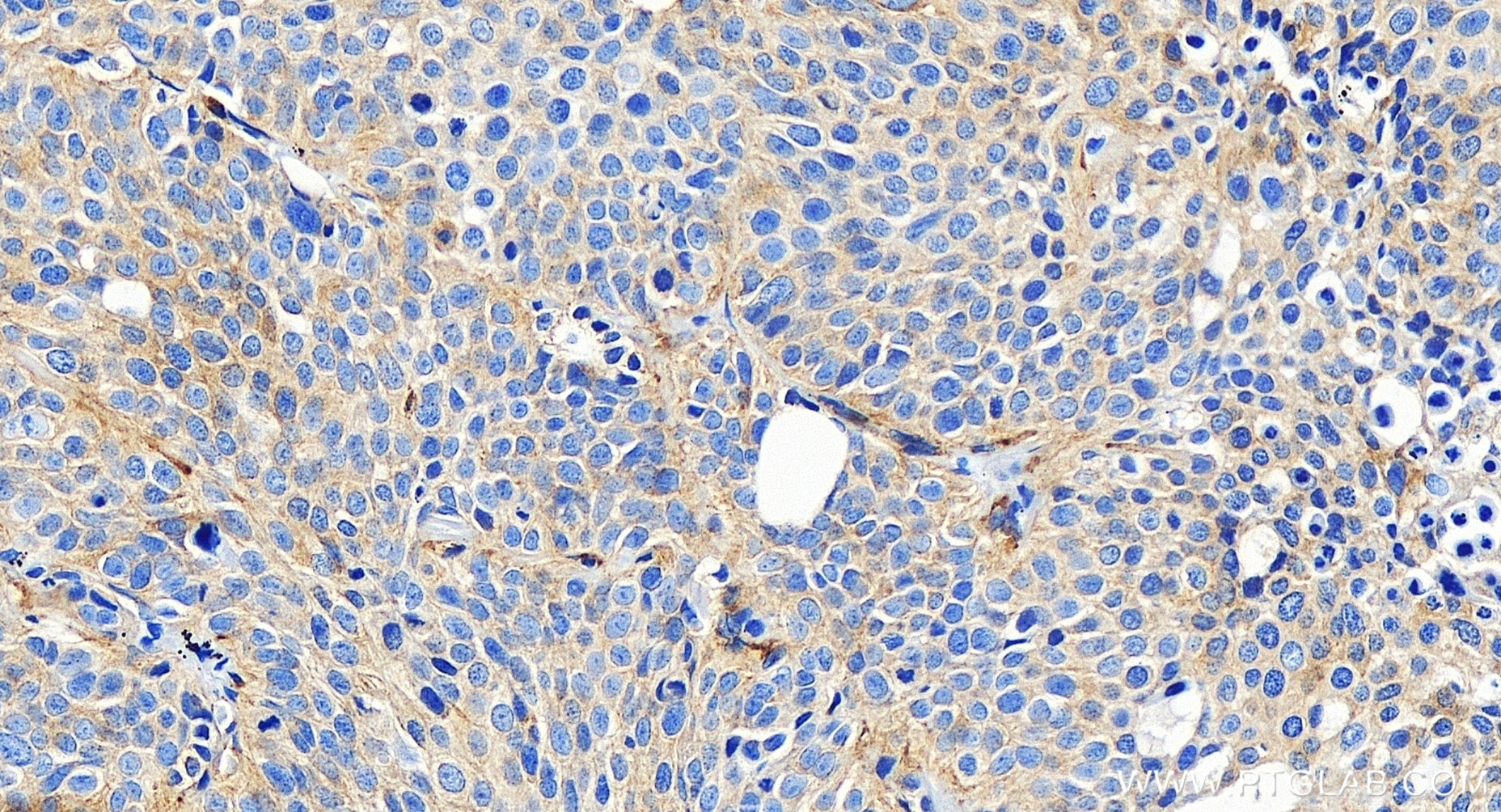
Geprüfte Anwendungen
Produktinformation
85627-1-PBS bindet in WB, IHC, Indirect ELISA HERPUD1 und zeigt Reaktivität mit human
| Getestete Reaktivität | human |
| Wirt / Isotyp | Kaninchen / IgG |
| Klonalität | Rekombinant |
| Typ | Antikörper |
| Immunogen | HERPUD1 fusion protein Ag34891 |
| Vollständiger Name | homocysteine-inducible, endoplasmic reticulum stress-inducible, ubiquitin-like domain member 1 |
| Berechnetes Molekulargewicht | 44 kDa |
| Beobachtetes Molekulargewicht | 54 kDa |
| GenBank-Zugangsnummer | BC008320 |
| Gene symbol | HERPUD1 |
| Gene ID (NCBI) | 9709 |
| Konjugation | Unkonjugiert |
| Form | Liquid |
| Reinigungsmethode | Protein-A-Reinigung |
| Lagerungspuffer | PBS only |
| Lagerungsbedingungen | Store at -80°C. 20ul Größen enthalten 0,1% BSA. |
Hintergrundinformationen
Homocysteine-responsive endoplasmic reticulum-resident ubiquitin-like domain member 1 protein (HERPUD1), also called HERP or MIF1, is component of the endoplasmic reticulum quality control (ERQC) system also called ER-associated degradation (ERAD) involved in ubiquitin-dependent degradation of misfolded endoplasmic reticulum proteins. HERP is strongly induced by ER stress but rapidly degraded by proteasome. HERP interacts with members of the ubiquilin family, which function as a shuttle factor to deliver ubiquitinated substrates to the proteasome for degradation. HERP is present in activated microglia in senile plaques in the brain of patients with Alzheimer disease, and there is evidence suggesting HERP increase nigro-striatal dopaminergic activity and is able to improve symptoms in patients with Parkinson's disease, levodopa-related dyskinesias and Tardive dyskinesia. MW of HERP is 54 kDa (PMID: 23620059).


