HLA-DQB1 Polyklonaler Antikörper
HLA-DQB1 Polyklonal Antikörper für WB, IHC, ELISA
Wirt / Isotyp
Kaninchen / IgG
Getestete Reaktivität
human
Anwendung
WB, IHC, ELISA
Konjugation
Unkonjugiert
Kat-Nr. : 32281-1-AP
Synonyme
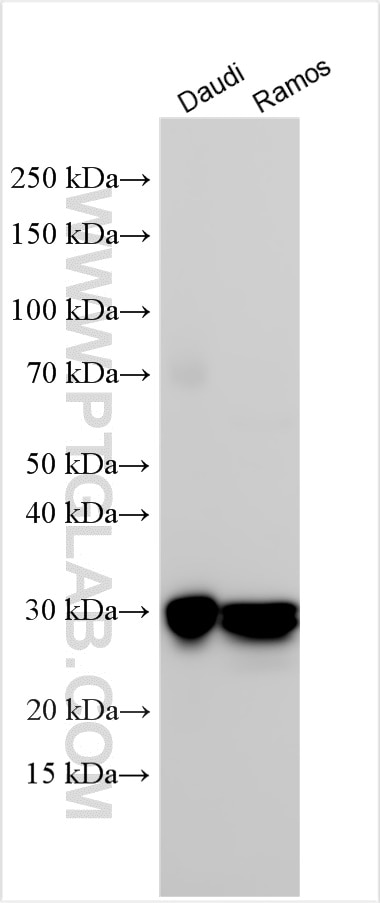
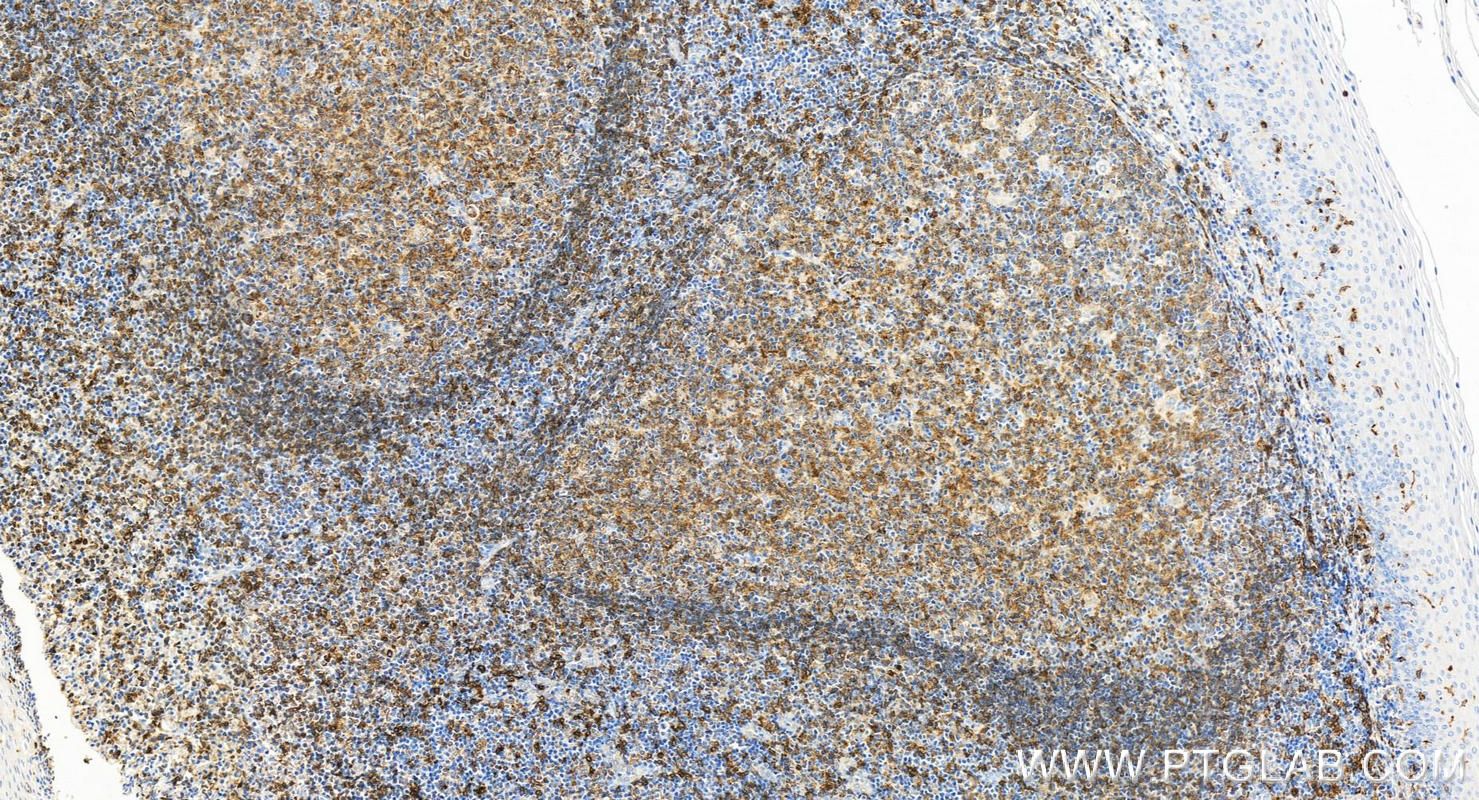
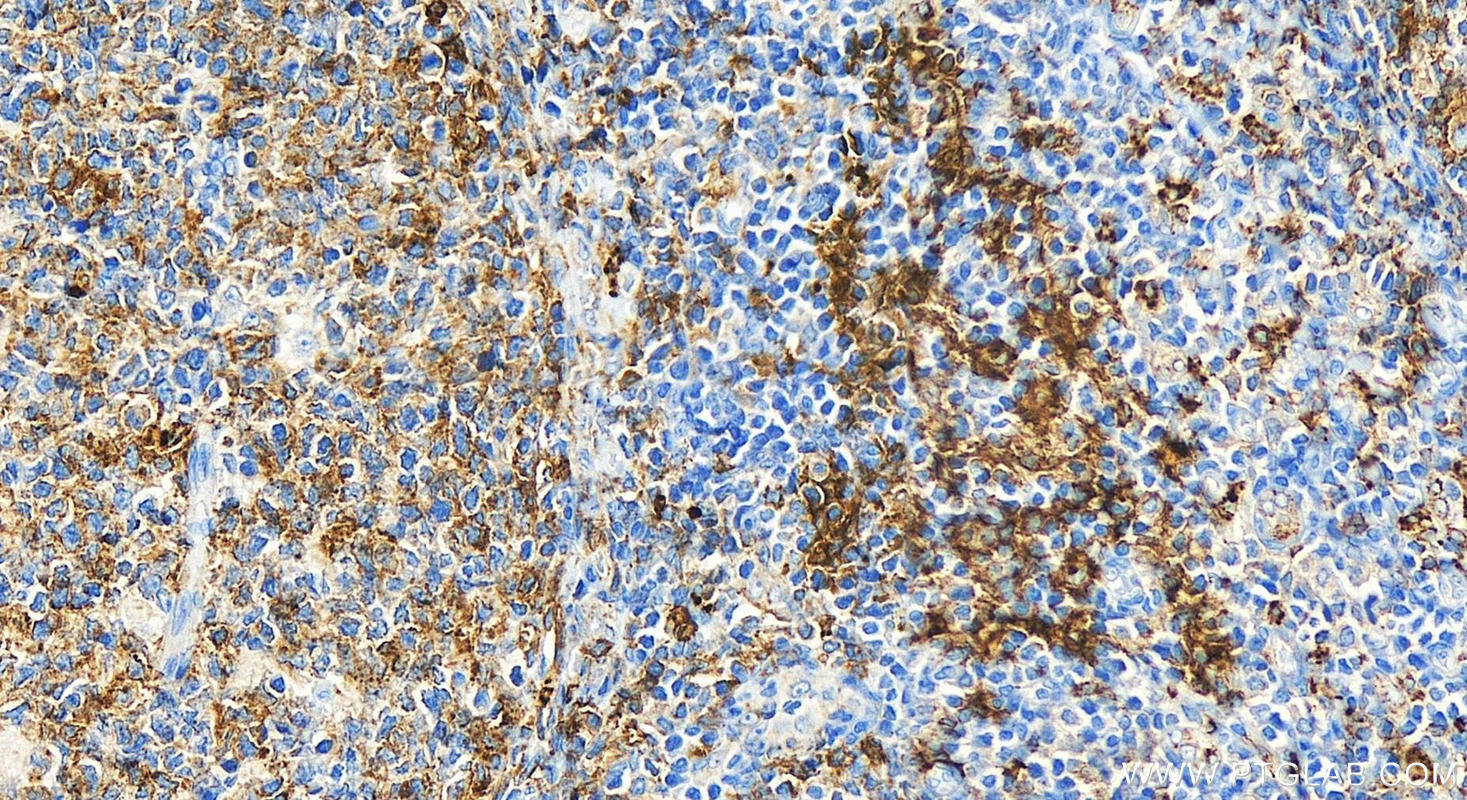
Geprüfte Anwendungen
| Erfolgreiche Detektion in WB | Daudi-Zellen, Ramos-Zellen |
| Erfolgreiche Detektion in IHC | humanes Tonsillitisgewebe Hinweis: Antigendemaskierung mit TE-Puffer pH 9,0 empfohlen. (*) Wahlweise kann die Antigendemaskierung auch mit Citratpuffer pH 6,0 erfolgen. |
Empfohlene Verdünnung
| Anwendung | Verdünnung |
|---|---|
| Western Blot (WB) | WB : 1:1000-1:6000 |
| Immunhistochemie (IHC) | IHC : 1:500-1:2000 |
| It is recommended that this reagent should be titrated in each testing system to obtain optimal results. | |
| Sample-dependent, check data in validation data gallery | |
Produktinformation
32281-1-AP bindet in WB, IHC, ELISA HLA-DQB1 und zeigt Reaktivität mit human
| Getestete Reaktivität | human |
| Wirt / Isotyp | Kaninchen / IgG |
| Klonalität | Polyklonal |
| Typ | Antikörper |
| Immunogen | HLA-DQB1 fusion protein Ag34755 |
| Vollständiger Name | major histocompatibility complex, class II, DQ beta 1 |
| Berechnetes Molekulargewicht | 30 kDa |
| Beobachtetes Molekulargewicht | 30 kDa |
| GenBank-Zugangsnummer | BC012106 |
| Gene symbol | HLA-DQB1 |
| Gene ID (NCBI) | 3119 |
| Konjugation | Unkonjugiert |
| Form | Liquid |
| Reinigungsmethode | Antigen-Affinitätsreinigung |
| Lagerungspuffer | PBS with 0.02% sodium azide and 50% glycerol |
| Lagerungsbedingungen | Bei -20°C lagern. Nach dem Versand ein Jahr lang stabil Aliquotieren ist bei -20oC Lagerung nicht notwendig. 20ul Größen enthalten 0,1% BSA. |
Hintergrundinformationen
The HLA-DQB1 gene is part of the human leukocyte antigen (HLA) complex, which is involved in the immune system's ability to distinguish the body's own proteins from those made by foreign invaders such as viruses and bacteria. It belongs to the MHC class II genes, which provide instructions for making proteins present on the surface of certain immune system cells. These proteins attach to protein fragments (peptides) outside the cell and display them to the immune system. If the immune system recognizes the peptides as foreign, it triggers a response to attack the invading pathogens. .
Protokolle
| PRODUKTSPEZIFISCHE PROTOKOLLE | |
|---|---|
| WB protocol for HLA-DQB1 antibody 32281-1-AP | Protokoll herunterladen |
| IHC protocol for HLA-DQB1 antibody 32281-1-AP | Protokoll herunterladenl |
| STANDARD-PROTOKOLLE | |
|---|---|
| Klicken Sie hier, um unsere Standardprotokolle anzuzeigen |

