Hepsin Polyklonaler Antikörper
Hepsin Polyklonal Antikörper für WB, Indirect ELISA
Wirt / Isotyp
Kaninchen / IgG
Getestete Reaktivität
human, Maus
Anwendung
WB, Indirect ELISA
Konjugation
Unkonjugiert
Kat-Nr. : 51060-1-PBS
Synonyme
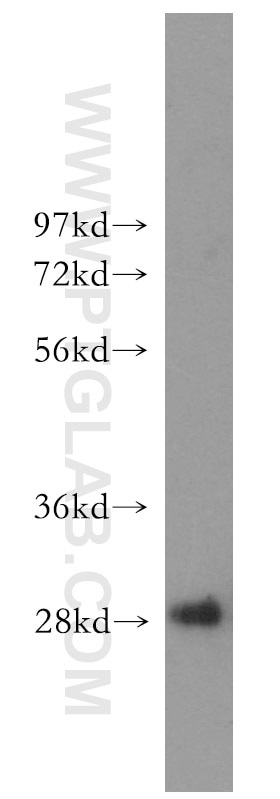
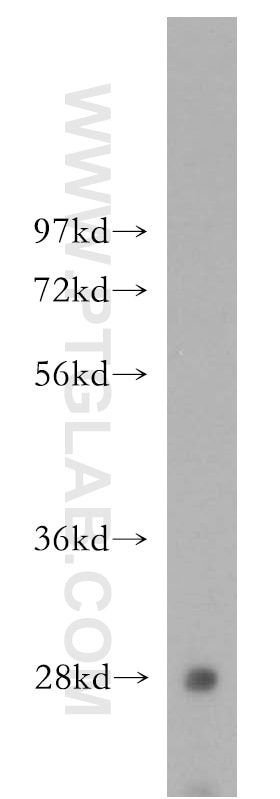
Geprüfte Anwendungen
Produktinformation
51060-1-PBS bindet in WB, Indirect ELISA Hepsin und zeigt Reaktivität mit human, Maus
| Getestete Reaktivität | human, Maus |
| Wirt / Isotyp | Kaninchen / IgG |
| Klonalität | Polyklonal |
| Typ | Antikörper |
| Immunogen | Peptid |
| Vollständiger Name | hepsin |
| Berechnetes Molekulargewicht | 47 kDa |
| Beobachtetes Molekulargewicht | 28 kDa |
| GenBank-Zugangsnummer | BC138809 |
| Gene symbol | Hepsin |
| Gene ID (NCBI) | 15451 |
| Konjugation | Unkonjugiert |
| Form | Liquid |
| Reinigungsmethode | Protein-A-Reinigung |
| Lagerungspuffer | PBS only |
| Lagerungsbedingungen | Store at -80°C. 20ul Größen enthalten 0,1% BSA. |
Hintergrundinformationen
Hepsin is a type II transmembrane serine protease. It is primarily expressed in the liver but has also been detected in other tissues, including the prostate, kidney, and pancreas. Hepsin plays a crucial role in various physiological processes, such as cell growth, extracellular matrix remodeling, and tissue homeostasis. Notably, Hepsin has been implicated in cancer progression, particularly in prostate cancer, where its overexpression is associated with tumor metastasis and poor prognosis (PMID: 15324701, PMID: 18726901). Hepsin has been identified as a peptide of approximately 45 kDa representing the intact protein, and a fragment of about 28 kDa representing the cleaved extracellular domain (PMID: 19302215, PMID: 21734266).


