IGFBP1 Polyklonaler Antikörper
IGFBP1 Polyklonal Antikörper für WB, IHC, Indirect ELISA
Wirt / Isotyp
Kaninchen / IgG
Getestete Reaktivität
human
Anwendung
WB, IHC, Indirect ELISA
Konjugation
Unkonjugiert
Kat-Nr. : 13981-1-PBS
Synonyme
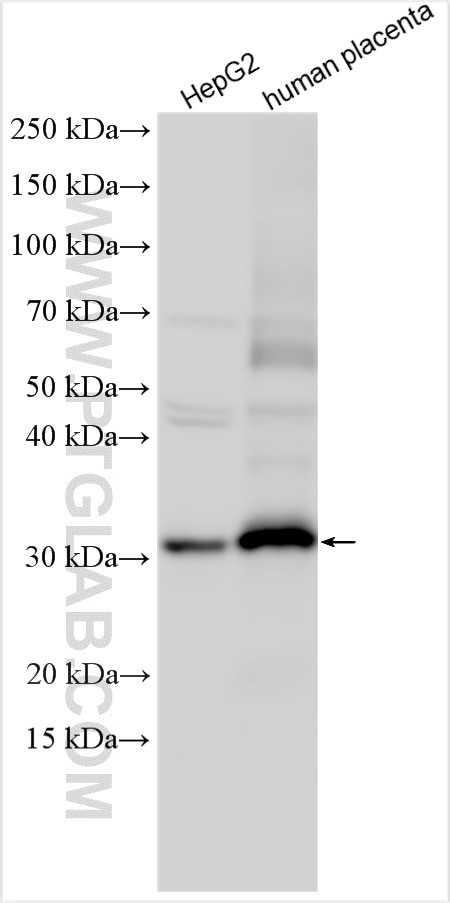
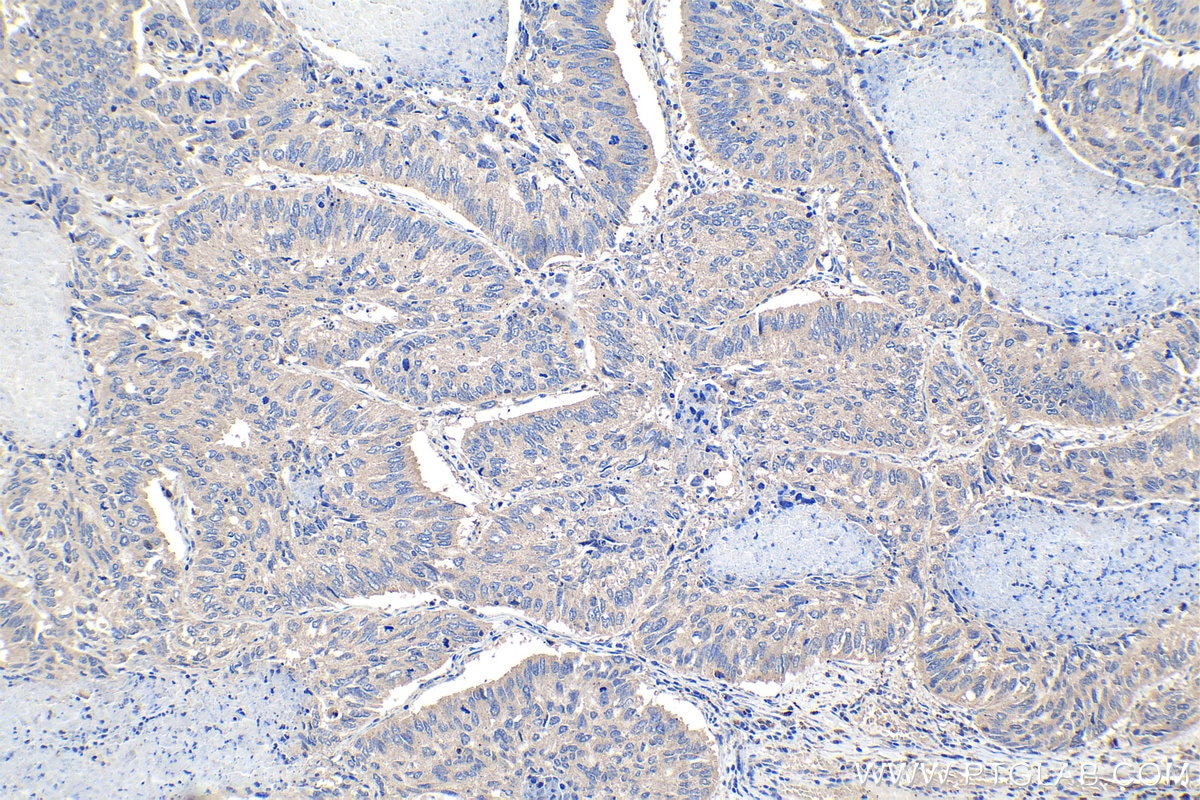
Geprüfte Anwendungen
Produktinformation
13981-1-PBS bindet in WB, IHC, Indirect ELISA IGFBP1 und zeigt Reaktivität mit human
| Getestete Reaktivität | human |
| Wirt / Isotyp | Kaninchen / IgG |
| Klonalität | Polyklonal |
| Typ | Antikörper |
| Immunogen | IGFBP1 fusion protein Ag5026 |
| Vollständiger Name | IGF binding protein 1 |
| Berechnetes Molekulargewicht | 28 kDa |
| Beobachtetes Molekulargewicht | 28-35 kDa |
| GenBank-Zugangsnummer | BC057806 |
| Gene symbol | IGFBP1 |
| Gene ID (NCBI) | 3484 |
| Konjugation | Unkonjugiert |
| Form | Liquid |
| Reinigungsmethode | Antigen-Affinitätsreinigung |
| Lagerungspuffer | PBS only |
| Lagerungsbedingungen | Store at -80°C. 20ul Größen enthalten 0,1% BSA. |
Hintergrundinformationen
IGF-binding proteins (IGFBPs) family contains members like IGFBP-1, -2, -3, -4,-5 and-6. IGFBPs prolong the half-life of the IGFs and have been shown to either inhibit or stimulate the growth promoting effects of the IGFs on cell culture. They alter the interaction of IGFs with their cell surface receptors. IGF-I physically interacts with IGFBP-1 and that IGFBP-1 also binds to an integrin receptor, but the effect of IGFBP-1 on cell migration may be independent of IGF-I and is probably mediated through the alpha 5 beta 1 integrin. Transgenic mice models demonstrated that IGFBPs played important roles in the pathogenesis of obesity and INS resistance. Studies conducted in humans demonstrated the close relation between IGFBPs and the components of the metabolic syndrome.


