KCNJ9 Polyklonaler Antikörper
KCNJ9 Polyklonal Antikörper für WB, Indirect ELISA
Wirt / Isotyp
Kaninchen / IgG
Getestete Reaktivität
human, Maus, Ratte
Anwendung
WB, Indirect ELISA
Konjugation
Unkonjugiert
Kat-Nr. : 31742-1-PBS
Synonyme
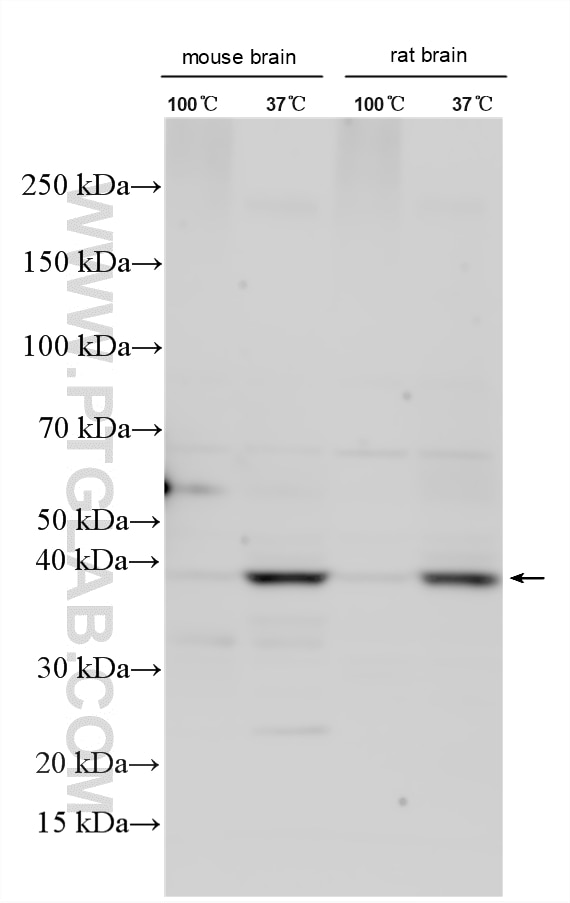
Geprüfte Anwendungen
Produktinformation
31742-1-PBS bindet in WB, Indirect ELISA KCNJ9 und zeigt Reaktivität mit human, Maus, Ratten
| Getestete Reaktivität | human, Maus, Ratte |
| Wirt / Isotyp | Kaninchen / IgG |
| Klonalität | Polyklonal |
| Typ | Antikörper |
| Immunogen | KCNJ9 fusion protein Ag35873 |
| Vollständiger Name | potassium inwardly-rectifying channel, subfamily J, member 9 |
| Beobachtetes Molekulargewicht | 38-44 kDa |
| GenBank-Zugangsnummer | BC167777 |
| Gene symbol | KCNJ9 |
| Gene ID (NCBI) | 3765 |
| Konjugation | Unkonjugiert |
| Form | Liquid |
| Reinigungsmethode | Antigen-Affinitätsreinigung |
| Lagerungspuffer | PBS only |
| Lagerungsbedingungen | Store at -80°C. 20ul Größen enthalten 0,1% BSA. |
Hintergrundinformationen
KCNJ9, also known as GIRK3 (G protein-activated inwardly rectifying potassium channel 3), is a crucial subunit that forms inwardly rectifying potassium channels. These channels are primarily activated by inhibitory G proteins (Gi/o) downstream of various G protein-coupled receptors (GPCRs), such as those for neurotransmitters like GABA, acetylcholine, and adenosine. Upon activation, KCNJ9 facilitates potassium efflux, leading to membrane hyperpolarization and a reduction in neuronal excitability. It is widely expressed in the brain, where it plays a key role in regulating synaptic transmission and neuronal circuits, influencing processes ranging from pain perception to reward and motivation.


