LIGHT/CD258 Rekombinanter Antikörper
LIGHT/CD258 Rekombinant Antikörper für FC
Wirt / Isotyp
Kaninchen / IgG
Getestete Reaktivität
human
Anwendung
FC
Konjugation
Unkonjugiert
CloneNo.
240694D7
Kat-Nr. : 98063-1-RR
Synonyme
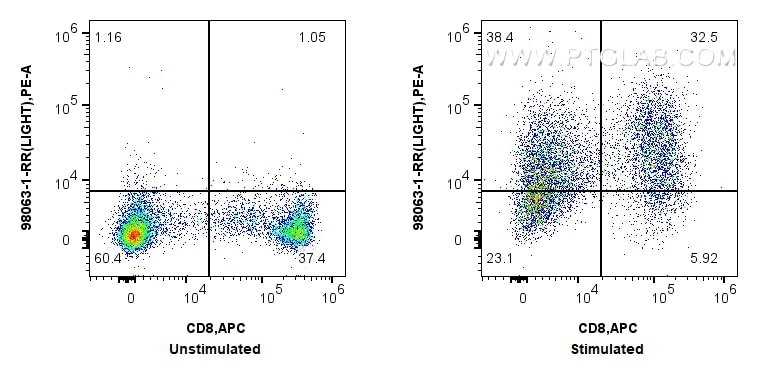
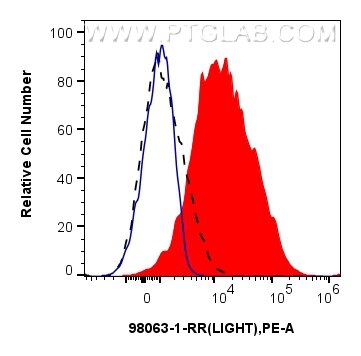
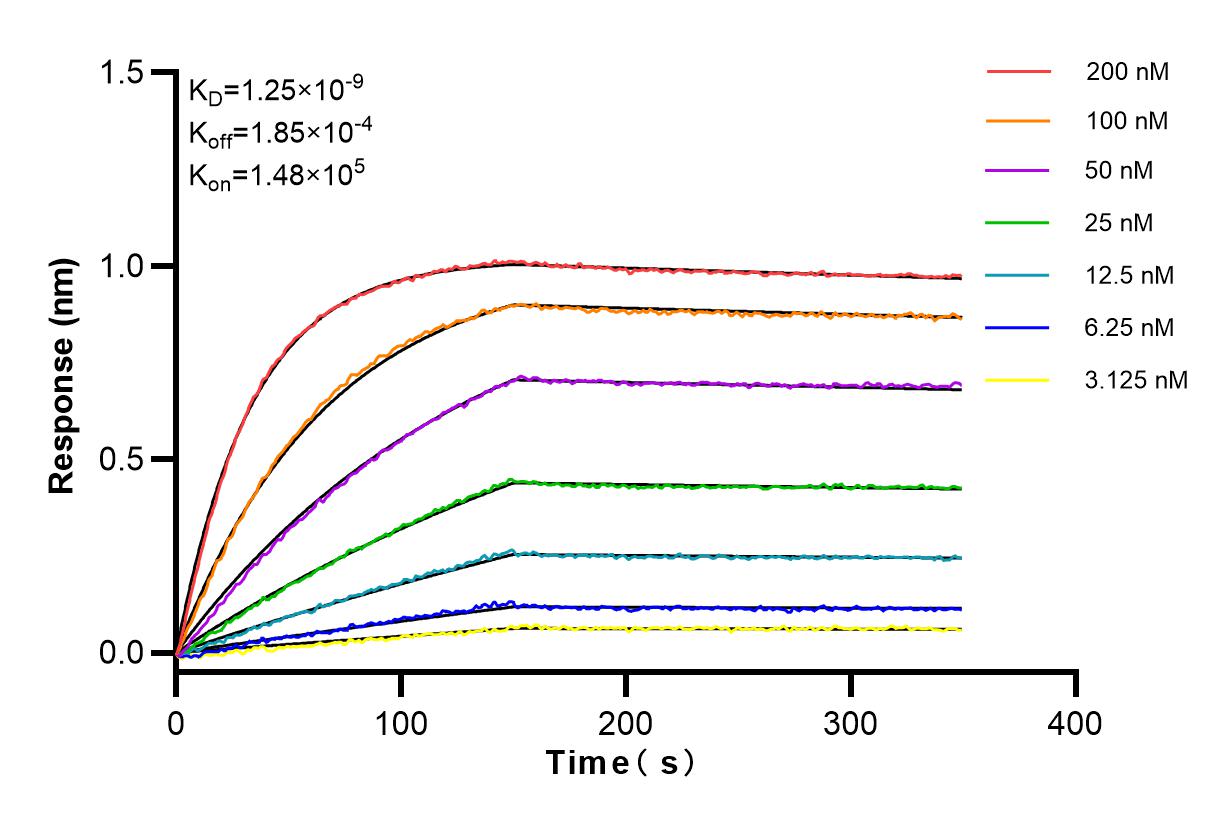
Geprüfte Anwendungen
| Erfolgreiche Detektion in FC | PMA, Ionomycin and Brefeldin A treated human PBMCs |
Empfohlene Verdünnung
| Anwendung | Verdünnung |
|---|---|
| This reagent has been tested for flow cytometric analysis. It is recommended that this reagent should be titrated in each testing system to obtain optimal results. | |
| Sample-dependent, check data in validation data gallery | |
Produktinformation
98063-1-RR bindet in FC LIGHT/CD258 und zeigt Reaktivität mit human
| Getestete Reaktivität | human |
| Wirt / Isotyp | Kaninchen / IgG |
| Klonalität | Rekombinant |
| Typ | Antikörper |
| Immunogen | Fusionsprotein |
| Vollständiger Name | tumor necrosis factor (ligand) superfamily, member 14 |
| Berechnetes Molekulargewicht | 26KD |
| GenBank-Zugangsnummer | NM_003807 |
| Gene symbol | LIGHT |
| Gene ID (NCBI) | 8740 |
| Konjugation | Unkonjugiert |
| Form | Liquid |
| Reinigungsmethode | Protein A purfication |
| Lagerungspuffer | PBS with 0.09% sodium azide |
| Lagerungsbedingungen | Store at 2 - 8°C. Stable for one year after shipment. |
Hintergrundinformationen
LIGHT, also known as TNFSF14, HVEML, or CD258, is a type II transmembrane protein that belongs to the TNF superfamily (PMID: 9462508). It is predominantly expressed in lymphoid tissues and produced by activated T cells and immature dendritic cells (DCs) (PMID: 9462508; 10754304). Through its two primary functional receptors HVEM (TNFRSF14) and lymphotoxin β receptor (LTβR), LIGHT signaling is involved in development and maintenance of lymphoid tissues, as well as innate and adaptive immune responses (PMID: 24575096; 26720335). In addition to the membrane form, LIGHT can also exist as a soluble form generated by cleavage of the extracellular portion of the membrane form.
Protokolle
| PRODUKTSPEZIFISCHE PROTOKOLLE | |
|---|---|
| FC protocol for LIGHT/CD258 antibody 98063-1-RR | Download protocol |
| STANDARD-PROTOKOLLE | |
|---|---|
| Klicken Sie hier, um unsere Standardprotokolle anzuzeigen |


