MCT4 Rekombinanter Antikörper
MCT4 Rekombinant Antikörper für WB, IHC, IF/ICC, IF-P, ELISA
Wirt / Isotyp
Kaninchen / IgG
Getestete Reaktivität
human
Anwendung
WB, IHC, IF/ICC, IF-P, ELISA
Konjugation
Unkonjugiert
CloneNo.
242296E3
Kat-Nr. : 84797-4-RR
Synonyme


Geprüfte Anwendungen
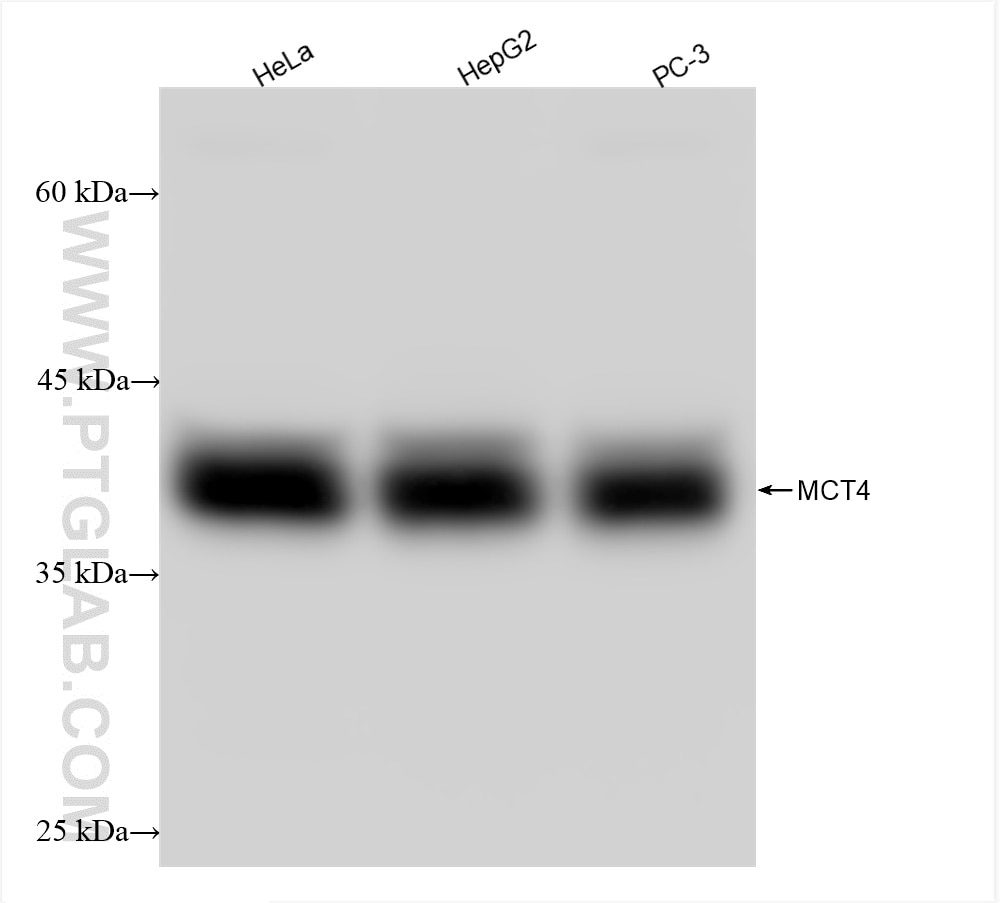
| Erfolgreiche Detektion in WB | HeLa-Zellen, HepG2-Zellen, PC-3-Zellen |
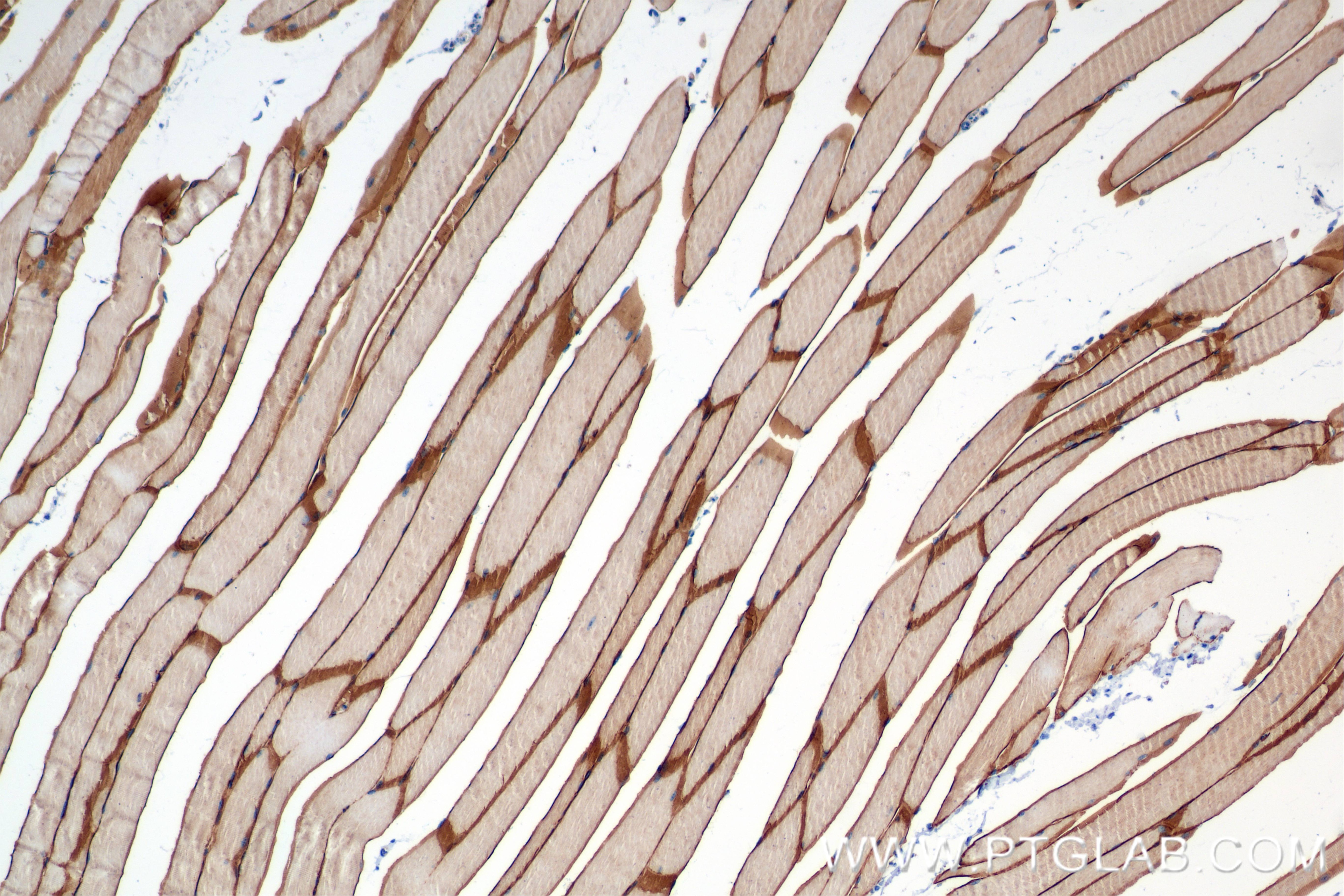
| Erfolgreiche Detektion in IHC | Maus-Skelettmuskelgewebe Hinweis: Antigendemaskierung mit TE-Puffer pH 9,0 empfohlen. (*) Wahlweise kann die Antigendemaskierung auch mit Citratpuffer pH 6,0 erfolgen. |
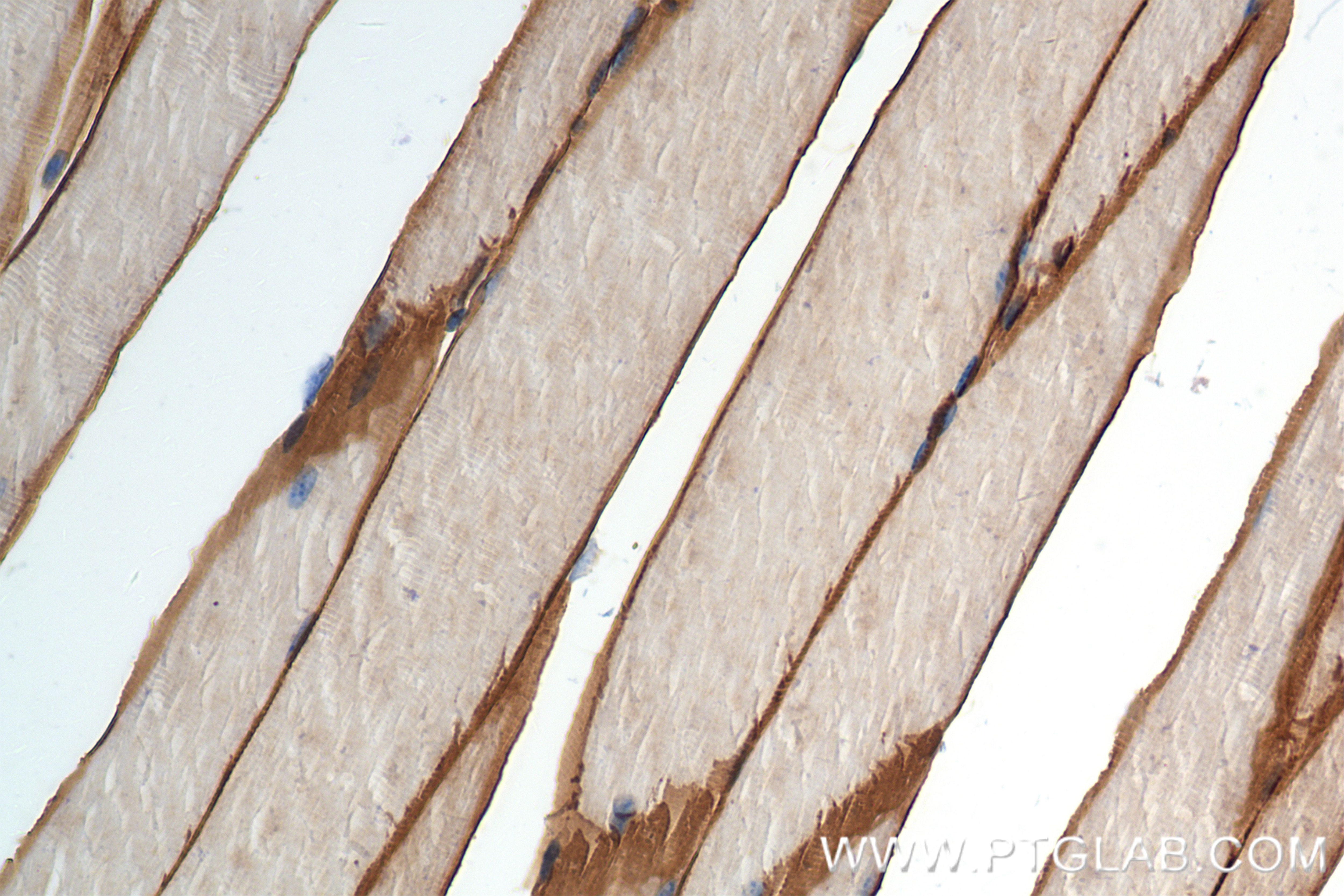
| Erfolgreiche Detektion in IF-P | Maus-Skelettmuskelgewebe |
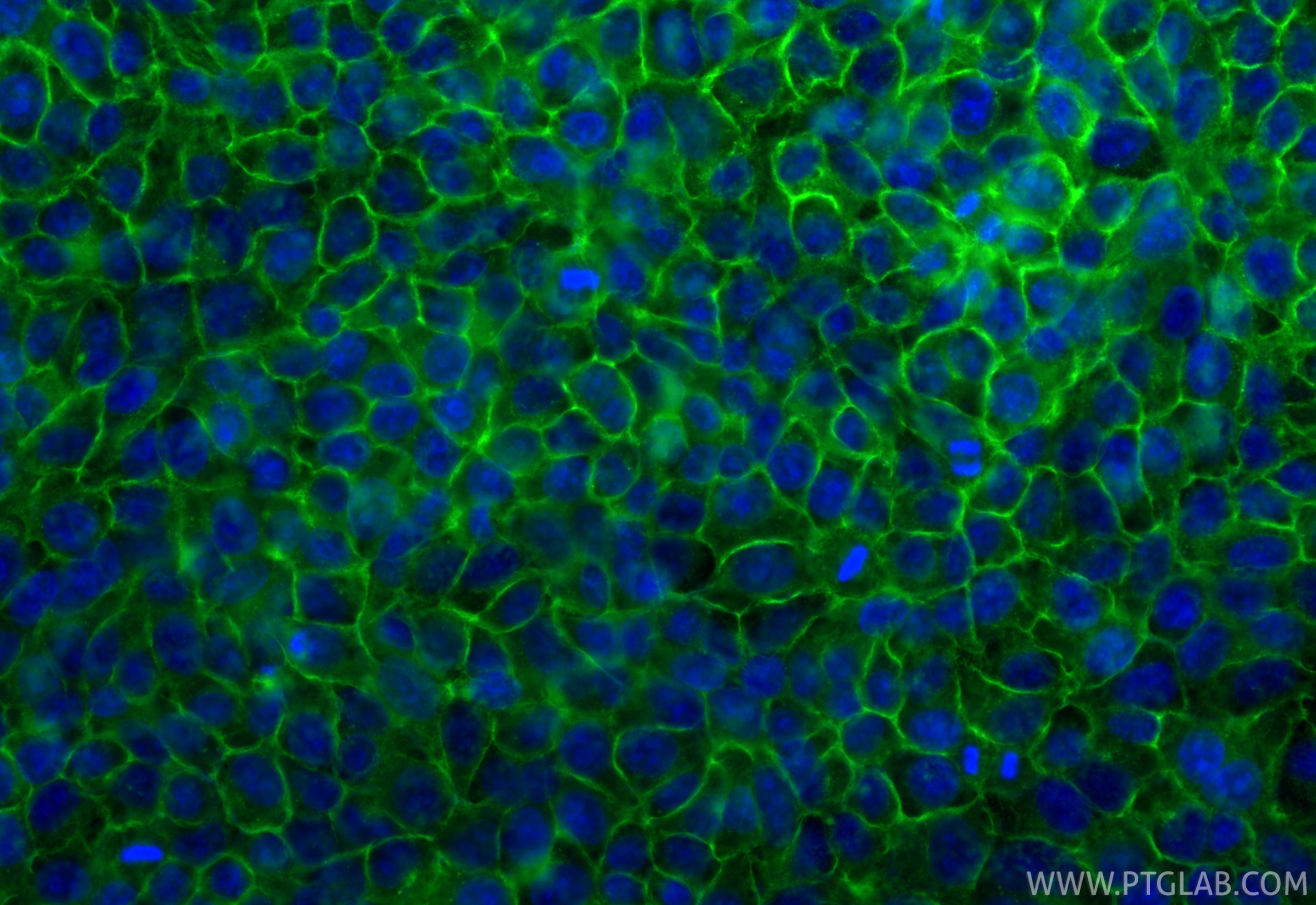
| Erfolgreiche Detektion in IF/ICC | HepG2-Zellen |
Empfohlene Verdünnung
| Anwendung | Verdünnung |
|---|---|
| Western Blot (WB) | WB : 1:500-1:2000 |
| Immunhistochemie (IHC) | IHC : 1:500-1:2000 |
| Immunfluoreszenz (IF)-P | IF-P : 1:250-1:1000 |
| Immunfluoreszenz (IF)/ICC | IF/ICC : 1:500-1:2000 |
| It is recommended that this reagent should be titrated in each testing system to obtain optimal results. | |
| Sample-dependent, check data in validation data gallery | |
Produktinformation
84797-4-RR bindet in WB, IHC, IF/ICC, IF-P, ELISA MCT4 und zeigt Reaktivität mit human
| Getestete Reaktivität | human |
| Wirt / Isotyp | Kaninchen / IgG |
| Klonalität | Rekombinant |
| Typ | Antikörper |
| Immunogen | MCT4 fusion protein Ag18788 |
| Vollständiger Name | solute carrier family 16, member 3 (monocarboxylic acid transporter 4) |
| Berechnetes Molekulargewicht | 465 aa, 49 kDa |
| Beobachtetes Molekulargewicht | 38-42 kDa |
| GenBank-Zugangsnummer | BC112269 |
| Gene symbol | MCT4 |
| Gene ID (NCBI) | 9123 |
| Konjugation | Unkonjugiert |
| Form | Liquid |
| Reinigungsmethode | Protein A purfication |
| Lagerungspuffer | PBS with 0.02% sodium azide and 50% glycerol |
| Lagerungsbedingungen | Bei -20°C lagern. Nach dem Versand ein Jahr lang stabil Aliquotieren ist bei -20oC Lagerung nicht notwendig. 20ul Größen enthalten 0,1% BSA. |
Hintergrundinformationen
The monocarboxylate transporter 4 (MCT4, also known as SLC16A3) is involved in the transportation of metabolically important monocarboxylates such as lactate, pyruvate, acetate and ketone bodies. It is widely expressed, particularly strongly in glycolytic tissues such as white skeletal muscle fibres, astrocytes, white blood cells, chondrocytes and some mammalian cell lines. MCT4 is also linked to tumor biology because it mediates lactate transport across membranes resulting in antiapoptotic effects.
Protokolle
| PRODUKTSPEZIFISCHE PROTOKOLLE | |
|---|---|
| WB protocol for MCT4 antibody 84797-4-RR | Protokoll herunterladen |
| IHC protocol for MCT4 antibody 84797-4-RR | Protokoll herunterladenl |
| IF protocol for MCT4 antibody 84797-4-RR | Protokoll herunterladen |
| STANDARD-PROTOKOLLE | |
|---|---|
| Klicken Sie hier, um unsere Standardprotokolle anzuzeigen |


