- Featured Product
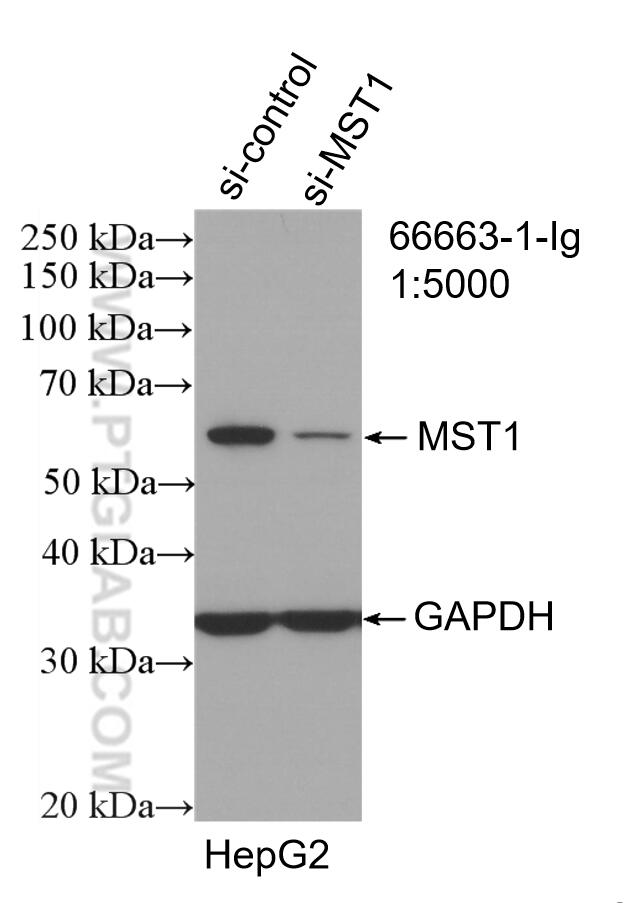
- KD/KO Validated
MST1 Monoklonaler Antikörper
MST1 Monoklonal Antikörper für WB, IHC, IF/ICC, Indirect ELISA
Wirt / Isotyp
Maus / IgG2a
Getestete Reaktivität
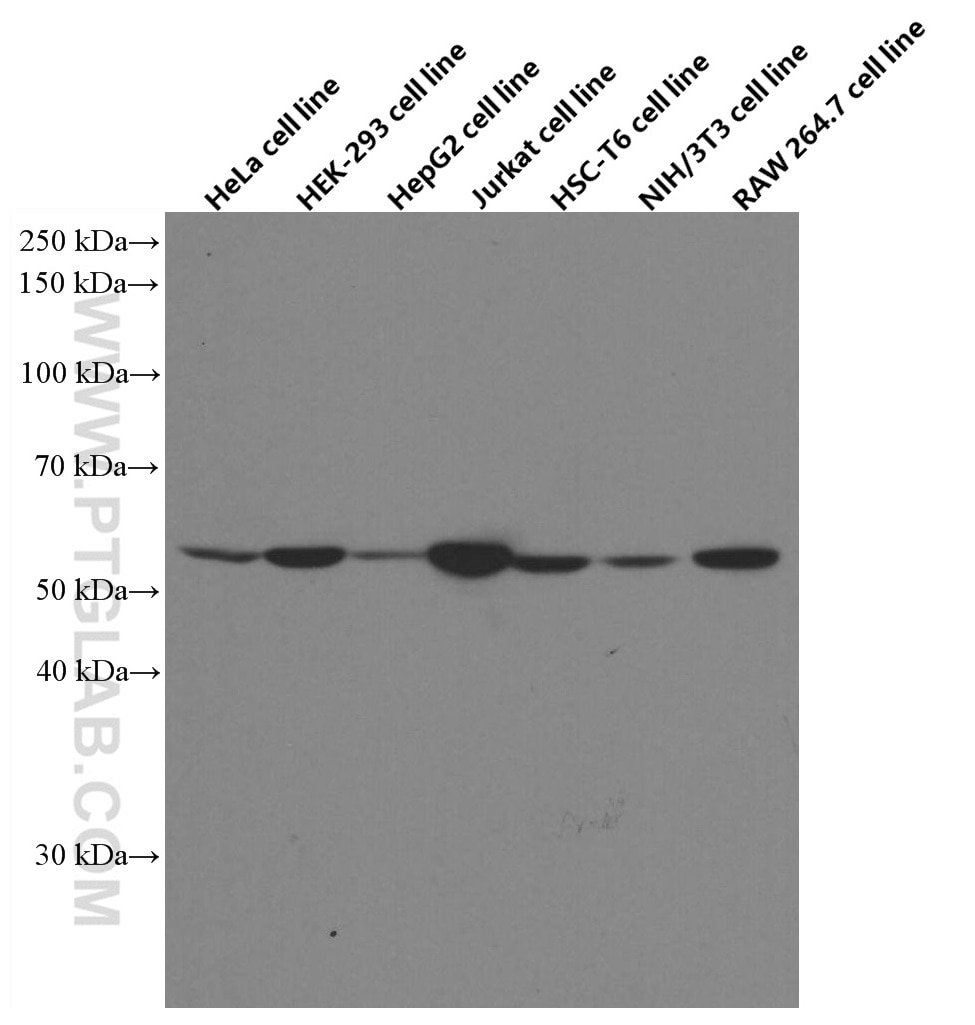
human, Maus, Ratte
Anwendung
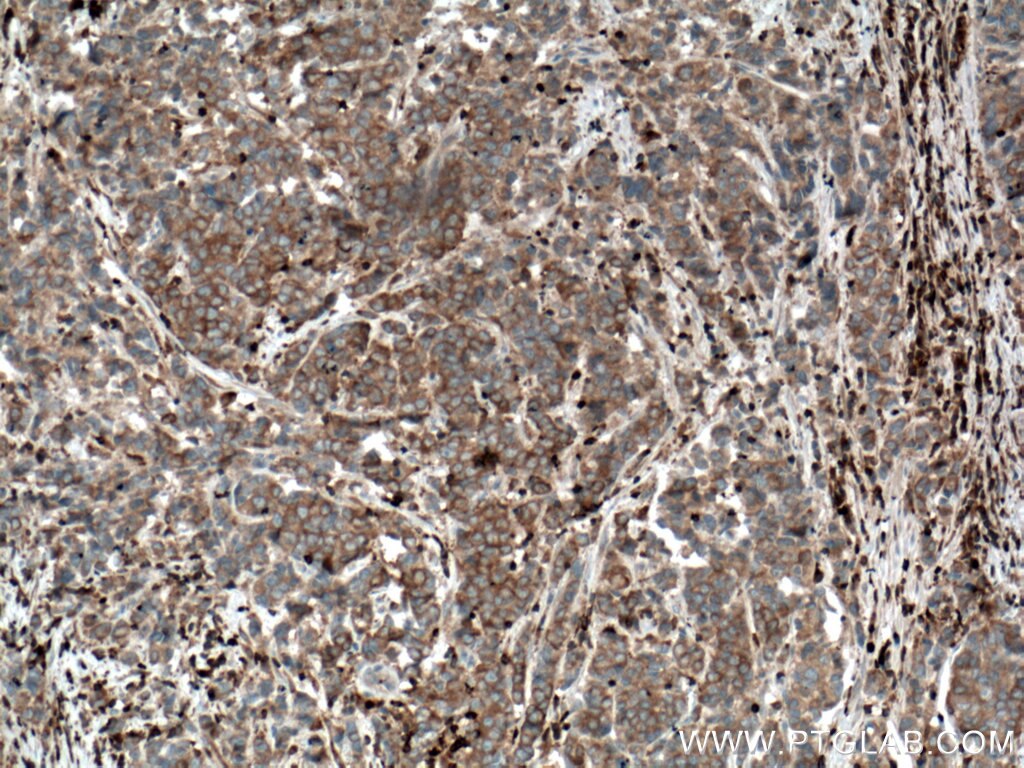
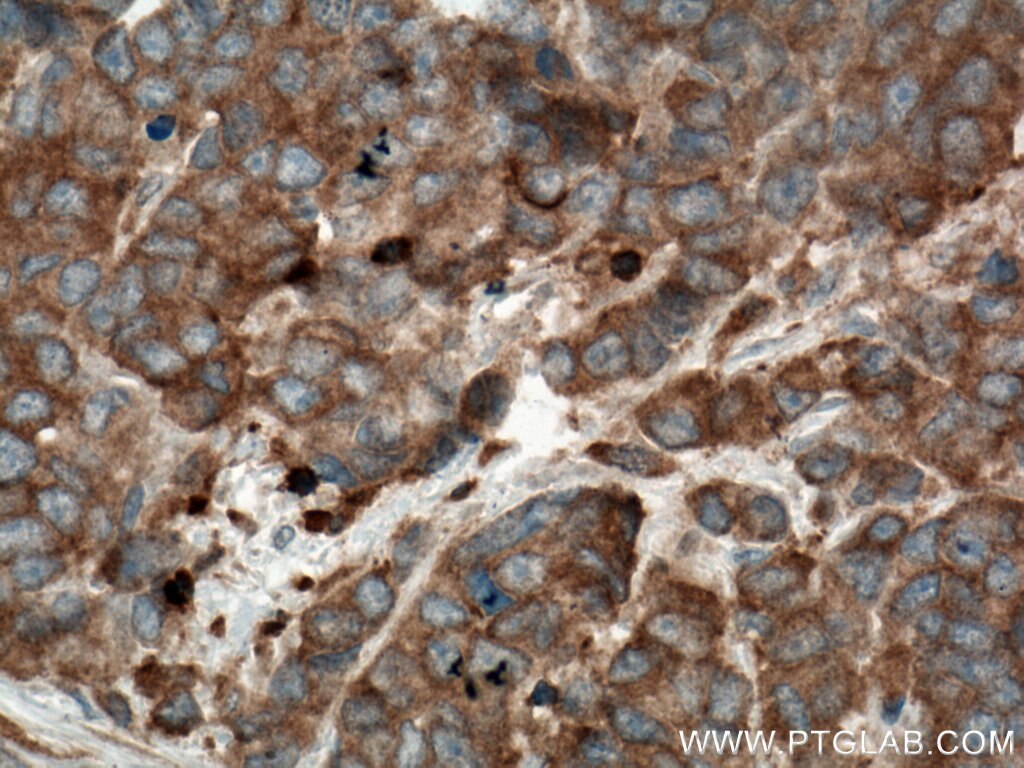
WB, IHC, IF/ICC, Indirect ELISA
Konjugation
Unkonjugiert
CloneNo.
2G11C1
Kat-Nr. : 66663-1-PBS
Synonyme
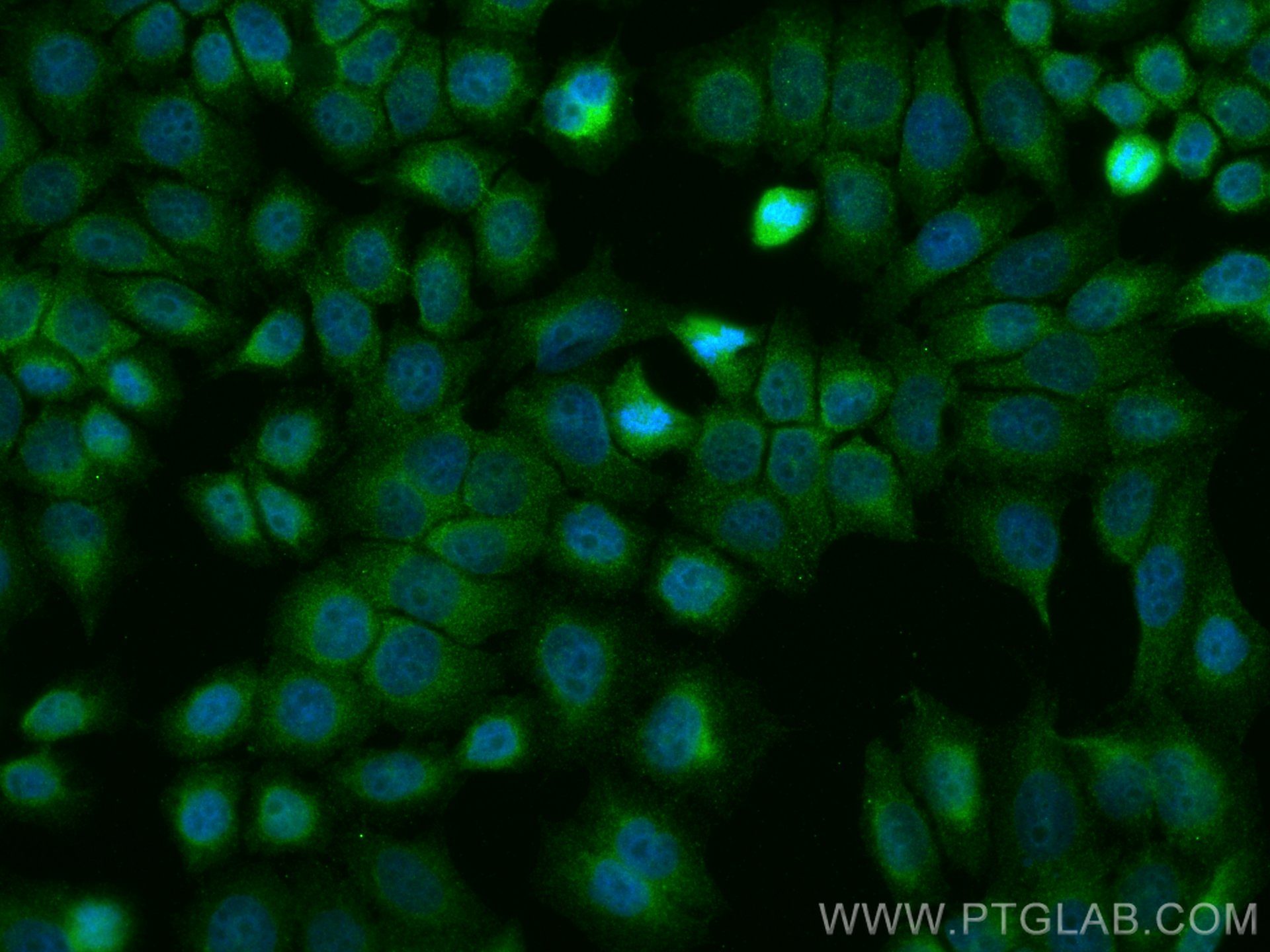
Geprüfte Anwendungen
Produktinformation
66663-1-PBS bindet in WB, IHC, IF/ICC, Indirect ELISA MST1 und zeigt Reaktivität mit human, Maus, Ratten
| Getestete Reaktivität | human, Maus, Ratte |
| Wirt / Isotyp | Maus / IgG2a |
| Klonalität | Monoklonal |
| Typ | Antikörper |
| Immunogen | MST1 fusion protein Ag17738 |
| Vollständiger Name | serine/threonine kinase 4 |
| Berechnetes Molekulargewicht | 487 aa, 56 kDa |
| Beobachtetes Molekulargewicht | 52-56 kDa |
| GenBank-Zugangsnummer | BC093768 |
| Gene symbol | MST1 |
| Gene ID (NCBI) | 6789 |
| Konjugation | Unkonjugiert |
| Form | Liquid |
| Reinigungsmethode | Protein-A-Reinigung |
| Lagerungspuffer | PBS only |
| Lagerungsbedingungen | Store at -80°C. 20ul Größen enthalten 0,1% BSA. |
Hintergrundinformationen
Mammalian STE20-like serine-threonine kinase MST1, encoded by the STK4 gene, is a multifunctional protein. MST1 and its closest paralogs MST2 (encoded by the STK3 gene), MST3, and MST4 are members of the Class II Germinal Center Family of Protein Kinases . STK3/4 and LATS1/2 (large tumor suppressor 1 and 2) are core kinase components of the Hippo tumor suppressor pathway in mammalians . In the conventional Hippo pathway, the STK3/4 and LATS1/2 signaling cascade phosphorylates and inactivates the transcriptional coactivator YAP1 (yes associated protein 1) and its close paralog WWTR1]. YAP1 and WWTR1 do not have DNA binding domains and they exert their biological outputs, such as cell proliferation and survival, by interacting with the TEAD1-4 transcription factors. Lines of evidence have indicated that dysregulation or loss of STK4/Hippo signaling is linked to developmental disorders and carcinogenesis with poor prognosis. STK4 is a stress-induced kinase and it can be activated in response to cell-death inducers. Autophosphorylation of STK4 at Thr183 (Thr180 in STK3) in the activation loop is a key activation mechanism for STK4/3 because phosphorylation of Thr183/180 causes the cleavage of STK4 by caspases under apoptotic conditions. The caspase-cleavage results in a more active STK4 protein (STK4-N, an amino-terminally truncated STK4), which localizes into the nucleus and induces apoptosis through histone modifications and chromatin condensations.


