MTMR15 Rekombinanter Antikörper
MTMR15 Rekombinant Antikörper für FC (Intra), ELISA
Wirt / Isotyp
Kaninchen / IgG
Getestete Reaktivität
human
Anwendung
FC (Intra), ELISA
Konjugation
Unkonjugiert
CloneNo.
240629E4
Kat-Nr. : 83622-6-RR
Synonyme
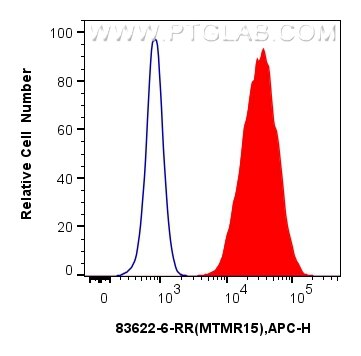
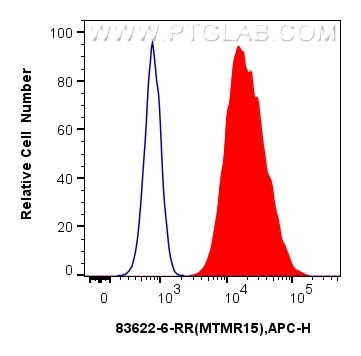
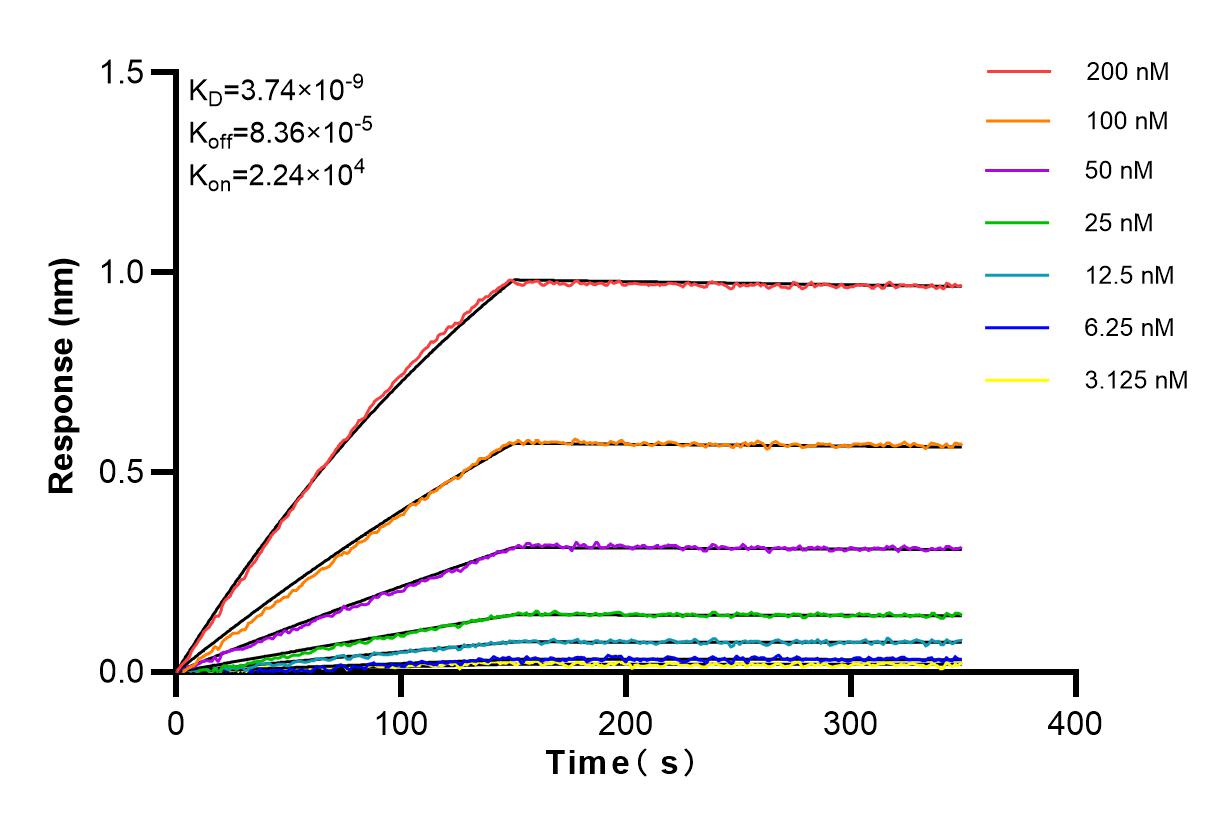
Geprüfte Anwendungen
| Erfolgreiche Detektion in FC (Intra) | K-562-Zellen, A431-Zellen |
Empfohlene Verdünnung
| Anwendung | Verdünnung |
|---|---|
| Durchflusszytometrie (FC) (INTRA) | FC (INTRA) : 0.25 ug per 10^6 cells in a 100 µl suspension |
| It is recommended that this reagent should be titrated in each testing system to obtain optimal results. | |
| Sample-dependent, check data in validation data gallery | |
Produktinformation
83622-6-RR bindet in FC (Intra), ELISA MTMR15 und zeigt Reaktivität mit human
| Getestete Reaktivität | human |
| Wirt / Isotyp | Kaninchen / IgG |
| Klonalität | Rekombinant |
| Typ | Antikörper |
| Immunogen | MTMR15 fusion protein Ag11651 |
| Vollständiger Name | myotubularin related protein 15 |
| Berechnetes Molekulargewicht | 60 kDa, 114 kDa |
| GenBank-Zugangsnummer | BC047882 |
| Gene symbol | MTMR15 |
| Gene ID (NCBI) | 22909 |
| Konjugation | Unkonjugiert |
| Form | Liquid |
| Reinigungsmethode | Protein A purfication |
| Lagerungspuffer | PBS with 0.02% sodium azide and 50% glycerol |
| Lagerungsbedingungen | Bei -20°C lagern. Nach dem Versand ein Jahr lang stabil Aliquotieren ist bei -20oC Lagerung nicht notwendig. 20ul Größen enthalten 0,1% BSA. |
Hintergrundinformationen
MTMR15, also named as FAN1 and KIAA1018, is a nuclease required for the repair of DNA interstrand cross-links (ICL) recruited at sites of DNA damage by monoubiquitinated FANCD2. It is specifically involved in repair of ICL-induced DNA breaks by being required for efficient homologous recombination, probably in the resolution of homologous recombination intermediates. MTMR15 has some isoforms with MW 114 kDa and 60 kDa. The MW will be migrated to 120-140 kDa and 63-68 kDa with modification.
Protokolle
| PRODUKTSPEZIFISCHE PROTOKOLLE | |
|---|---|
| FC protocol for MTMR15 antibody 83622-6-RR | Download protocol |
| STANDARD-PROTOKOLLE | |
|---|---|
| Klicken Sie hier, um unsere Standardprotokolle anzuzeigen |


