LASP1 Monoklonaler Antikörper
LASP1 Monoklonal Antikörper für Single Cell (Intra)
Wirt / Isotyp
Maus / IgG1
Getestete Reaktivität
human
Anwendung
Single Cell (Intra)
Konjugation
5CFLX Fluorescent Dye
CloneNo.
1G4B6
Kat-Nr. : G68080-1-5C
Synonyme
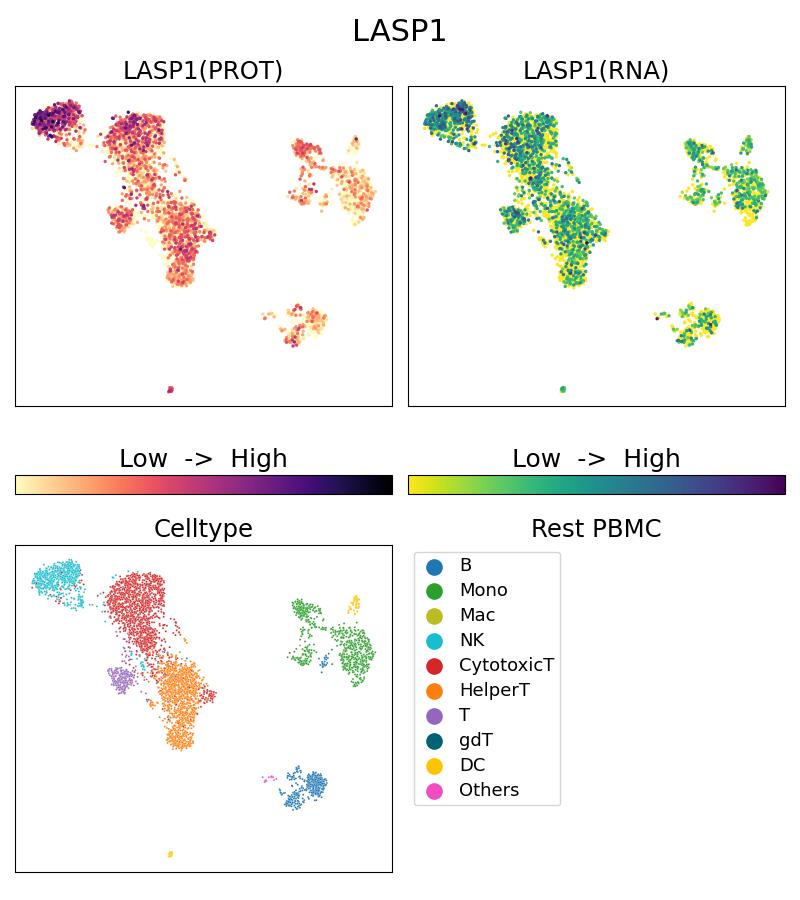
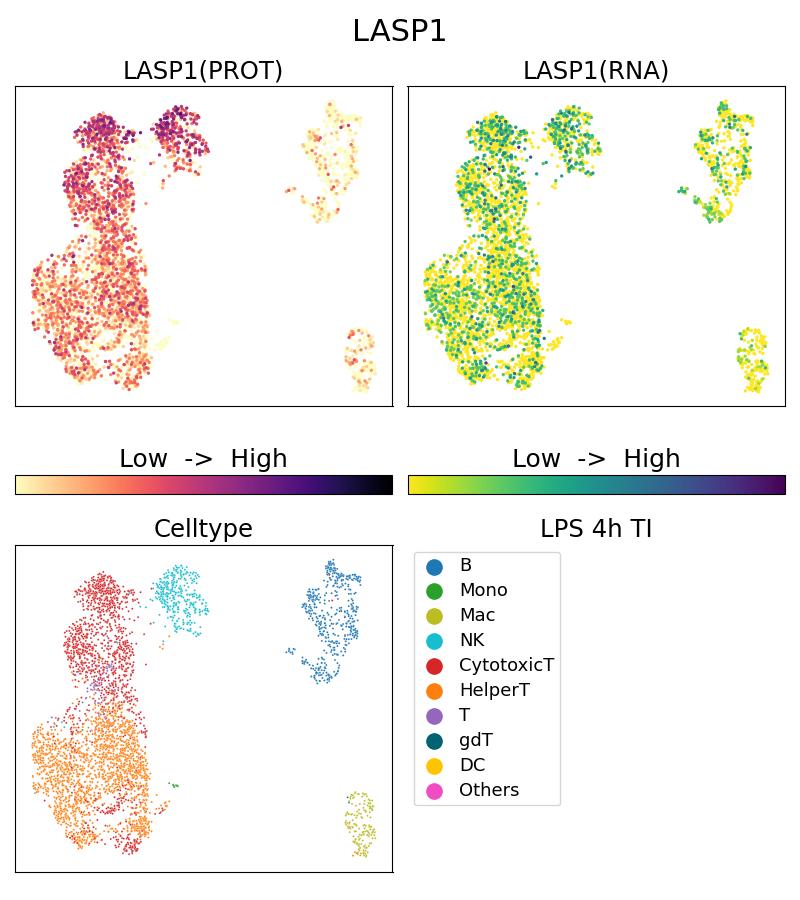
Geprüfte Anwendungen
| Erfolgreiche Detektion in Single Cell (Intra) | 10x Genomics Gene Expression Flex with Feature Barcodes and Multiplexing product |
Empfohlene Verdünnung
| Anwendung | Verdünnung |
|---|---|
| SINGLE CELL (INTRA) | SINGLE CELL (INTRA) : <0.5ug/test |
| It is recommended that this reagent should be titrated in each testing system to obtain optimal results. | |
| Sample-dependent, check data in validation data gallery | |
Produktinformation
G68080-1-5C bindet in Single Cell (Intra) LASP1 und zeigt Reaktivität mit human
| Getestete Reaktivität | human |
| Wirt / Isotyp | Maus / IgG1 |
| Klonalität | Monoklonal |
| Typ | Antikörper |
| Immunogen | LASP1 fusion protein Ag18101 |
| Vollständiger Name | LIM and SH3 protein 1 |
| Berechnetes Molekulargewicht | 30 kDa |
| GenBank-Zugangsnummer | BC012460 |
| Gene symbol | LASP1 |
| Gene ID (NCBI) | 3927 |
| Konjugation | 5CFLX Fluorescent Dye |
| Form | Liquid |
| Reinigungsmethode | |
| Lagerungspuffer | PBS with 1mM EDTA and 0.09% sodium azide |
| Lagerungsbedingungen | 2-8°C Stable for one year after shipment. 20ul Größen enthalten 0,1% BSA. |
Hintergrundinformationen
LASP1(LIM and SH3 protein 1), also known as MLN50, is a 261 amino acid protein that localizes to both the cytoplasm and the cytoskeleton(PMID: 7589475). LASP1 consists of an N-terminal LIM-domain with two zinc finger motifs, followed by two central actin-binding nebulin repeats, flanked by a linker region and a C-terminal SH3 domain (PMID: 17177073, 9848085). LASP-1 interacts with F-Actin and plays an important role in the regulation of Actin-associated cytoskeletal organization. Agonist-dependent changes in LASP1 phosphorylation may regulate Actin-related ion transport activities in epithelial cells (PMID: 15465019,12571245). Overexpression of LASP-1 is associated with breast cancer, and plays a role in tumor transformation and metastasis (PMID: 17956604).

