LEF1 Polyklonaler Antikörper
LEF1 Polyklonal Antikörper für Single Cell (Intra)
Wirt / Isotyp
Kaninchen / IgG
Getestete Reaktivität
human
Anwendung
Single Cell (Intra)
Konjugation
5CFLX Fluorescent Dye
Kat-Nr. : G14972-1-5C
Synonyme
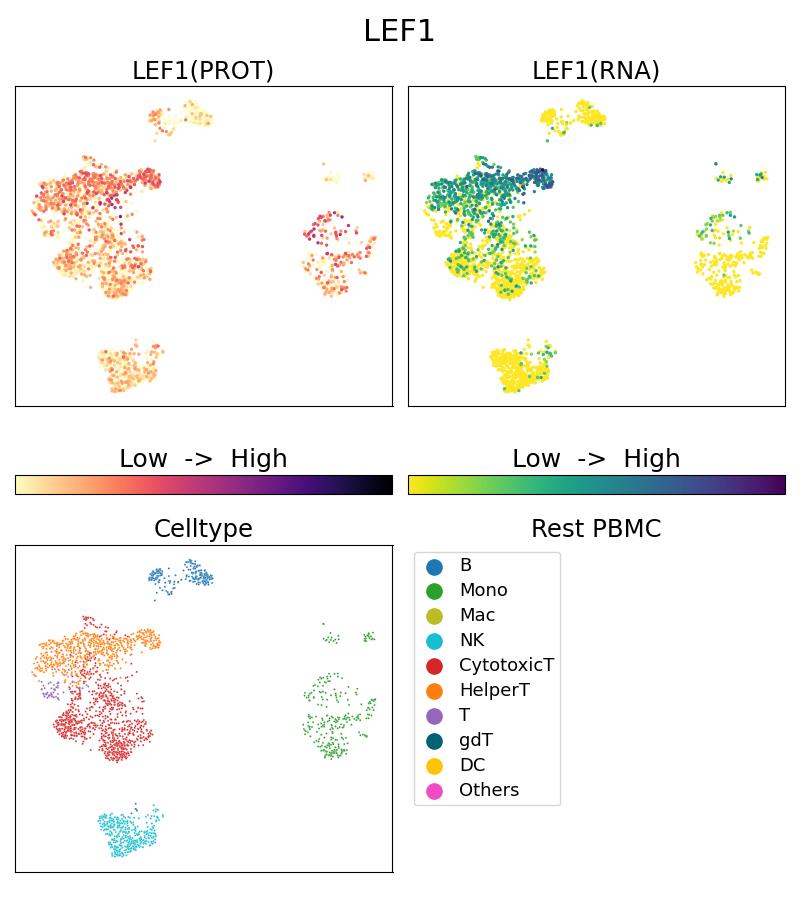
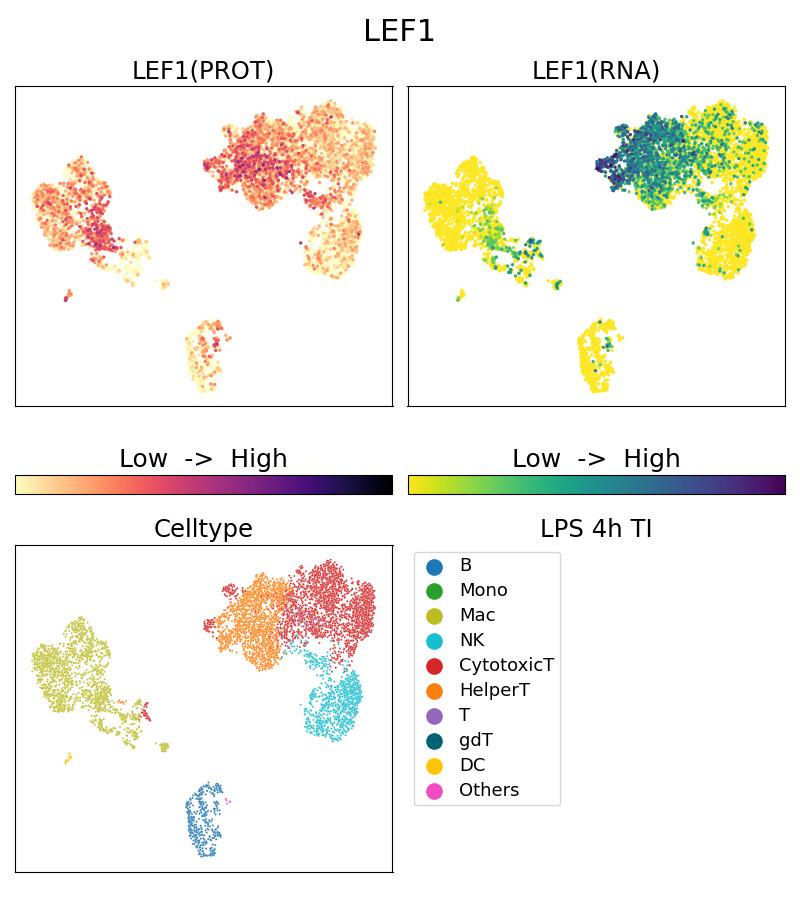
Geprüfte Anwendungen
| Erfolgreiche Detektion in Single Cell (Intra) | 10x Genomics Gene Expression Flex with Feature Barcodes and Multiplexing product |
Empfohlene Verdünnung
| Anwendung | Verdünnung |
|---|---|
| SINGLE CELL (INTRA) | SINGLE CELL (INTRA) : <0.5ug/test |
| It is recommended that this reagent should be titrated in each testing system to obtain optimal results. | |
| Sample-dependent, check data in validation data gallery | |
Produktinformation
G14972-1-5C bindet in Single Cell (Intra) LEF1 und zeigt Reaktivität mit human
| Getestete Reaktivität | human |
| Wirt / Isotyp | Kaninchen / IgG |
| Klonalität | Polyklonal |
| Typ | Antikörper |
| Immunogen | LEF1 fusion protein Ag6882 |
| Vollständiger Name | lymphoid enhancer-binding factor 1 |
| Berechnetes Molekulargewicht | 37 kDa |
| GenBank-Zugangsnummer | BC050632 |
| Gene symbol | LEF1 |
| Gene ID (NCBI) | 51176 |
| Konjugation | 5CFLX Fluorescent Dye |
| Form | Liquid |
| Reinigungsmethode | |
| Lagerungspuffer | PBS with 1mM EDTA and 0.09% sodium azide |
| Lagerungsbedingungen | 2-8°C Stable for one year after shipment. 20ul Größen enthalten 0,1% BSA. |
Hintergrundinformationen
Lymphoid enhancer-binding factor 1(LEF1) belongs to a family of regulatory protein share homology with high mobility group protein-1, and it's a nuclear protein exprssed in pre-B and T cells. LEF1 has a role in the Wnt signaling pathway and hair cell differentiation and follicle morphogenesis. Together with CTNNB1 and EP300, LEF1 activates transcription of target genes. Isoform 5 transcriptionally activates the fibronectin promoter, binds to and represses transcription from the E-cadherin promoter in a CTNNB1-independent manner, and is involved in reducing cellular aggregation and increasing cell migration of pancreatic cancer cells. Isoform 1 transcriptionally activates MYC and CCND1 expression and enhances proliferation of pancreatic tumor cells. MECs can give rise to seven cell types of the SAE and SMGs following severe airway injury. MECs progressively adopted a basal cell phenotype on the SAE and established lasting progenitors capable of further regeneration following reinjury. MECs activate Wnt-regulated transcription factors (Lef-1/TCF7) following injury and Lef-1 induction in cultured MECs promoted transition to a basal cell phenotype. Surprisingly, dose-dependent MEC conditional activation of Lef-1in vivopromoted self-limited airway regeneration in the absence of injury. Thus, modulating the Lef-1 transcriptional program in MEC-derived progenitors may have regenerative medicine applications for lung diseases. (https://doi.org/10.1016/j.stem.2018.03.017) The phosphorylation may affects LEF1 protein's theoretical molecular weight when tested.40-70 kD bands have also been reported (PMID: 22261717; 17063141 ).

