MAFB Polyklonaler Antikörper
MAFB Polyklonal Antikörper für Single Cell (Intra)
Wirt / Isotyp
Kaninchen / IgG
Getestete Reaktivität
human
Anwendung
Single Cell (Intra)
Konjugation
5CFLX Fluorescent Dye
Kat-Nr. : G20189-1-5C
Synonyme
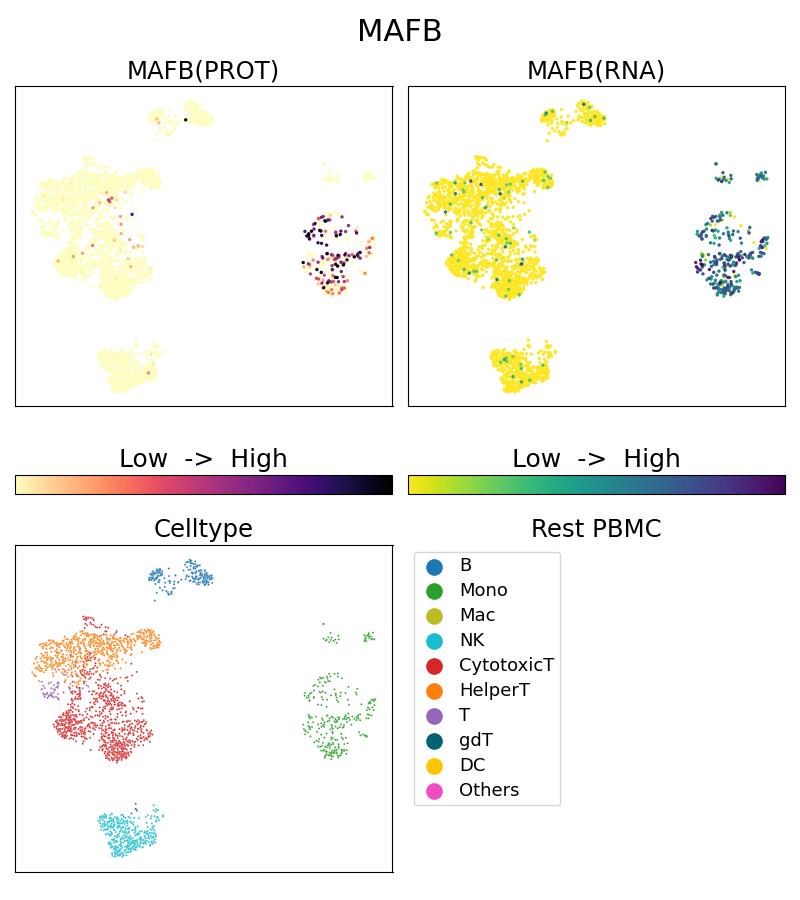
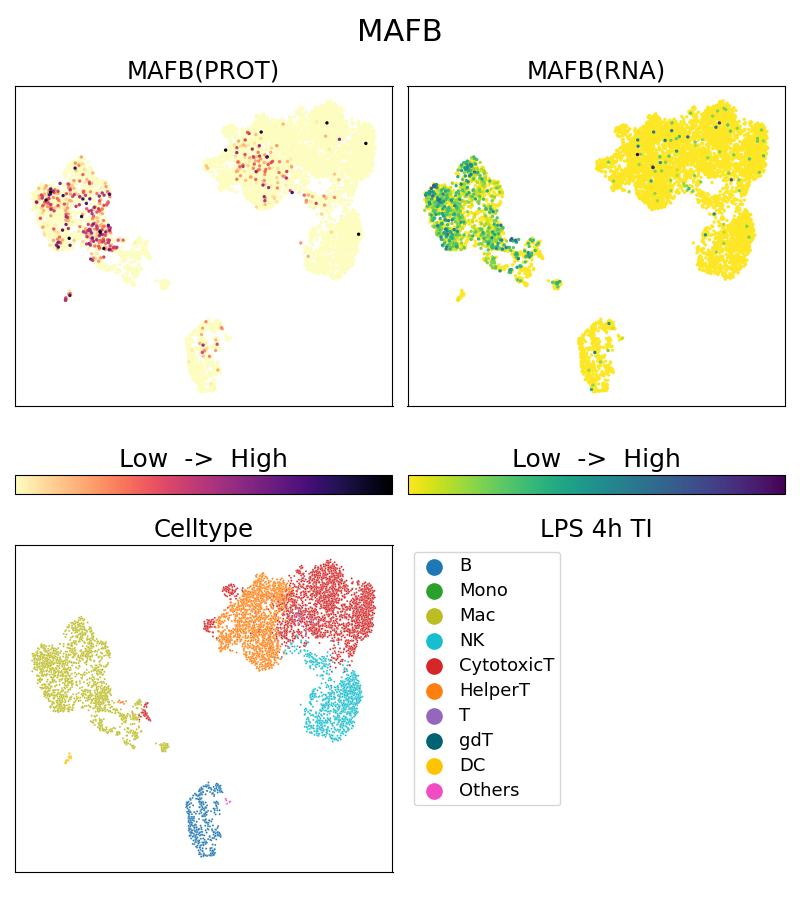
Geprüfte Anwendungen
| Erfolgreiche Detektion in Single Cell (Intra) | 10x Genomics Gene Expression Flex with Feature Barcodes and Multiplexing product |
Empfohlene Verdünnung
| Anwendung | Verdünnung |
|---|---|
| SINGLE CELL (INTRA) | SINGLE CELL (INTRA) : <0.5ug/test |
| It is recommended that this reagent should be titrated in each testing system to obtain optimal results. | |
| Sample-dependent, check data in validation data gallery | |
Produktinformation
G20189-1-5C bindet in Single Cell (Intra) MAFB und zeigt Reaktivität mit human
| Getestete Reaktivität | human |
| Wirt / Isotyp | Kaninchen / IgG |
| Klonalität | Polyklonal |
| Typ | Antikörper |
| Immunogen | MAFB fusion protein Ag14102 |
| Vollständiger Name | v-maf musculoaponeurotic fibrosarcoma oncogene homolog B (avian) |
| Berechnetes Molekulargewicht | 323 aa, 36 kDa |
| GenBank-Zugangsnummer | BC036689 |
| Gene symbol | MAFB |
| Gene ID (NCBI) | 9935 |
| Konjugation | 5CFLX Fluorescent Dye |
| Form | Liquid |
| Reinigungsmethode | |
| Lagerungspuffer | PBS with 1mM EDTA and 0.09% sodium azide |
| Lagerungsbedingungen | 2-8°C Stable for one year after shipment. 20ul Größen enthalten 0,1% BSA. |
Hintergrundinformationen
MAFB (MAF BZIP Transcription Factor B), also known as V-maf musculoaponeurotic fibrosarcoma oncogene homolog B, is a widely expressed basic leucine zipper transcription factor belonging to the Maf family. MAFB expression is significantly elevated in response to a broad range of metabolic and immunological stimuli that promote macrophage M2 polarization, cholesterol efflux, or both, whereas it is strongly down-regulated in response to various pro-inflammatory pathogenic triggers(PMID: 28790455). MAFB is highly expressed in tumor tissues and required for proliferation and tumorigenicity of osteosarcoma cells(PMID: 32234710) and is a marker of tumor-associated macrophages in both mouse and human(PMID: 31679694).

