PACSIN1 Monoklonaler Antikörper
PACSIN1 Monoklonal Antikörper für WB, IHC, IF/ICC, IF-P, FC (Intra), Indirect ELISA
Wirt / Isotyp
Maus / IgG1
Getestete Reaktivität
Hausschwein, Huhn, human, Kaninchen, Maus, Ratte
Anwendung
WB, IHC, IF/ICC, IF-P, FC (Intra), Indirect ELISA
Konjugation
Unkonjugiert
CloneNo.
1B7B4
Kat-Nr. : 68115-1-PBS
Synonyme
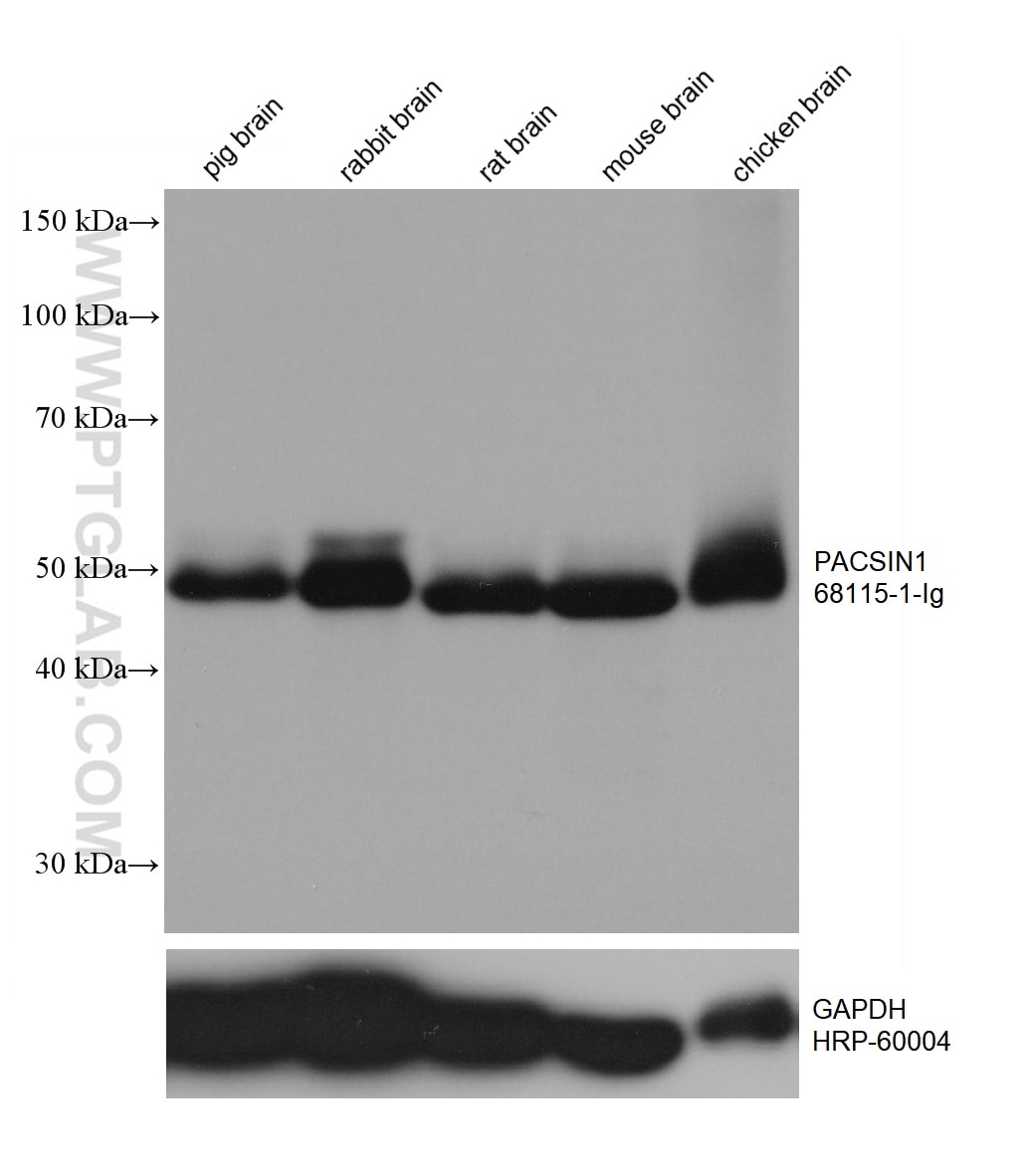
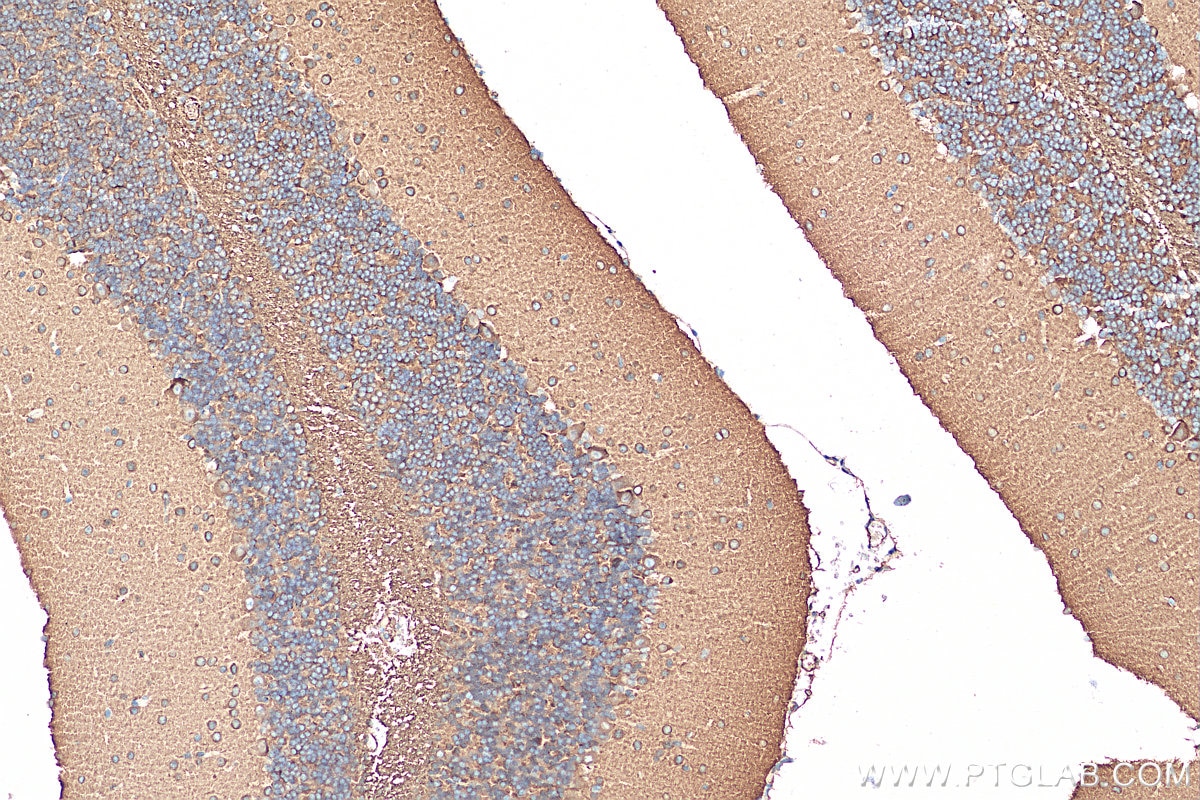
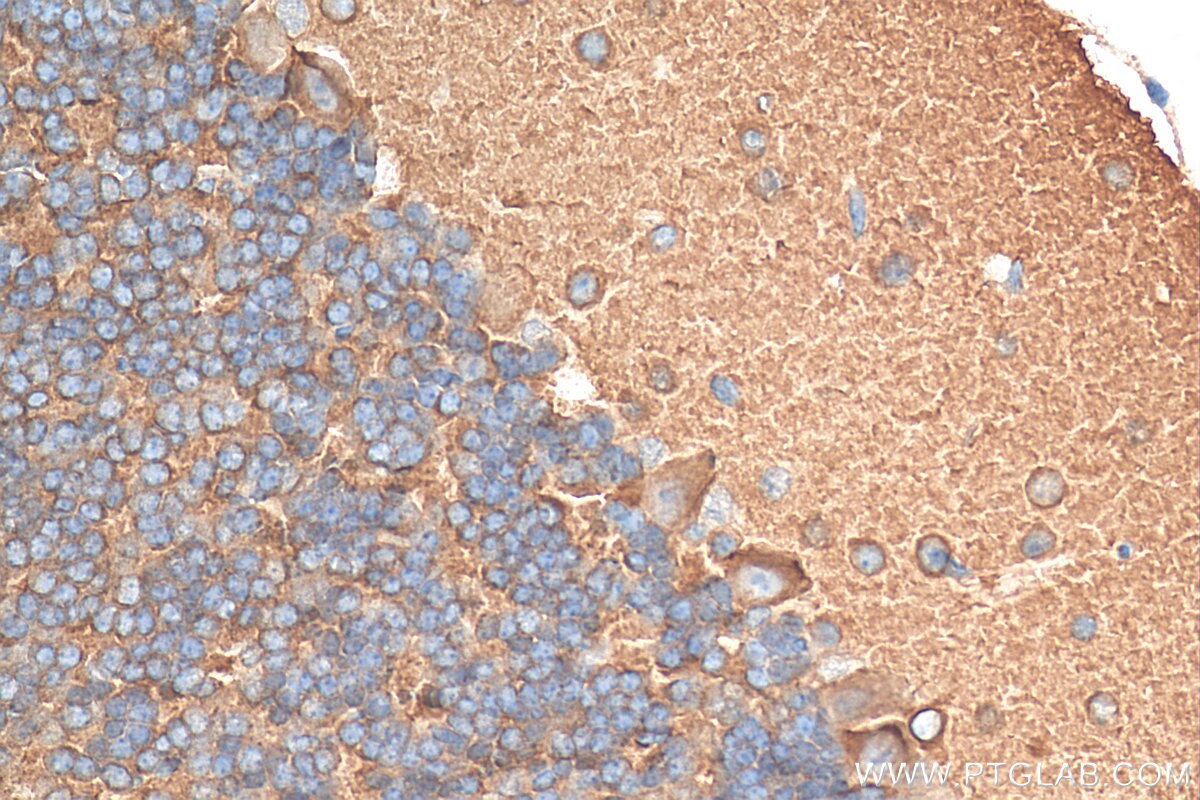
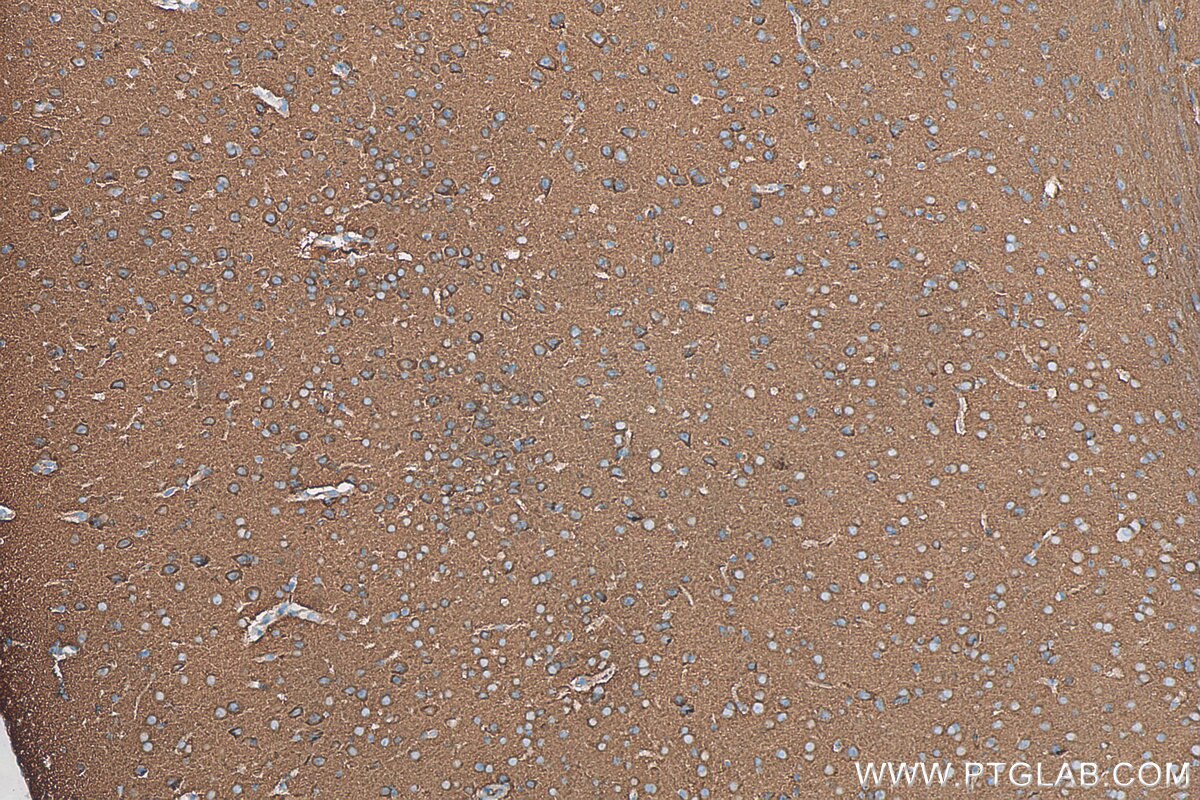
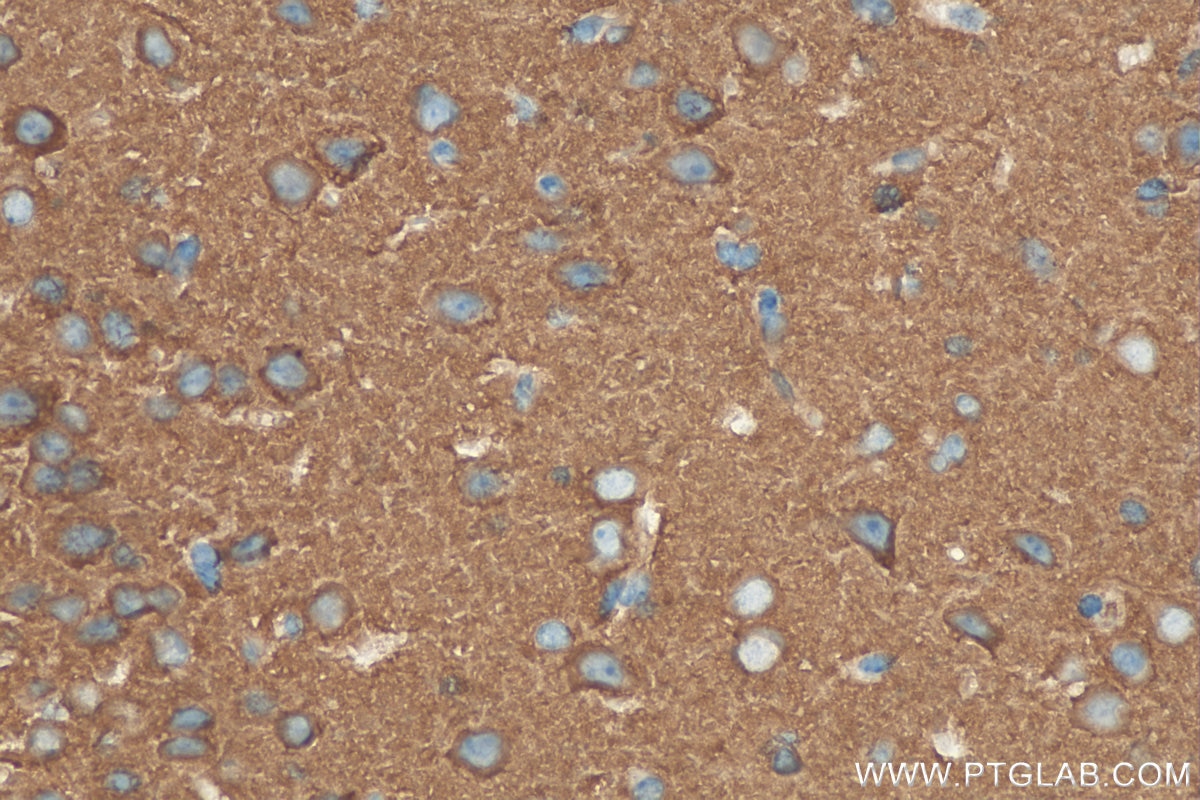
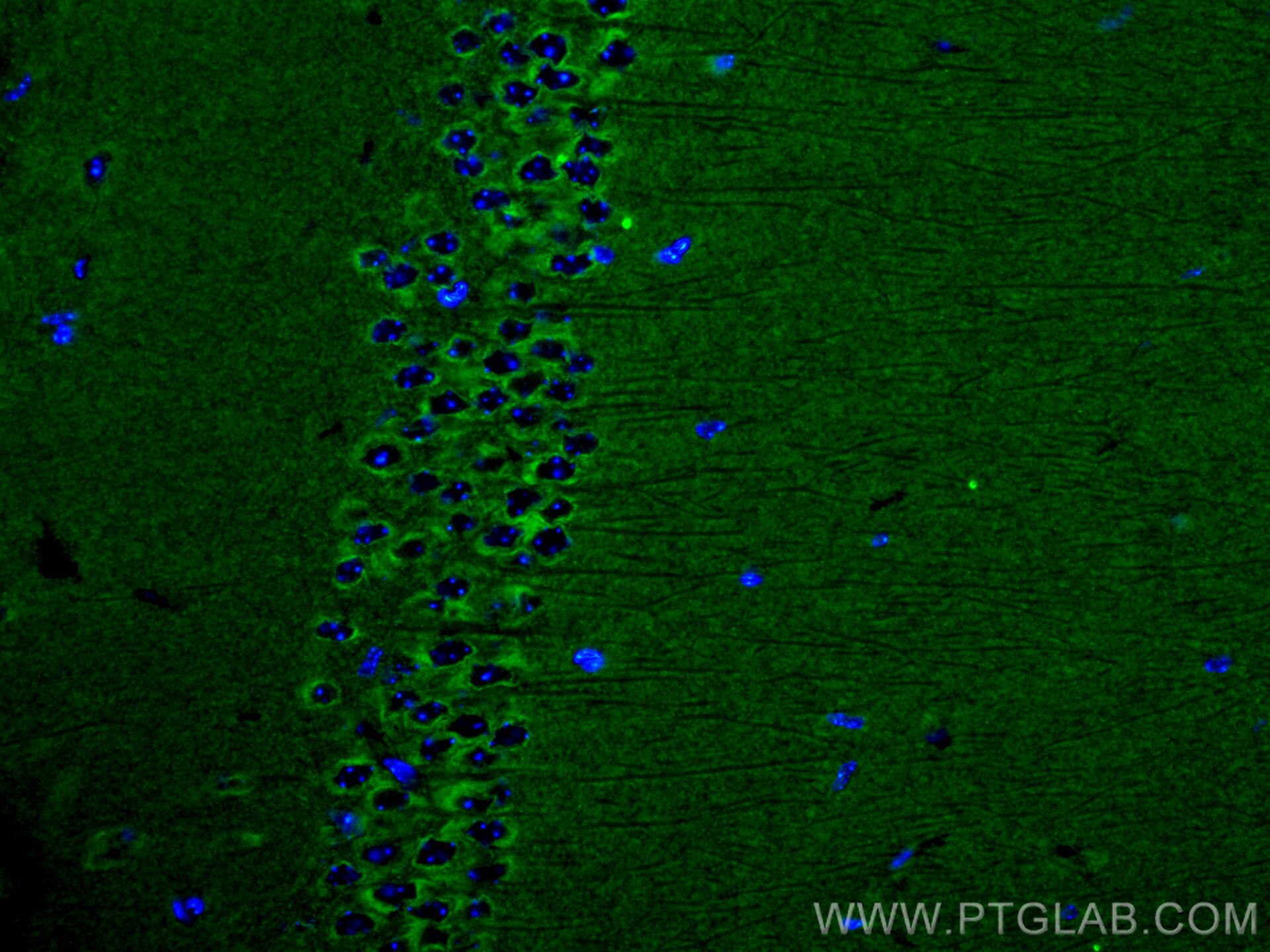
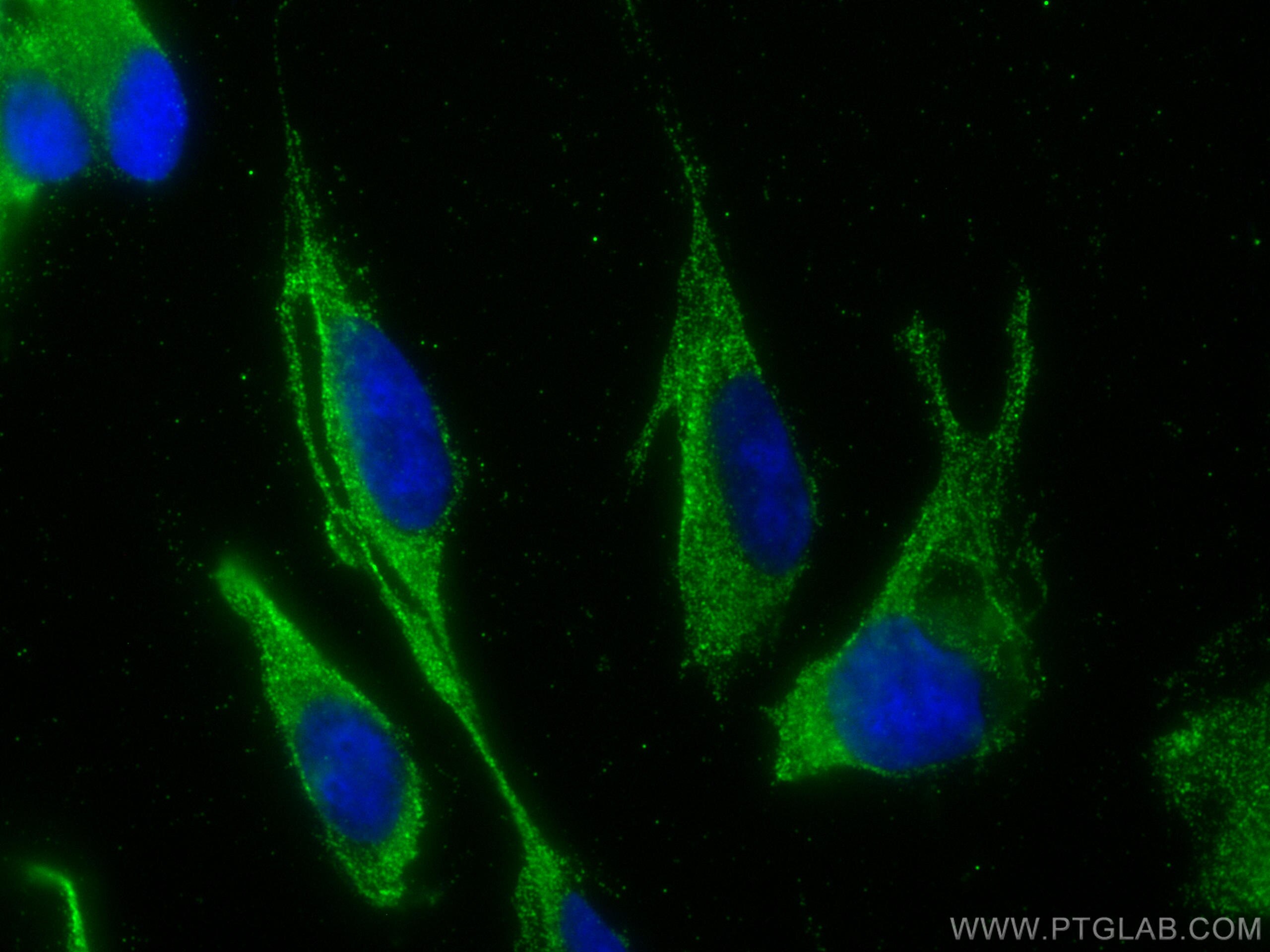
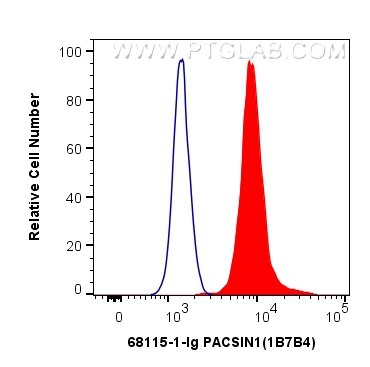
Geprüfte Anwendungen
Produktinformation
68115-1-PBS bindet in WB, IHC, IF/ICC, IF-P, FC (Intra), Indirect ELISA PACSIN1 und zeigt Reaktivität mit Hausschwein, Huhn, human, Kaninchen, Maus, Ratten
| Getestete Reaktivität | Hausschwein, Huhn, human, Kaninchen, Maus, Ratte |
| Wirt / Isotyp | Maus / IgG1 |
| Klonalität | Monoklonal |
| Typ | Antikörper |
| Immunogen | PACSIN1 fusion protein Ag4102 |
| Vollständiger Name | protein kinase C and casein kinase substrate in neurons 1 |
| Berechnetes Molekulargewicht | 444 aa, 51 kDa |
| Beobachtetes Molekulargewicht | 48-51 kDa |
| GenBank-Zugangsnummer | BC040228 |
| Gene symbol | PACSIN1 |
| Gene ID (NCBI) | 29993 |
| Konjugation | Unkonjugiert |
| Form | Liquid |
| Reinigungsmethode | Protein-G-Reinigung |
| Lagerungspuffer | PBS only |
| Lagerungsbedingungen | Store at -80°C. 20ul Größen enthalten 0,1% BSA. |
Hintergrundinformationen
PACSIN1 (also known as syndapin-1) is a member of the protein kinase C and casein kinase substrate in neurons (PACSIN) family. In mammals, the PACSIN family is comprised of three members, PACSIN1, PACSIN2, and PACSIN3 (PMID: 34990060). PACSIN1 is expressed mainly in neurons, whereas PACSIN2 is ubiquitously expressed in all tissues, and PACSIN3 is expressed mainly in skeletal muscle and the heart (PMID: 23668323). All of these three members contain an N-terminal F-BAR domain and a C-terminal SH3 domain. PACSIN1 plays a role in endocytosis and endosomal recycling. Meanwhile, it has a role in actin remodeling and microtubule nucleation and also plays a particular role in membrane shaping and reconstruction (PMID: 23035120; 34422904). PACSIN1 is involved in neuromorphogenesis and the regulation of the nervous system, and the inappropriate expression of PACSIN1 has been associated with some neurological diseases, including schizophrenia, Alzheimer's disease, and Huntington's disease (PMID: 34990060).


