PCDH15 Polyklonaler Antikörper
PCDH15 Polyklonal Antikörper für WB, IF/ICC, Indirect ELISA
Wirt / Isotyp
Kaninchen / IgG
Getestete Reaktivität
human, Maus, Ratte
Anwendung
WB, IF/ICC, Indirect ELISA
Konjugation
Unkonjugiert
Kat-Nr. : 20719-1-PBS
Synonyme
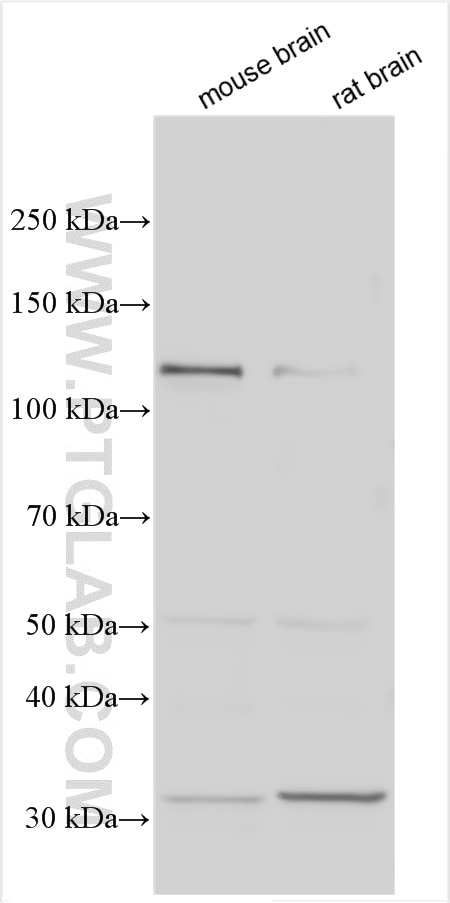
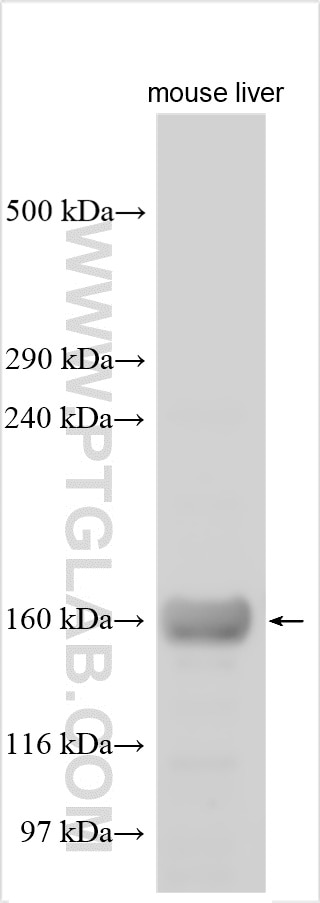
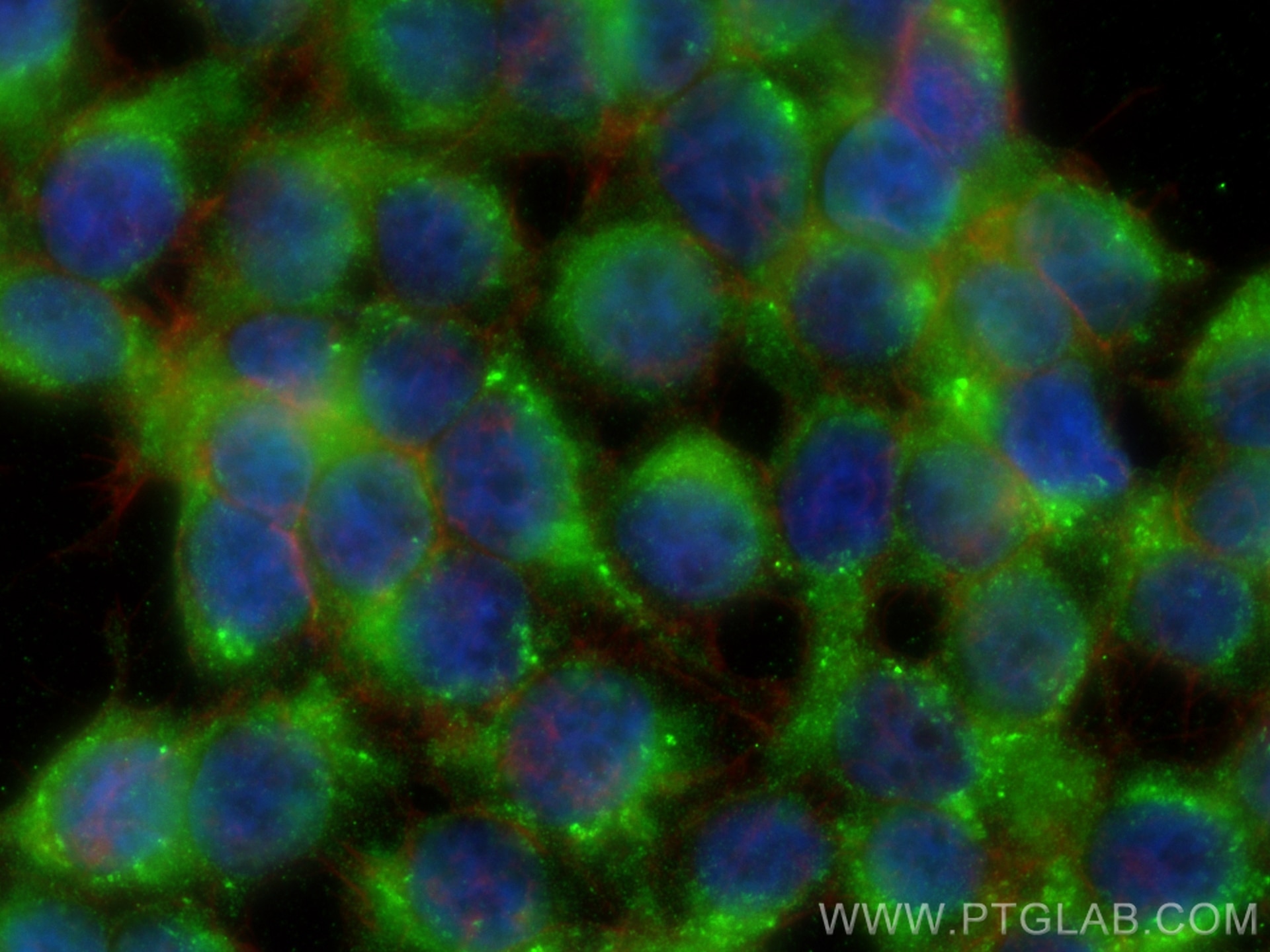
Geprüfte Anwendungen
Produktinformation
20719-1-PBS bindet in WB, IF/ICC, Indirect ELISA PCDH15 und zeigt Reaktivität mit human, Maus, Ratten
| Getestete Reaktivität | human, Maus, Ratte |
| Wirt / Isotyp | Kaninchen / IgG |
| Klonalität | Polyklonal |
| Typ | Antikörper |
| Immunogen | Peptid |
| Vollständiger Name | protocadherin 15 |
| Berechnetes Molekulargewicht | 216 kDa |
| Beobachtetes Molekulargewicht | 120-160 kDa, 50 kDa |
| GenBank-Zugangsnummer | NM_033056 |
| Gene symbol | PCDH15 |
| Gene ID (NCBI) | 65217 |
| Konjugation | Unkonjugiert |
| Form | Liquid |
| Reinigungsmethode | Antigen-Affinitätsreinigung |
| Lagerungspuffer | PBS only |
| Lagerungsbedingungen | Store at -80°C. 20ul Größen enthalten 0,1% BSA. |
Hintergrundinformationen
Protocadherin-15 (PCDH15) belongs to the cadherin superfamily that mediates calcium-dependent cell-cell adhesion and plays an important role in the maintenance of normal tissue architecture. A homozygous variant in PCDH15 results in Usher syndrome type 1F (USH1F) which leads to congenital hearing loss and syndromicretinitis pigmentosa (PMID: 38014037). Multiple isoforms of PCDH15 have been described, including 216-250 kDa (full-length), 150-180 kDa, 100-120 kDa, 50-65 kDa, and 25-40 kDa (PMID: 22363448; 15928608; 14570705; 23035094; 28883094).


