PHD1 Polyklonaler Antikörper
PHD1 Polyklonal Antikörper für WB, Indirect ELISA
Wirt / Isotyp
Kaninchen / IgG
Getestete Reaktivität
human, Maus
Anwendung
WB, Indirect ELISA
Konjugation
Unkonjugiert
Kat-Nr. : 12984-1-PBS
Synonyme
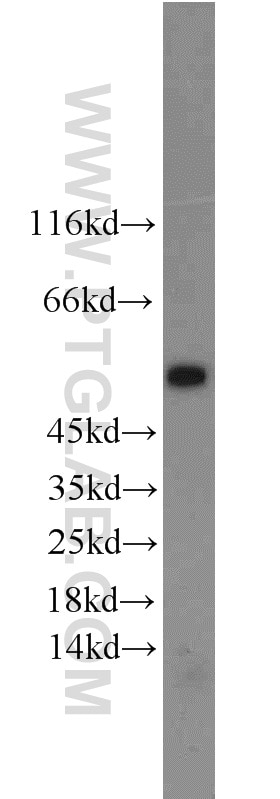
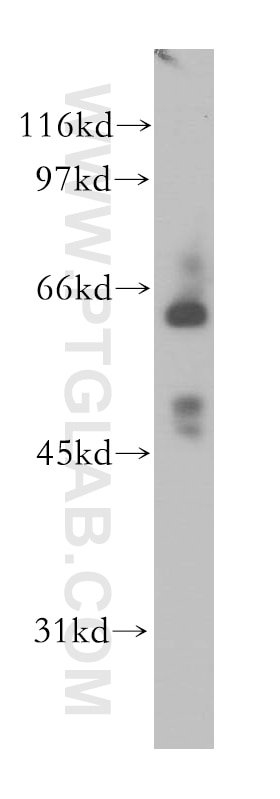
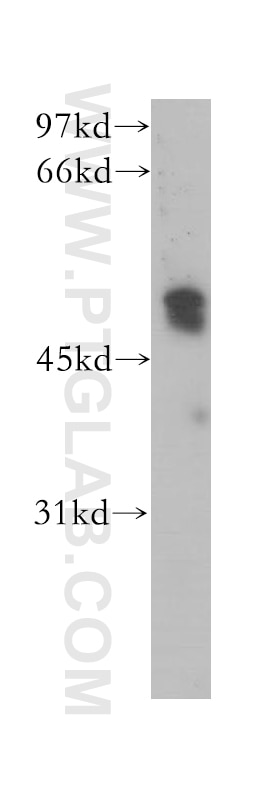
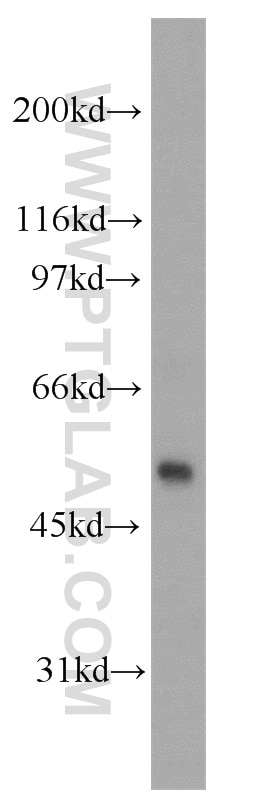
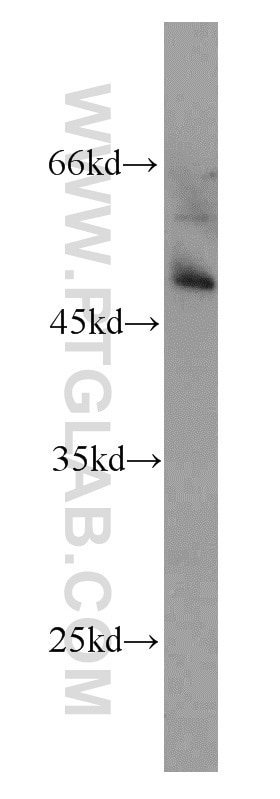
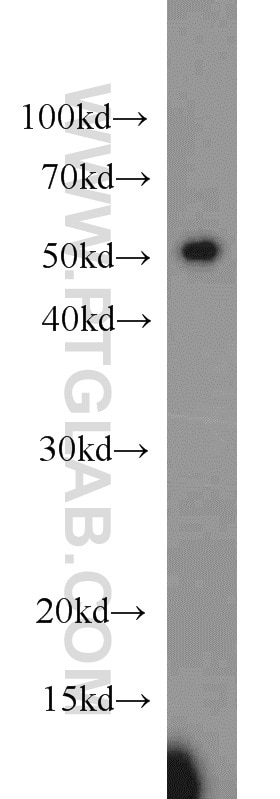
Geprüfte Anwendungen
Produktinformation
12984-1-PBS bindet in WB, Indirect ELISA PHD1 und zeigt Reaktivität mit human, Maus
| Getestete Reaktivität | human, Maus |
| Wirt / Isotyp | Kaninchen / IgG |
| Klonalität | Polyklonal |
| Typ | Antikörper |
| Immunogen | PHD1 fusion protein Ag3616 |
| Vollständiger Name | egl nine homolog 2 (C. elegans) |
| Berechnetes Molekulargewicht | 407 aa, 44 kDa |
| Beobachtetes Molekulargewicht | 48 kDa |
| GenBank-Zugangsnummer | BC036051 |
| Gene symbol | PHD1 |
| Gene ID (NCBI) | 112398 |
| Konjugation | Unkonjugiert |
| Form | Liquid |
| Reinigungsmethode | Antigen-Affinitätsreinigung |
| Lagerungspuffer | PBS only |
| Lagerungsbedingungen | Store at -80°C. 20ul Größen enthalten 0,1% BSA. |
Hintergrundinformationen
EGLN2, also named as PHD1, EIT6 and HPH-3, catalyzes the post-translational formation of 4-hydroxyproline in hypoxia-inducible factor (HIF) alpha proteins. It hydroxylates HIF-1 alpha at 'Pro-402' and 'Pro-564', and HIF-2 alpha. EGLN2 functions as a cellular oxygen sensor and, under normoxic conditions, targets HIF through the hydroxylation for proteasomal degradation via the von Hippel-Lindau ubiquitination complex. It may play a role in cell growth regulation.


