- Featured Product
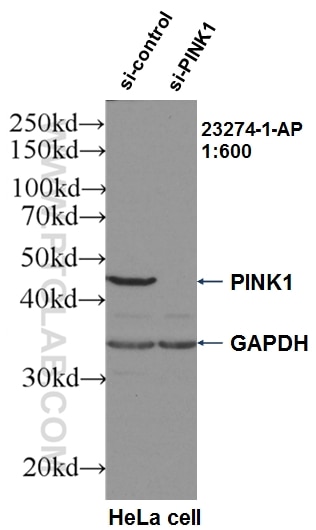
- KD/KO Validated
PINK1 Polyklonaler Antikörper
PINK1 Polyklonal Antikörper für WB, IHC, IF-P, ELISA
Wirt / Isotyp
Kaninchen / IgG
Getestete Reaktivität
human, Maus, Ratte
Anwendung
WB, IHC, IF-P, ELISA
Konjugation
Unkonjugiert
Kat-Nr. : 23274-1-PBS
Synonyme
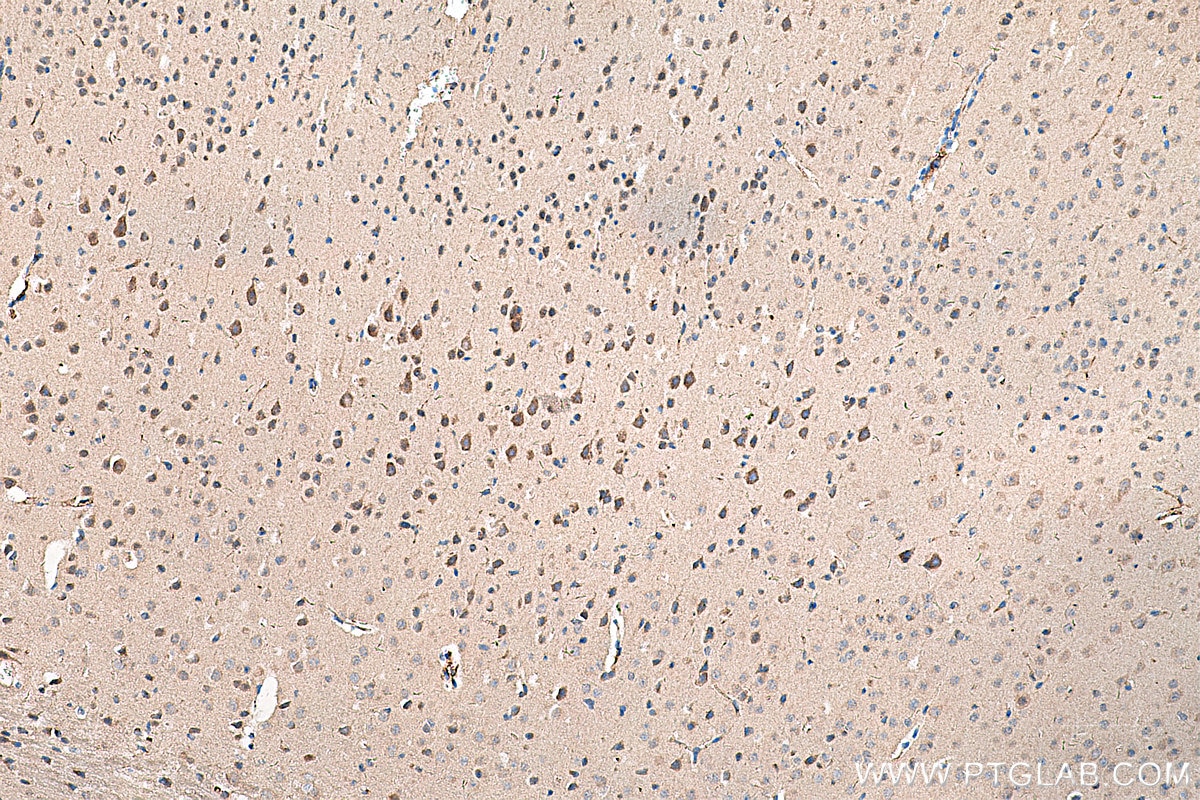
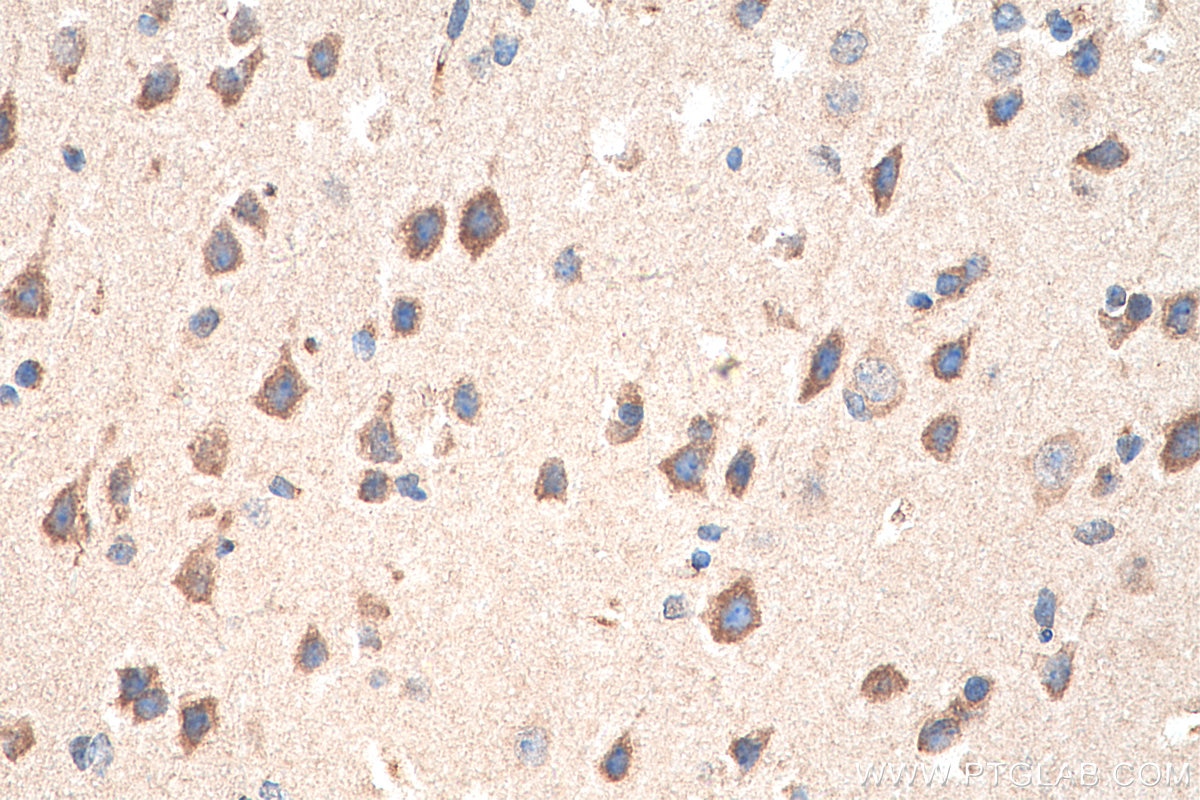
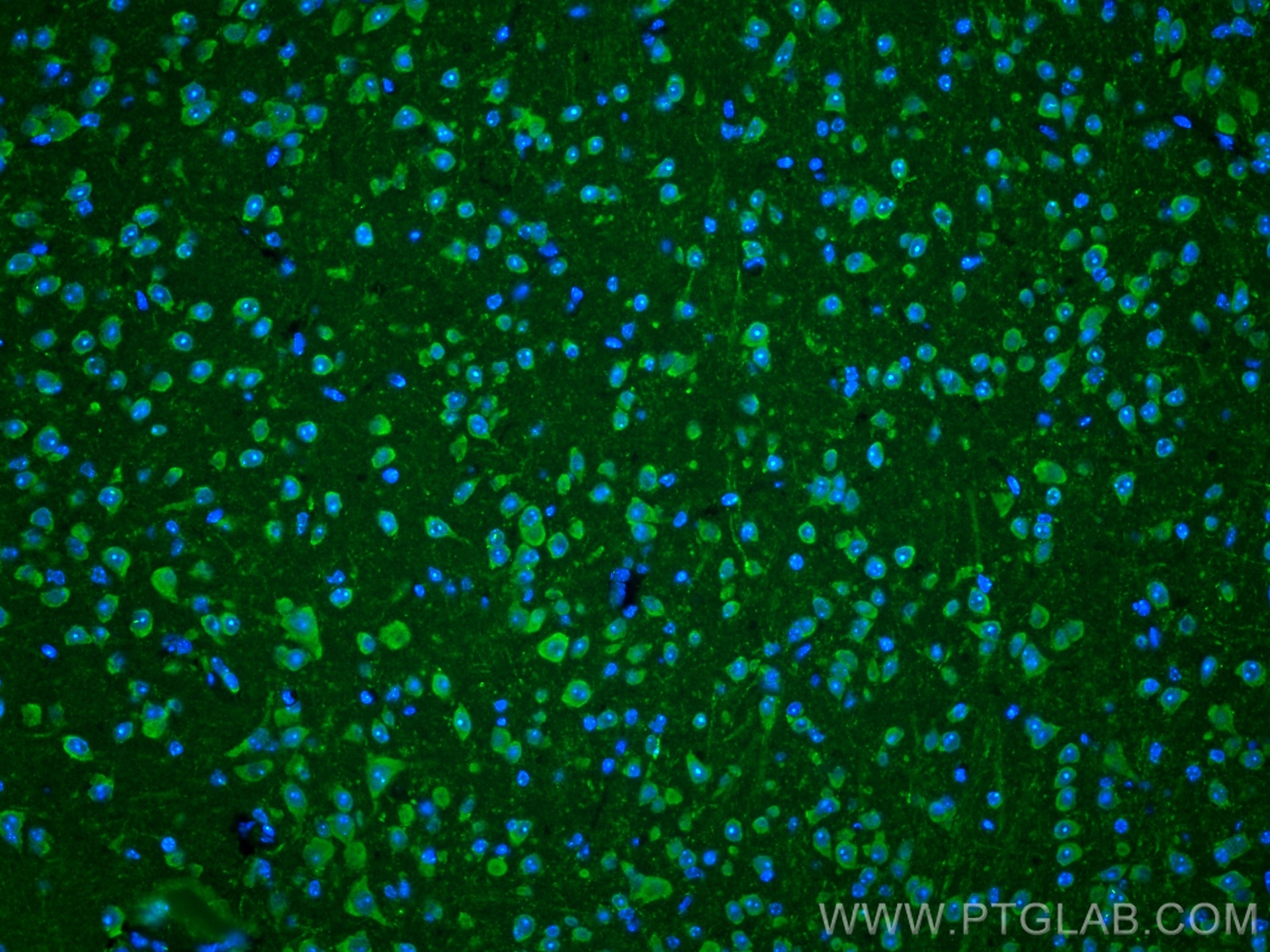
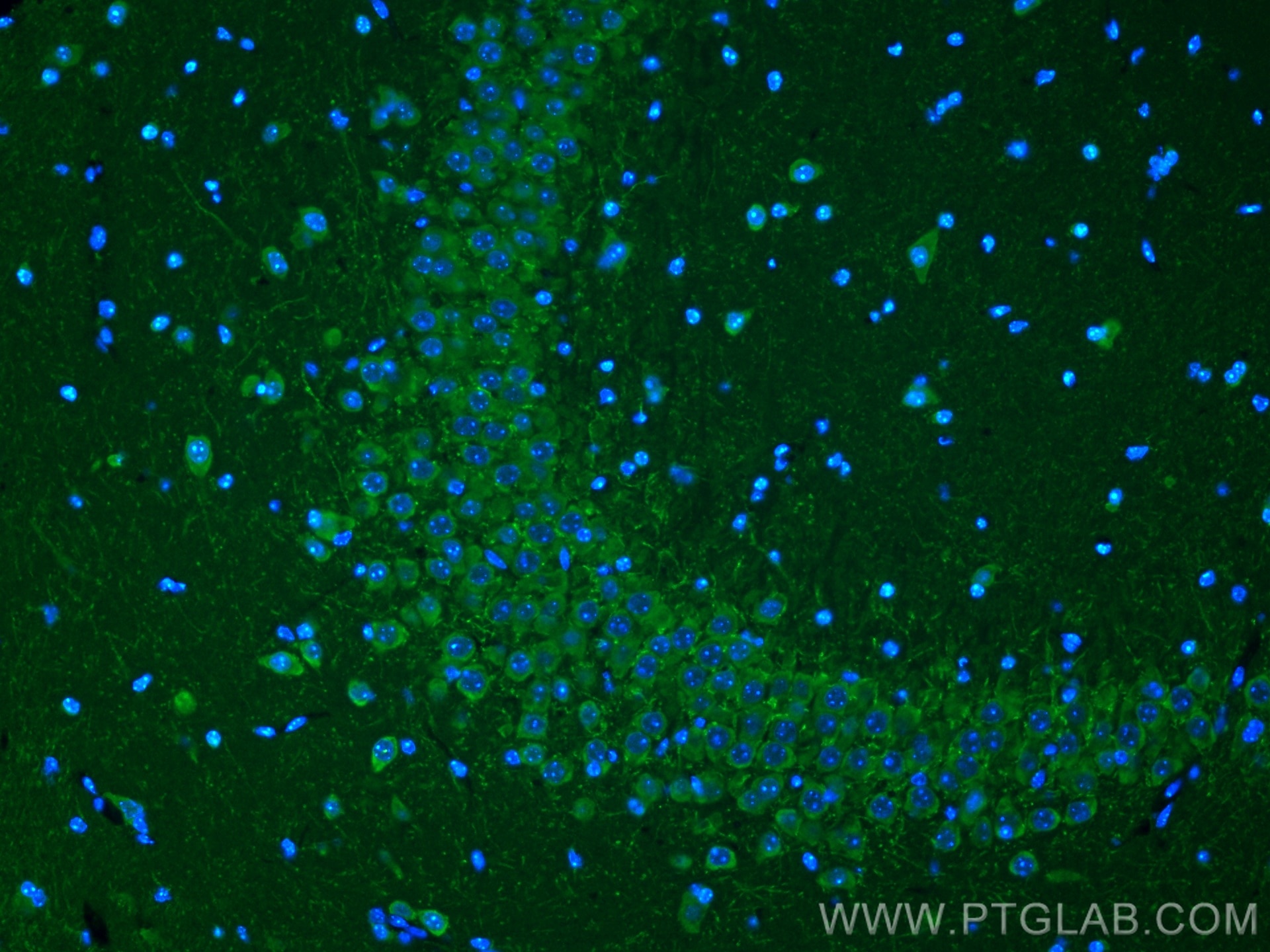
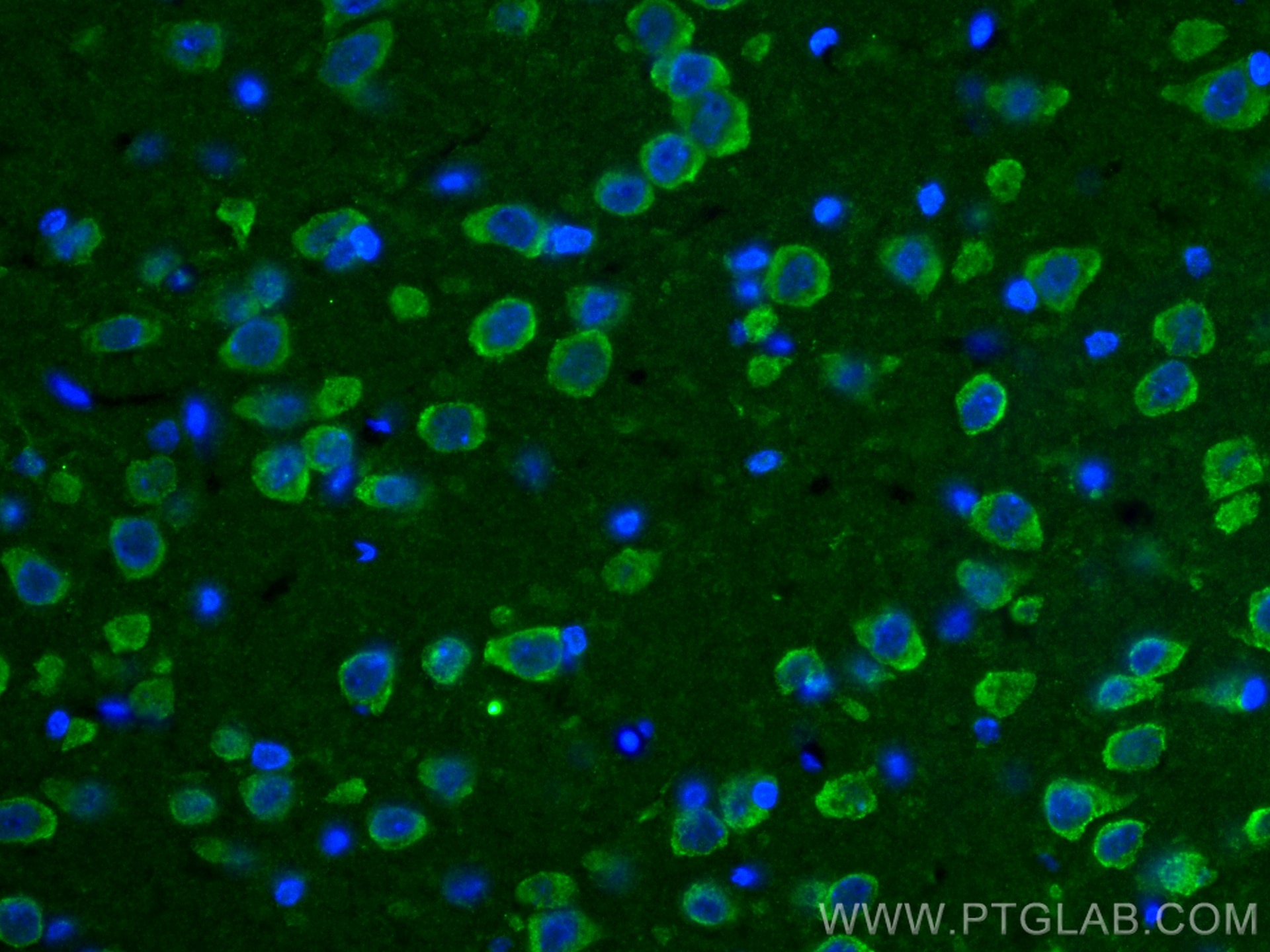
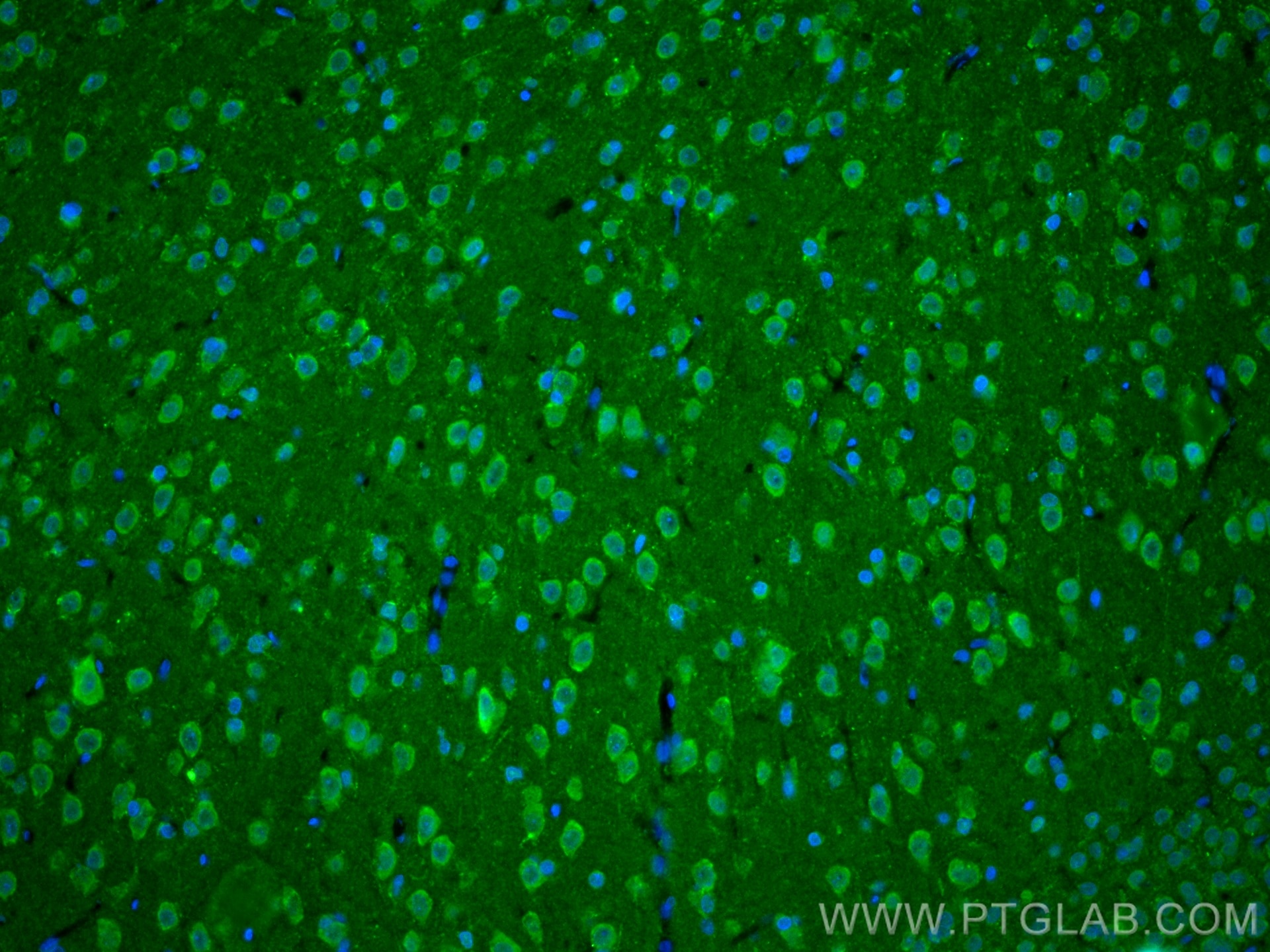
Geprüfte Anwendungen
Produktinformation
23274-1-PBS bindet in WB, IHC, IF-P, ELISA PINK1 und zeigt Reaktivität mit human, Maus, Ratten
| Getestete Reaktivität | human, Maus, Ratte |
| Wirt / Isotyp | Kaninchen / IgG |
| Klonalität | Polyklonal |
| Typ | Antikörper |
| Immunogen | PINK1 fusion protein Ag19825 |
| Vollständiger Name | PTEN induced putative kinase 1 |
| Berechnetes Molekulargewicht | 581 aa, 63 kDa |
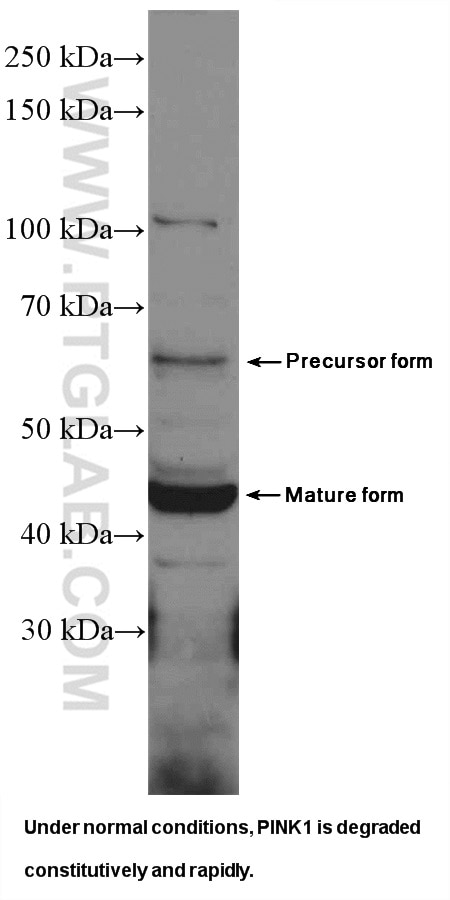
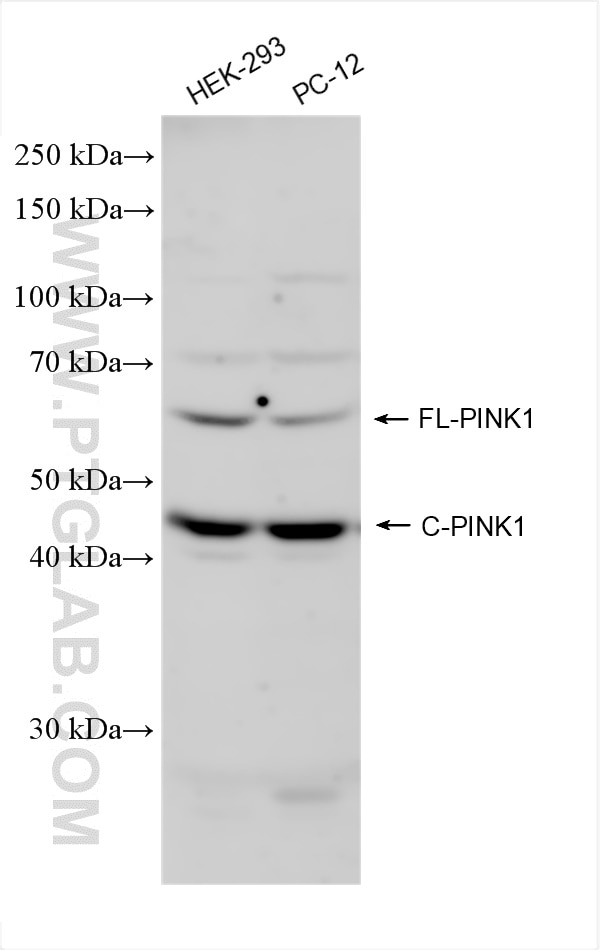
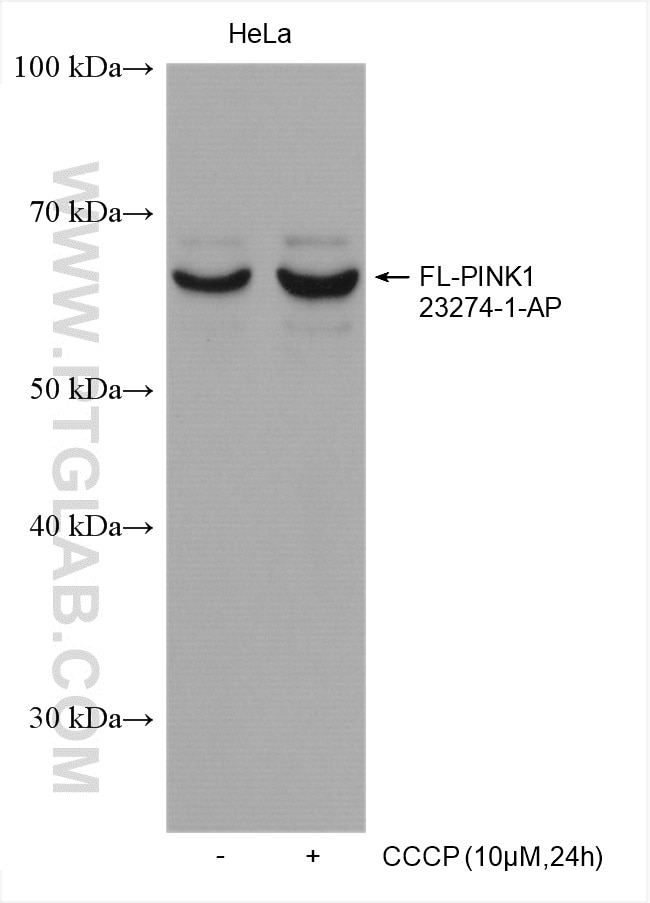
| Beobachtetes Molekulargewicht | 65 kDa, 45 kDa |
| GenBank-Zugangsnummer | BC028215 |
| Gene symbol | PINK1 |
| Gene ID (NCBI) | 65018 |
| Konjugation | Unkonjugiert |
| Form | Liquid |
| Reinigungsmethode | Antigen-affinitätsgereinigt |
| Lagerungspuffer | PBS only |
| Lagerungsbedingungen | Store at -80°C. 20ul Größen enthalten 0,1% BSA. |
Hintergrundinformationen
PINK1 is a mitochondrial serine/threonine-protein kinase that protects cells from stress-induced mitochondrial dysfunction. The precursor of PINK1 (65 kDa) is synthesized in the cytosol and is imported into the outer membrane of mitochondria. PINK1 is further transferred into the inner membrane. The full-length PINK1 can be proteolytically processed into 52-55 kDa and 45-46 kDa forms (PMID: 18221368; 25108683; 18031932). The half-life of the mature form of PINK1 is very short and it was proposed that the proteasome is involved in its degradation (PMID: 23472196). The gene of PINK1 maps to chromosome 1p36.12. Two alternatively spliced variants exist, the shorter isoform (30 kDa) produced by alternative splicing. Mutations in the PINK1 gene cause autosomal recessive early-onset Parkinson's disease.


