PKC Iota Rekombinanter Antikörper
PKC Iota Rekombinant Antikörper für WB, Sandwich ELISA, Indirect ELISA, Sample test
Wirt / Isotyp
Kaninchen / IgG
Getestete Reaktivität
human, Maus, Ratte
Anwendung
WB, Sandwich ELISA, Indirect ELISA, Sample test
Konjugation
Unkonjugiert
CloneNo.
243126A4
Kat-Nr. : 85733-2-PBS
Synonyme
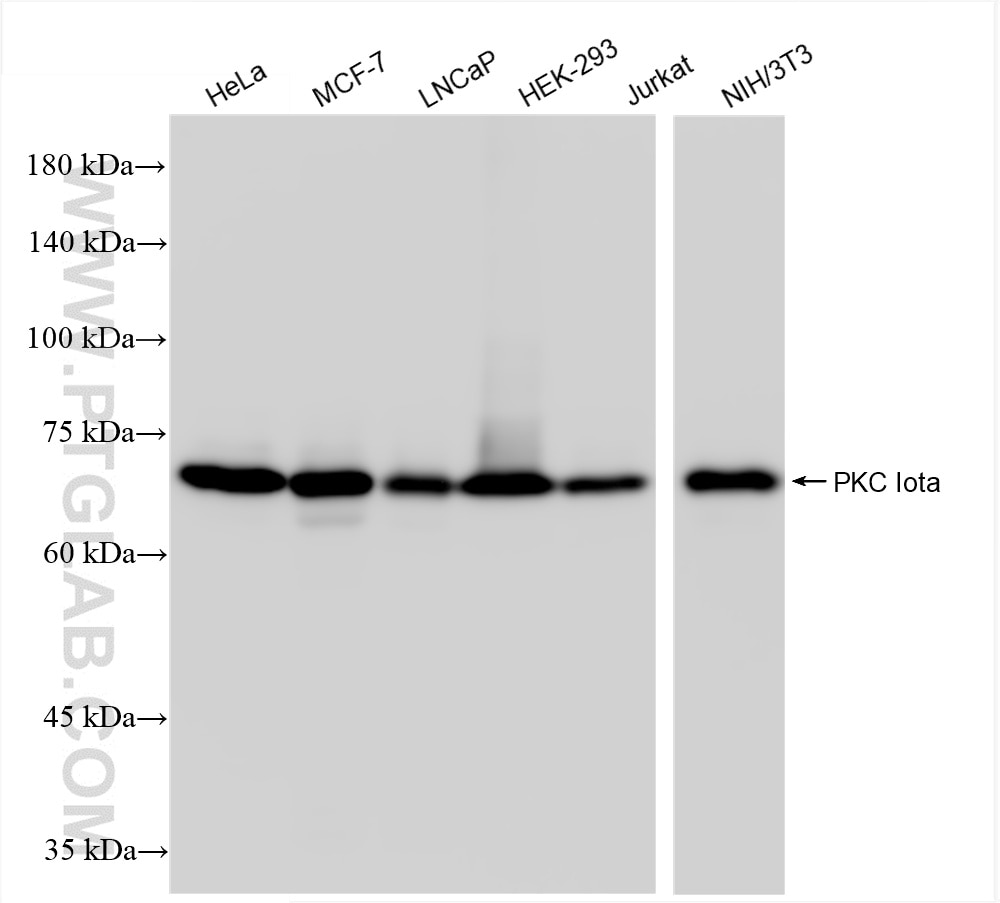
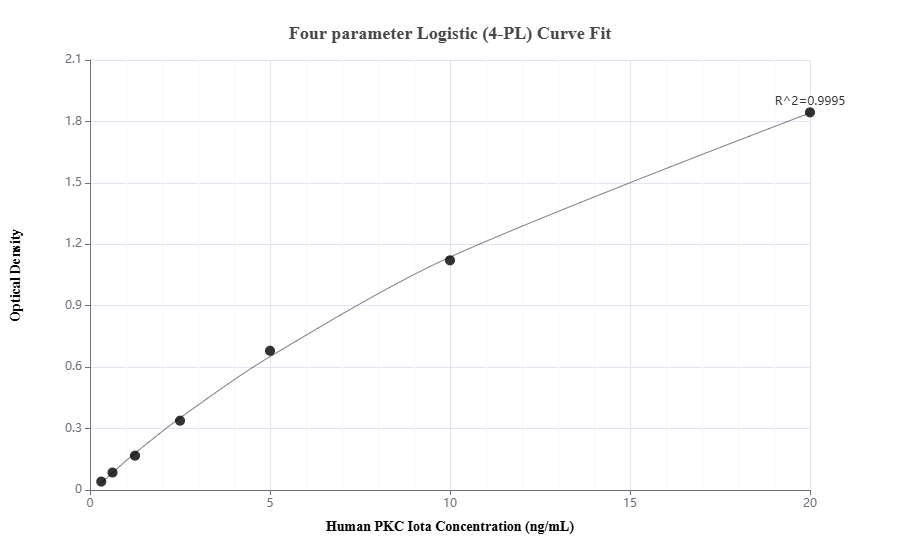
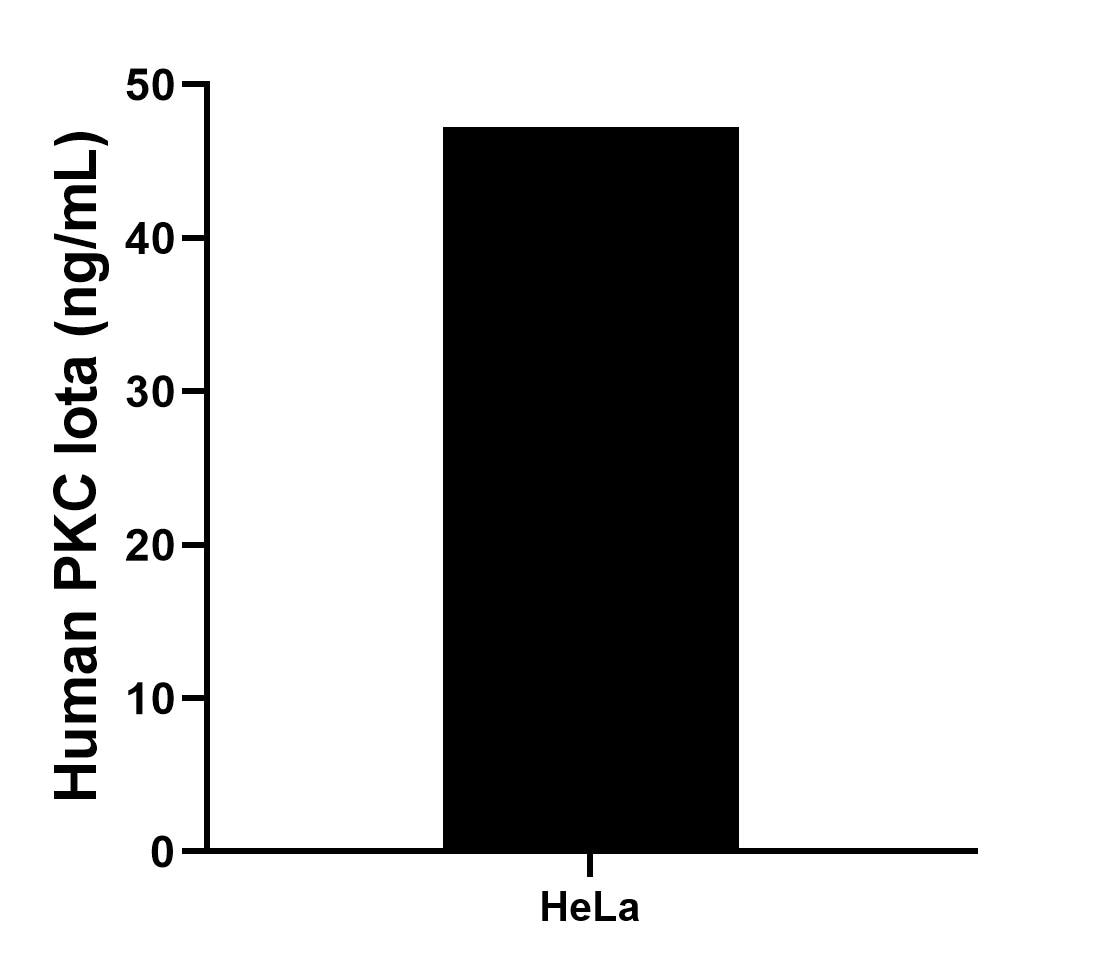
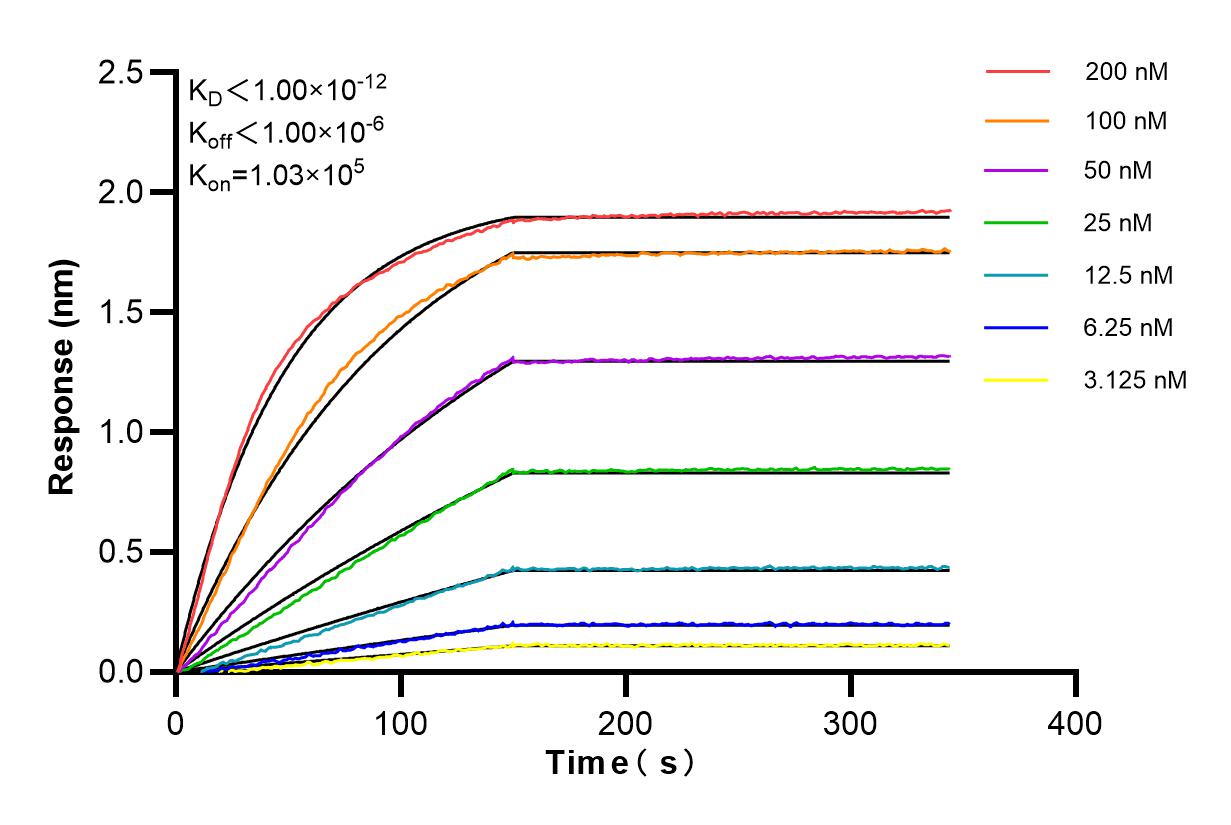
Geprüfte Anwendungen
Produktinformation
85733-2-PBS bindet in WB, Sandwich ELISA, Indirect ELISA, Sample test PKC Iota und zeigt Reaktivität mit human, Maus, Ratten
| Getestete Reaktivität | human, Maus, Ratte |
| Wirt / Isotyp | Kaninchen / IgG |
| Klonalität | Rekombinant |
| Typ | Antikörper |
| Immunogen | PKC Iota fusion protein Ag4990 |
| Vollständiger Name | protein kinase C, iota |
| Berechnetes Molekulargewicht | 68 kDa |
| Beobachtetes Molekulargewicht | 67 kDa |
| GenBank-Zugangsnummer | BC022016 |
| Gene symbol | PKC Iota |
| Gene ID (NCBI) | 5584 |
| Konjugation | Unkonjugiert |
| Form | Liquid |
| Reinigungsmethode | Protein-A-Reinigung |
| Lagerungspuffer | PBS only |
| Lagerungsbedingungen | Store at -80°C. 20ul Größen enthalten 0,1% BSA. |
Hintergrundinformationen
The atypical protein kinase C isoform PRKC iota (PRKCI) is a member of the protein kinase C (PKC) family of serine/threonine protein kinases. PKC family comprises at least eight members, which are differentially expressed and are involved in a wide variety of cellular processes. PRKC iota is calcium-independent and phospholipid-dependent. It is not activated by phorbolesters or diacylglycerol. This kinase can be recruited to vesicle tubular clusters (VTCs) by direct interaction with the small GTPase RAB2, where this kinase phosphorylates glyceraldehyde-3-phosphate dehydrogenase (GAPD/GAPDH) and plays a role in microtubule dynamics in the early secretory pathway. This kinase is found to be necessary for BCL-ABL-mediated resistance to drug-induced apoptosis and therefore protects leukemia cells against drug-induced apoptosis. PRKC iota plays a key role in cell proliferation, differentiation, and carcinogenesis, and it has been shown to be a human oncogene.


