PKIA Polyklonaler Antikörper
PKIA Polyklonal Antikörper für IHC, IF/ICC, Indirect ELISA
Wirt / Isotyp
Kaninchen / IgG
Getestete Reaktivität
human, Maus, Ratte
Anwendung
IHC, IF/ICC, Indirect ELISA
Konjugation
Unkonjugiert
Kat-Nr. : 11743-1-PBS
Synonyme
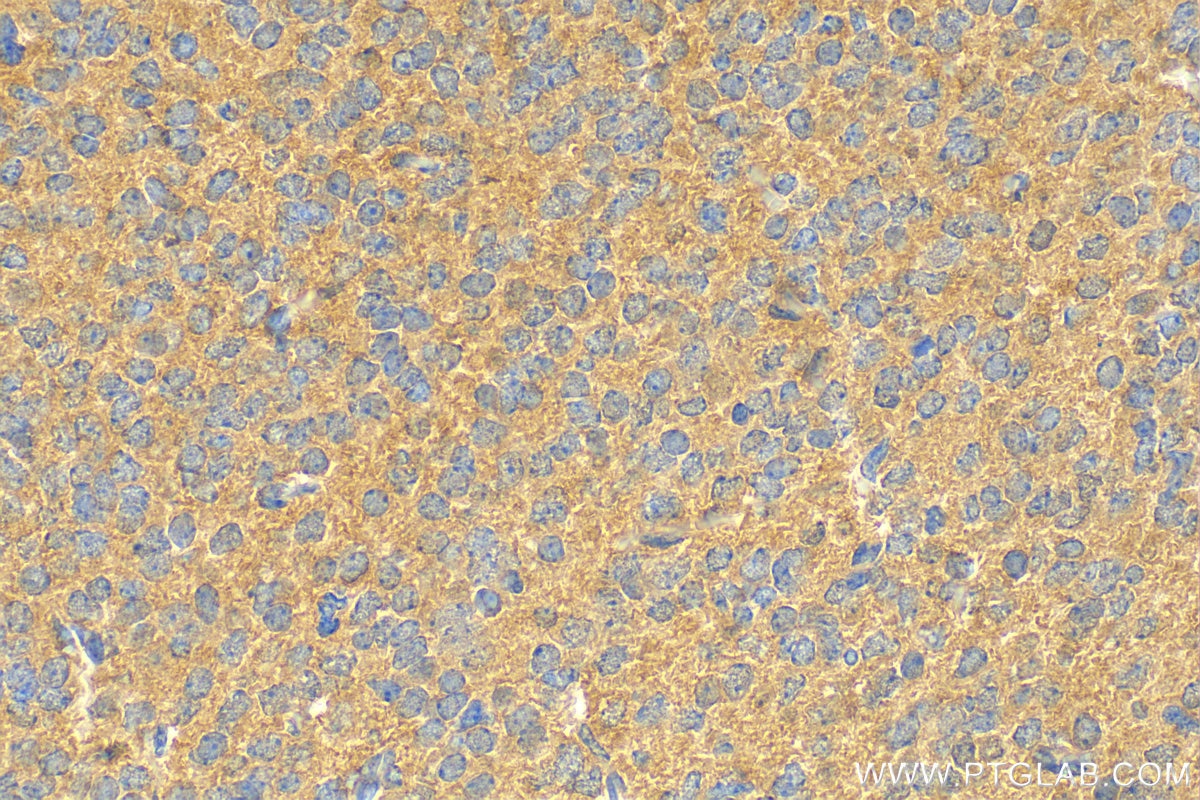
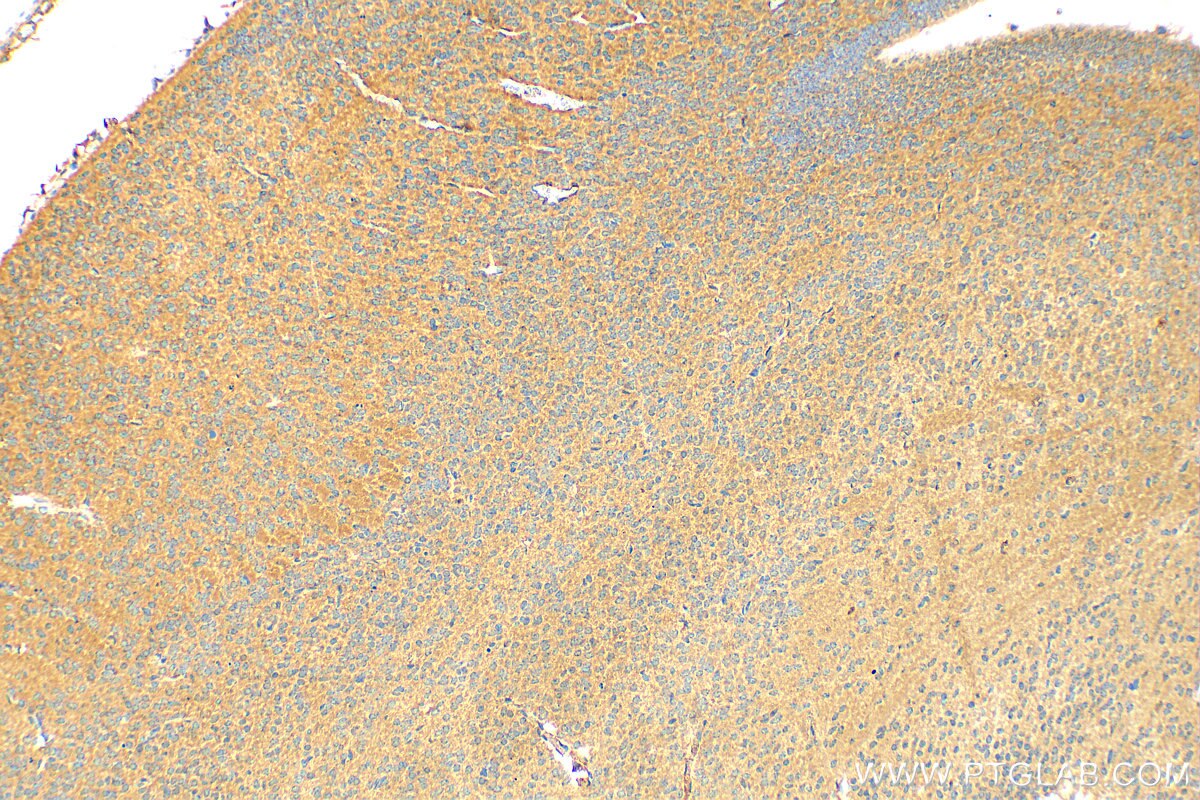
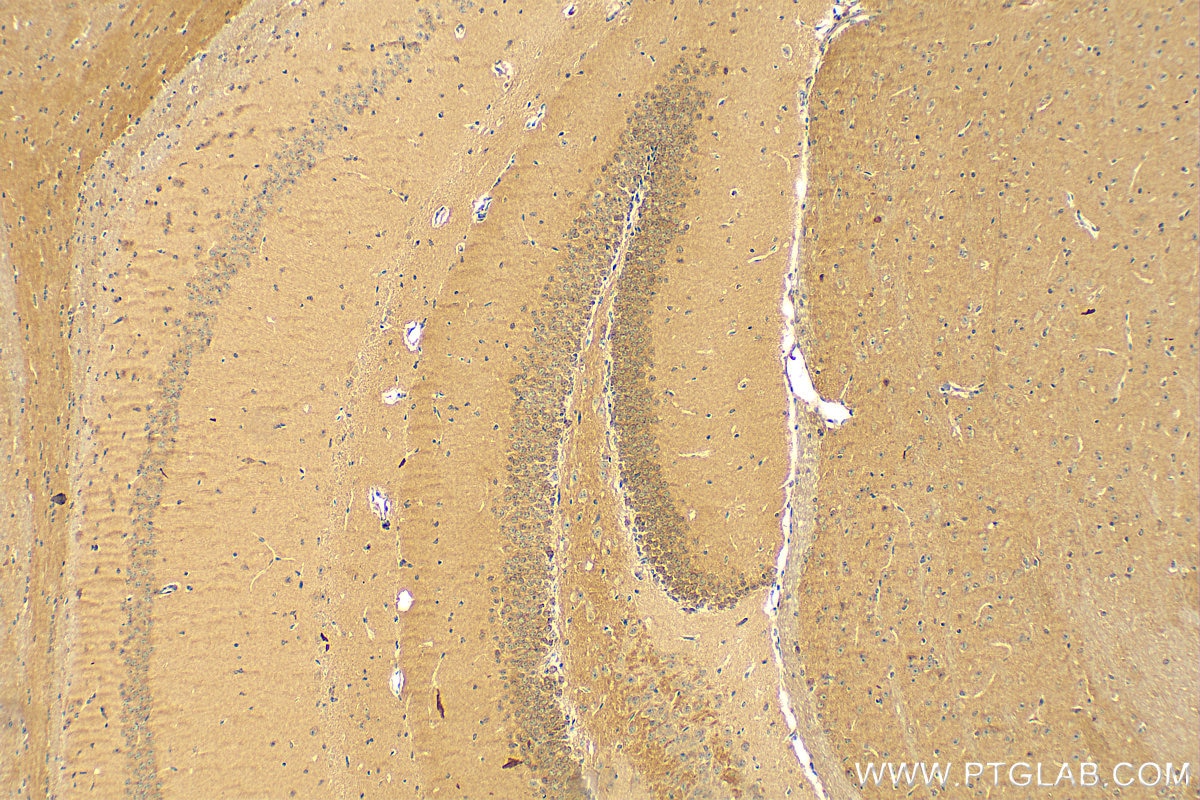
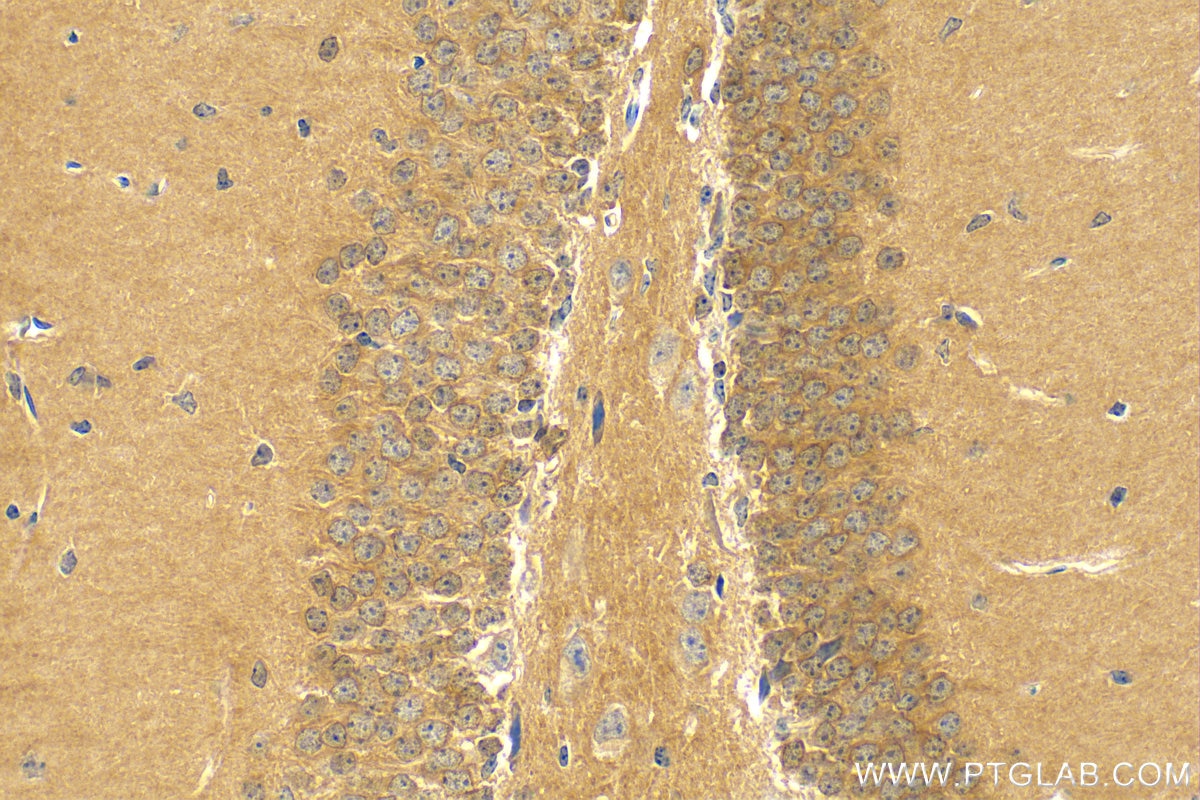
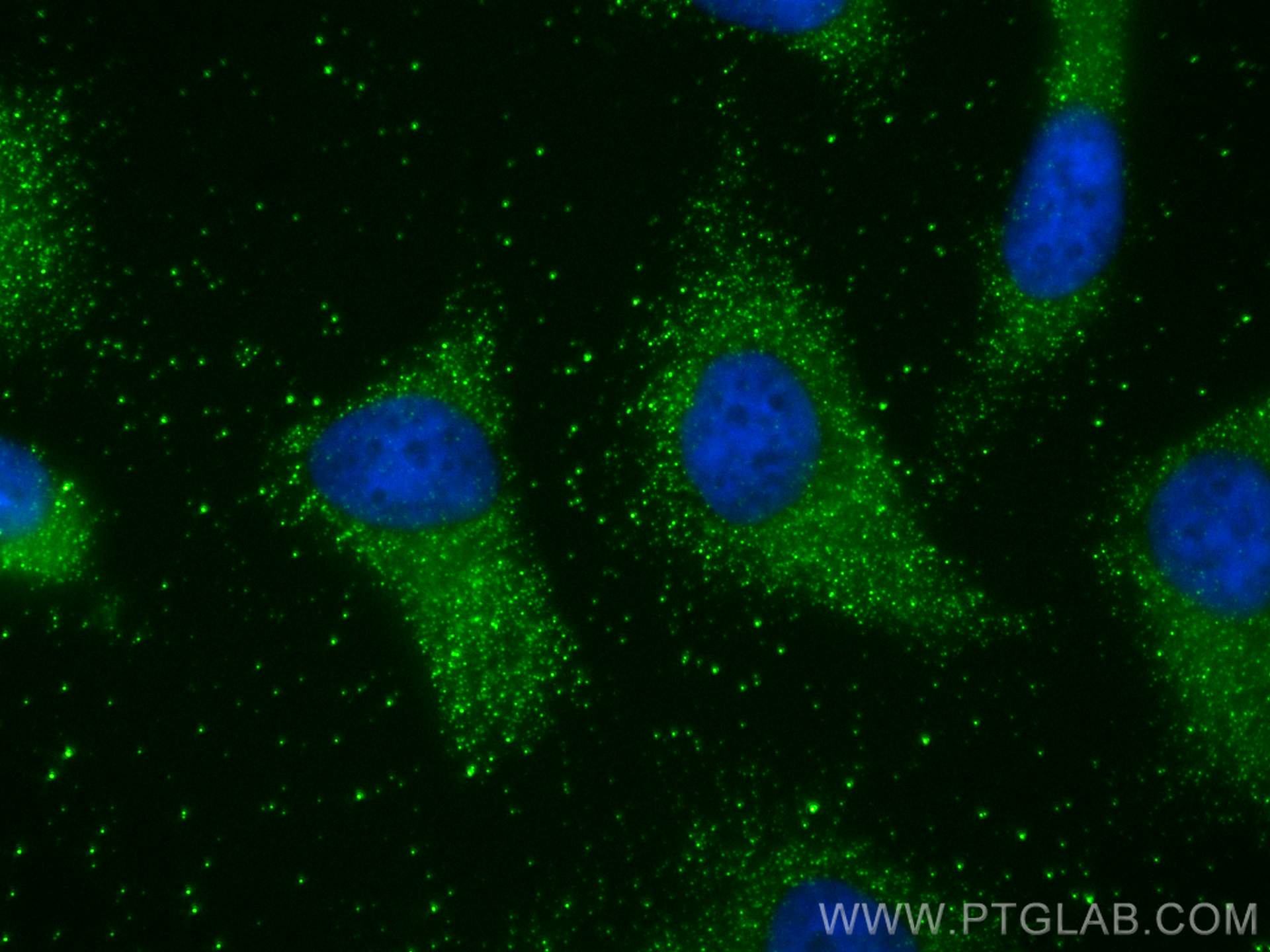
Geprüfte Anwendungen
Produktinformation
11743-1-PBS bindet in IHC, IF/ICC, Indirect ELISA PKIA und zeigt Reaktivität mit human, Maus, Ratten
| Getestete Reaktivität | human, Maus, Ratte |
| Wirt / Isotyp | Kaninchen / IgG |
| Klonalität | Polyklonal |
| Typ | Antikörper |
| Immunogen | PKIA fusion protein Ag2338 |
| Vollständiger Name | protein kinase (cAMP-dependent, catalytic) inhibitor alpha |
| Berechnetes Molekulargewicht | 76 aa, 8 kDa |
| GenBank-Zugangsnummer | BC022265 |
| Gene symbol | PKIA |
| Gene ID (NCBI) | 5569 |
| Konjugation | Unkonjugiert |
| Form | Liquid |
| Reinigungsmethode | Antigen-Affinitätsreinigung |
| Lagerungspuffer | PBS only |
| Lagerungsbedingungen | Store at -80°C. 20ul Größen enthalten 0,1% BSA. |
Hintergrundinformationen
cAMP-dependent protein kinase inhibitor alpha (PKIA) is also named as PRKACN1, and belongs to the PKI family. Among them, PKIA, a member of protein kinase A (PKA) inhibitor family, was found to be most significantly and highly expressed in susceptible animals (PMID:24910983). Decreased PKIA signaling would directly impact PKA activation, potentially inducing DRP1 phosphorylation and increasing ER Ca2+ stores (PMID:32152556). miR-129-5p activated PKA to regulate the phosphorylation of beta-catenin and cAMP-response element binding protein (CREB) by inhibiting PKIA (PMID:36222334).


