DNA-PKcs Rekombinanter Antikörper
DNA-PKcs Rekombinant Antikörper für WB, IHC, IF/ICC, FC (Intra), Indirect ELISA
Wirt / Isotyp
Kaninchen / IgG
Getestete Reaktivität
human
Anwendung
WB, IHC, IF/ICC, FC (Intra), Indirect ELISA
Konjugation
Unkonjugiert
CloneNo.
242676E6
Kat-Nr. : 85370-2-PBS
Synonyme
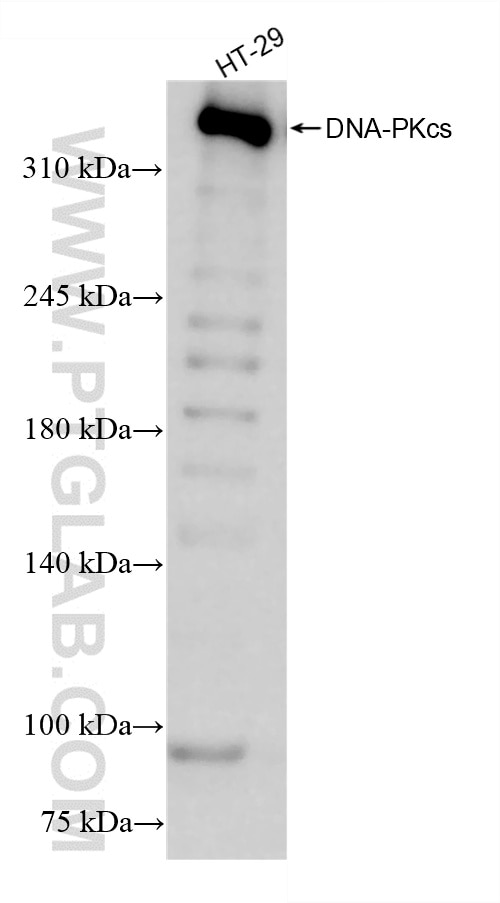
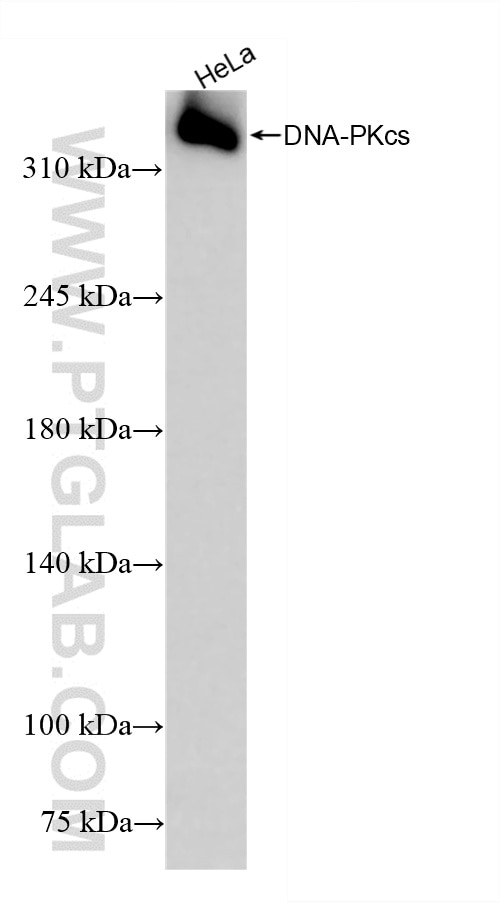
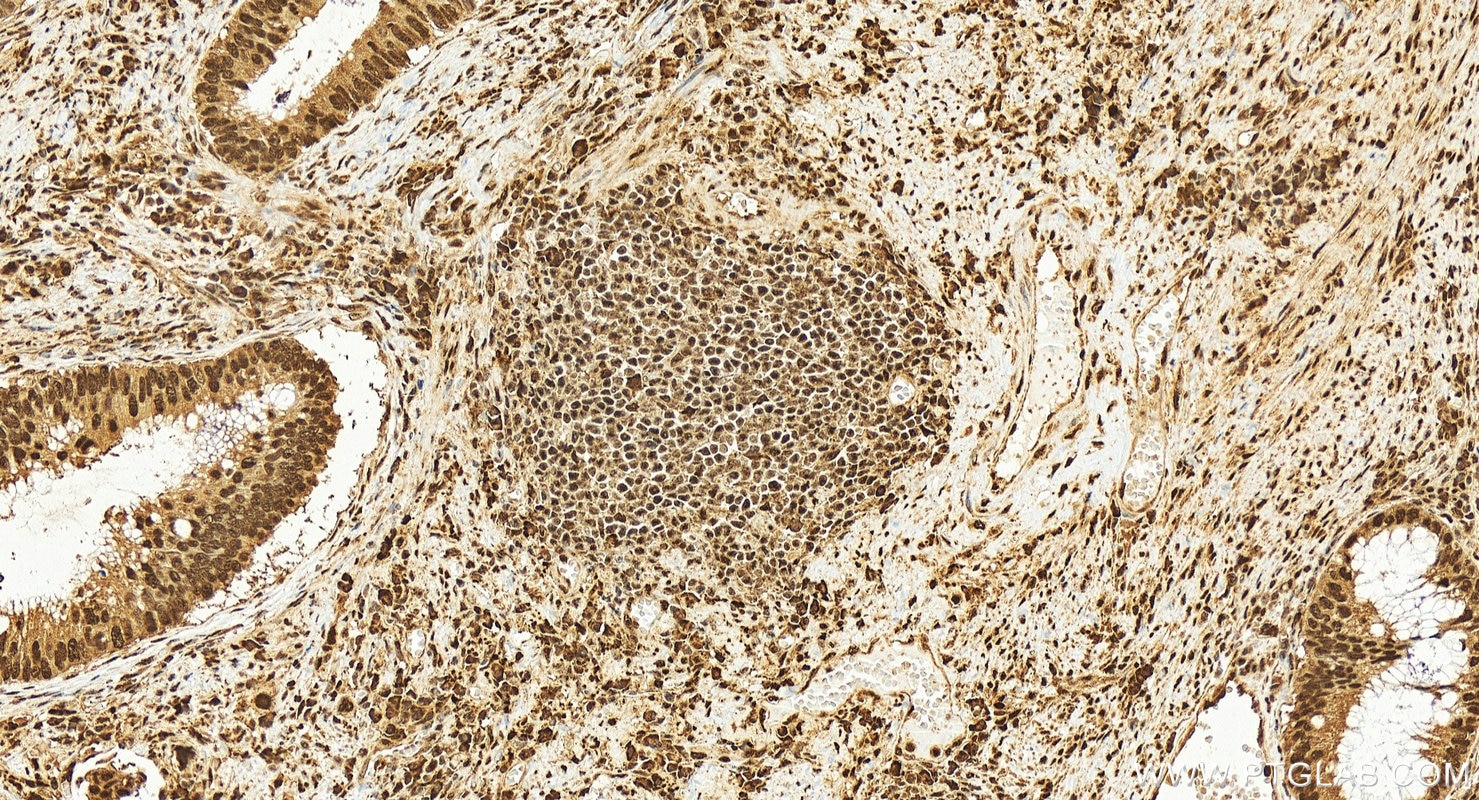
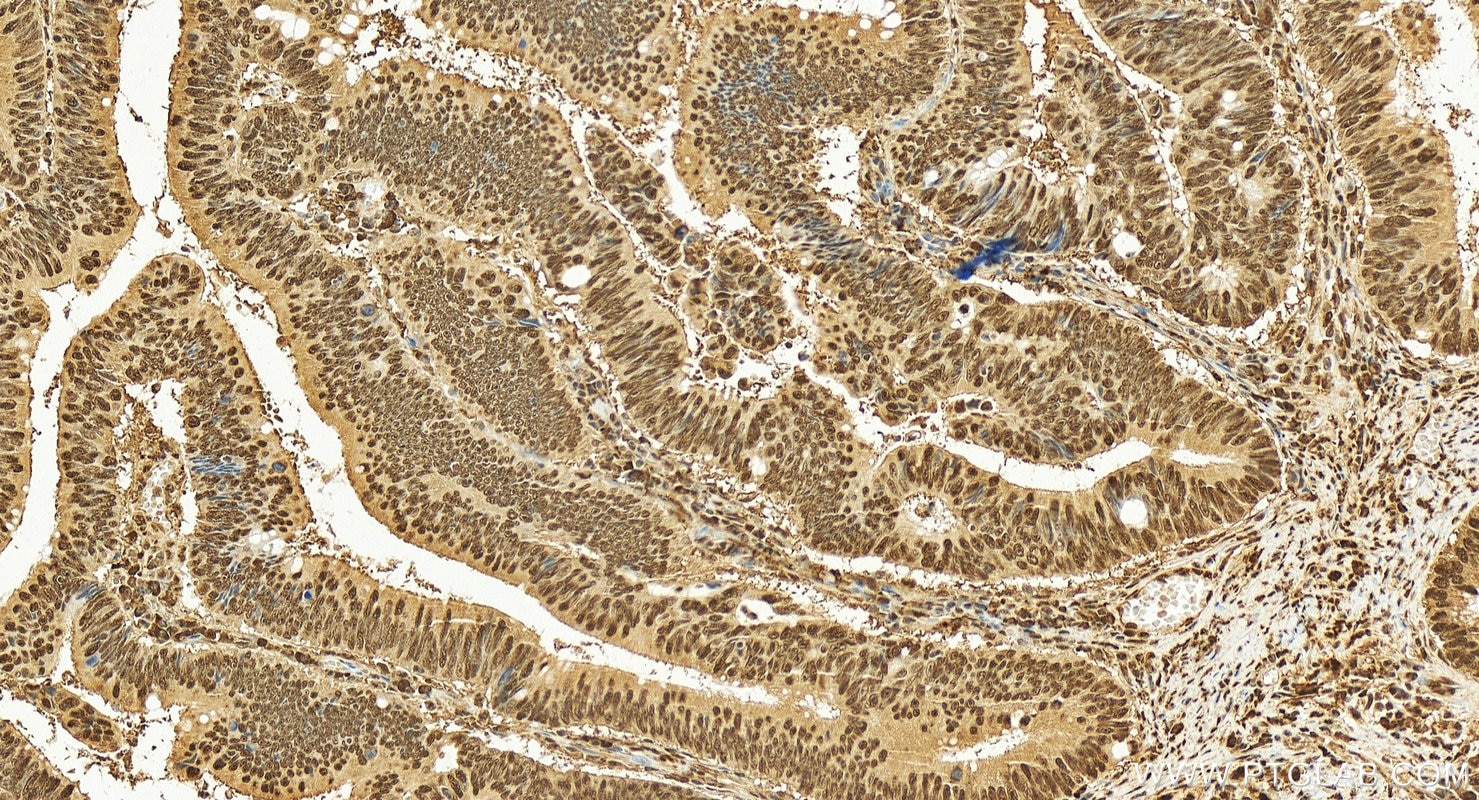
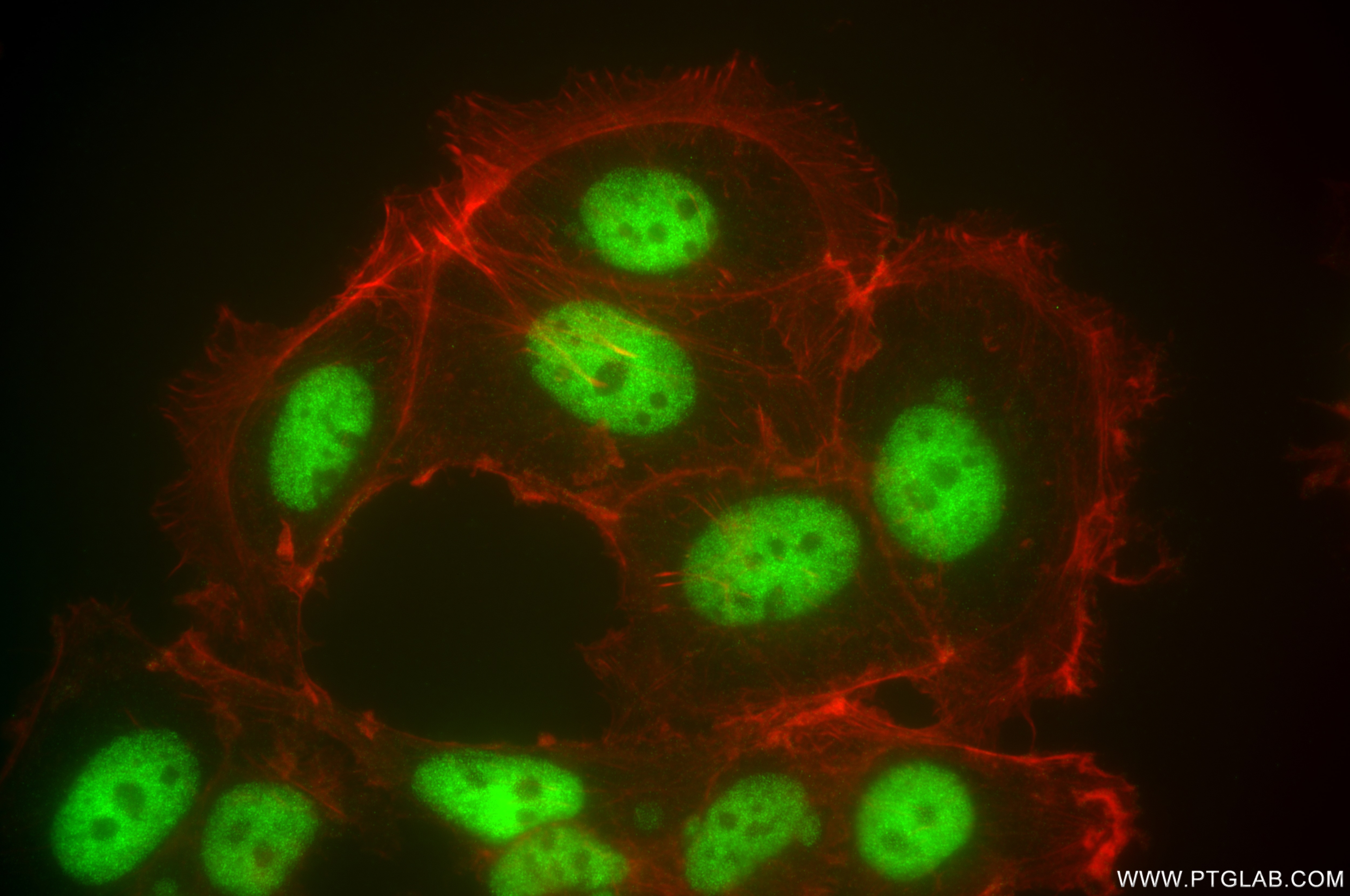
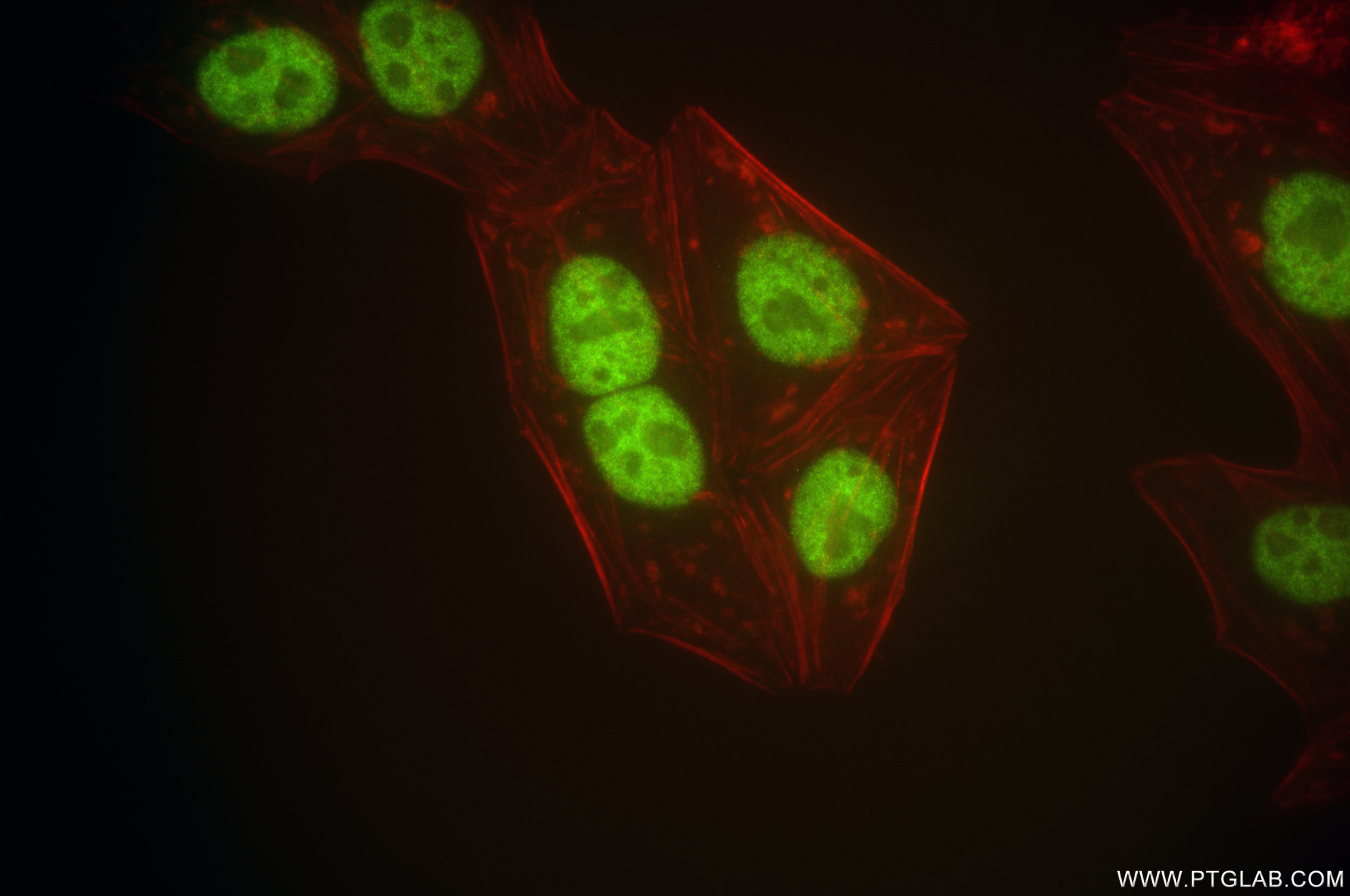

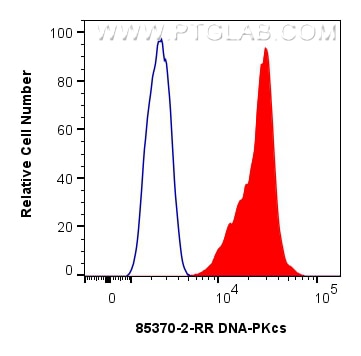
Geprüfte Anwendungen
Produktinformation
85370-2-PBS bindet in WB, IHC, IF/ICC, FC (Intra), Indirect ELISA DNA-PKcs und zeigt Reaktivität mit human
| Getestete Reaktivität | human |
| Wirt / Isotyp | Kaninchen / IgG |
| Klonalität | Rekombinant |
| Typ | Antikörper |
| Immunogen | Peptid |
| Vollständiger Name | protein kinase, DNA-activated, catalytic polypeptide |
| Berechnetes Molekulargewicht | 469 kDa |
| Beobachtetes Molekulargewicht | 350-460 kDa |
| GenBank-Zugangsnummer | NM_006904 |
| Gene symbol | PRKDC |
| Gene ID (NCBI) | 5591 |
| Konjugation | Unkonjugiert |
| Form | Liquid |
| Reinigungsmethode | Protein-A-Reinigung |
| Lagerungspuffer | PBS only |
| Lagerungsbedingungen | Store at -80°C. 20ul Größen enthalten 0,1% BSA. |
Hintergrundinformationen
PRKDC, also named as HYRC, HYRC1, DNPK1 and p460, belongs to the PI3/PI4-kinase family. PRKDC is a serine/threonine-protein kinase that acts as a molecular sensor for DNA damage. Involved in DNA nonhomologous end joining (NHEJ), PRKDC is required for double-strand break (DSB) repair and V(D)J recombination. PRKDC must be bound to DNA to express its catalytic properties. It promotes processing of hairpin DNA structures in V(D)J recombination by activation of the hairpin endonuclease artemis (DCLRE1C). It is required to protect and align broken ends of DNA. PRKDC may also act as a scaffold protein to aid the localization of DNA repair proteins to the site of damage. It is found at the ends of chromosomes, suggesting a further role in the maintenance of telomeric stability and the prevention of chromosomal end fusion. It also involved in modulation of transcription. It recognizes the substrate consensus sequence [ST]-Q. PRKDC phosphorylates 'Ser-139' of histone variant H2AX/H2AFX, thereby regulating DNA damage response mechanism.


