- Featured Product
- KD/KO Validated
PSMD9 Monoklonaler Antikörper
PSMD9 Monoklonal Antikörper für WB, IF/ICC, FC (Intra), Indirect ELISA
Wirt / Isotyp
Maus / IgG1
Getestete Reaktivität
human, Maus, Ratte
Anwendung
WB, IF/ICC, FC (Intra), Indirect ELISA
Konjugation
Unkonjugiert
CloneNo.
1H2G1
Kat-Nr. : 67338-1-PBS
Synonyme
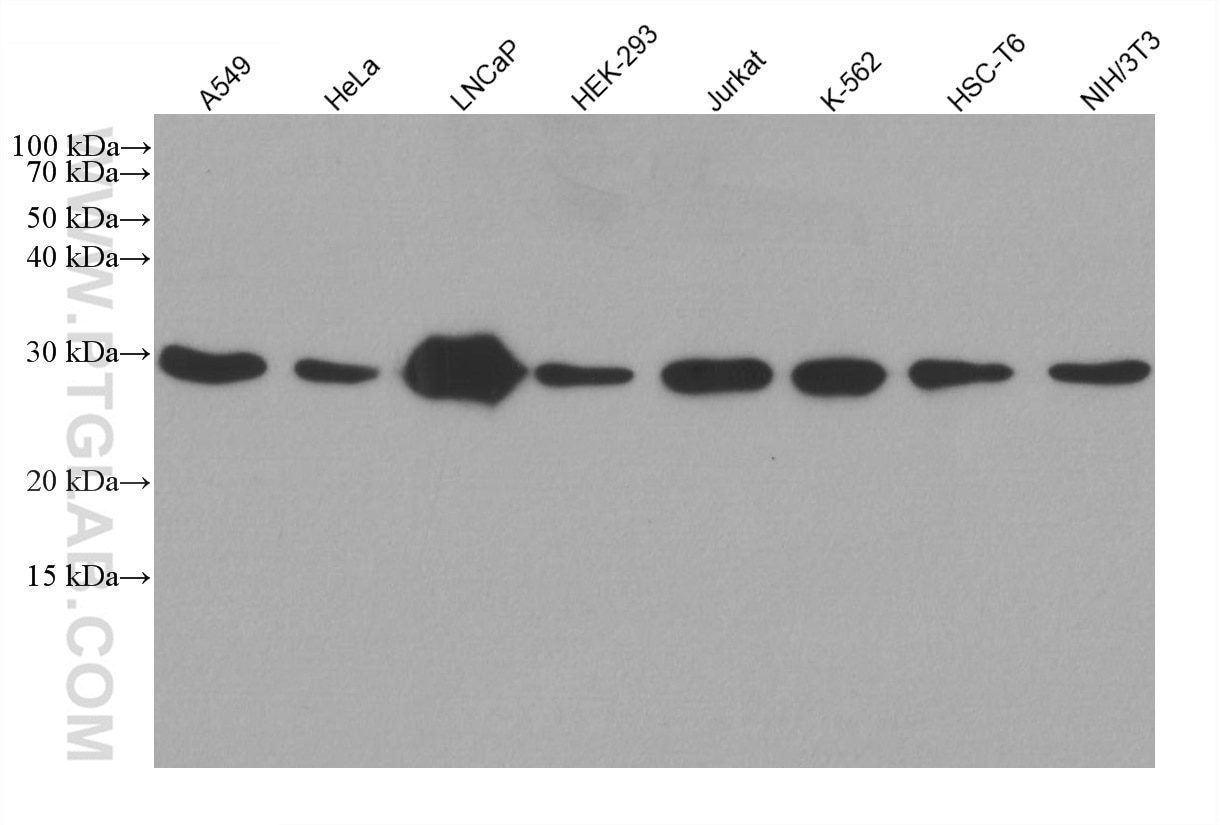
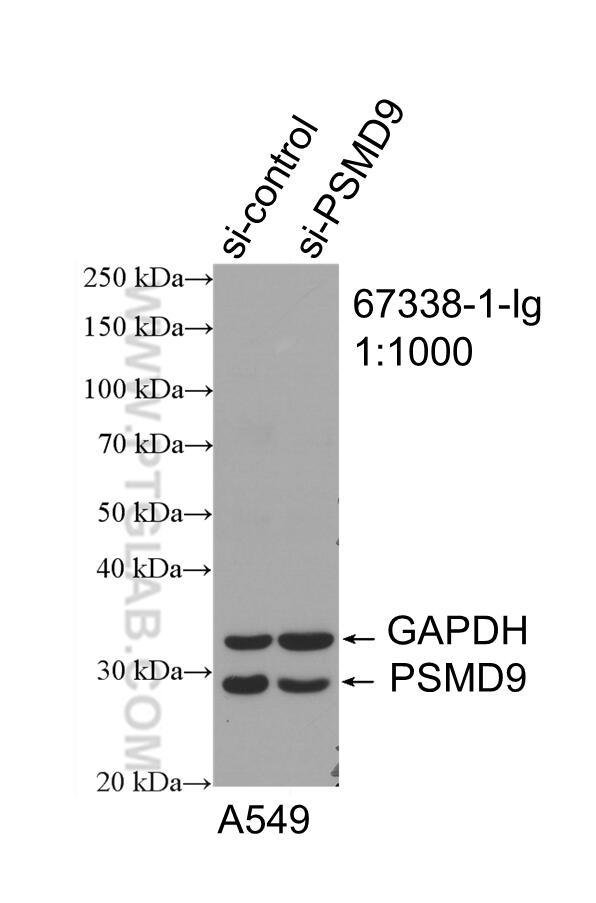
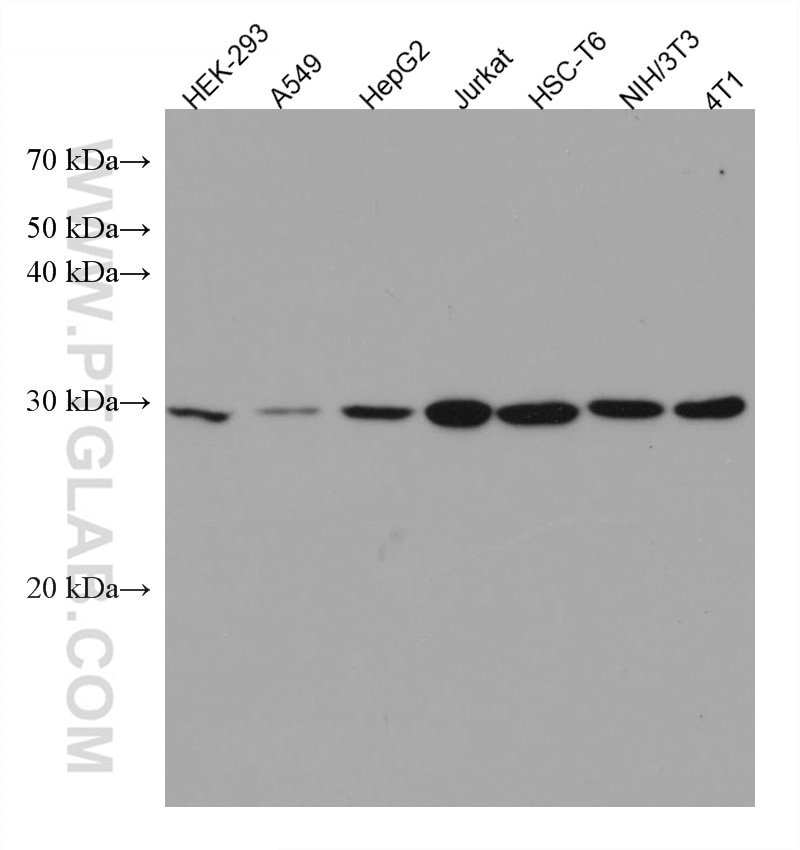
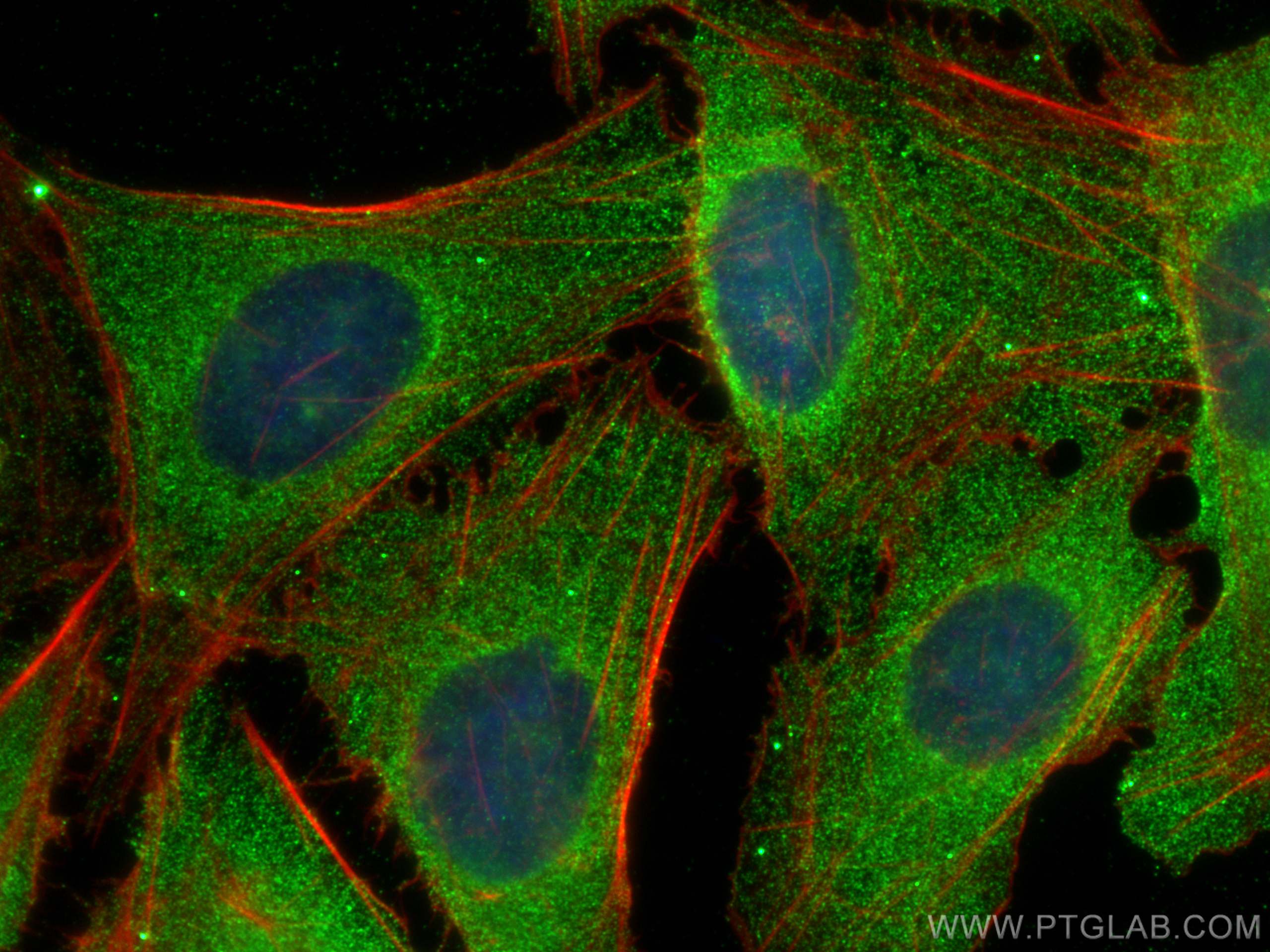
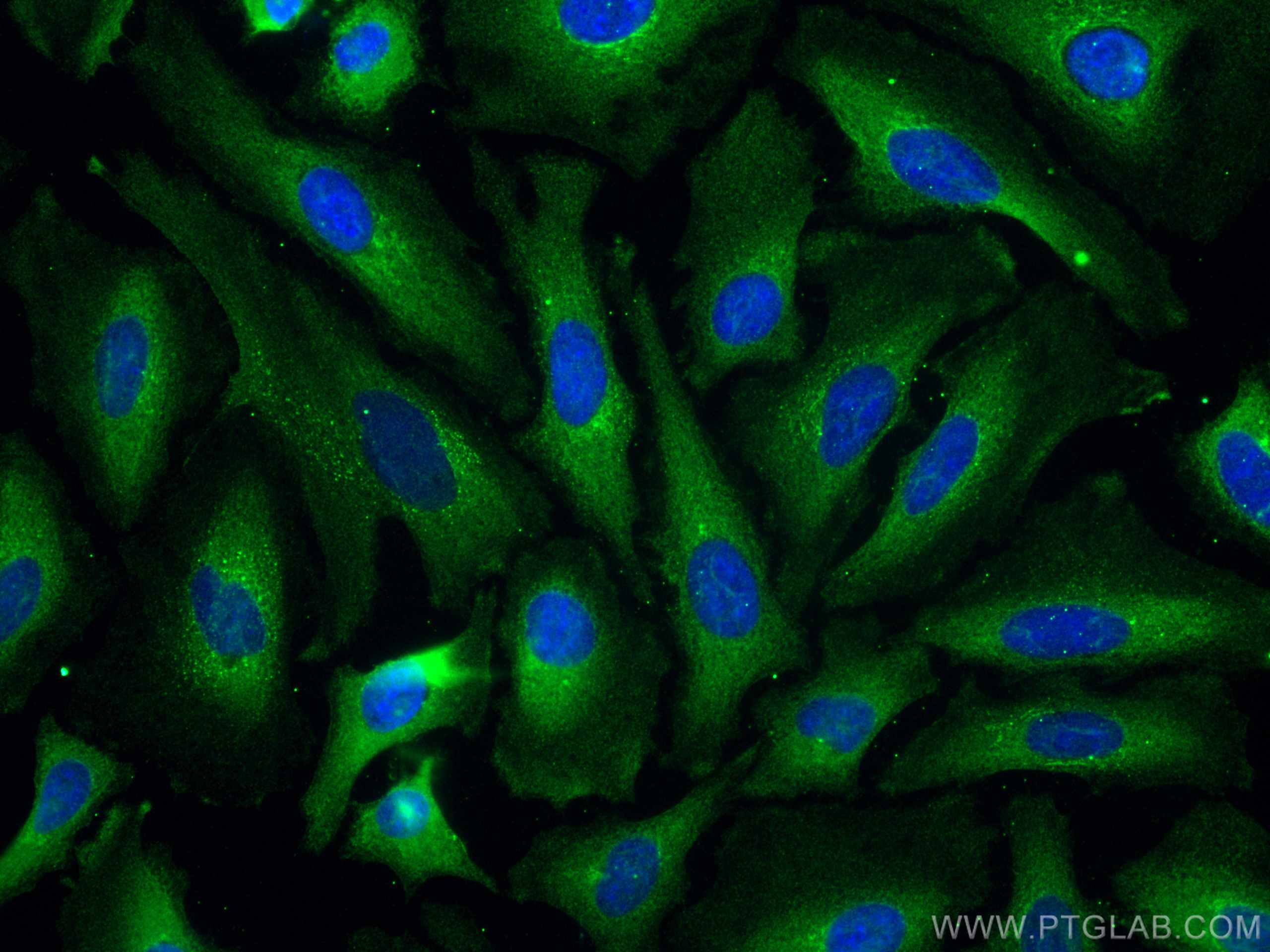
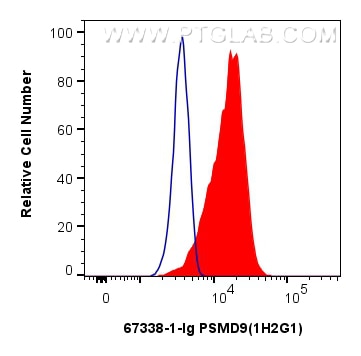
Geprüfte Anwendungen
Produktinformation
67338-1-PBS bindet in WB, IF/ICC, FC (Intra), Indirect ELISA PSMD9 und zeigt Reaktivität mit human, Maus, Ratten
| Getestete Reaktivität | human, Maus, Ratte |
| Wirt / Isotyp | Maus / IgG1 |
| Klonalität | Monoklonal |
| Typ | Antikörper |
| Immunogen | PSMD9 fusion protein Ag25654 |
| Vollständiger Name | proteasome (prosome, macropain) 26S subunit, non-ATPase, 9 |
| Berechnetes Molekulargewicht | 27 kDa |
| Beobachtetes Molekulargewicht | 25-30 kDa |
| GenBank-Zugangsnummer | BC004213 |
| Gene symbol | PSMD9 |
| Gene ID (NCBI) | 5715 |
| Konjugation | Unkonjugiert |
| Form | Liquid |
| Reinigungsmethode | Protein-G-Reinigung |
| Lagerungspuffer | PBS only |
| Lagerungsbedingungen | Store at -80°C. 20ul Größen enthalten 0,1% BSA. |
Hintergrundinformationen
PSMD9 is a ubiquitous protein of eukaryotic cells and is a chaperon of the 26S proteasome complex, which degrades ubiquitinated proteins in eukaryotic cells and contributes to the degradation of intracellular proteins into antigenic peptides for antigen presentation by MHC class I cells. The 26S mammalian base sub-complex involves three distinct modules which have ATPase subunits distinctly associated to three chaperones, one of which is PSMD9 regulating the modules assembly. The PSMD9 ubiquitous regulatory role within the proteasome implies its potential pleiotropic effects within different physio-pathological systems. PSMD9 is known to form a stable subcomplex with PSMC3 and PSMC6, two of the AAA-ATPases, assisting in the assembly of the 20S and 19S particles to form the holo complex.


