PTPRH Monoklonaler Antikörper
PTPRH Monoklonal Antikörper für WB, IF/ICC, Indirect ELISA
Wirt / Isotyp
Maus / IgG1
Getestete Reaktivität
Hausschwein, human
Anwendung
WB, IF/ICC, Indirect ELISA
Konjugation
Unkonjugiert
CloneNo.
3C6E8
Kat-Nr. : 68635-1-PBS
Synonyme
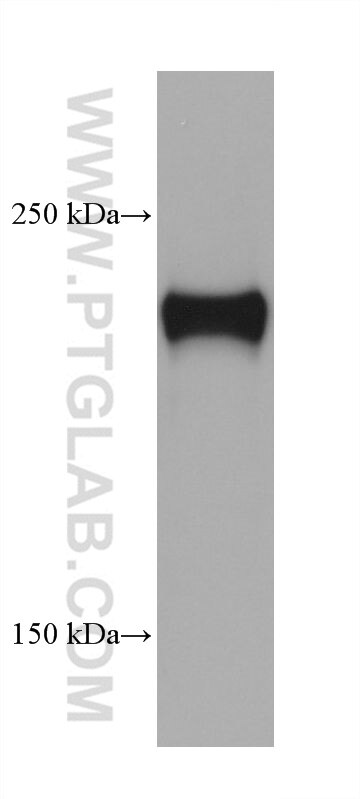
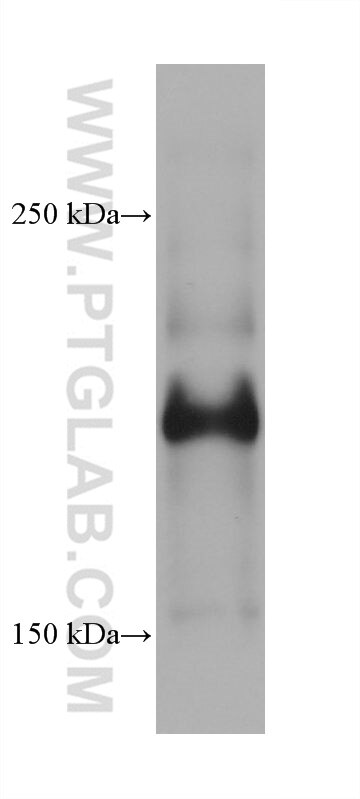
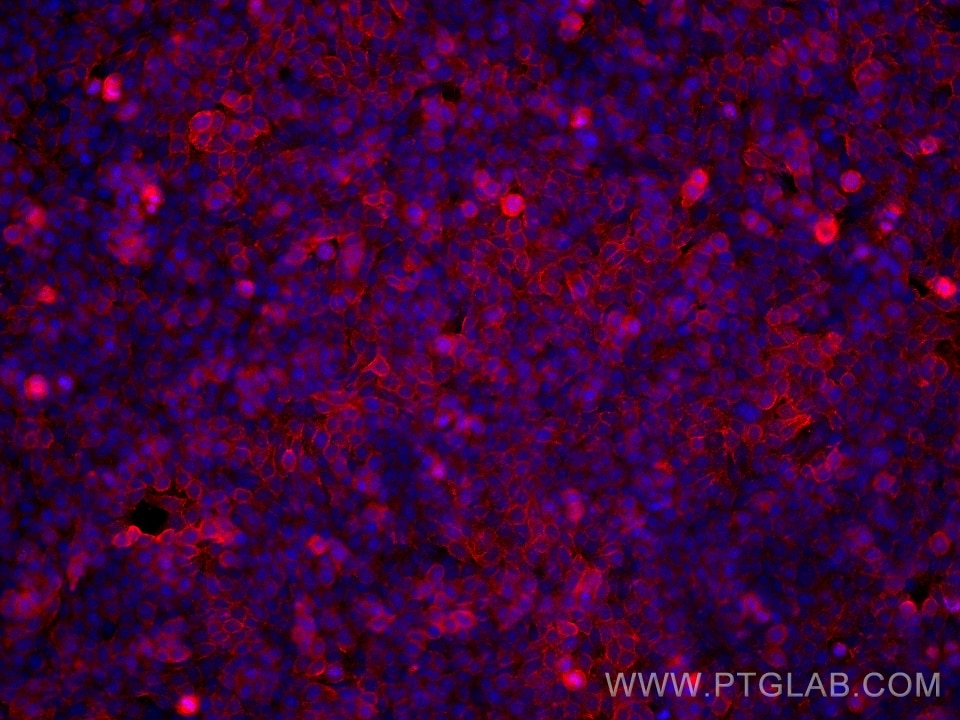
Geprüfte Anwendungen
Produktinformation
68635-1-PBS bindet in WB, IF/ICC, Indirect ELISA PTPRH und zeigt Reaktivität mit Hausschwein, human
| Getestete Reaktivität | Hausschwein, human |
| Wirt / Isotyp | Maus / IgG1 |
| Klonalität | Monoklonal |
| Typ | Antikörper |
| Immunogen | PTPRH fusion protein Ag17351 |
| Vollständiger Name | protein tyrosine phosphatase, receptor type, H |
| Berechnetes Molekulargewicht | 1115 aa, 122 kDa |
| Beobachtetes Molekulargewicht | 200-210 kDa |
| GenBank-Zugangsnummer | BC111716 |
| Gene symbol | PTPRH |
| Gene ID (NCBI) | 5794 |
| Konjugation | Unkonjugiert |
| Form | Liquid |
| Reinigungsmethode | Protein-G-Reinigung |
| Lagerungspuffer | PBS only |
| Lagerungsbedingungen | Store at -80°C. 20ul Größen enthalten 0,1% BSA. |
Hintergrundinformationen
PTPRH, also known as SAP-1 (Stomach Cancer-Associated Protein-Tyrosine Phosphatase-1), is a member of the protein tyrosine phosphatase (PTP) family. These enzymes regulate cellular signaling by dephosphorylating tyrosine residues on proteins, counterbalancing kinase activity (PMID: 11278335). PTPRH is classified as a receptor-type PTP, characterized by an extracellular domain, a transmembrane region, and intracellular catalytic domains. In colorectal, gastric, and hepatocellular cancers, PTPRH is often upregulated and linked to poor prognosis (PMID: 12101188). Paradoxically, it may suppress tumorigenesis in other contexts by stabilizing cell adhesion. Overexpression in certain cancers suggests utility as a diagnostic or prognostic marker. The molecular weight of PTPRH is 122 kDa, it is reported that it can form a dimer with a molecular weight of 210 kDa (PMID:15850787).


