- Featured Product
- KD/KO Validated
Pentraxin 3 Polyklonaler Antikörper
Pentraxin 3 Polyklonal Antikörper für WB, IF/ICC, Indirect ELISA
Wirt / Isotyp
Kaninchen / IgG
Getestete Reaktivität
human, Maus
Anwendung
WB, IF/ICC, Indirect ELISA
Konjugation
Unkonjugiert
Kat-Nr. : 13797-1-PBS
Synonyme
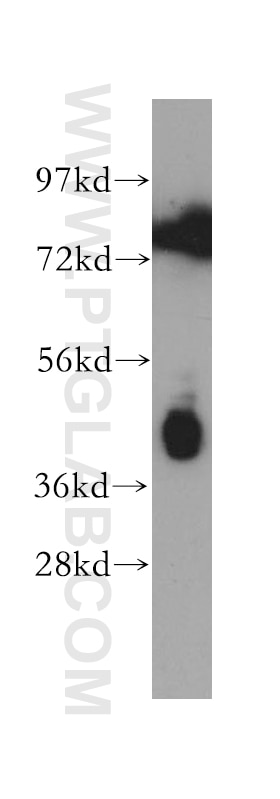
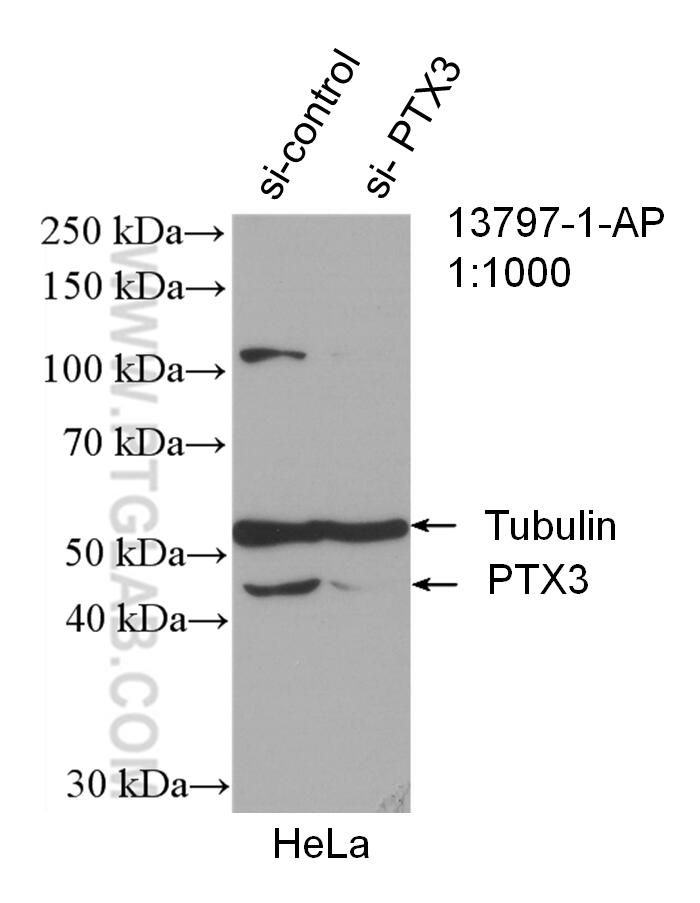
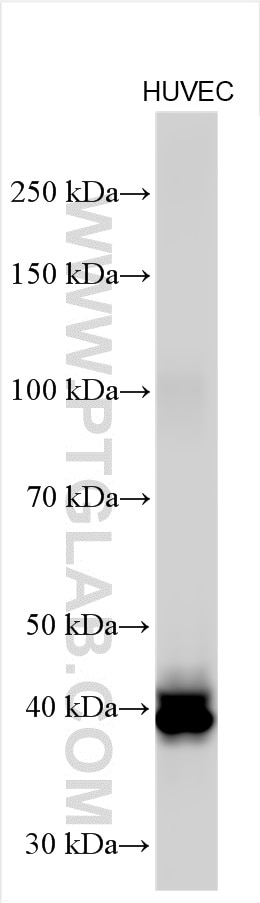
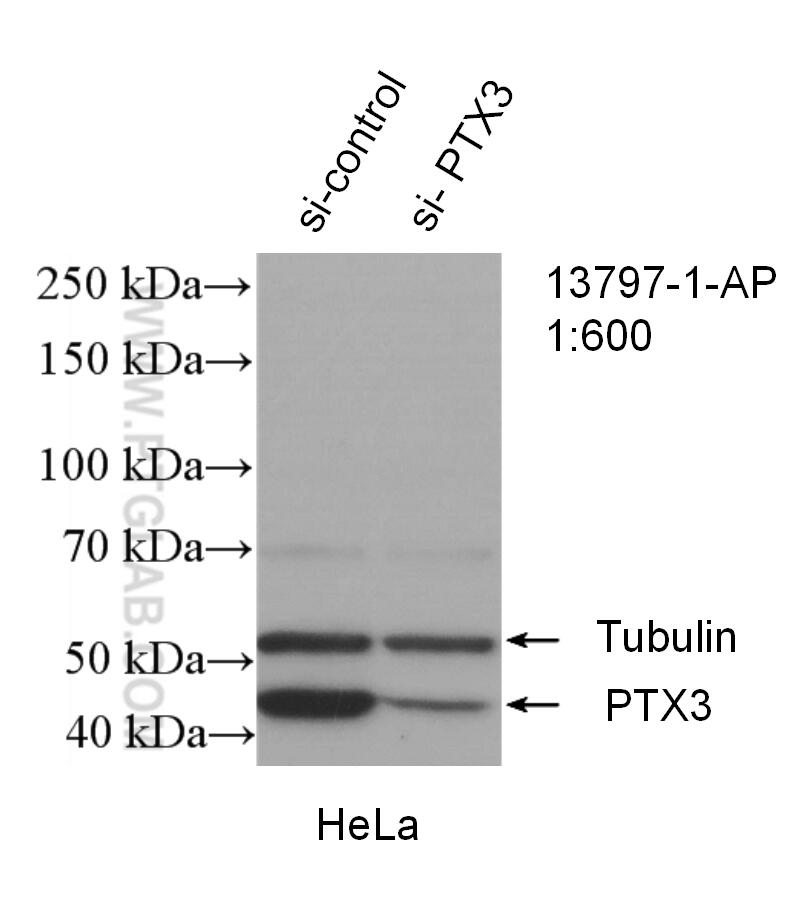
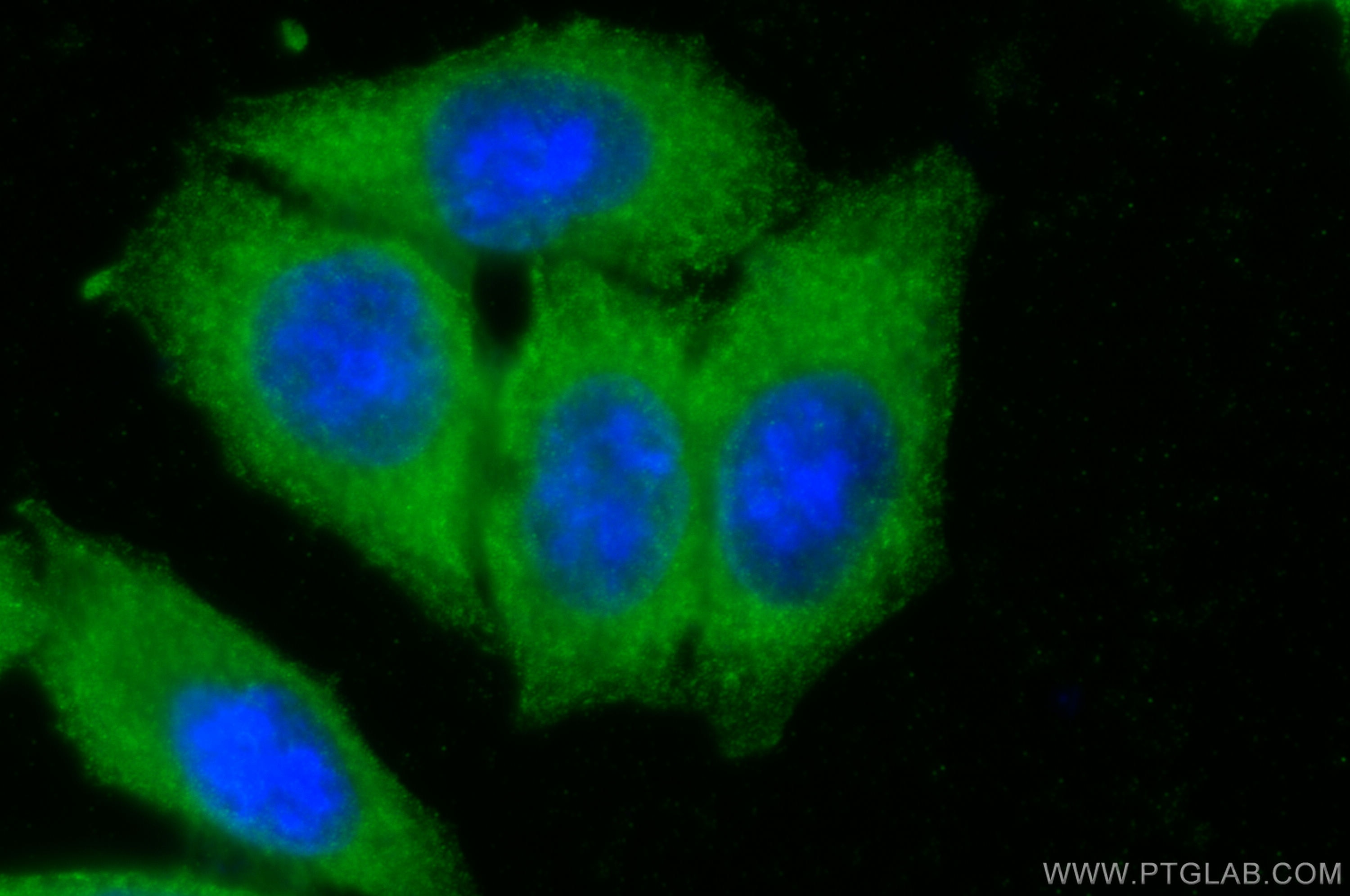
Geprüfte Anwendungen
Produktinformation
13797-1-PBS bindet in WB, IF/ICC, Indirect ELISA Pentraxin 3 und zeigt Reaktivität mit human, Maus
| Getestete Reaktivität | human, Maus |
| Wirt / Isotyp | Kaninchen / IgG |
| Klonalität | Polyklonal |
| Typ | Antikörper |
| Immunogen | Pentraxin 3 fusion protein Ag4624 |
| Vollständiger Name | pentraxin-related gene, rapidly induced by IL-1 beta |
| Berechnetes Molekulargewicht | 381 aa, 42 kDa |
| Beobachtetes Molekulargewicht | 40-45 kDa |
| GenBank-Zugangsnummer | BC039733 |
| Gene symbol | Pentraxin 3/PTX3 |
| Gene ID (NCBI) | 5806 |
| Konjugation | Unkonjugiert |
| Form | Liquid |
| Reinigungsmethode | Antigen-Affinitätsreinigung |
| Lagerungspuffer | PBS only |
| Lagerungsbedingungen | Store at -80°C. 20ul Größen enthalten 0,1% BSA. |
Hintergrundinformationen
Pentraxin 3 (PTX3), also known as TNF-inducible gene 14 protein (TSG-14), is a member of the pentraxin superfamily which consists of evolutionarily conserved proteins characterized by a structural motif99, the pentraxin domain (PMID: 15771574). Pentraxin 3 can be produced by a variety of cell types including endothelial cells, smooth muscle cells, adipocytes, fibroblasts, mononuclear phagocytes, and dendritic cells, and its expression is induced by primary inflammatory signals, such as IL-1, TNF, and microbial moieties (PMID: 15771574). Pentraxin 3 is an acute-phase glycoprotein that plays a role in regulating innate resistance to pathogens, inflammation, tissue remodeling and repair, female fertility, and cancer (PMID: 29412047). Pentraxin 3 is a biomarker for cardiovascular disease (PMID: 22347626). Increased plasma Pentraxin 3 levels have been found in patients with cardiovascular disorders (PMID: 22347626; 31057548). In WB, there're two major bands, an upper signal at 80-86 kDa and a lower signal at 42 kDa, representing Pentraxin 3 dimers and monomers, respectively (PMID: 18223257).


