Phospho-P53 (Ser15) Polyklonaler Antikörper
Phospho-P53 (Ser15) Polyklonal Antikörper für WB, IF/ICC, Indirect ELISA
Wirt / Isotyp
Kaninchen / IgG
Getestete Reaktivität
human
Anwendung
WB, IF/ICC, Indirect ELISA
Konjugation
Unkonjugiert
Kat-Nr. : 28961-1-PBS
Synonyme
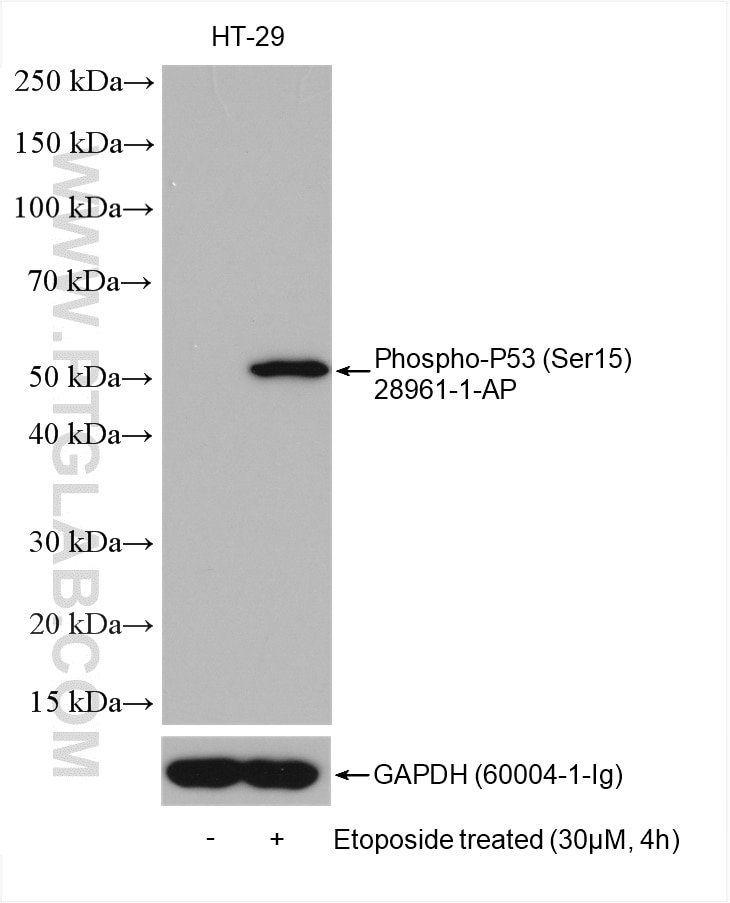
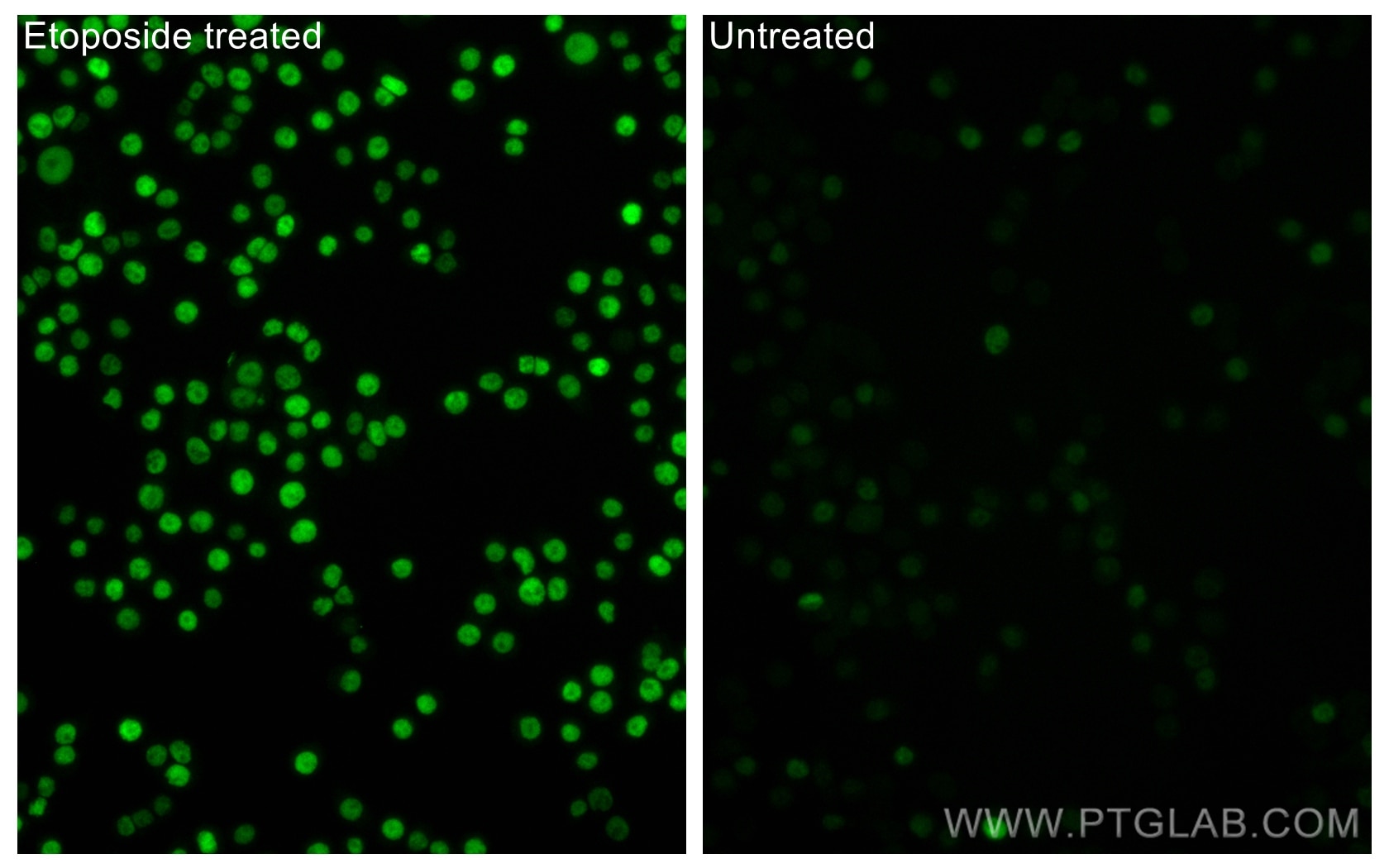
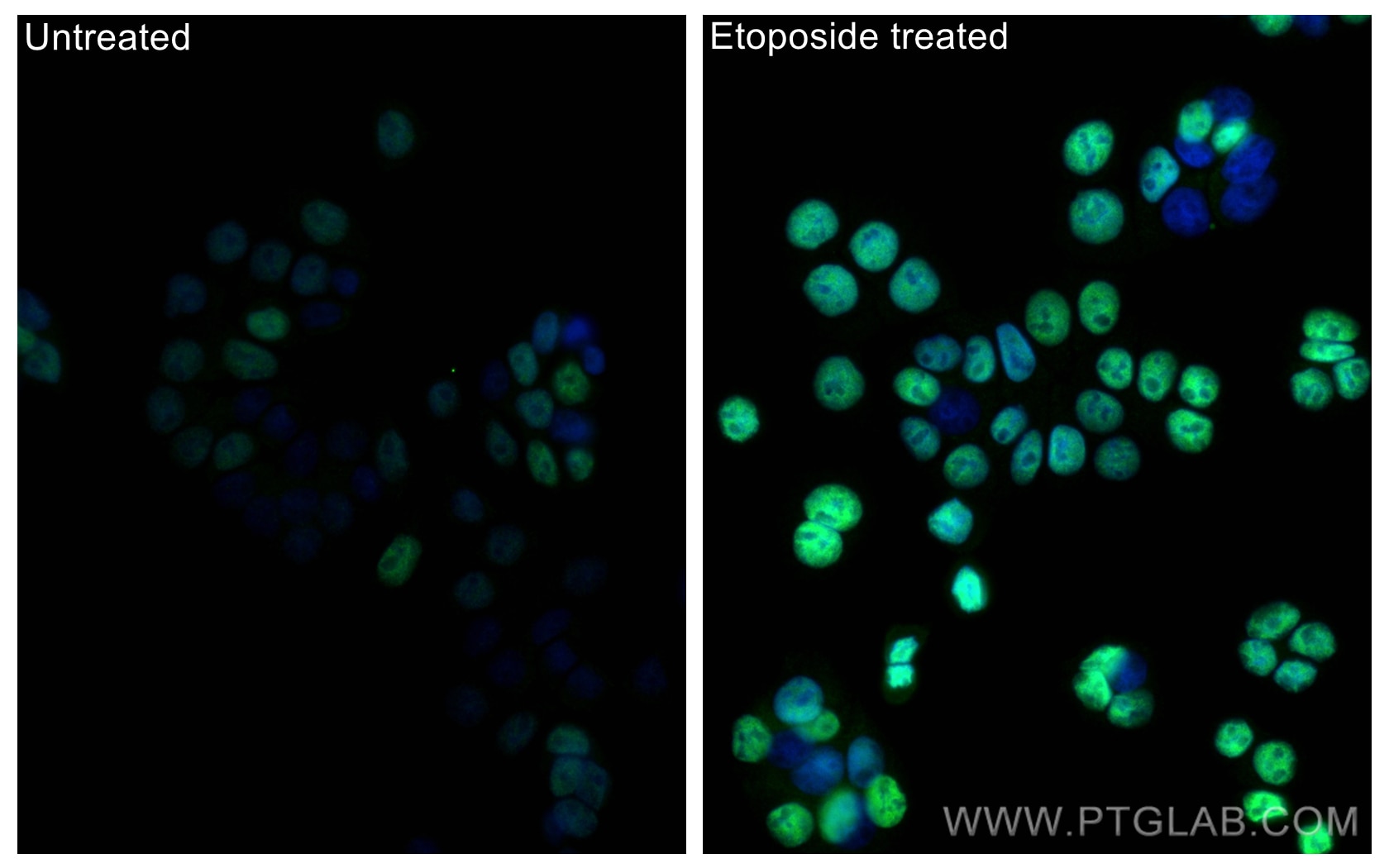
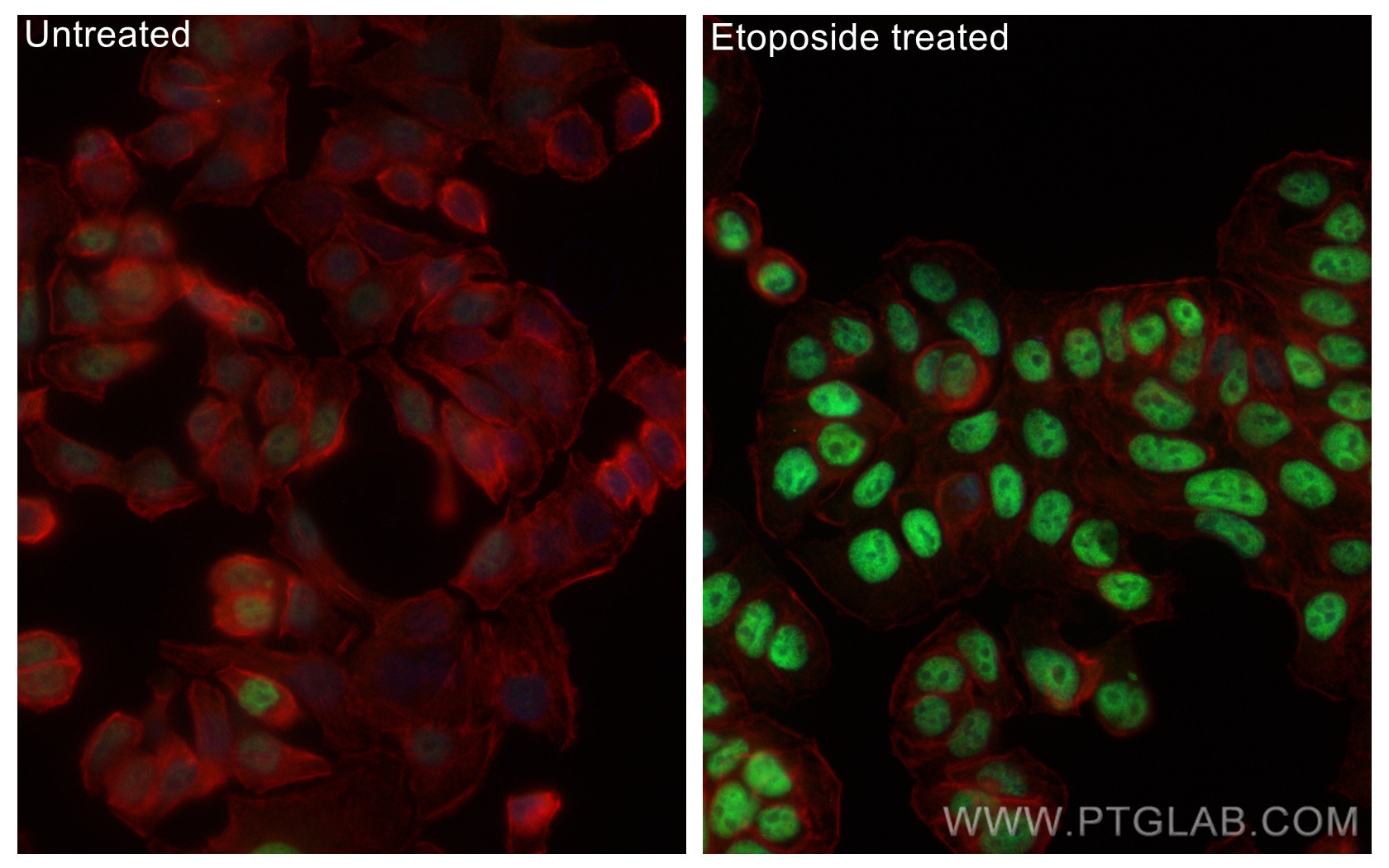
Geprüfte Anwendungen
Produktinformation
28961-1-PBS bindet in WB, IF/ICC, Indirect ELISA Phospho-P53 (Ser15) und zeigt Reaktivität mit human
| Getestete Reaktivität | human |
| Wirt / Isotyp | Kaninchen / IgG |
| Klonalität | Polyklonal |
| Typ | Antikörper |
| Immunogen | Peptid |
| Vollständiger Name | tumor protein p53 |
| Berechnetes Molekulargewicht | 44 kDa |
| Beobachtetes Molekulargewicht | 53 kDa |
| GenBank-Zugangsnummer | BC003596 |
| Gene symbol | P53 |
| Gene ID (NCBI) | 7157 |
| Konjugation | Unkonjugiert |
| Form | Liquid |
| Reinigungsmethode | Antigen-Affinitätsreinigung |
| Lagerungspuffer | PBS only |
| Lagerungsbedingungen | Store at -80°C. 20ul Größen enthalten 0,1% BSA. |
Hintergrundinformationen
The p53 tumor suppressor protein plays a major role in cellular response to DNA damage and other genomic aberrations. Activation of p53 can lead to either cell cycle arrest and DNA repair or apoptosis . DNA damage induces phosphorylation of p53 at Ser15 and Ser20 and leads to a reduced interaction between p53 and its negative regulator, the oncoprotein MDM2. p53 can be phosphorylated by ATM, ATR, and DNA-PK at Ser15 and Ser37. Phosphorylation impairs the ability of MDM2 to bind p53, promoting both the accumulation and activation of p53 in response to DNA damage.


