Prolactin Rekombinanter Antikörper
Prolactin Rekombinant Antikörper für WB, IHC, IF-P, ELISA
Wirt / Isotyp
Kaninchen / IgG
Getestete Reaktivität
human, Maus
Anwendung
WB, IHC, IF-P, ELISA
Konjugation
Unkonjugiert
CloneNo.
242898A8
Kat-Nr. : 85765-3-RR
Synonyme
Geprüfte Anwendungen
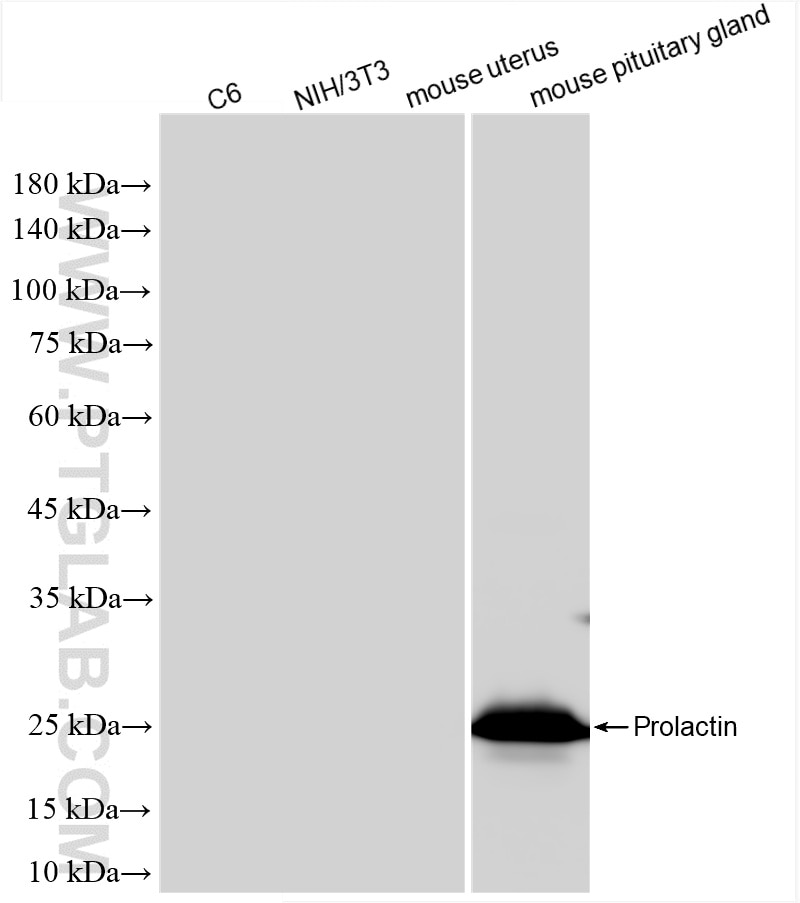
| Erfolgreiche Detektion in WB | mouse pituitary gland tissue, Maus-Uterusgewebe, NIH/3T3-Zellen |
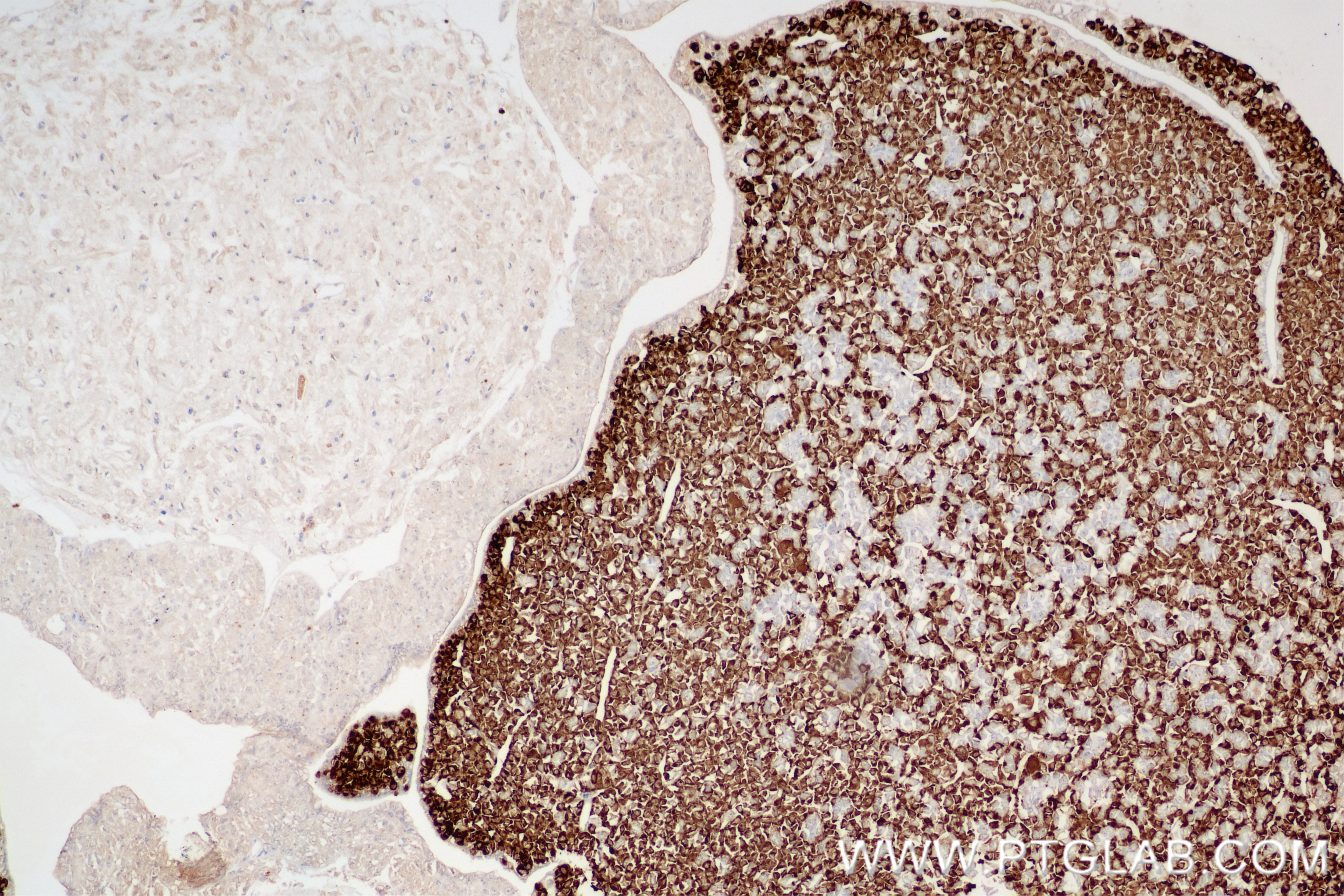
| Erfolgreiche Detektion in IHC | mouse pituitary gland tissue Hinweis: Antigendemaskierung mit TE-Puffer pH 9,0 empfohlen. (*) Wahlweise kann die Antigendemaskierung auch mit Citratpuffer pH 6,0 erfolgen. |
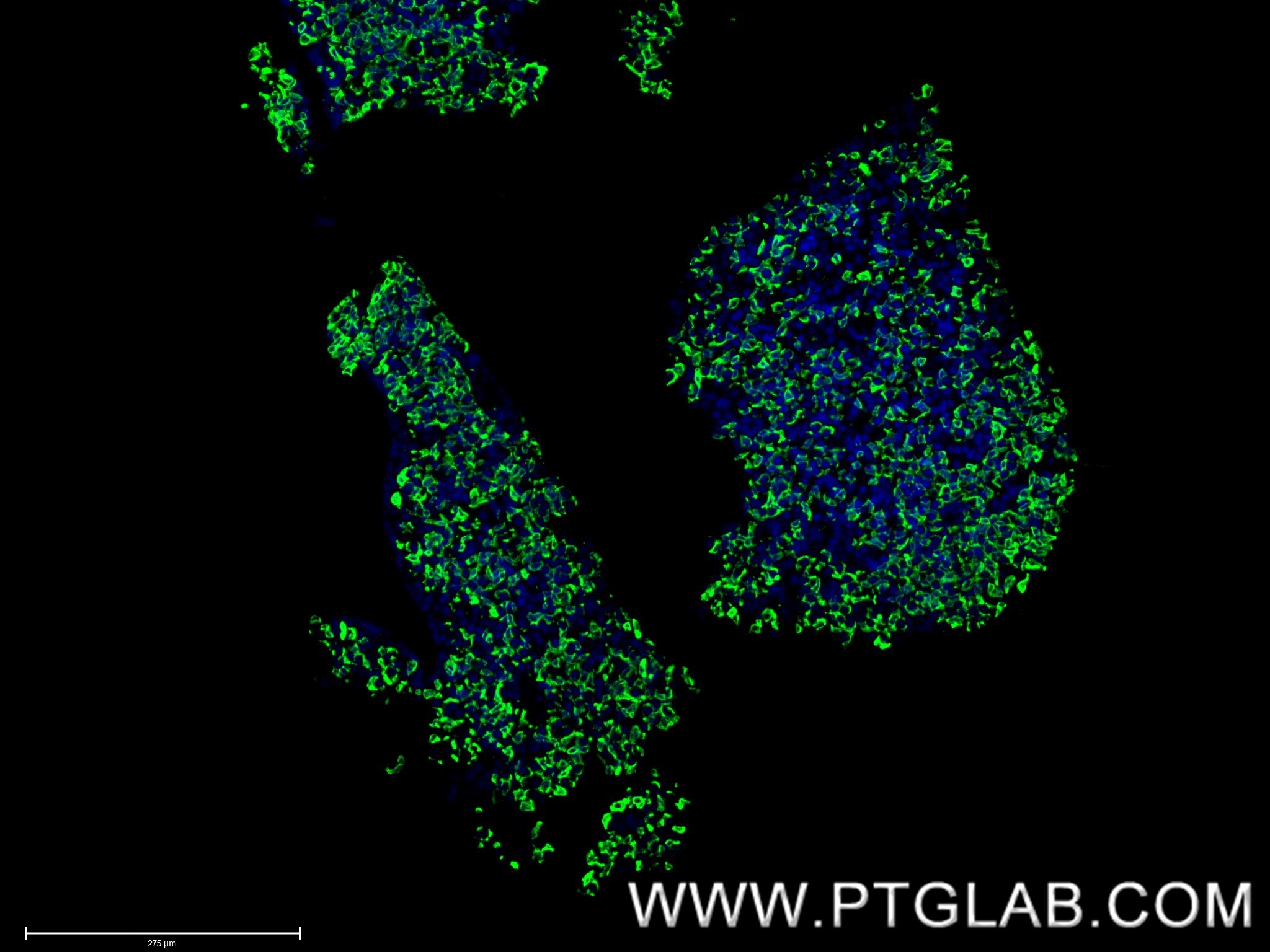
| Erfolgreiche Detektion in IF-P | mouse pituitary gland tissue |
Empfohlene Verdünnung
| Anwendung | Verdünnung |
|---|---|
| Western Blot (WB) | WB : 1:5000-1:50000 |
| Immunhistochemie (IHC) | IHC : 1:500-1:2000 |
| Immunfluoreszenz (IF)-P | IF-P : 1:500-1:2000 |
| It is recommended that this reagent should be titrated in each testing system to obtain optimal results. | |
| Sample-dependent, check data in validation data gallery | |
Produktinformation
85765-3-RR bindet in WB, IHC, IF-P, ELISA Prolactin und zeigt Reaktivität mit human, Maus
| Getestete Reaktivität | human, Maus |
| Wirt / Isotyp | Kaninchen / IgG |
| Klonalität | Rekombinant |
| Typ | Antikörper |
| Immunogen | Prolactin fusion protein Ag9764 |
| Vollständiger Name | prolactin |
| Berechnetes Molekulargewicht | 227 aa, 26 kDa |
| Beobachtetes Molekulargewicht | 26 kDa |
| GenBank-Zugangsnummer | BC015850 |
| Gene symbol | Prolactin/PRL |
| Gene ID (NCBI) | 5617 |
| Konjugation | Unkonjugiert |
| Form | Liquid |
| Reinigungsmethode | Protein-A-Reinigung |
| Lagerungspuffer | PBS with 0.02% sodium azide and 50% glycerol |
| Lagerungsbedingungen | Bei -20°C lagern. Nach dem Versand ein Jahr lang stabil Aliquotieren ist bei -20oC Lagerung nicht notwendig. 20ul Größen enthalten 0,1% BSA. |
Hintergrundinformationen
Prolactin is also named as PRL and belongs to the somatotropin/prolactin family. The proteins encoded by PRL are secreted into the cell surroundings. And they are abundantly expressed in pituitary gland, adenohypophysis, decidua and testis. Indeed, chemically, prolactin appears in a multiplicity of posttranslational forms ranging from size variants to chemical modifications such as phosphorylation or glycosylation. It is not only synthesized in the pituitary gland, as originally described, but also within the central nervous system, the immune system, the uterus and its associated tissues of conception, and even the mammary gland itself (PMID: 11015620). Prolactin acts primarily on the mammary gland by promoting lactation (PMID: 30546056). The major form of prolactin found in the pituitary gland is 23 kDa, variants of prolactin have been characterized in many mammals, including humans. Of the cleaved forms that have been characterized, 14 kDa, 16 kDa, and 22 kDa prolactin variants have been most widely studied (PMID: 7937959) (PMID: 8425495).
Protokolle
| PRODUKTSPEZIFISCHE PROTOKOLLE | |
|---|---|
| WB protocol for Prolactin antibody 85765-3-RR | Protokoll herunterladen |
| IHC protocol for Prolactin antibody 85765-3-RR | Protokoll herunterladenl |
| IF protocol for Prolactin antibody 85765-3-RR | Protokoll herunterladen |
| STANDARD-PROTOKOLLE | |
|---|---|
| Klicken Sie hier, um unsere Standardprotokolle anzuzeigen |


