RENALASE Monoklonaler Antikörper
RENALASE Monoklonal Antikörper für WB, IHC, Indirect ELISA
Wirt / Isotyp
Maus / IgG1
Getestete Reaktivität
human
Anwendung
WB, IHC, Indirect ELISA
Konjugation
Unkonjugiert
CloneNo.
3A12F5
Kat-Nr. : 60128-1-PBS
Synonyme
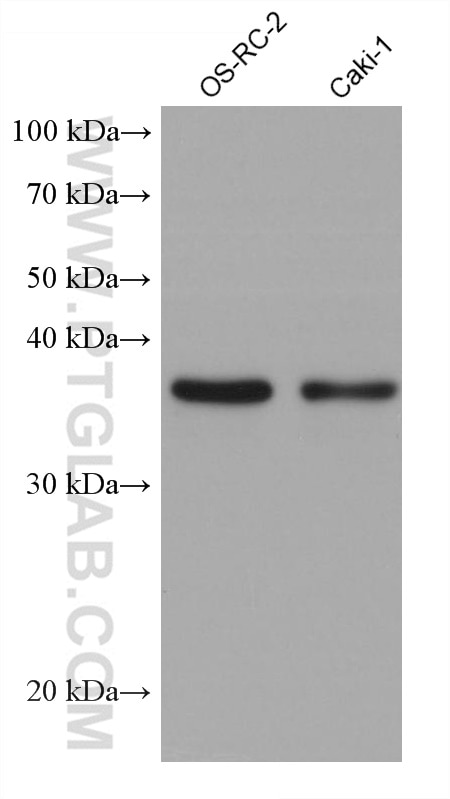
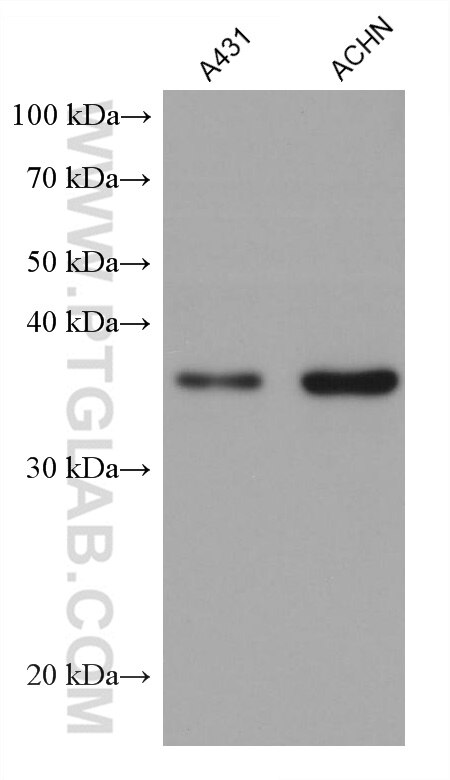
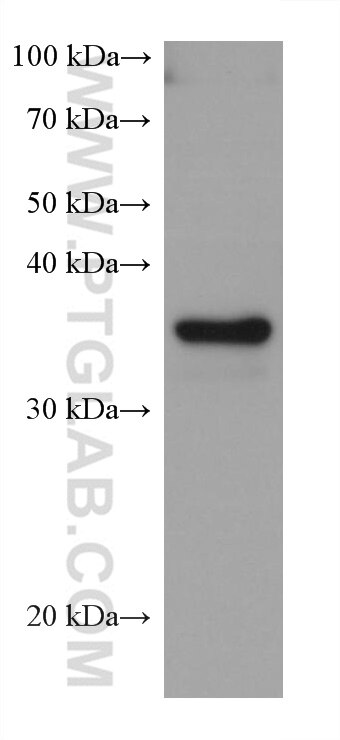
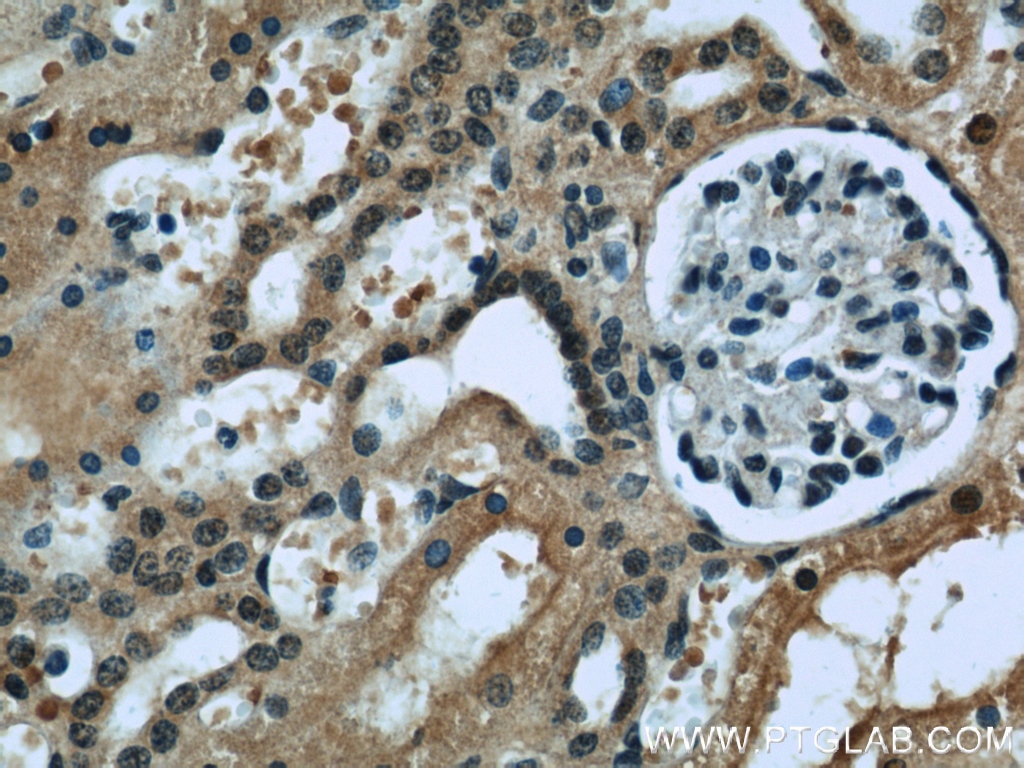
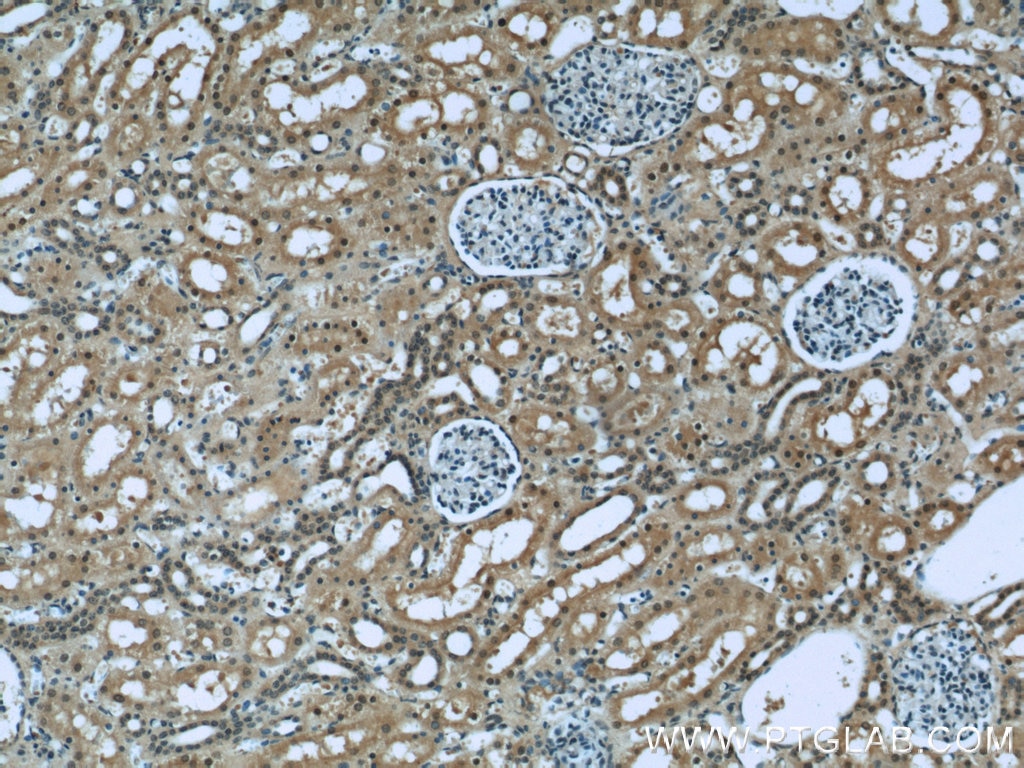
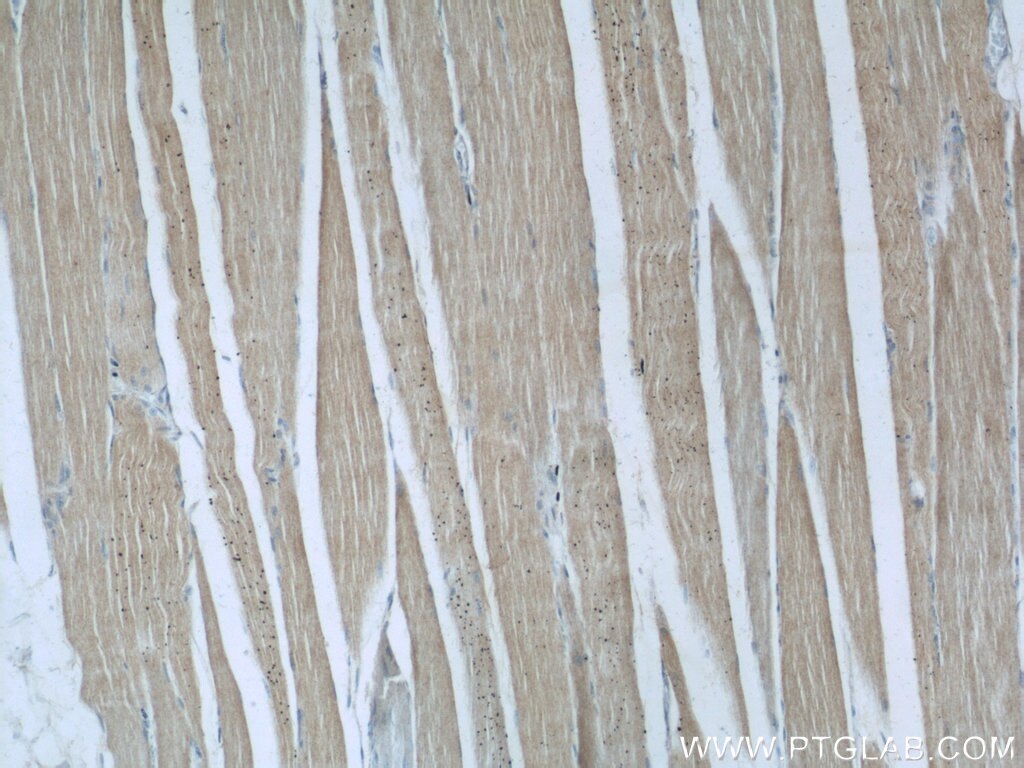
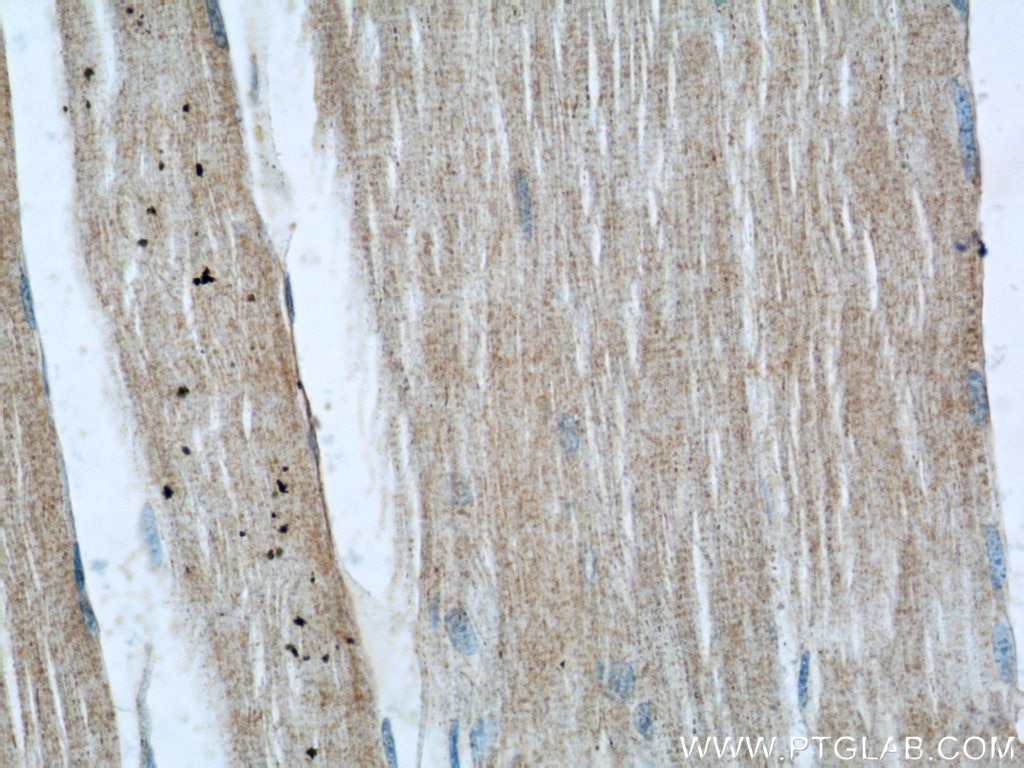
Geprüfte Anwendungen
Produktinformation
60128-1-PBS bindet in WB, IHC, Indirect ELISA RENALASE und zeigt Reaktivität mit human
| Getestete Reaktivität | human |
| Wirt / Isotyp | Maus / IgG1 |
| Klonalität | Monoklonal |
| Typ | Antikörper |
| Immunogen | RENALASE fusion protein Ag13061 |
| Vollständiger Name | chromosome 10 open reading frame 59 |
| Berechnetes Molekulargewicht | 38 kDa |
| Beobachtetes Molekulargewicht | 38 kDa |
| GenBank-Zugangsnummer | BC005364 |
| Gene symbol | RENALASE |
| Gene ID (NCBI) | 55328 |
| Konjugation | Unkonjugiert |
| Form | Liquid |
| Reinigungsmethode | Protein-G-Reinigung |
| Lagerungspuffer | PBS only |
| Lagerungsbedingungen | Store at -80°C. 20ul Größen enthalten 0,1% BSA. |
Hintergrundinformationen
RNLS, also named as Renalase, C10orf59 and MAO-C, belongs to the renalase family. It is probable FAD-dependent amine oxidase secreted by the kidney, which circulates in blood and modulates cardiac function and systemic blood pressure. RNLS degrades catecholamines such as dopamine, norepinephrine and epinephrine in vitro. It lowers blood pressure in vivo by decreasing cardiac contractility and heart rate and preventing a compensatory increase in peripheral vascular tone, suggesting a causal link to the increased plasma catecholamine and heightened cardiovascular risk. High concentrations of catecholamines activate plasma renalase and promotes its secretion and synthesis. RNLS has physiologically relevant catecholamine-oxidizing activity. (PMID:15841207 ) This antibody is specific to RNLS.


