RNF139 Rekombinanter Antikörper
RNF139 Rekombinant Antikörper für WB, FC (Intra), ELISA
Wirt / Isotyp
Kaninchen / IgG
Getestete Reaktivität
human
Anwendung
WB, FC (Intra), ELISA
Konjugation
Unkonjugiert
CloneNo.
240481G6
Kat-Nr. : 83755-2-PBS
Synonyme
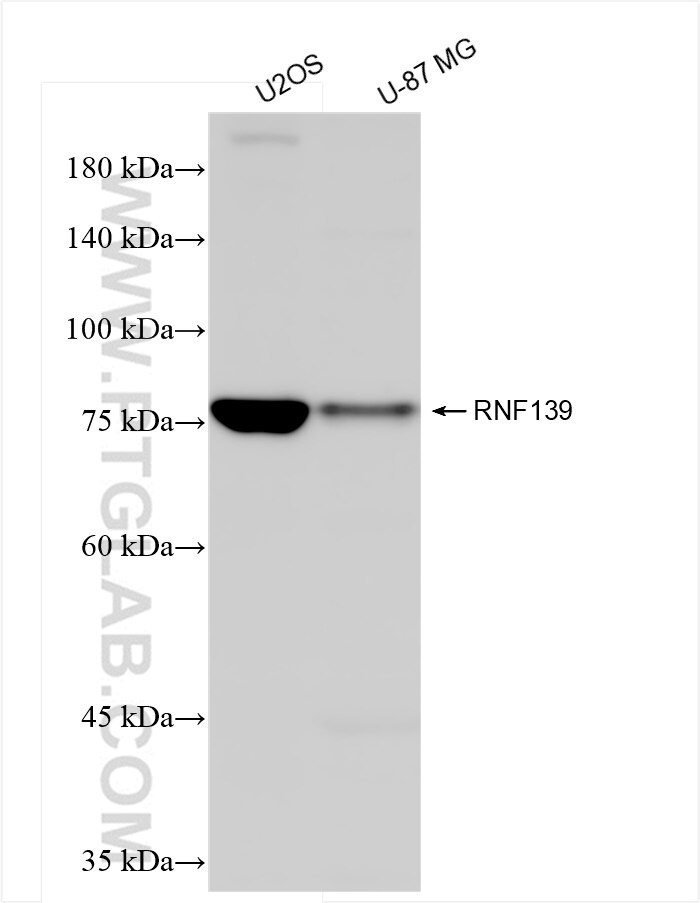
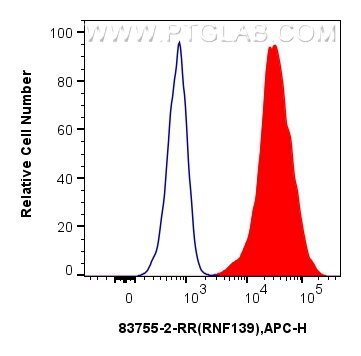
Geprüfte Anwendungen
Produktinformation
83755-2-PBS bindet in WB, FC (Intra), ELISA RNF139 und zeigt Reaktivität mit human
| Getestete Reaktivität | human |
| Wirt / Isotyp | Kaninchen / IgG |
| Klonalität | Rekombinant |
| Typ | Antikörper |
| Immunogen | RNF139 fusion protein Ag21530 |
| Vollständiger Name | ring finger protein 139 |
| Berechnetes Molekulargewicht | 664 aa, 76 kDa |
| Beobachtetes Molekulargewicht | 76 kDa |
| GenBank-Zugangsnummer | BC064636 |
| Gene symbol | RNF139 |
| Gene ID (NCBI) | 11236 |
| Konjugation | Unkonjugiert |
| Form | Liquid |
| Reinigungsmethode | Protein A purfication |
| Lagerungspuffer | PBS only |
| Lagerungsbedingungen | Store at -80°C. 20ul Größen enthalten 0,1% BSA. |
Hintergrundinformationen
The RNF139 gene (ring-finger protein 139), also known as TRC8 (translocation in renal carcinoma from chromosome 8), was first identified from a family with 3;8 chromosomal translocation and hereditary renal cell carcinoma and thyroid cancer (PMID:22689053). RNF139 encodes an endoplasmic reticulum (ER) protein with 10 transmembrane segments that contain a sterol-sensing domain and a RING finger motif encoding an E3 ubiquitin ligase (PMID: 19706601). Northern blot and dot blot show that RNF139 is highly expressed in the testis, placenta, and adrenal gland and is expressed at lower levels in the heart, brain, liver, skeletal muscle, and pancreas (PMID: 9689122). It is reported that TRC8 suppresses tumorigenesis by targeting heme oxygenase-1 (HO-1), an antioxidant enzyme highly expressed in various cancers, for ubiquitination and degradation (PMID:22689053). TRC8 is also involved in cholesterol and fatty acid biosynthesis that are transcriptionally regulated by the sterol response element binding proteins (SREBPs) (PMID:17016439). Acetylation, phosphorylation, and autoubiquitination are common post-translational modifications of FNF139 protein.


