RNF20 Rekombinanter Antikörper
RNF20 Rekombinant Antikörper für WB, IF/ICC, Indirect ELISA
Wirt / Isotyp
Kaninchen / IgG
Getestete Reaktivität
human, Maus
Anwendung
WB, IF/ICC, Indirect ELISA
Konjugation
Unkonjugiert
CloneNo.
243078G12
Kat-Nr. : 85630-6-PBS
Synonyme
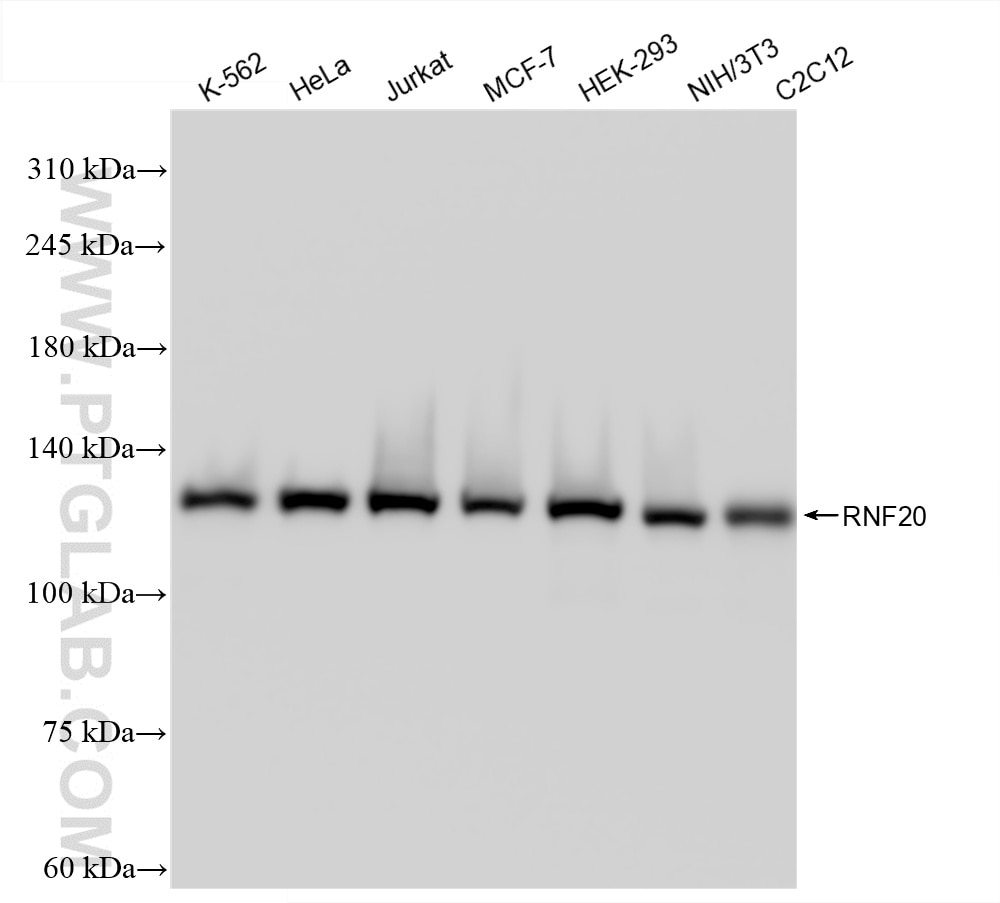
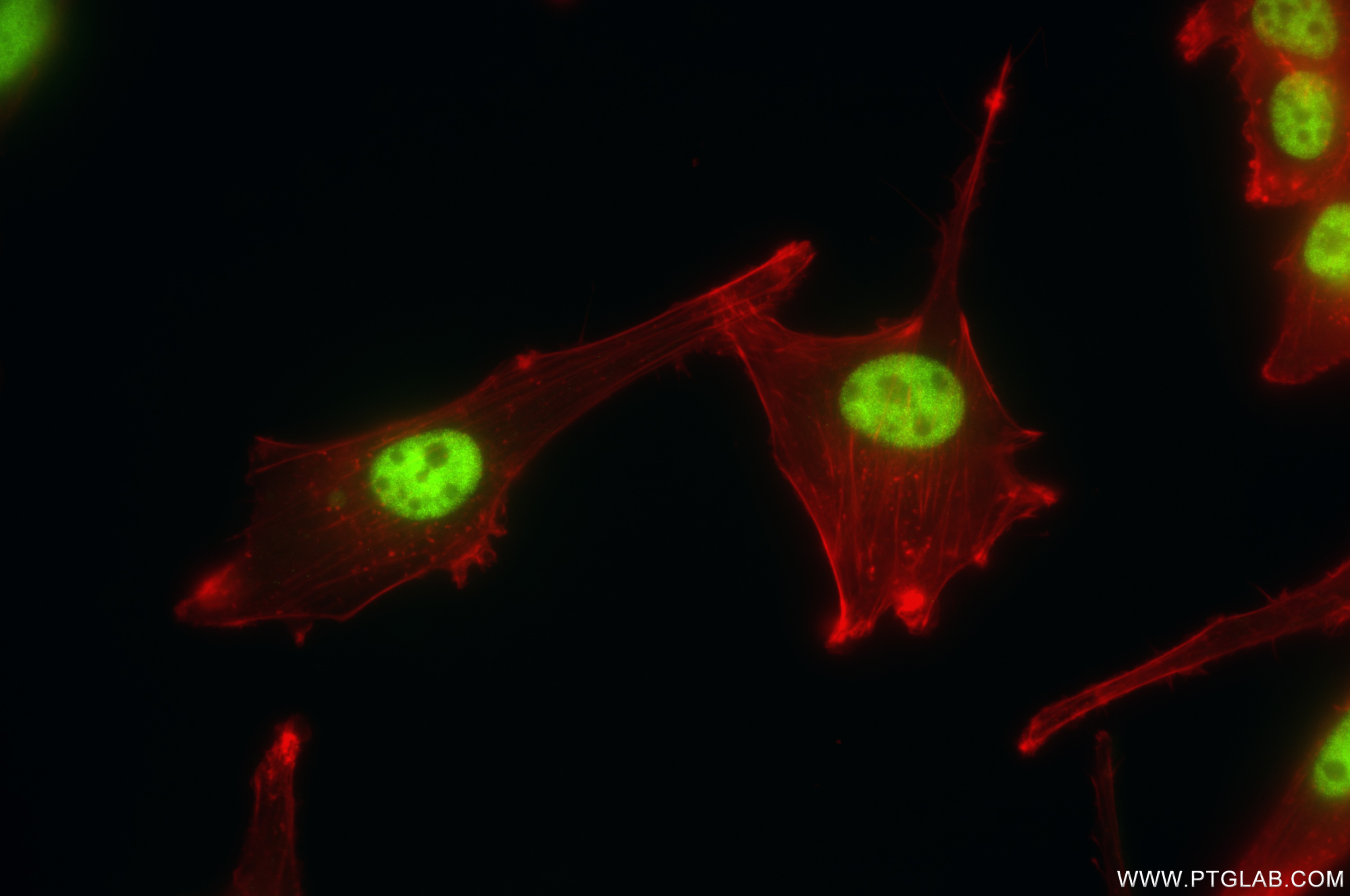
Geprüfte Anwendungen
Produktinformation
85630-6-PBS bindet in WB, IF/ICC, Indirect ELISA RNF20 und zeigt Reaktivität mit human, Maus
| Getestete Reaktivität | human, Maus |
| Wirt / Isotyp | Kaninchen / IgG |
| Klonalität | Rekombinant |
| Typ | Antikörper |
| Immunogen | RNF20 fusion protein Ag16066 |
| Vollständiger Name | ring finger protein 20 |
| Berechnetes Molekulargewicht | 975 aa, 114 kDa |
| Beobachtetes Molekulargewicht | 114 kDa |
| GenBank-Zugangsnummer | BC110585 |
| Gene symbol | RNF20 |
| Gene ID (NCBI) | 56254 |
| Konjugation | Unkonjugiert |
| Form | Liquid |
| Reinigungsmethode | Protein-A-Reinigung |
| Lagerungspuffer | PBS only |
| Lagerungsbedingungen | Store at -80°C. 20ul Größen enthalten 0,1% BSA. |
Hintergrundinformationen
RNF20, also named as E3 ubiquitin-protein ligase BRE1A, is a 975 amino acid protein, which contains 1 RING-type zinc finger and belongs to the BRE1 family. RNF20 is a component of the RNF20/40 complex and localizes in the nucleus. RNF20 is a component of the RNF20/40 E3 ubiquitin-protein ligase complex that mediates monoubiquitination of 'Lys-120' of histone H2B (H2BK120ub1). H2BK120ub1 gives a specific tag for epigenetic transcriptional activation and is also prerequisite for histone H3 'Lys-4' and 'Lys-79' methylation (H3K4me and H3K79me, respectively). The RNF20/40 complex forms a H2B ubiquitin ligase complex in cooperation with the E2 enzyme UBE2A or UBE2B. RNF20 is required for transcriptional activation of Hox genes and recruited to the MDM2 promoter, probably by being recruited by p53/TP53, and thereby acts as a transcriptional coactivator. RNF20/40 complex monoubiquitinates and stabilizes Eg5. Loss of RNF20/40 results in spindle assembly defects, cell cycle arrest and apoptosis. Spindle assembly role of the RNF20/40 complex, and implicates the RNF20/40-Eg5 axis in breast carcinogenesis, supporting the pursuit of these proteins as potential targets for breast cancer therapeutic interventions.


