RPLP0 Monoklonaler Antikörper
RPLP0 Monoklonal Antikörper für WB, IHC, ELISA
Wirt / Isotyp
Maus / IgG1
Getestete Reaktivität
human, Maus, Ratte
Anwendung
WB, IHC, ELISA
Konjugation
Unkonjugiert
CloneNo.
2A2E1
Kat-Nr. : 68056-1-Ig
Synonyme
Filter:
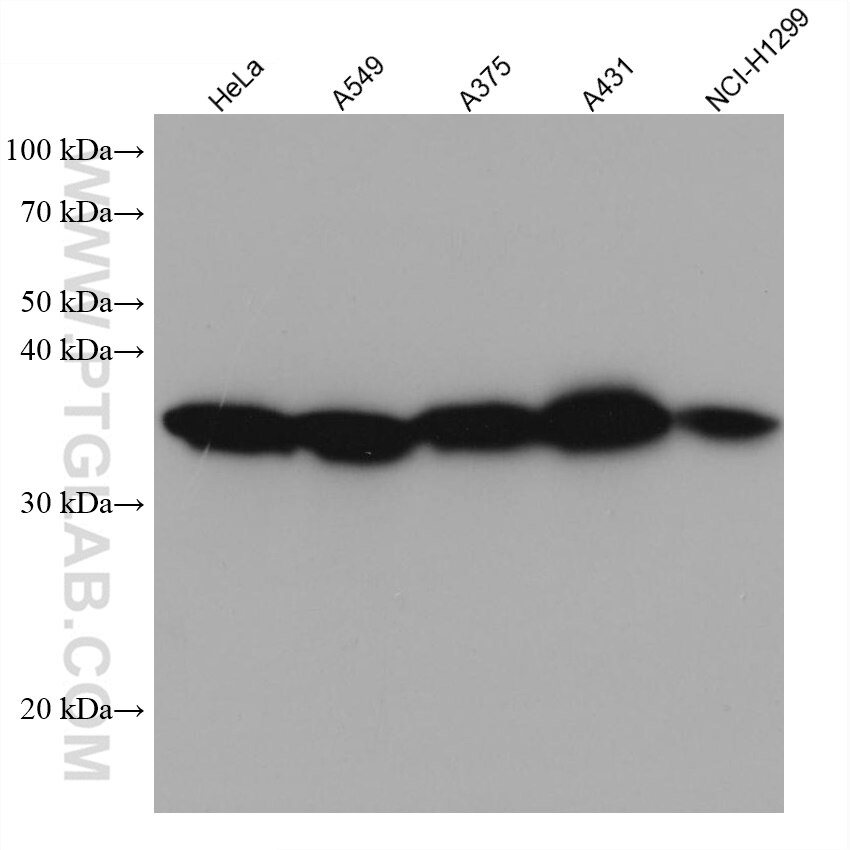
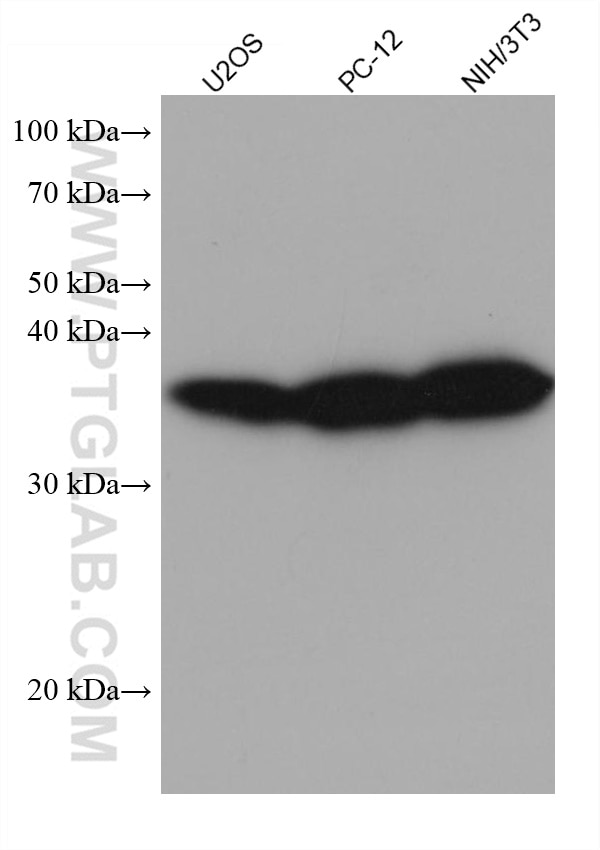
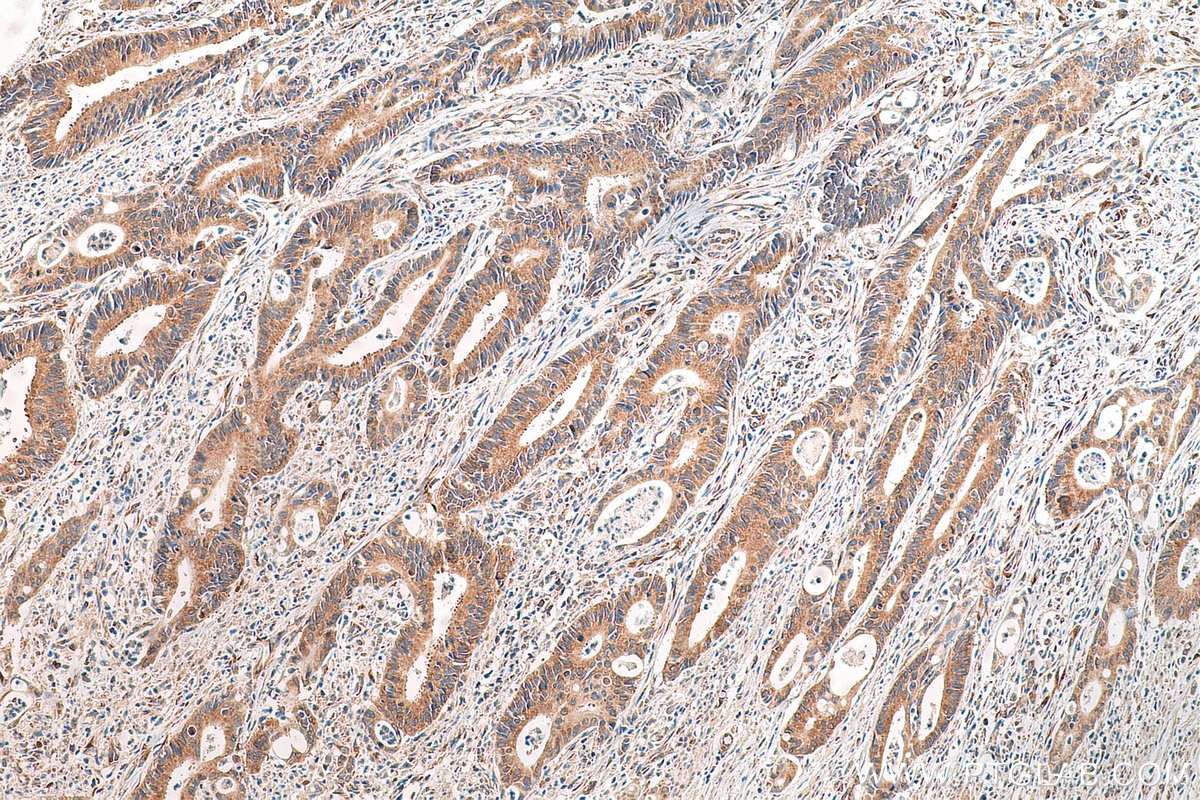
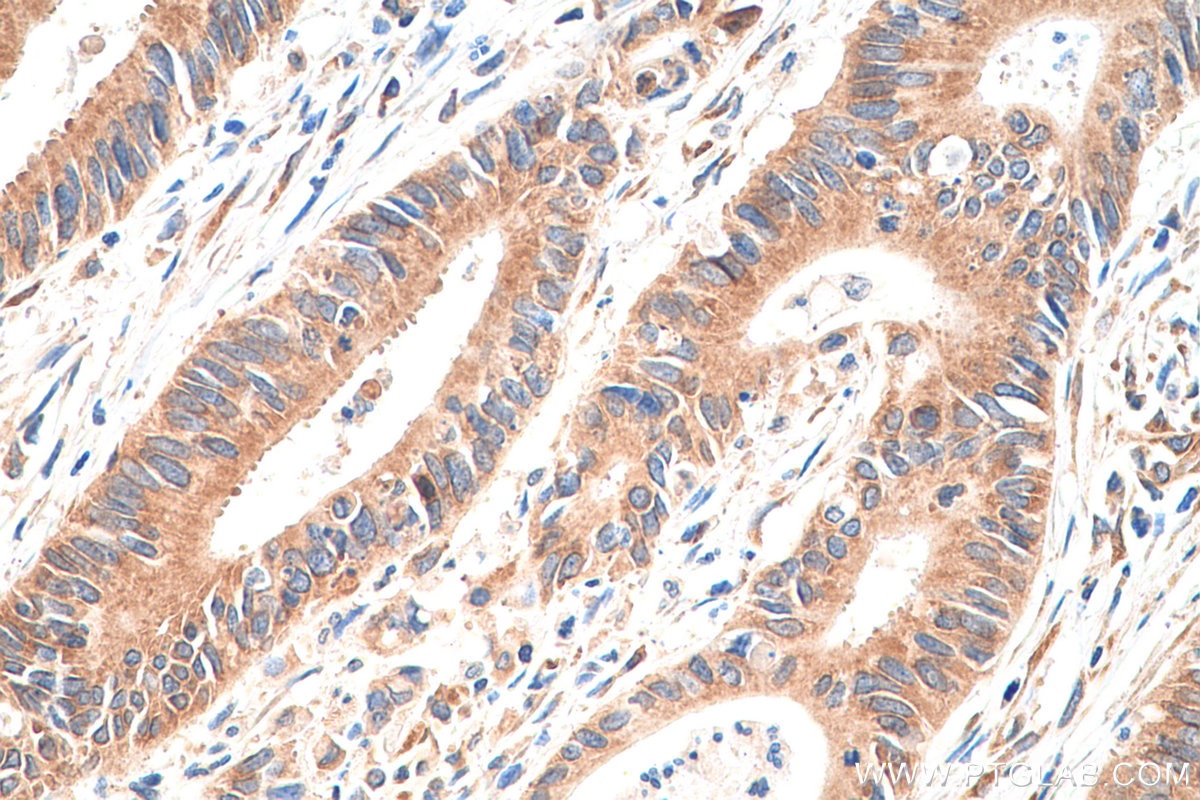
Geprüfte Anwendungen
| Erfolgreiche Detektion in WB | HeLa-Zellen, A375-Zellen, A431-Zellen, A549-Zellen, NCI-H1299-Zellen, NIH/3T3-Zellen, PC-12-Zellen, U2OS-Zellen |
| Erfolgreiche Detektion in IHC | humanes Kolonkarzinomgewebe Hinweis: Antigendemaskierung mit TE-Puffer pH 9,0 empfohlen. (*) Wahlweise kann die Antigendemaskierung auch mit Citratpuffer pH 6,0 erfolgen. |
Empfohlene Verdünnung
| Anwendung | Verdünnung |
|---|---|
| Western Blot (WB) | WB : 1:5000-1:50000 |
| Immunhistochemie (IHC) | IHC : 1:200-1:800 |
| It is recommended that this reagent should be titrated in each testing system to obtain optimal results. | |
| Sample-dependent, check data in validation data gallery | |
Veröffentlichte Anwendungen
| WB | See 1 publications below |
Produktinformation
68056-1-Ig bindet in WB, IHC, ELISA RPLP0 und zeigt Reaktivität mit human, Maus, Ratten
| Getestete Reaktivität | human, Maus, Ratte |
| In Publikationen genannte Reaktivität | human, Ratte |
| Wirt / Isotyp | Maus / IgG1 |
| Klonalität | Monoklonal |
| Typ | Antikörper |
| Immunogen | RPLP0 fusion protein Ag1829 |
| Vollständiger Name | ribosomal protein, large, P0 |
| Berechnetes Molekulargewicht | 34 kDa |
| Beobachtetes Molekulargewicht | 34 kDa |
| GenBank-Zugangsnummer | BC009867 |
| Gene symbol | RPLP0 |
| Gene ID (NCBI) | 6175 |
| Konjugation | Unkonjugiert |
| Form | Liquid |
| Reinigungsmethode | Protein-G-Reinigung |
| Lagerungspuffer | PBS with 0.02% sodium azide and 50% glycerol |
| Lagerungsbedingungen | Bei -20℃ lagern. Aliquotieren ist bei -20oC Lagerung nicht notwendig. 20ul Größen enthalten 0,1% BSA. |
Protokolle
| PRODUKTSPEZIFISCHE PROTOKOLLE | |
|---|---|
| WB protocol for RPLP0 antibody 68056-1-Ig | Protokoll herunterladen |
| IHC protocol for RPLP0 antibody 68056-1-Ig | Protokoll herunterladenl |
| STANDARD-PROTOKOLLE | |
|---|---|
| Klicken Sie hier, um unsere Standardprotokolle anzuzeigen |
Publikationen
| Species | Application | Title |
|---|---|---|
Biomolecules Dietary Soy Prevents Alcohol-Mediated Neurocognitive Dysfunction and Associated Impairments in Brain Insulin Pathway Signaling in an Adolescent Rat Model. | ||
Life Sci Alliance Transcriptional regulators ensuring specific gene expression and decision-making at high TGFβ doses |

