- Featured Product
- KD/KO Validated
Raptor Polyklonaler Antikörper
Raptor Polyklonal Antikörper für WB, IF/ICC, IP, Indirect ELISA
Wirt / Isotyp
Kaninchen / IgG
Getestete Reaktivität
human, Maus
Anwendung
WB, IF/ICC, IP, Indirect ELISA
Konjugation
Unkonjugiert
Kat-Nr. : 20984-1-PBS
Synonyme
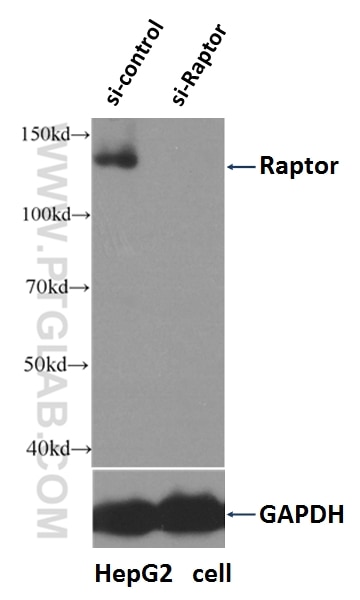
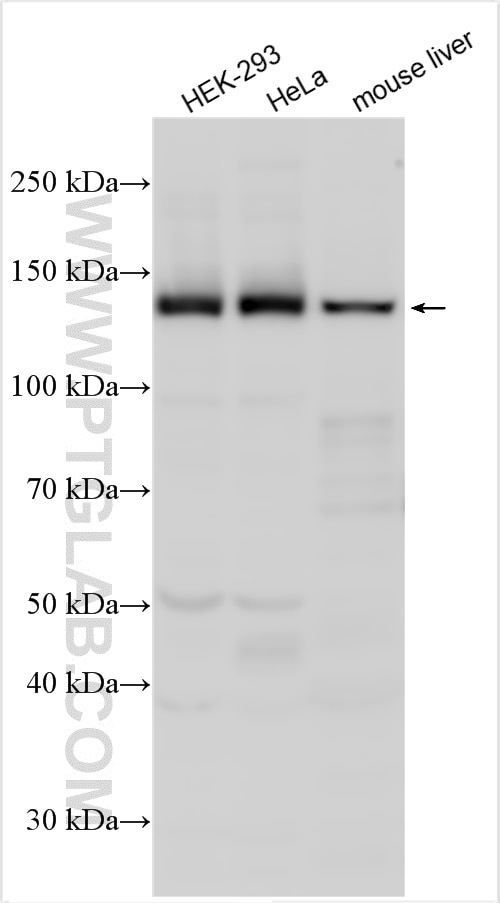
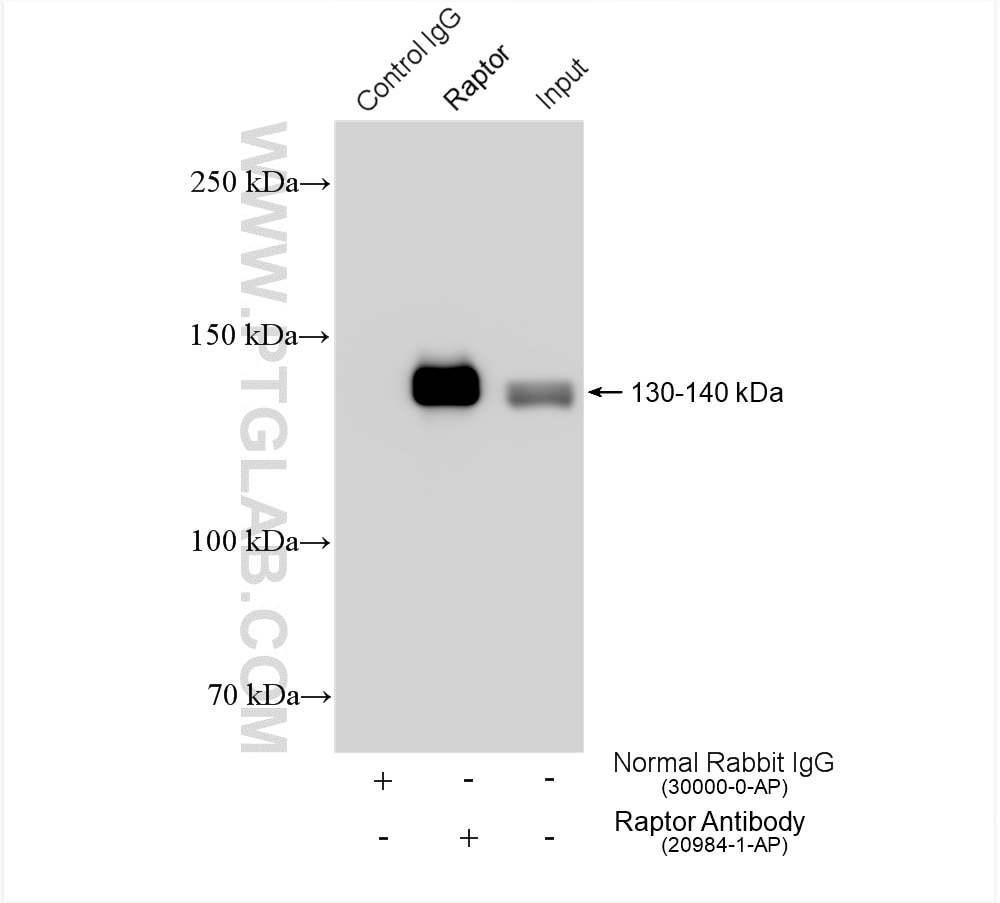
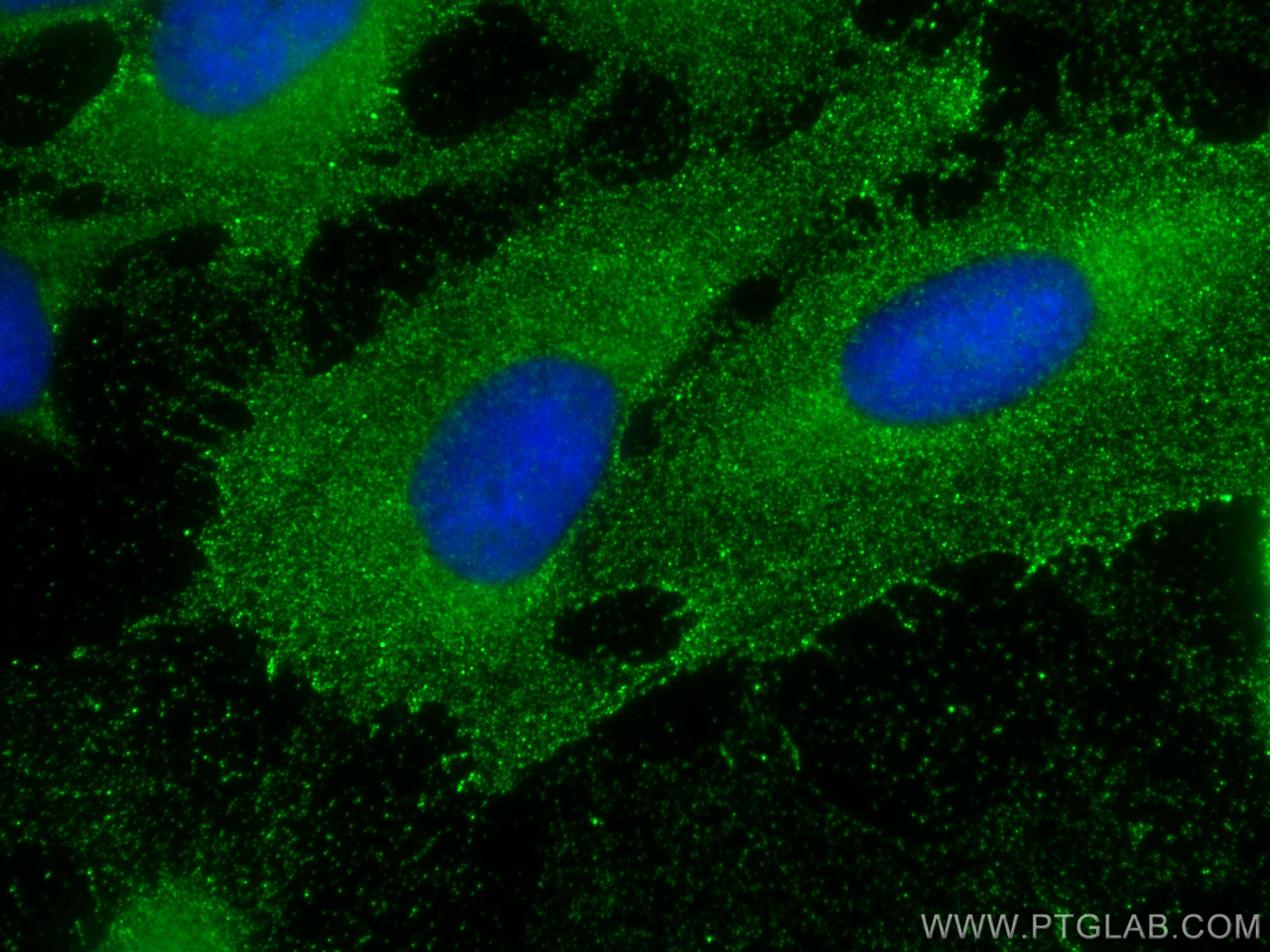
Geprüfte Anwendungen
Produktinformation
20984-1-PBS bindet in WB, IF/ICC, IP, Indirect ELISA Raptor und zeigt Reaktivität mit human, Maus
| Getestete Reaktivität | human, Maus |
| Wirt / Isotyp | Kaninchen / IgG |
| Klonalität | Polyklonal |
| Typ | Antikörper |
| Immunogen | Peptid |
| Vollständiger Name | raptor |
| Berechnetes Molekulargewicht | 149 kDa |
| Beobachtetes Molekulargewicht | 130-150 kDa |
| GenBank-Zugangsnummer | NM_020761 |
| Gene symbol | Raptor |
| Gene ID (NCBI) | 57521 |
| Konjugation | Unkonjugiert |
| Form | Liquid |
| Reinigungsmethode | Antigen-Affinitätsreinigung |
| Lagerungspuffer | PBS only |
| Lagerungsbedingungen | Store at -80°C. 20ul Größen enthalten 0,1% BSA. |
Hintergrundinformationen
RPTOR, also named as KIAA1303 and RAPTOR Belongs to the WD repeat RAPTOR family. It is involved in the control of the mammalian target of rapamycin complex 1 (mTORC1) activity which regulates cell growth and survival, and autophagy in response to nutrient and hormonal signals; functions as a scaffold for recruiting mTORC1 substrates. mTORC1 is activated in response to growth factors or amino-acids. Amino-acid-signaling to mTORC1 is mediated by Rag GTPases, which cause amino-acid-induced relocalization of mTOR within the endomembrane system. Activated mTORC1 up-regulates protein synthesis by phosphorylating key regulators of mRNA translation and ribosome synthesis. mTORC1 phosphorylates EIF4EBP1 and releases it from inhibiting the elongation initiation factor 4E (eiF4E). mTORC1 phosphorylates and activates S6K1 at 'Thr-389', which then promotes protein synthesis by phosphorylating PDCD4 and targeting it for degradation. The antibody is specific to RPTOR.


