SLPI Polyklonaler Antikörper
SLPI Polyklonal Antikörper für WB, IF/ICC, IP, Indirect ELISA
Wirt / Isotyp
Kaninchen / IgG
Getestete Reaktivität
human
Anwendung
WB, IF/ICC, IP, Indirect ELISA
Konjugation
Unkonjugiert
Kat-Nr. : 32205-1-PBS
Synonyme
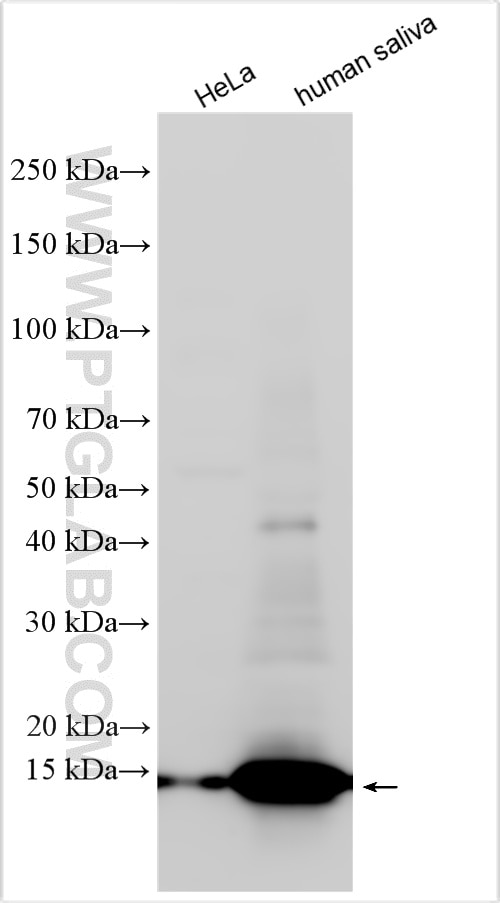
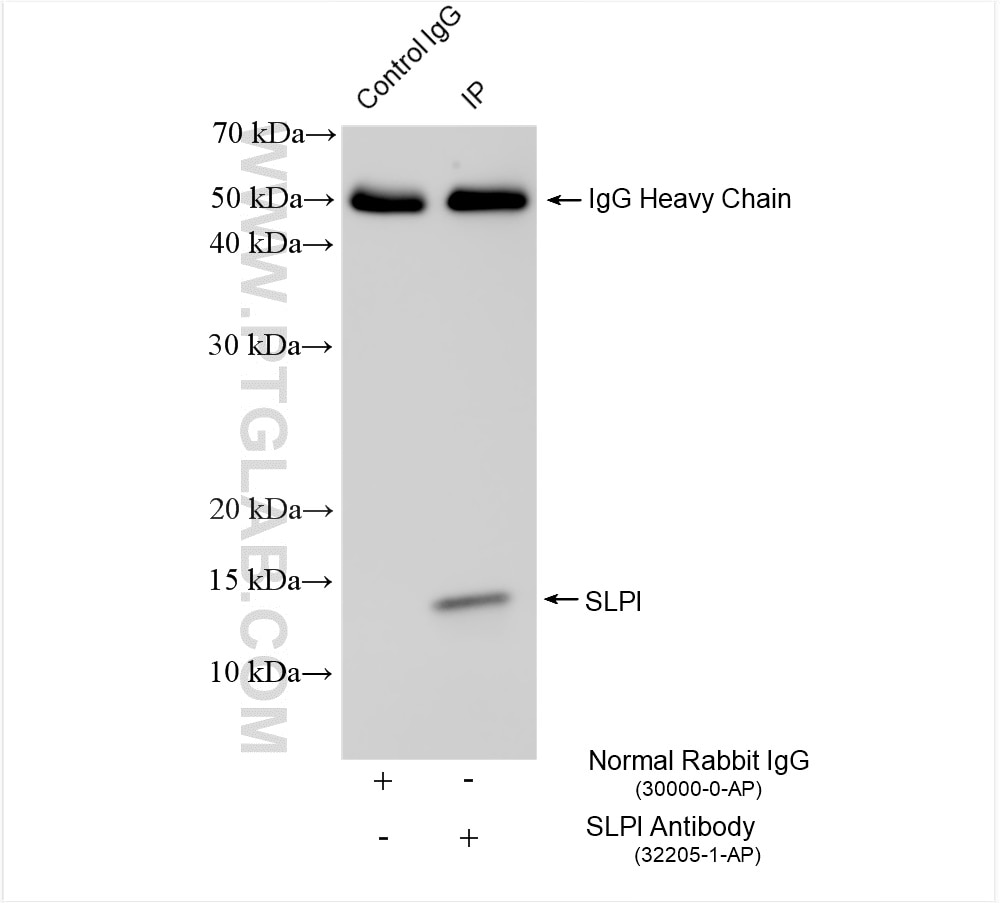
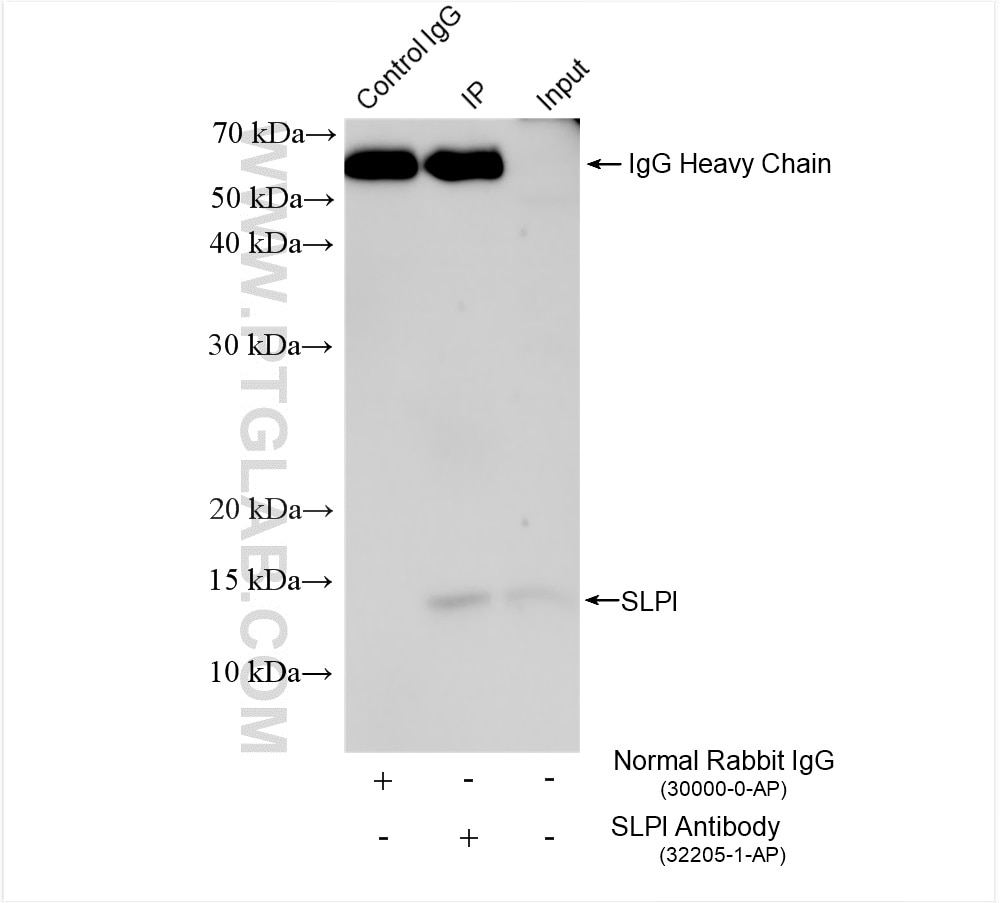
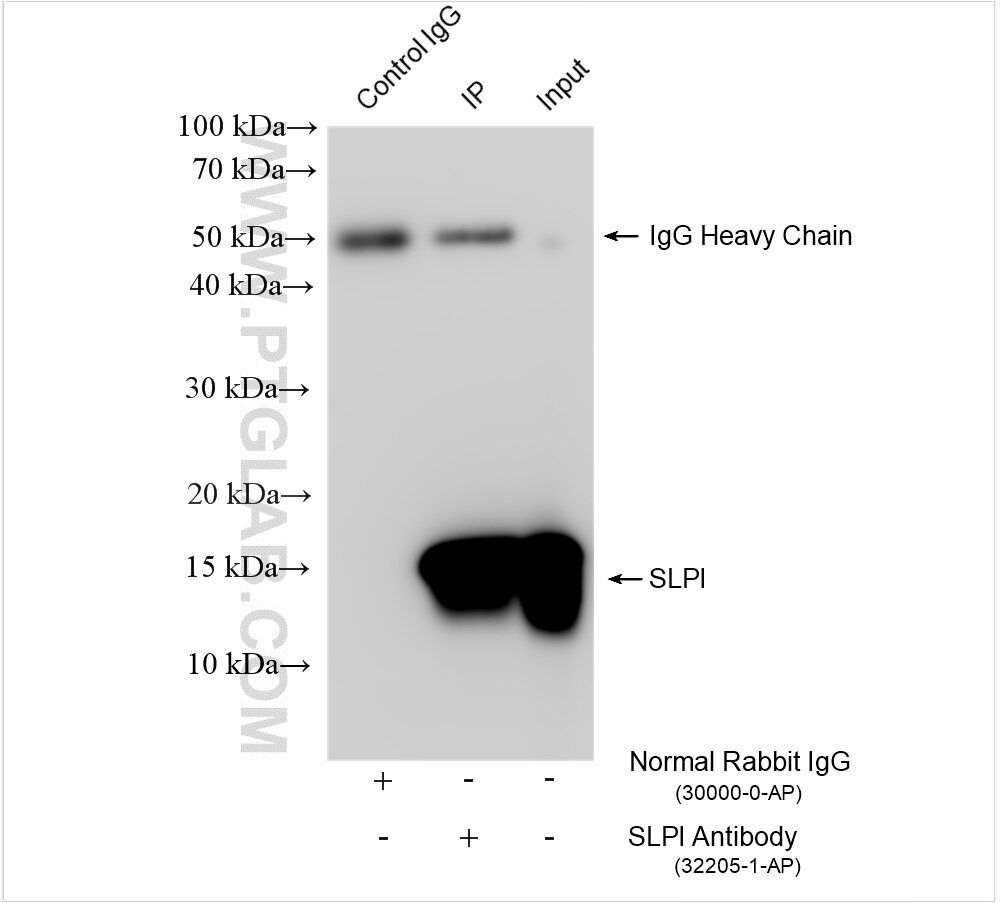
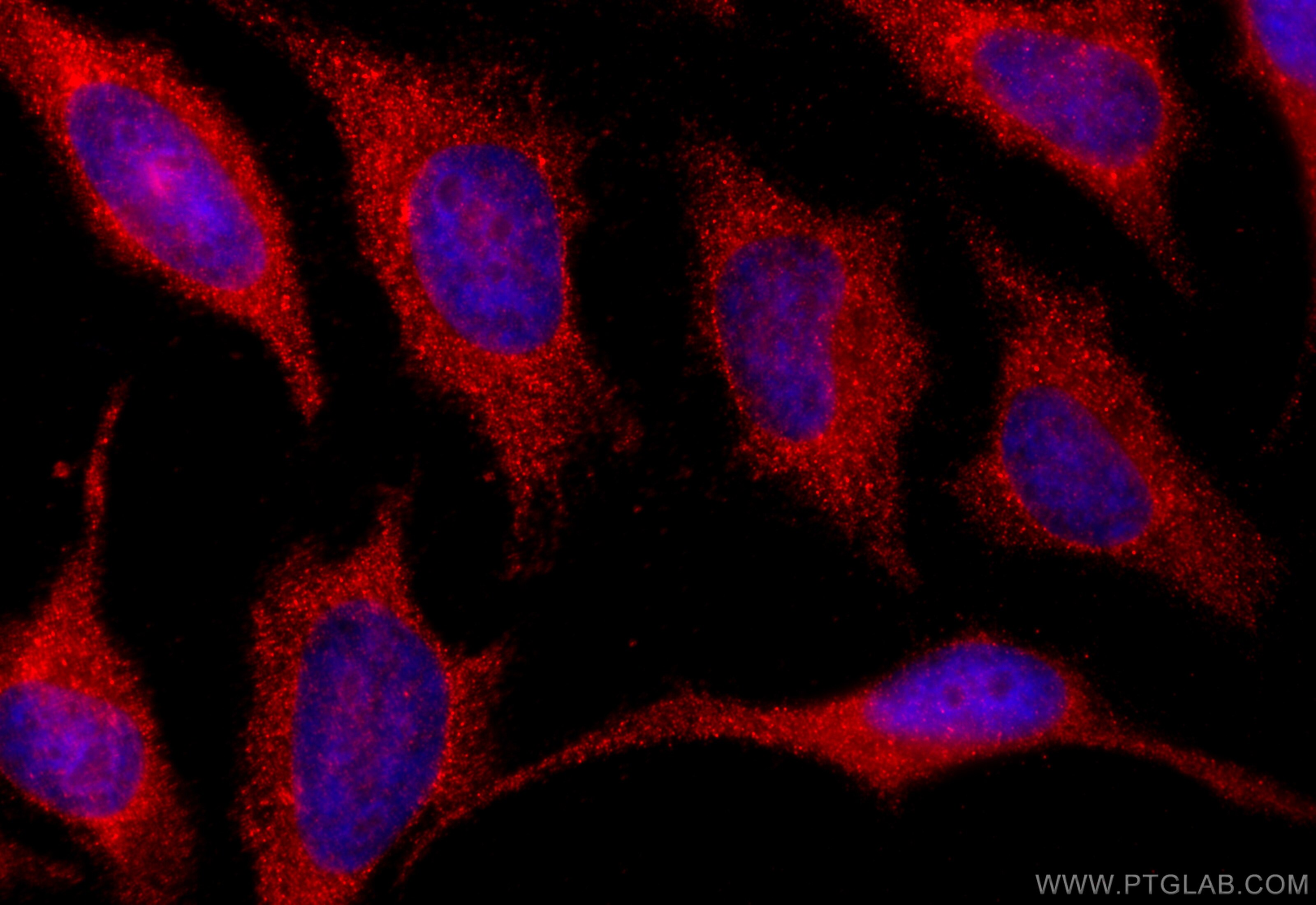
Geprüfte Anwendungen
Produktinformation
32205-1-PBS bindet in WB, IF/ICC, IP, Indirect ELISA SLPI und zeigt Reaktivität mit human
| Getestete Reaktivität | human |
| Wirt / Isotyp | Kaninchen / IgG |
| Klonalität | Polyklonal |
| Typ | Antikörper |
| Immunogen | SLPI fusion protein Ag36523 |
| Vollständiger Name | secretory leukocyte peptidase inhibitor |
| Berechnetes Molekulargewicht | 14 kDa |
| Beobachtetes Molekulargewicht | 14 kDa |
| GenBank-Zugangsnummer | BC020708 |
| Gene symbol | SLPI |
| Gene ID (NCBI) | 6590 |
| Konjugation | Unkonjugiert |
| Form | Liquid |
| Reinigungsmethode | Antigen-Affinitätsreinigung |
| Lagerungspuffer | PBS only |
| Lagerungsbedingungen | Store at -80°C. 20ul Größen enthalten 0,1% BSA. |
Hintergrundinformationen
Secretory leukocyte protease inhibitor (SLPI) is also named as Antileukoproteinase (ALP), BLPI, HUSI-1, WAP4, WFDC4 and mucus proteinase inhibitor (MPI). The SLPI is a multifunctional protein involved in the modulation of immunological response and the inhibition of protease activities. SLPI acts as an inhibitor of proteases, exerts antibacterial properties, and suppresses the transcription of proinflammatory genes through the nuclear factor-kappa B (NF-κB) pathway (PMID: 37356220). SLPI is as a serine protease inhibitor and also as a critical mediator that is involved in the PTH-mediated shift to the osteoblastic phase (PMID: 17474882). Slpi induction in osteoblasts enhances its differentiation, and increases osteoblast-osteoclast contact, thereby suppressing osteoclastic function (PMID: 17474882). SLPI is an evolutionarily conserved, pleiotropic protein expressed at mucosal surfaces, mainly by epithelial cells (PMID: 33602652). SLPI maintains homeostasis at barrier tissues by preventing tissue destruction and regulating the threshold of inflammatory immune responses, while protecting the host from infection. However, as recent studies demonstrate that overexpression of SLPI increases the metastatic potential of epithelial tumors (PMID: 33602652). The role of this protein as a regulatory agent has been implicated in various types of cancer (PMID: 37356220).


