SMAD9 Polyklonaler Antikörper
SMAD9 Polyklonal Antikörper für WB, Indirect ELISA
Wirt / Isotyp
Kaninchen / IgG
Getestete Reaktivität
human, Maus, Ratte
Anwendung
WB, Indirect ELISA
Konjugation
Unkonjugiert
Kat-Nr. : 16397-1-PBS
Synonyme
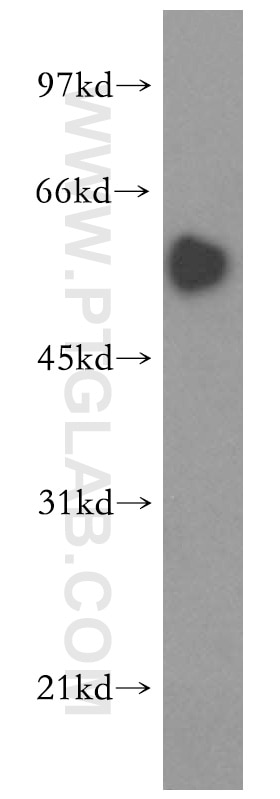
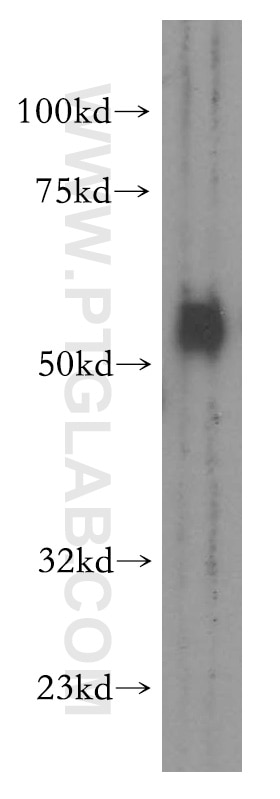
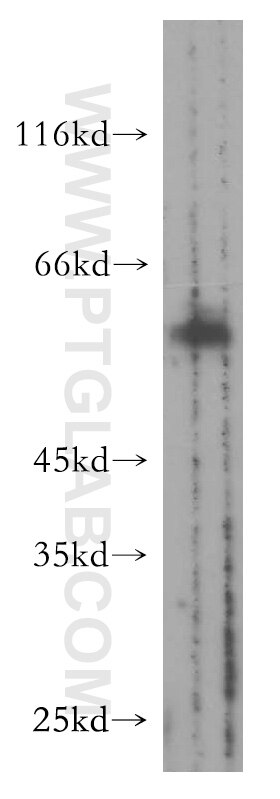
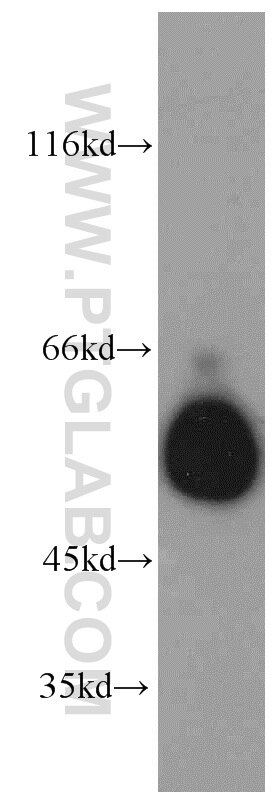
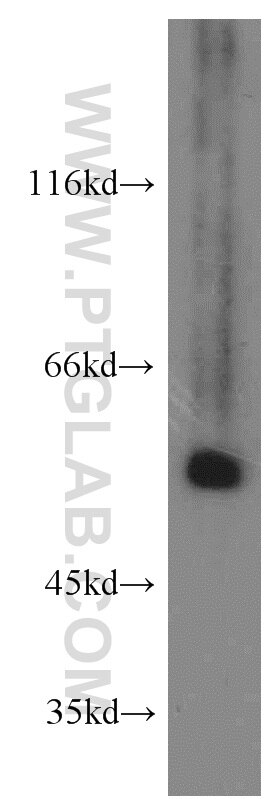
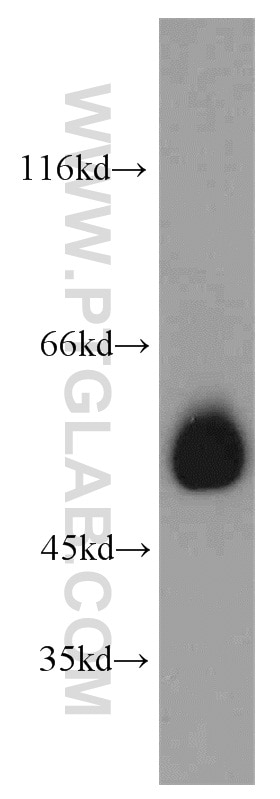
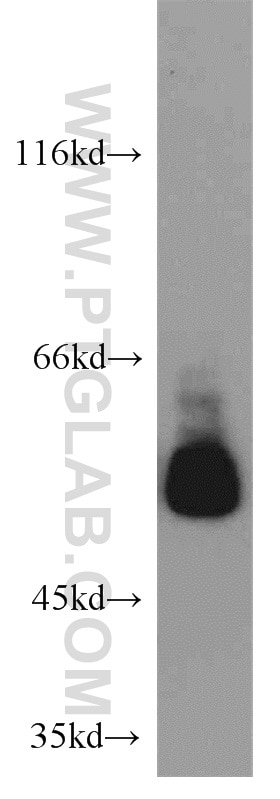
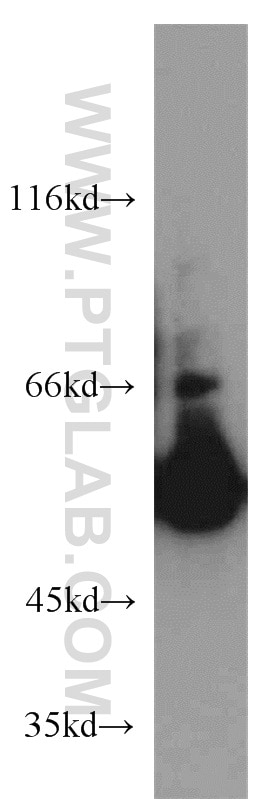
Geprüfte Anwendungen
Produktinformation
16397-1-PBS bindet in WB, Indirect ELISA SMAD9 und zeigt Reaktivität mit human, Maus, Ratten
| Getestete Reaktivität | human, Maus, Ratte |
| Wirt / Isotyp | Kaninchen / IgG |
| Klonalität | Polyklonal |
| Typ | Antikörper |
| Immunogen | SMAD9 fusion protein Ag9490 |
| Vollständiger Name | SMAD family member 9 |
| Berechnetes Molekulargewicht | 430 aa, 49 kDa |
| Beobachtetes Molekulargewicht | 49-55 kDa |
| GenBank-Zugangsnummer | BC011559 |
| Gene symbol | SMAD9 |
| Gene ID (NCBI) | 4093 |
| Konjugation | Unkonjugiert |
| Form | Liquid |
| Reinigungsmethode | Antigen-Affinitätsreinigung |
| Lagerungspuffer | PBS only |
| Lagerungsbedingungen | Store at -80°C. 20ul Größen enthalten 0,1% BSA. |
Hintergrundinformationen
SMAD9 (also known as MADH9 or MAD homolog 9) is a key signaling molecule in the transforming growth factor-β (TGF-β) superfamily signaling pathway and belongs to the SMAD1/5/9 subgroup of receptor-regulated SMADs (R-SMADs). It is primarily activated and phosphorylated by BMP (bone morphogenetic protein) type I receptors. Once activated, SMAD9 forms a complex with the common SMAD4 (Co-SMAD), translocates into the nucleus, and acts as a transcription factor to regulate the expression of specific target genes. This process is involved in modulating a variety of critical biological processes, including cell proliferation, differentiation, apoptosis, and embryonic development. Mutations or abnormal expression of SMAD9 are associated with several diseases, particularly in pulmonary arterial hypertension, certain cancers, and vascular diseases, where it plays a significant role.


