- Featured Product
- KD/KO Validated
SRRM1 Polyklonaler Antikörper
SRRM1 Polyklonal Antikörper für WB, IP, Indirect ELISA
Wirt / Isotyp
Kaninchen / IgG
Getestete Reaktivität
human, Maus, Ratte
Anwendung
WB, IP, Indirect ELISA
Konjugation
Unkonjugiert
Kat-Nr. : 12822-1-PBS
Synonyme
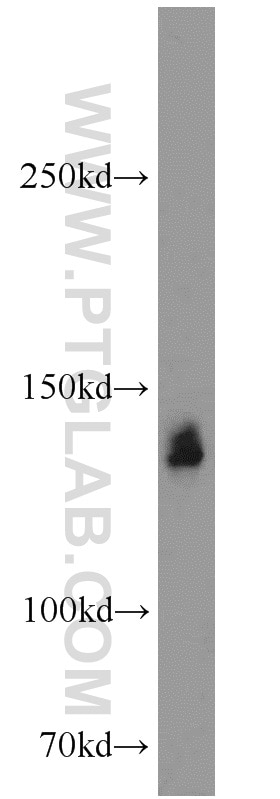
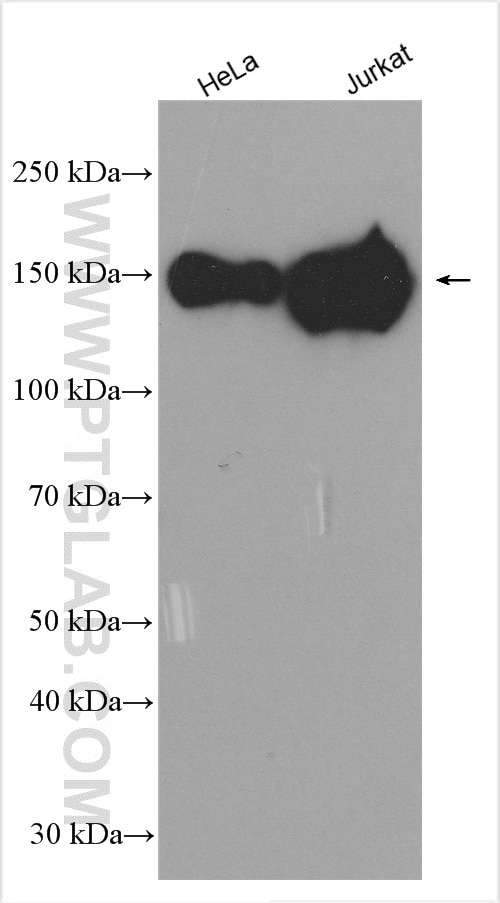
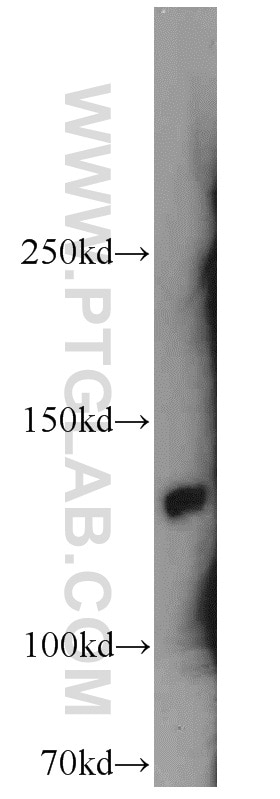
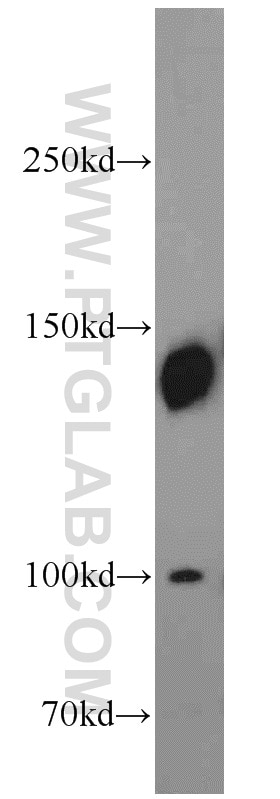
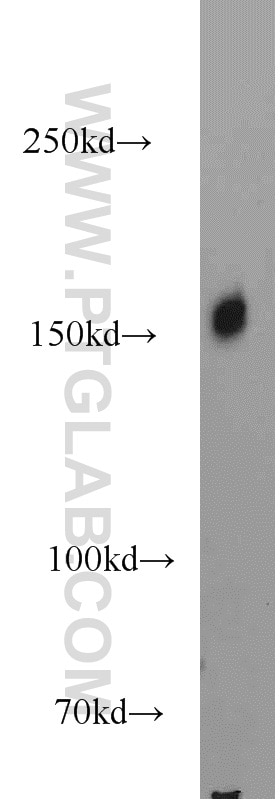
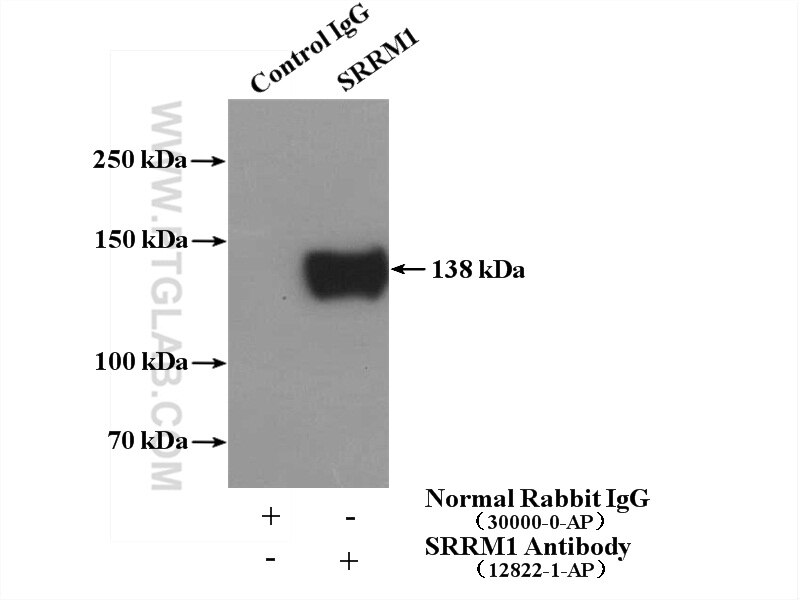
Geprüfte Anwendungen
Produktinformation
12822-1-PBS bindet in WB, IP, Indirect ELISA SRRM1 und zeigt Reaktivität mit human, Maus, Ratten
| Getestete Reaktivität | human, Maus, Ratte |
| Wirt / Isotyp | Kaninchen / IgG |
| Klonalität | Polyklonal |
| Typ | Antikörper |
| Immunogen | SRRM1 fusion protein Ag3513 |
| Vollständiger Name | serine/arginine repetitive matrix 1 |
| Berechnetes Molekulargewicht | 904 aa, 102 kDa |
| Beobachtetes Molekulargewicht | 120-160 kDa |
| GenBank-Zugangsnummer | BC036187 |
| Gene symbol | SRRM1 |
| Gene ID (NCBI) | 10250 |
| Konjugation | Unkonjugiert |
| Form | Liquid |
| Reinigungsmethode | Antigen-Affinitätsreinigung |
| Lagerungspuffer | PBS only |
| Lagerungsbedingungen | Store at -80°C. 20ul Größen enthalten 0,1% BSA. |
Hintergrundinformationen
SRRM1, also named as SRM160 and POP101, contains one PWI domain and belongs to the splicing factor SR family. As part of pre- and post-splicing multiprotein mRNP complexes, SRRM1 is involved in numerous pre-mRNA processing events. It promotes constitutive and exonic splicing enhancer (ESE)-dependent splicing activation by bridging together sequence-specific (SR family proteins, SFRS4, SFRS5 and TRA2B/SFRS10) and basal snRNP (SNRP70 and SNRPA1) factors of the spliceosome. SRRM1 stimulates mRNA 3'-end cleavage independently of the formation of an exon junction complex. It binds both pre-mRNA and spliced mRNA 20-25 nt upstream of exon-exon junctions. SRRM1 binds RNA and DNA with low sequence specificity and has similar preference for either double- or single-stranded nucleic acid substrates. SRRM1, a protein of high molecular weight(120-160kd), has a heavy glycosylation level and is normally highly phosphorylated. This antibody is a rabbit polyclonal antibody raised against residues near the N terminus of human SRRM1.


