- Featured Product
- KD/KO Validated
STARD7 Polyklonaler Antikörper
STARD7 Polyklonal Antikörper für WB, IHC, ELISA
Wirt / Isotyp
Kaninchen / IgG
Getestete Reaktivität
human, Maus, Ratte
Anwendung
WB, IHC, ELISA
Konjugation
Unkonjugiert
Kat-Nr. : 15689-1-AP
Synonyme
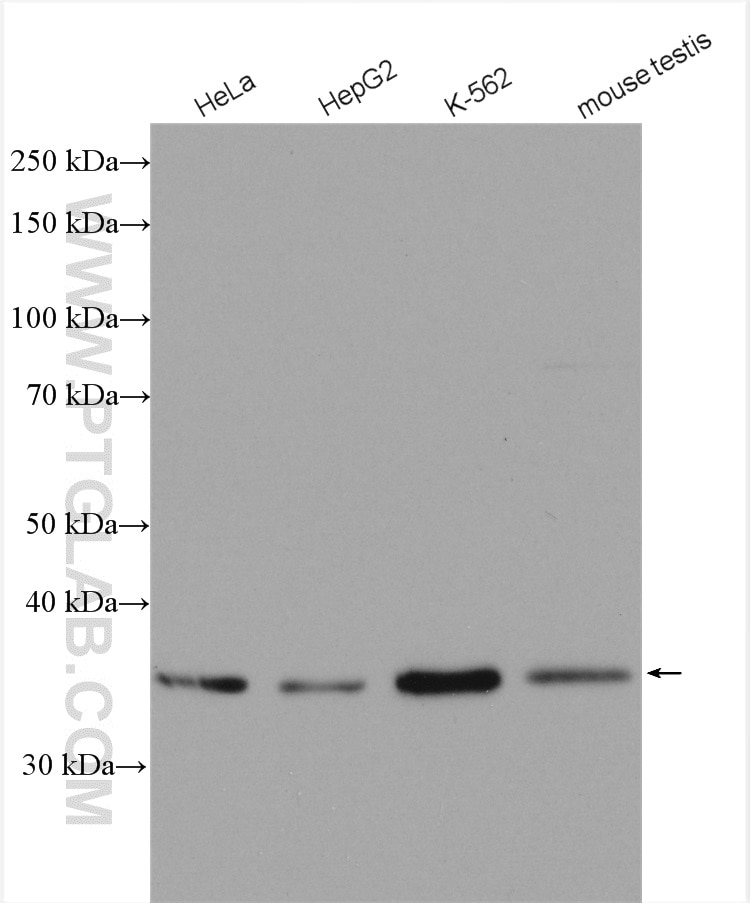
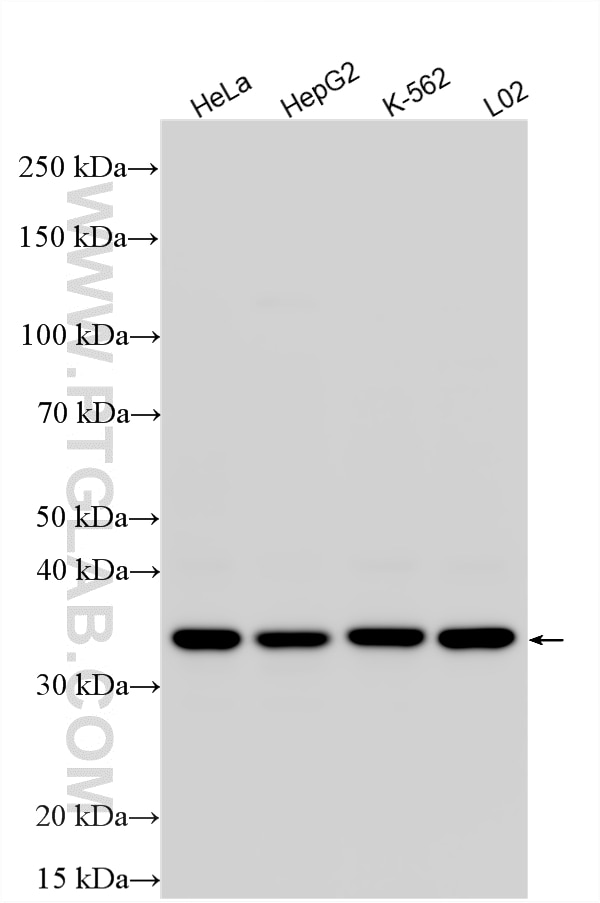
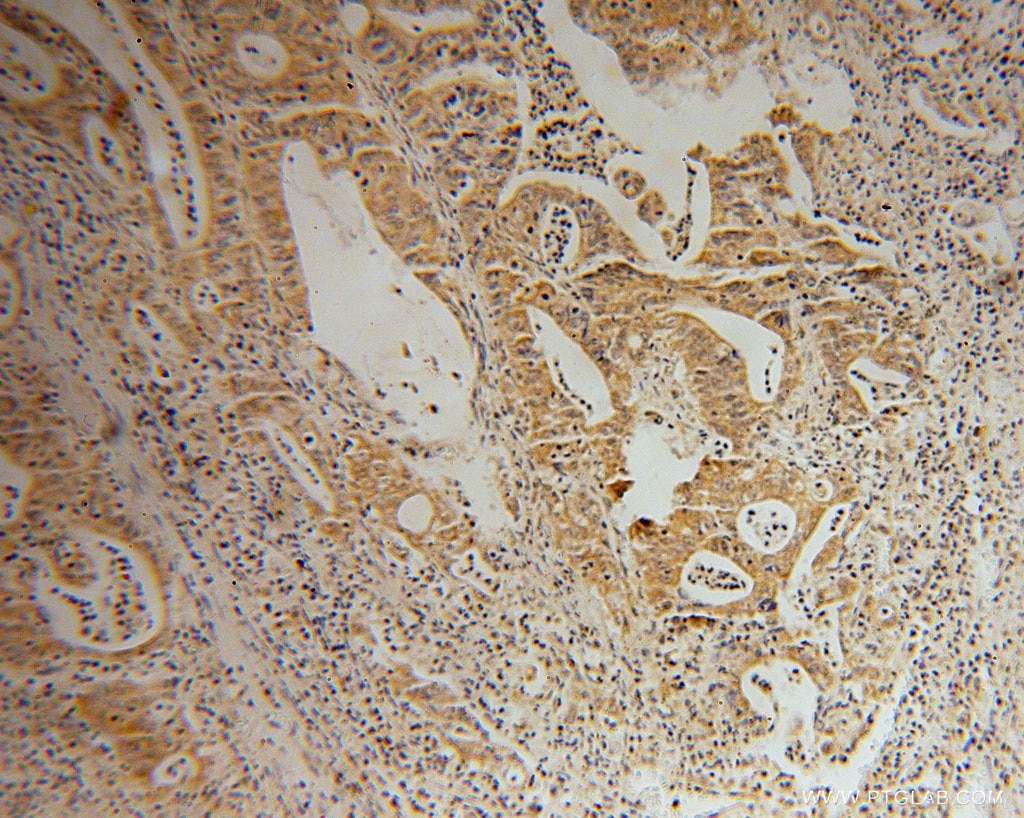
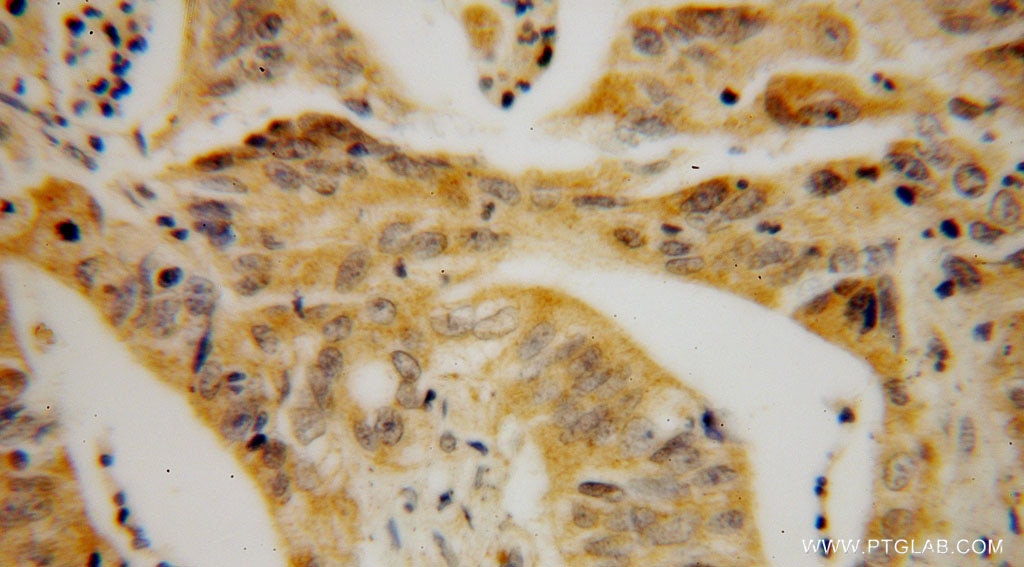
Geprüfte Anwendungen
| Erfolgreiche Detektion in WB | HeLa-Zellen, HepG2-Zellen, K-562-Zellen, L02-Zellen, Maushodengewebe |
| Erfolgreiche Detektion in IHC | humanes Kolonkarzinomgewebe Hinweis: Antigendemaskierung mit TE-Puffer pH 9,0 empfohlen. (*) Wahlweise kann die Antigendemaskierung auch mit Citratpuffer pH 6,0 erfolgen. |
Empfohlene Verdünnung
| Anwendung | Verdünnung |
|---|---|
| Western Blot (WB) | WB : 1:2000-1:8000 |
| Immunhistochemie (IHC) | IHC : 1:20-1:200 |
| It is recommended that this reagent should be titrated in each testing system to obtain optimal results. | |
| Sample-dependent, check data in validation data gallery | |
Veröffentlichte Anwendungen
| KD/KO | See 2 publications below |
| WB | See 10 publications below |
Produktinformation
15689-1-AP bindet in WB, IHC, ELISA STARD7 und zeigt Reaktivität mit human, Maus, Ratten
| Getestete Reaktivität | human, Maus, Ratte |
| In Publikationen genannte Reaktivität | human, Maus |
| Wirt / Isotyp | Kaninchen / IgG |
| Klonalität | Polyklonal |
| Typ | Antikörper |
| Immunogen | STARD7 fusion protein Ag8224 |
| Vollständiger Name | StAR-related lipid transfer (START) domain containing 7 |
| Berechnetes Molekulargewicht | 295 aa, 35 kDa |
| Beobachtetes Molekulargewicht | 34 kDa |
| GenBank-Zugangsnummer | BC008894 |
| Gene symbol | STARD7 |
| Gene ID (NCBI) | 56910 |
| Konjugation | Unkonjugiert |
| Form | Liquid |
| Reinigungsmethode | Antigen-Affinitätsreinigung |
| Lagerungspuffer | PBS with 0.02% sodium azide and 50% glycerol |
| Lagerungsbedingungen | Bei -20°C lagern. Nach dem Versand ein Jahr lang stabil Aliquotieren ist bei -20oC Lagerung nicht notwendig. 20ul Größen enthalten 0,1% BSA. |
Hintergrundinformationen
STARD7, also known as gestational trophoblastic tumor gene-1 (GTT1), is a lipid transfer protein that specifically binds and transports phosphatidylcholine (PC) between cellular membranes. It is a member of the START (Steroidogenic Acute Regulatory protein-related lipid transfer) domain-containing protein family, which is involved in intracellular lipid transport and metabolism. (PMID: 23507753)
Protokolle
| PRODUKTSPEZIFISCHE PROTOKOLLE | |
|---|---|
| WB protocol for STARD7 antibody 15689-1-AP | Protokoll herunterladen |
| IHC protocol for STARD7 antibody 15689-1-AP | Protokoll herunterladenl |
| STANDARD-PROTOKOLLE | |
|---|---|
| Klicken Sie hier, um unsere Standardprotokolle anzuzeigen |
Publikationen
| Species | Application | Title |
|---|---|---|
Nat Cell Biol PARL mediates Smac proteolytic maturation in mitochondria to promote apoptosis. | ||
Nat Commun Intronic ATTTC repeat expansions in STARD7 in familial adult myoclonic epilepsy linked to chromosome 2. | ||
EMBO J PARL partitions the lipid transfer protein STARD7 between the cytosol and mitochondria. | ||
EMBO Mol Med Loss of the mitochondrial i-AAA protease YME1L leads to ocular dysfunction and spinal axonopathy. | ||
J Lipid Res A search for ceramide binding proteins using bifunctional lipid analogs yields CERT-related protein StarD7.
| ||
iScience Lipopolysaccharide induces placental mitochondrial dysfunction in murine and human systems by reducing MNRR1 levels via a TLR4-independent pathway |
Rezensionen
The reviews below have been submitted by verified Proteintech customers who received an incentive for providing their feedback.
FH Elsa (Verified Customer) (05-06-2019) | The antibody works well, a band at the expected molecular weight is shown. No unspecificity.
|

