Selenoprotein P Polyklonaler Antikörper
Selenoprotein P Polyklonal Antikörper für WB, IHC, IF/ICC, FC (Intra), Indirect ELISA
Wirt / Isotyp
Kaninchen / IgG
Getestete Reaktivität
human
Anwendung
WB, IHC, IF/ICC, FC (Intra), Indirect ELISA
Konjugation
Unkonjugiert
Kat-Nr. : 30249-1-PBS
Synonyme
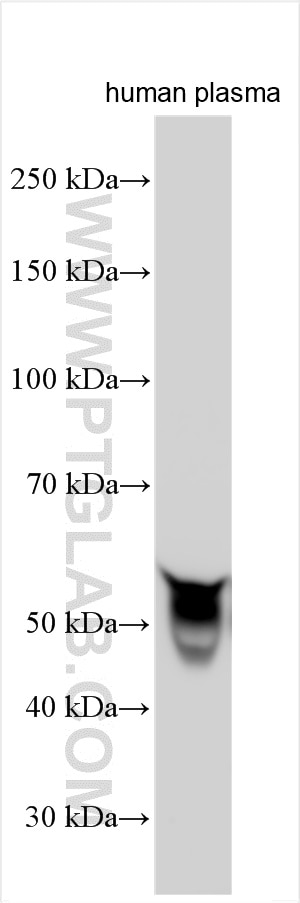
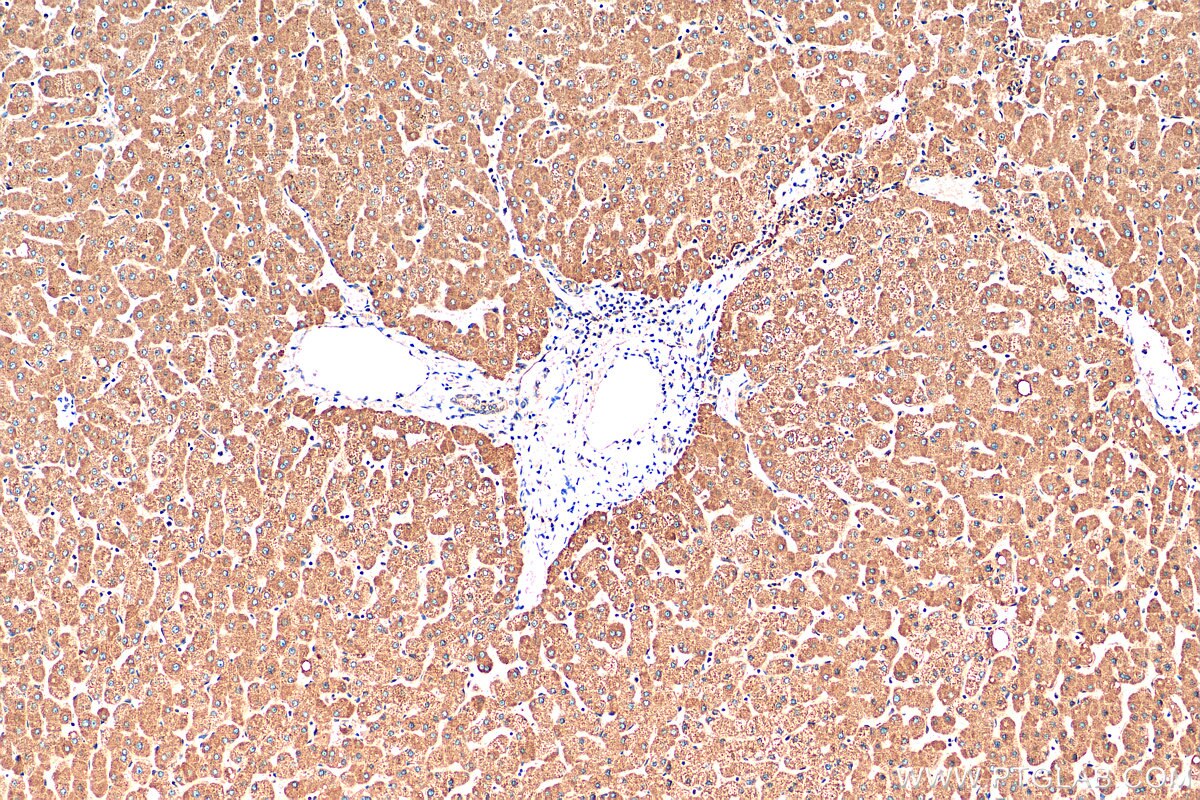
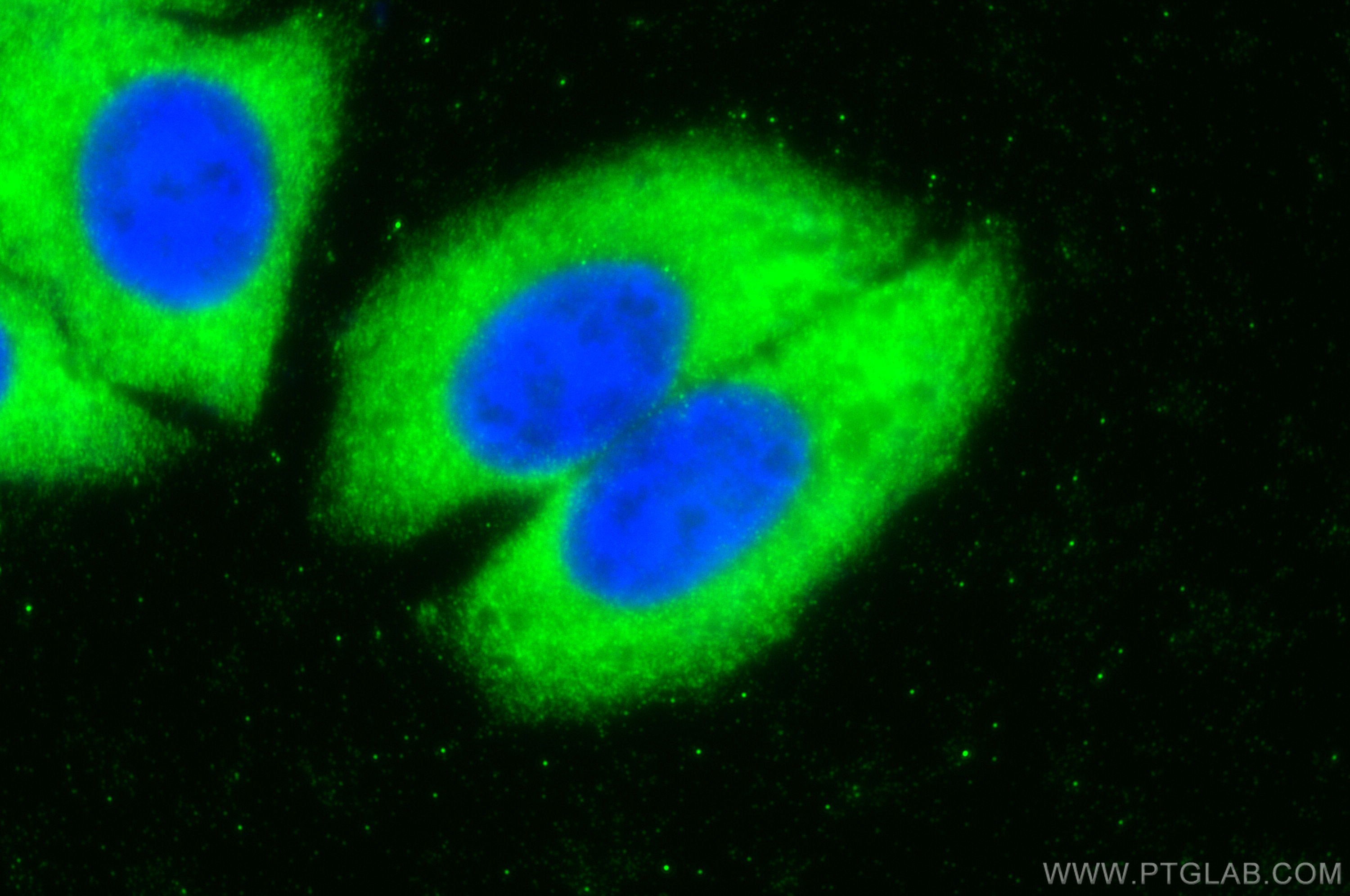
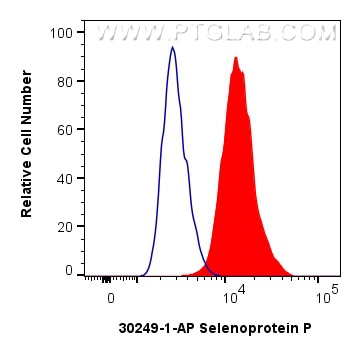
Geprüfte Anwendungen
Produktinformation
30249-1-PBS bindet in WB, IHC, IF/ICC, FC (Intra), Indirect ELISA Selenoprotein P und zeigt Reaktivität mit human
| Getestete Reaktivität | human |
| Wirt / Isotyp | Kaninchen / IgG |
| Klonalität | Polyklonal |
| Typ | Antikörper |
| Immunogen | Selenoprotein P fusion protein Ag32952 |
| Vollständiger Name | selenoprotein P, plasma, 1 |
| Berechnetes Molekulargewicht | 43 kDa |
| Beobachtetes Molekulargewicht | 45-50 kDa |
| GenBank-Zugangsnummer | NM_001085486.2 |
| Gene symbol | Selenoprotein P |
| Gene ID (NCBI) | 6414 |
| Konjugation | Unkonjugiert |
| Form | Liquid |
| Reinigungsmethode | Antigen-Affinitätsreinigung |
| Lagerungspuffer | PBS only |
| Lagerungsbedingungen | Store at -80°C. 20ul Größen enthalten 0,1% BSA. |
Hintergrundinformationen
Selenoprotein P, also known as SEPP1, is expressed in the liver and heart and secreted into the plasma(PMID: 8421687). Selenoprotein P is implicated as an extracellular antioxidant involved in the transport of selenium to extra-hepatic tissues via apolipoprotein E receptor-2 (apoER2) and provides selenium to tissues such as brain and testis. In humans, it exists in plasma as two isoforms of approximately 50 and 60 kDa(PMID:19453253). Selenoprotein P is a glycosylated protein and deglycosylation of SEPP1 results in 45 kDa and 35 kDa isoforms(PMID: 25298198).


