TMUB1 Polyklonaler Antikörper
TMUB1 Polyklonal Antikörper für WB, IF/ICC, Indirect ELISA
Wirt / Isotyp
Kaninchen / IgG
Getestete Reaktivität
human
Anwendung
WB, IF/ICC, Indirect ELISA
Konjugation
Unkonjugiert
Kat-Nr. : 16638-1-PBS
Synonyme
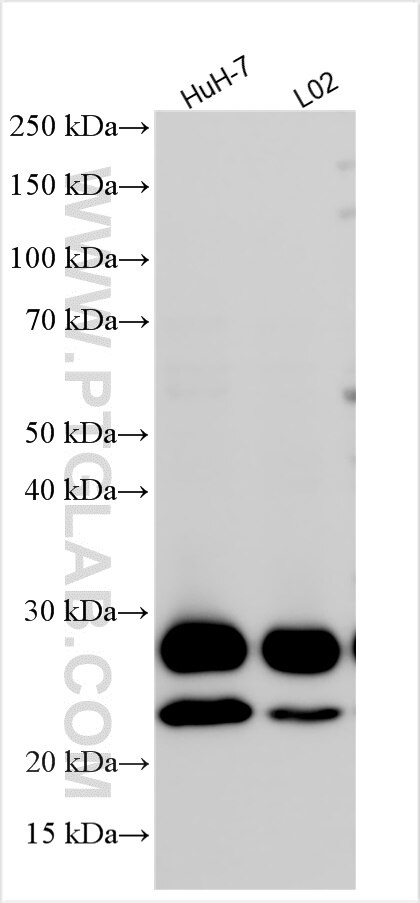
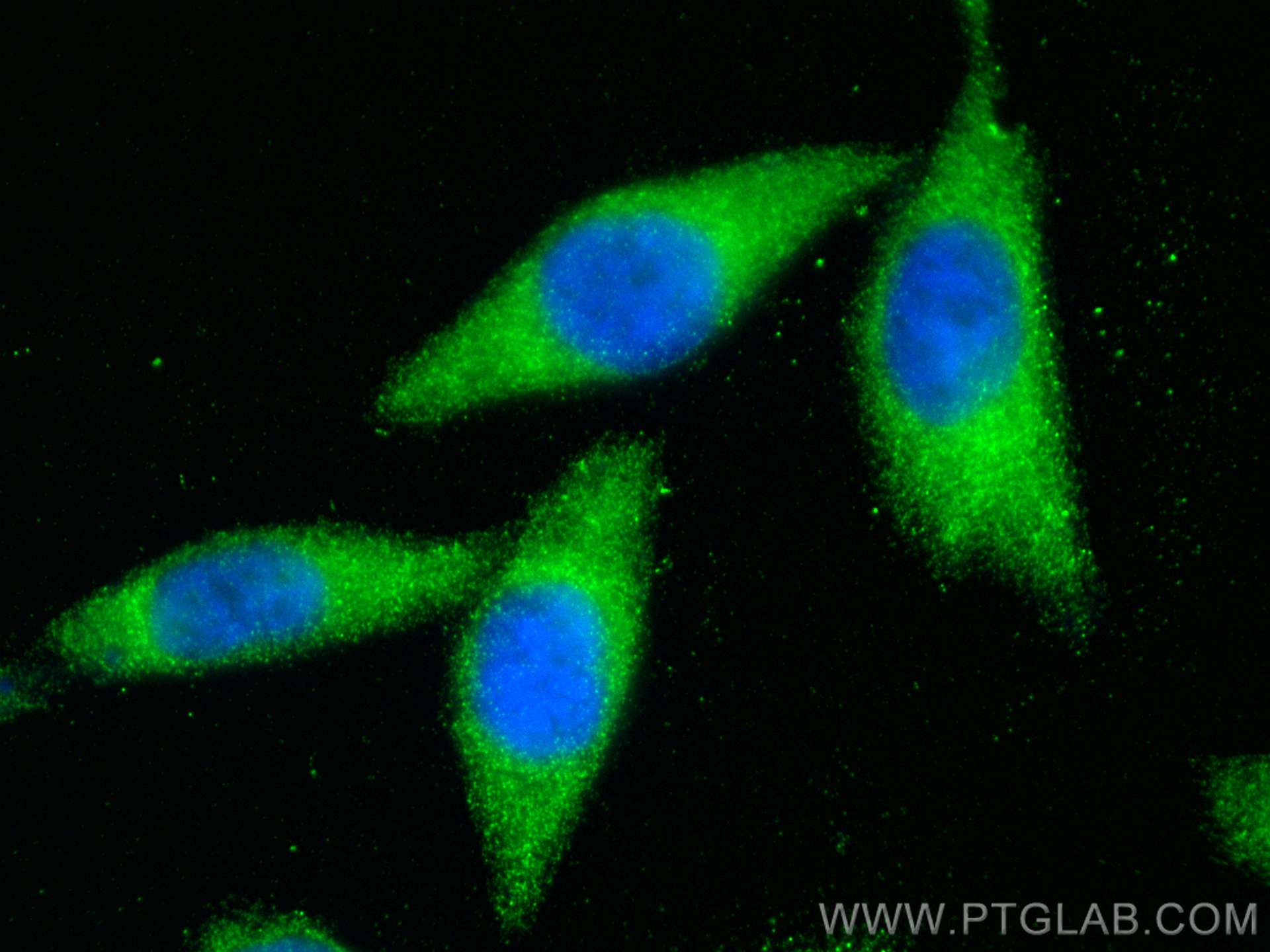
Geprüfte Anwendungen
Produktinformation
16638-1-PBS bindet in WB, IF/ICC, Indirect ELISA TMUB1 und zeigt Reaktivität mit human
| Getestete Reaktivität | human |
| Wirt / Isotyp | Kaninchen / IgG |
| Klonalität | Polyklonal |
| Typ | Antikörper |
| Immunogen | TMUB1 fusion protein Ag9988 |
| Vollständiger Name | transmembrane and ubiquitin-like domain containing 1 |
| Berechnetes Molekulargewicht | 26 kDa |
| Beobachtetes Molekulargewicht | 27 kDa, 24 kDa |
| GenBank-Zugangsnummer | BC000936 |
| Gene symbol | TMUB1 |
| Gene ID (NCBI) | 83590 |
| Konjugation | Unkonjugiert |
| Form | Liquid |
| Reinigungsmethode | Antigen-Affinitätsreinigung |
| Lagerungspuffer | PBS only |
| Lagerungsbedingungen | Store at -80°C. 20ul Größen enthalten 0,1% BSA. |
Hintergrundinformationen
Transmembrane and ubiquitin-like domain-containing protein 1 (TMUB1), also referred to as hepatocyte odd protein shuttling (HOPS), is a transmembrane ubiquitin-like protein that was originally identified in the regenerated liver. HOPS is a transmembrane protein released into the cell by an enzymatic cleavage. This allows HOPS to be shuttled from the nucleus to the cytoplasm and vice versa, depending on cell cycle and environmental stress conditions. HOPS cDNA expression gives rise to the translation of three different proteins with distinct molecular weights of 27, 24 and 21 kDa, respectively.The three isoforms of HOPS are differentially expressed depending on the tissue being examined. In the brain, the shortest isoform prevails over the other, whereas in the intestine the higher molecular weight isoform prevails among the other two. Indeed, HOPS shows a different concentration of the three isoforms, which can play different cell-dependent functions. The ratio between different isoforms may vary owing to physiopathological changes in the cell (PMID:32860479).16638-1-AP can detect two bands and some literature also detected two bands (PMID:30610893, 29777440, 29967478)


