TGFBI/BIGH3 Rekombinanter Antikörper
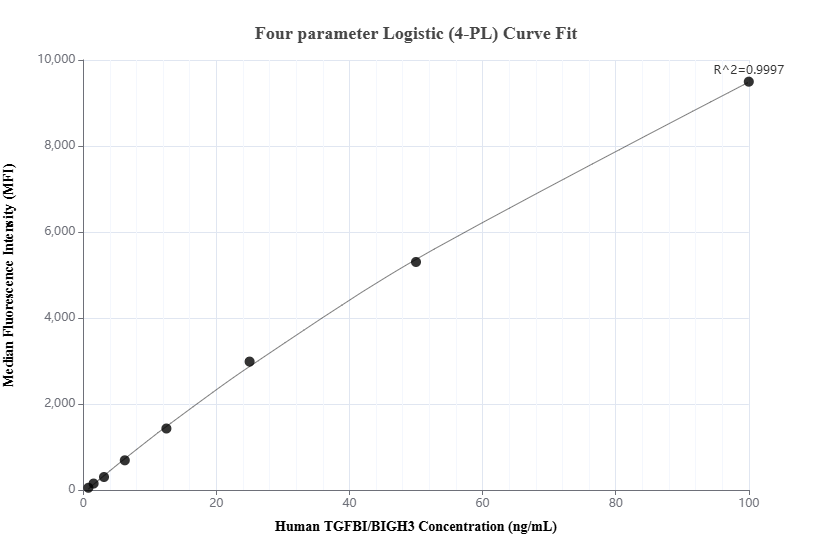
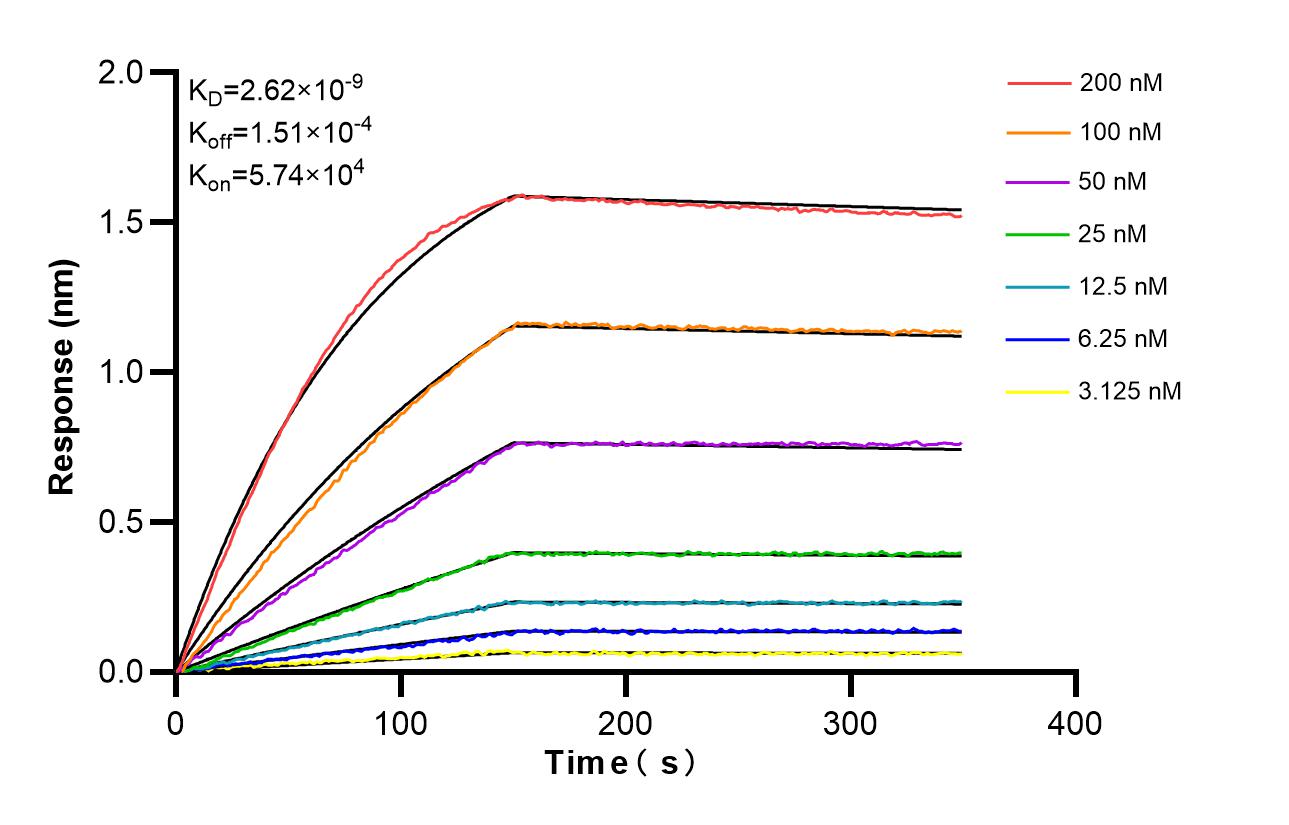
TGFBI/BIGH3 Rekombinant Antikörper für WB, Cytometric bead array, Indirect ELISA
Wirt / Isotyp
Kaninchen / IgG
Getestete Reaktivität
human, Maus, Ratte
Anwendung
WB, Cytometric bead array, Indirect ELISA
Konjugation
Unkonjugiert
CloneNo.
243108H4
Kat-Nr. : 80805-3-PBS
Synonyme
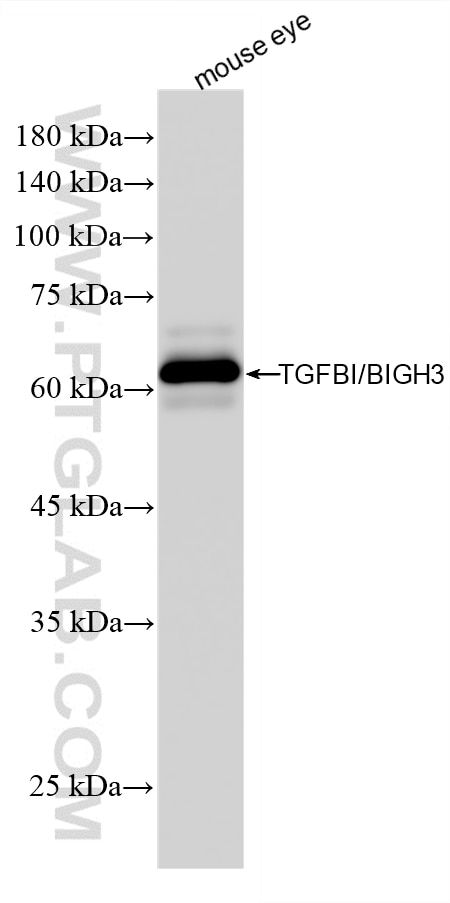
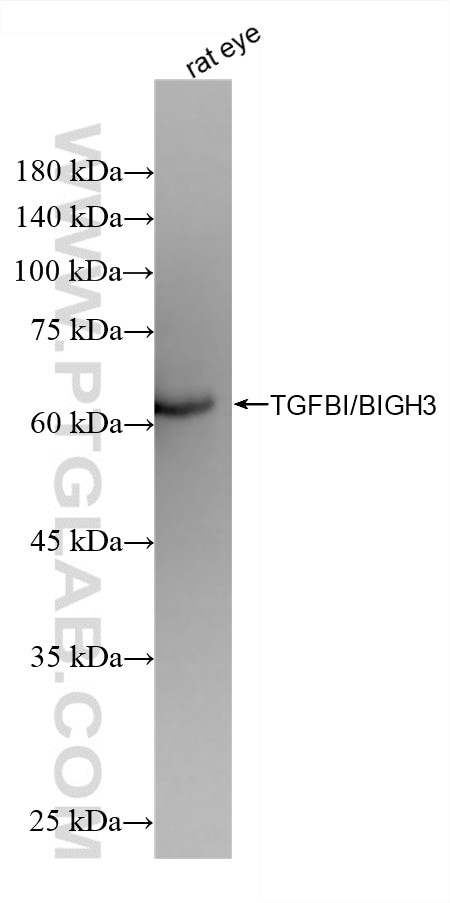
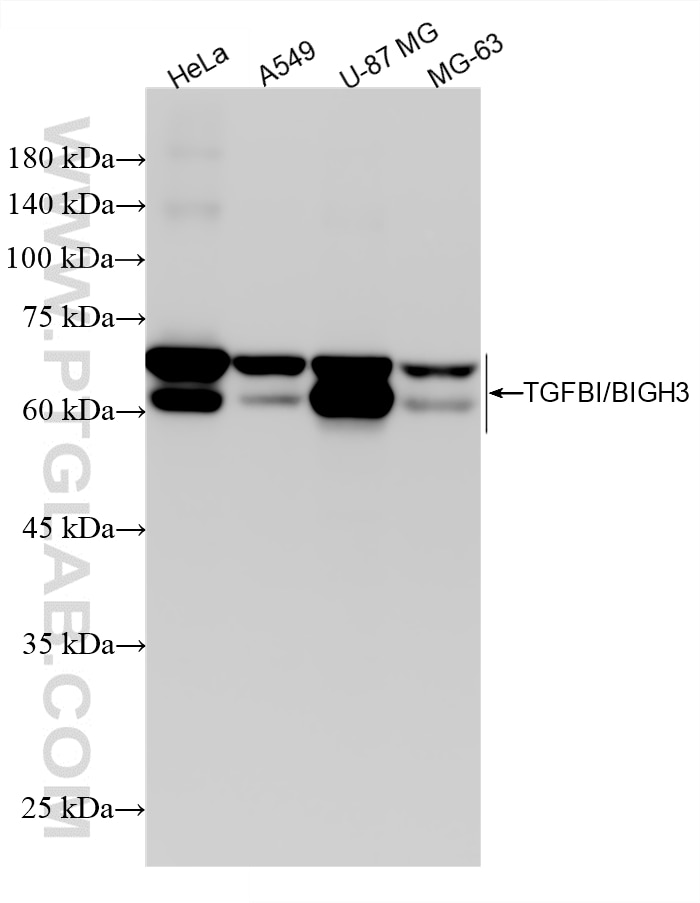
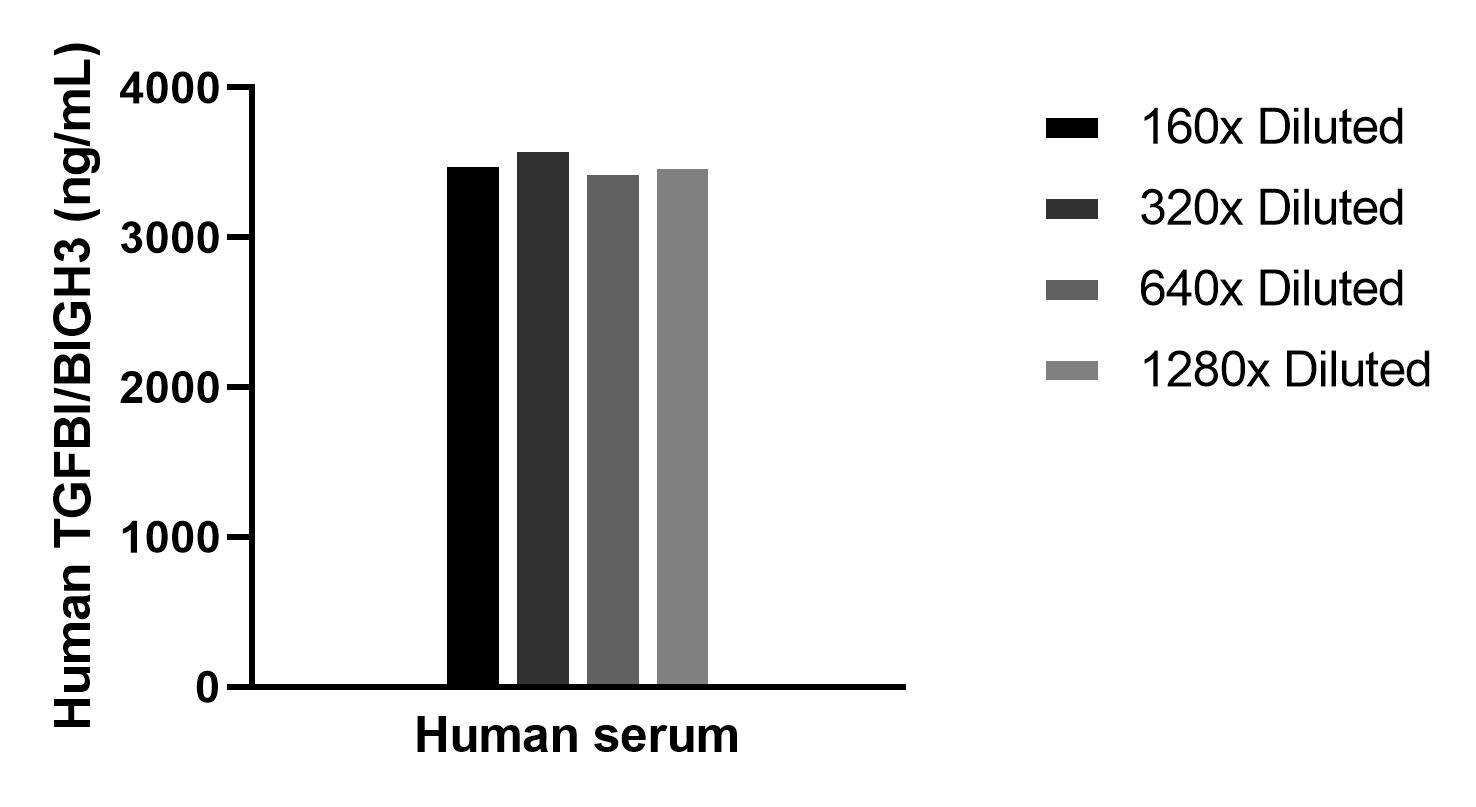
Geprüfte Anwendungen
Produktinformation
80805-3-PBS bindet in WB, Cytometric bead array, Indirect ELISA TGFBI/BIGH3 und zeigt Reaktivität mit human, Maus, Ratten
| Getestete Reaktivität | human, Maus, Ratte |
| Wirt / Isotyp | Kaninchen / IgG |
| Klonalität | Rekombinant |
| Typ | Antikörper |
| Immunogen | TGFBI/BIGH3 fusion protein Eg1233 |
| Vollständiger Name | transforming growth factor, beta-induced, 68kDa |
| Berechnetes Molekulargewicht | 75kDa |
| Beobachtetes Molekulargewicht | 68 kDa |
| GenBank-Zugangsnummer | NM_000358.3 |
| Gene symbol | TGFBI |
| Gene ID (NCBI) | 7045 |
| Konjugation | Unkonjugiert |
| Form | Liquid |
| Reinigungsmethode | Protein-A-Reinigung |
| Lagerungspuffer | PBS only |
| Lagerungsbedingungen | Store at -80°C. 20ul Größen enthalten 0,1% BSA. |
Hintergrundinformationen
TGFBI, also named as BIGH3, Kerato-epithelin and RGD-CAP, binds to type I, II, and IV collagens. TGFBI is an adhesion protein which may play an important role in cell-collagen interactions. In cartilage, it may be involved in endochondral bone formation. TGFBI is an extracellular matrix adaptor protein, it has been reported to be differentially expressed in transformed tissues. TGFBI is a predictive factor of the response to chemotherapy, and suggest the use of TGFBI-derived peptides as possible therapeutic adjuvants for the enhancement of responses to chemotherapy.(PMID:20509890) Defects in TGFBI are the cause of epithelial basement membrane corneal dystrophy (EBMD). Defects in TGFBI are the cause of corneal dystrophy Groenouw type 1 (CDGG1). Defects in TGFBI are the cause of corneal dystrophy lattice type 1 (CDL1). Defects in TGFBI are a cause of corneal dystrophy Thiel-Behnke type (CDTB). Defects in TGFBI are the cause of Reis-Buecklers corneal dystrophy (CDRB). Defects in TGFBI are the cause of lattice corneal dystrophy type 3A (CDL3A). Defects in TGFBI are the cause of Avellino corneal dystrophy (ACD).


