uPAR/CD87 Monoklonaler Antikörper
uPAR/CD87 Monoklonal Antikörper für WB, IHC, ELISA
Wirt / Isotyp
Maus / IgG2b
Getestete Reaktivität
human
Anwendung
WB, IHC, ELISA
Konjugation
Unkonjugiert
CloneNo.
2A3E8
Kat-Nr. : 68727-1-Ig
Synonyme
Geprüfte Anwendungen
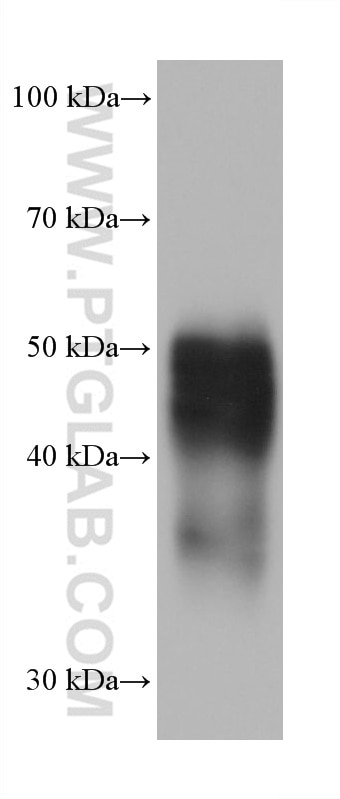
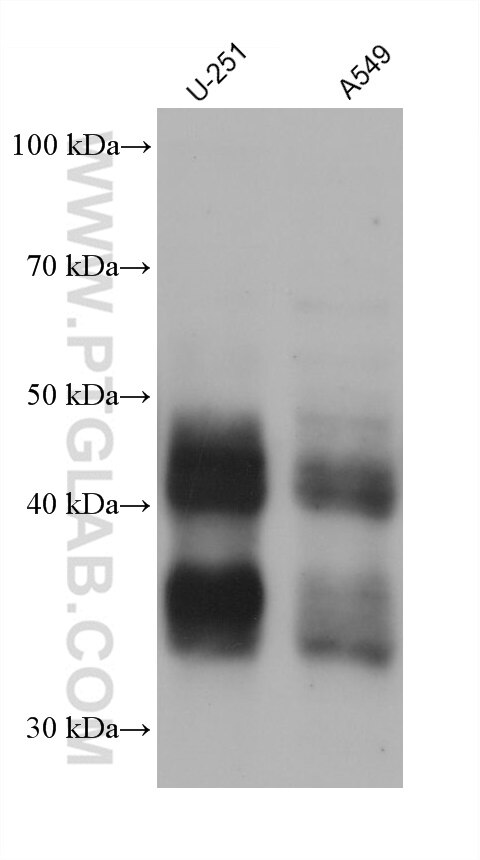
| Erfolgreiche Detektion in WB | U2OS-Zellen, A549-Zellen, U-251-Zellen |
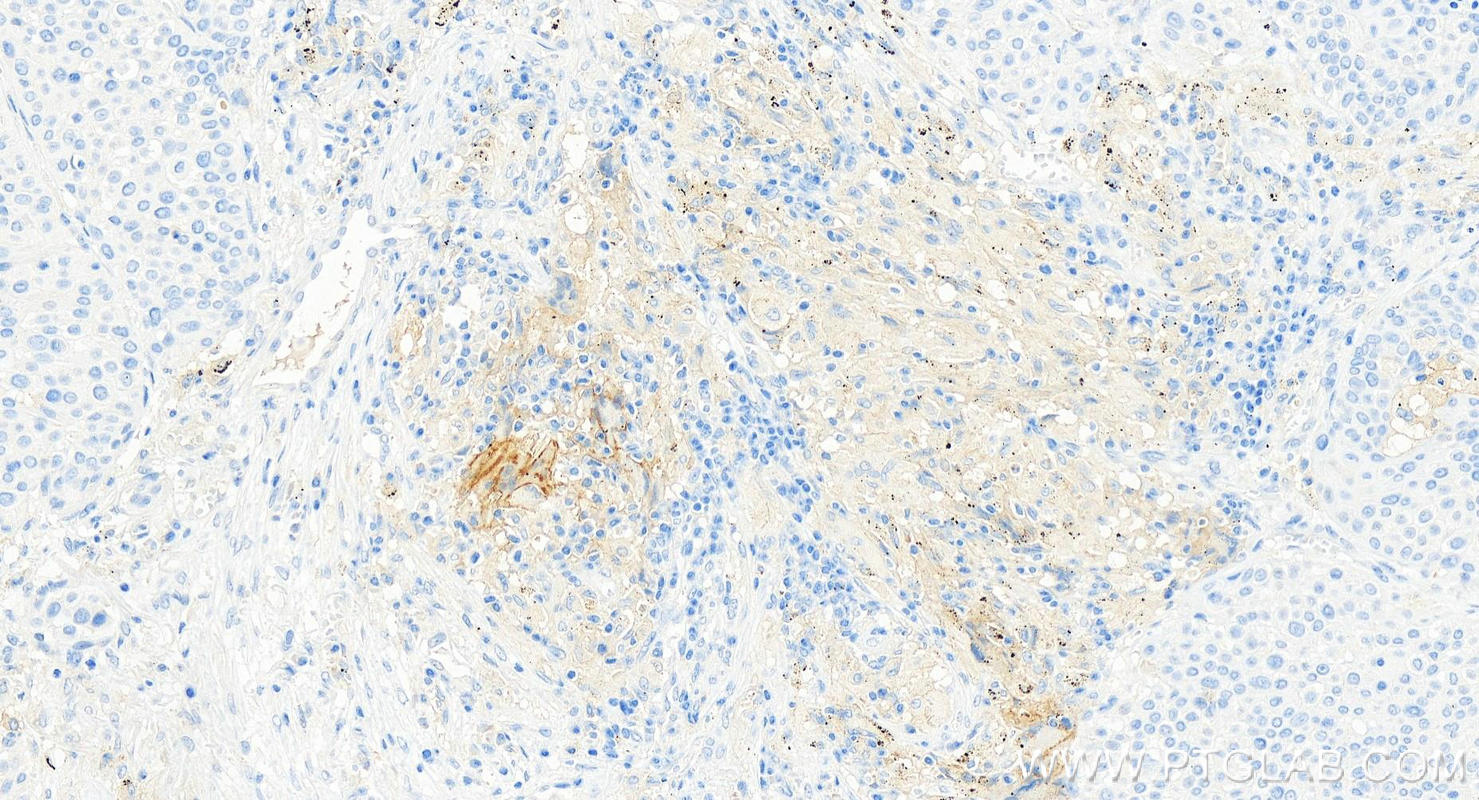
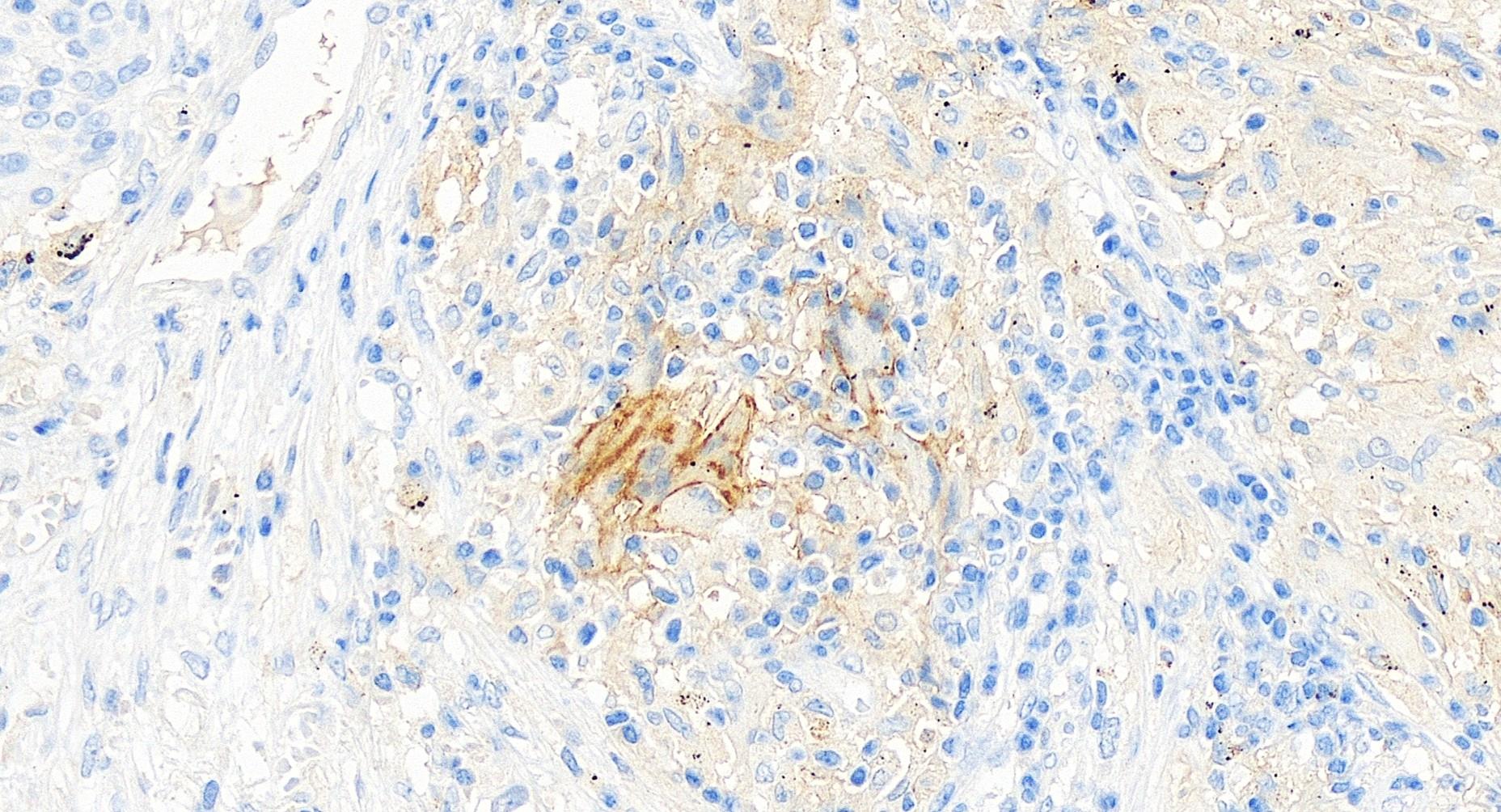
| Erfolgreiche Detektion in IHC | human lung squamous cell cancer Hinweis: Antigendemaskierung mit TE-Puffer pH 9,0 empfohlen. (*) Wahlweise kann die Antigendemaskierung auch mit Citratpuffer pH 6,0 erfolgen. |
Empfohlene Verdünnung
| Anwendung | Verdünnung |
|---|---|
| Western Blot (WB) | WB : 1:1000-1:4000 |
| Immunhistochemie (IHC) | IHC : 1:250-1:1000 |
| It is recommended that this reagent should be titrated in each testing system to obtain optimal results. | |
| Sample-dependent, check data in validation data gallery | |
Produktinformation
68727-1-Ig bindet in WB, IHC, ELISA uPAR/CD87 und zeigt Reaktivität mit human
| Getestete Reaktivität | human |
| Wirt / Isotyp | Maus / IgG2b |
| Klonalität | Monoklonal |
| Typ | Antikörper |
| Immunogen | uPAR/CD87 fusion protein Ag28056 |
| Vollständiger Name | PLAUR |
| Berechnetes Molekulargewicht | 37 kDa |
| Beobachtetes Molekulargewicht | 35-50 kDa |
| GenBank-Zugangsnummer | BC002788 |
| Gene symbol | uPAR |
| Gene ID (NCBI) | 5329 |
| Konjugation | Unkonjugiert |
| Form | Liquid |
| Reinigungsmethode | Protein-A-Reinigung |
| Lagerungspuffer | PBS with 0.02% sodium azide and 50% glycerol |
| Lagerungsbedingungen | Bei -20°C lagern. Nach dem Versand ein Jahr lang stabil Aliquotieren ist bei -20oC Lagerung nicht notwendig. 20ul Größen enthalten 0,1% BSA. |
Hintergrundinformationen
uPAR is a highly glycosylated, GPI-anchored membrane protein. In addition to the membrane-anchored form, uPAR is released from the plasma membrane by cleavage of the GPI anchor and can be found as a soluble form (suPAR). uPAR contains three homologous domains (D1-D3) of which the N-terminal one (D1) represents the uPA-binding domain. After binding to uPAR, uPA cleaves plasminogen, generating the active protease plasmin which is involved in a wide variety of physiologic and pathologic processes. In addition to regulating proteolysis, uPAR has important function in cell adhesion, migration and proliferation. Studies reveal that uPAR expression is elevated during inflammation and tissue remodeling and in many human cancers, in which it frequently indicates poor prognosis. (PMID 20027185; 12461559)
Protokolle
| PRODUKTSPEZIFISCHE PROTOKOLLE | |
|---|---|
| WB protocol for uPAR/CD87 antibody 68727-1-Ig | Protokoll herunterladen |
| IHC protocol for uPAR/CD87 antibody 68727-1-Ig | Protokoll herunterladenl |
| STANDARD-PROTOKOLLE | |
|---|---|
| Klicken Sie hier, um unsere Standardprotokolle anzuzeigen |

