uPAR/CD87 Monoklonaler Antikörper
uPAR/CD87 Monoklonal Antikörper für WB, IHC, Indirect ELISA
Wirt / Isotyp
Maus / IgG2b
Getestete Reaktivität
human
Anwendung
WB, IHC, Indirect ELISA
Konjugation
Unkonjugiert
CloneNo.
2A3E8
Kat-Nr. : 68727-1-PBS
Synonyme
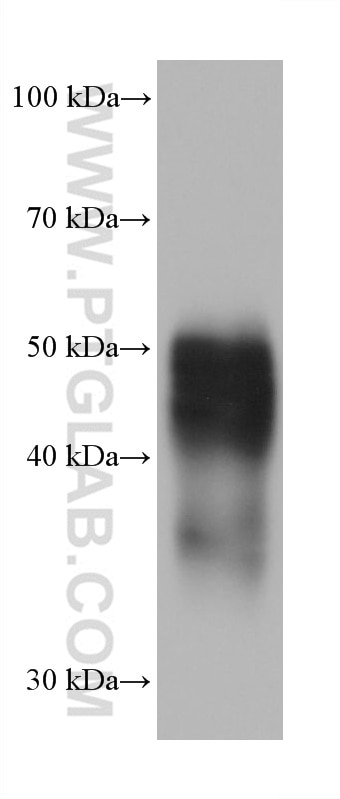
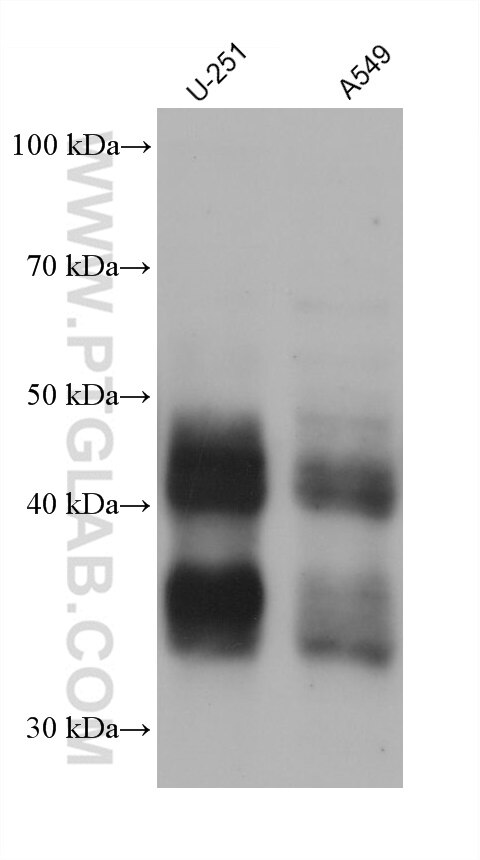
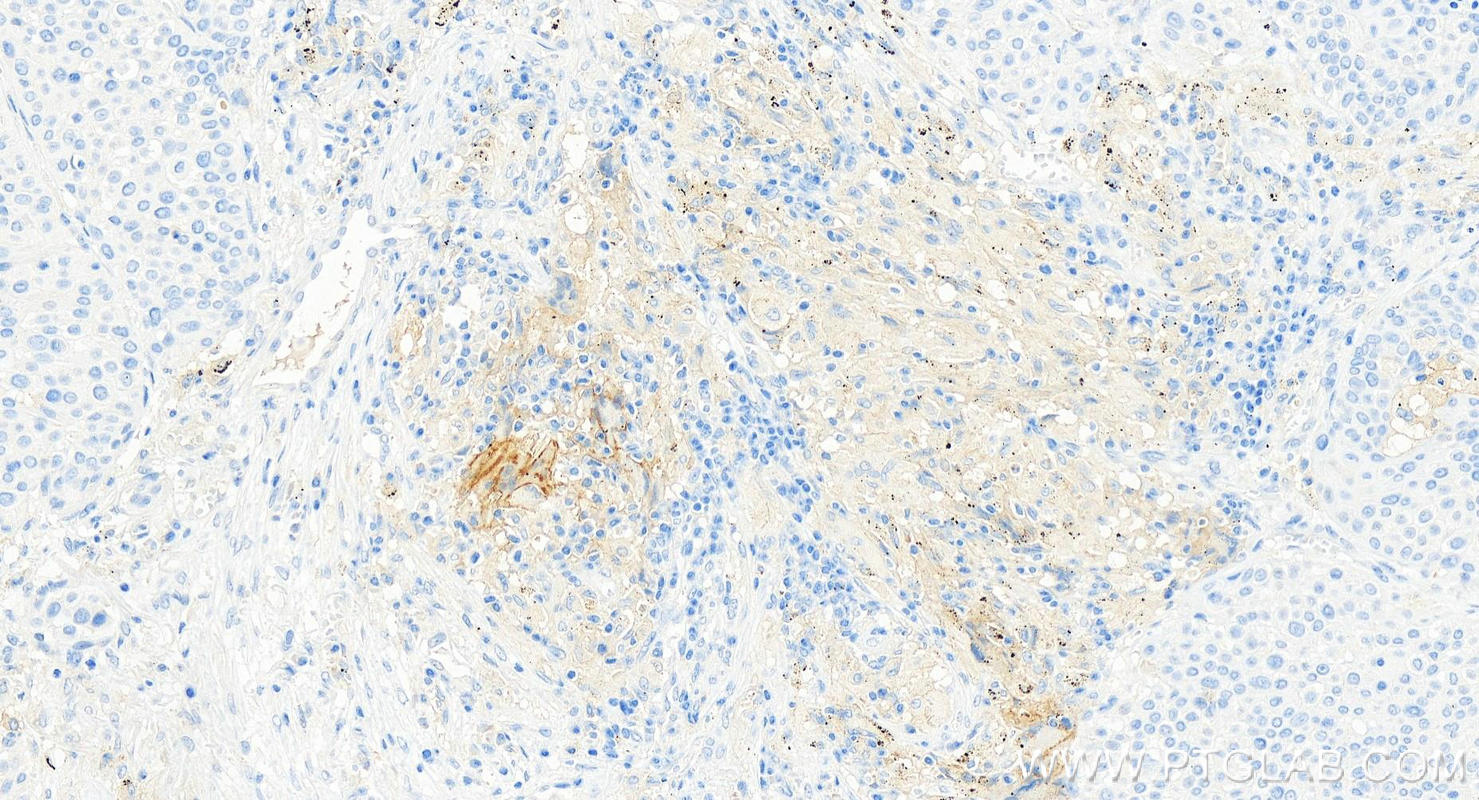
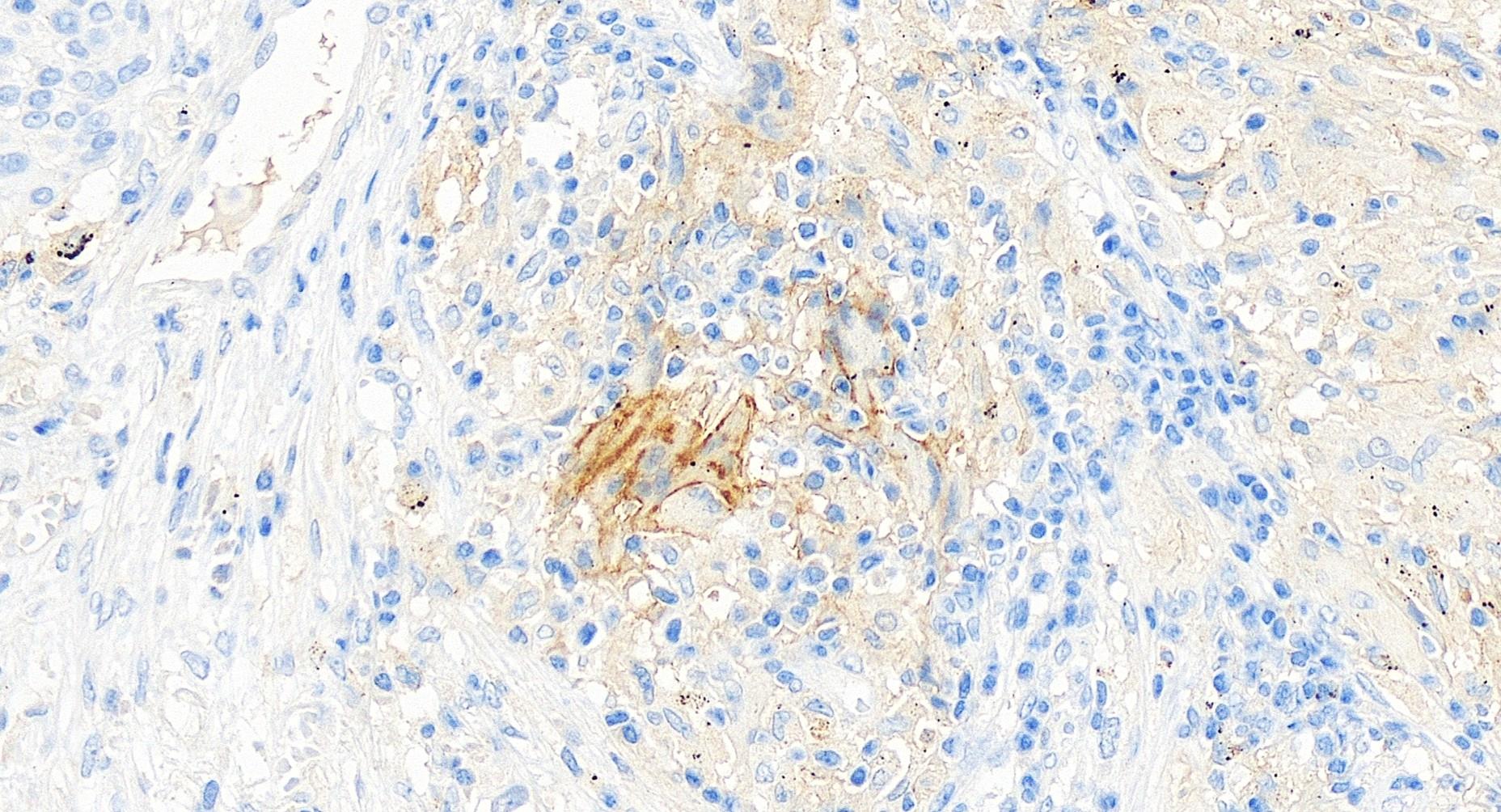
Geprüfte Anwendungen
Produktinformation
68727-1-PBS bindet in WB, IHC, Indirect ELISA uPAR/CD87 und zeigt Reaktivität mit human
| Getestete Reaktivität | human |
| Wirt / Isotyp | Maus / IgG2b |
| Klonalität | Monoklonal |
| Typ | Antikörper |
| Immunogen | uPAR/CD87 fusion protein Ag28056 |
| Vollständiger Name | PLAUR |
| Berechnetes Molekulargewicht | 37 kDa |
| Beobachtetes Molekulargewicht | 35-50 kDa |
| GenBank-Zugangsnummer | BC002788 |
| Gene symbol | uPAR |
| Gene ID (NCBI) | 5329 |
| Konjugation | Unkonjugiert |
| Form | Liquid |
| Reinigungsmethode | Protein-A-Reinigung |
| Lagerungspuffer | PBS only |
| Lagerungsbedingungen | Store at -80°C. 20ul Größen enthalten 0,1% BSA. |
Hintergrundinformationen
uPAR is a highly glycosylated, GPI-anchored membrane protein. In addition to the membrane-anchored form, uPAR is released from the plasma membrane by cleavage of the GPI anchor and can be found as a soluble form (suPAR). uPAR contains three homologous domains (D1-D3) of which the N-terminal one (D1) represents the uPA-binding domain. After binding to uPAR, uPA cleaves plasminogen, generating the active protease plasmin which is involved in a wide variety of physiologic and pathologic processes. In addition to regulating proteolysis, uPAR has important function in cell adhesion, migration and proliferation. Studies reveal that uPAR expression is elevated during inflammation and tissue remodeling and in many human cancers, in which it frequently indicates poor prognosis. (PMID 20027185; 12461559)


