Anticorps Monoclonal anti-Amphiregulin
Amphiregulin Monoclonal Antibody for WB, IHC, Indirect ELISA
Hôte / Isotype
Mouse / IgG1
Réactivité testée
Humain, porc, rat
Applications
WB, IHC, Indirect ELISA
Conjugaison
Non conjugué
CloneNo.
1A1G9
N° de cat : 66433-1-PBS
Synonymes
Galerie de données de validation
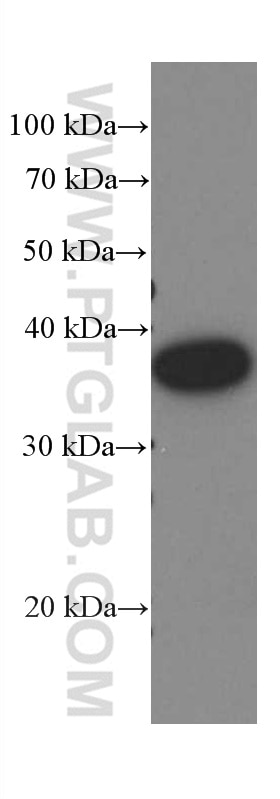
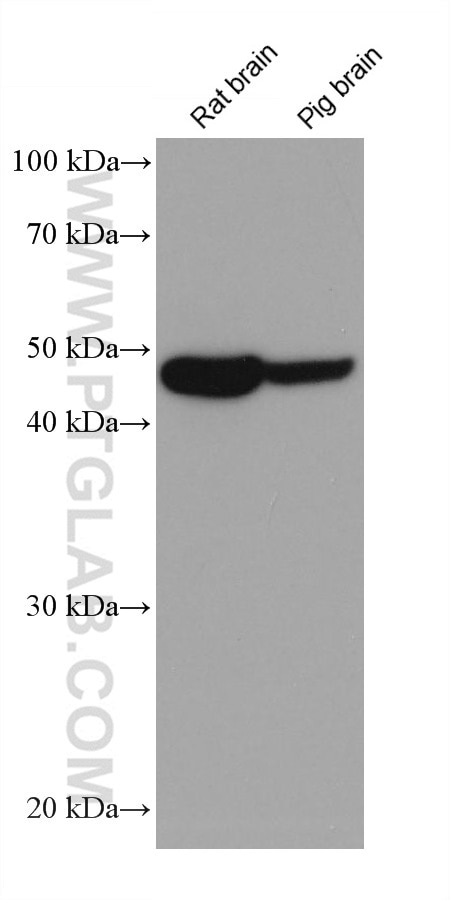
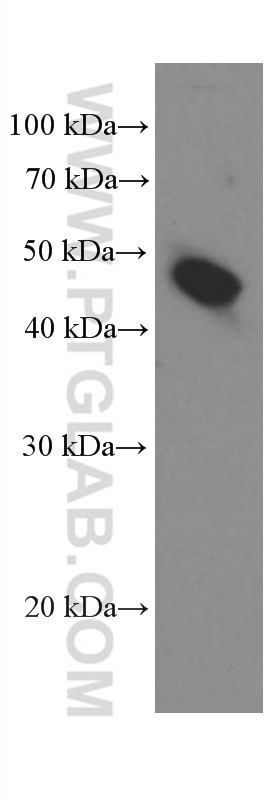
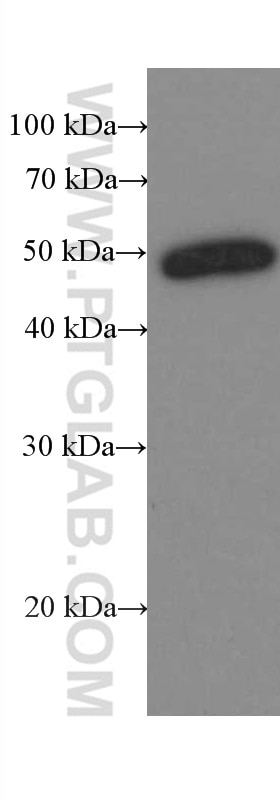
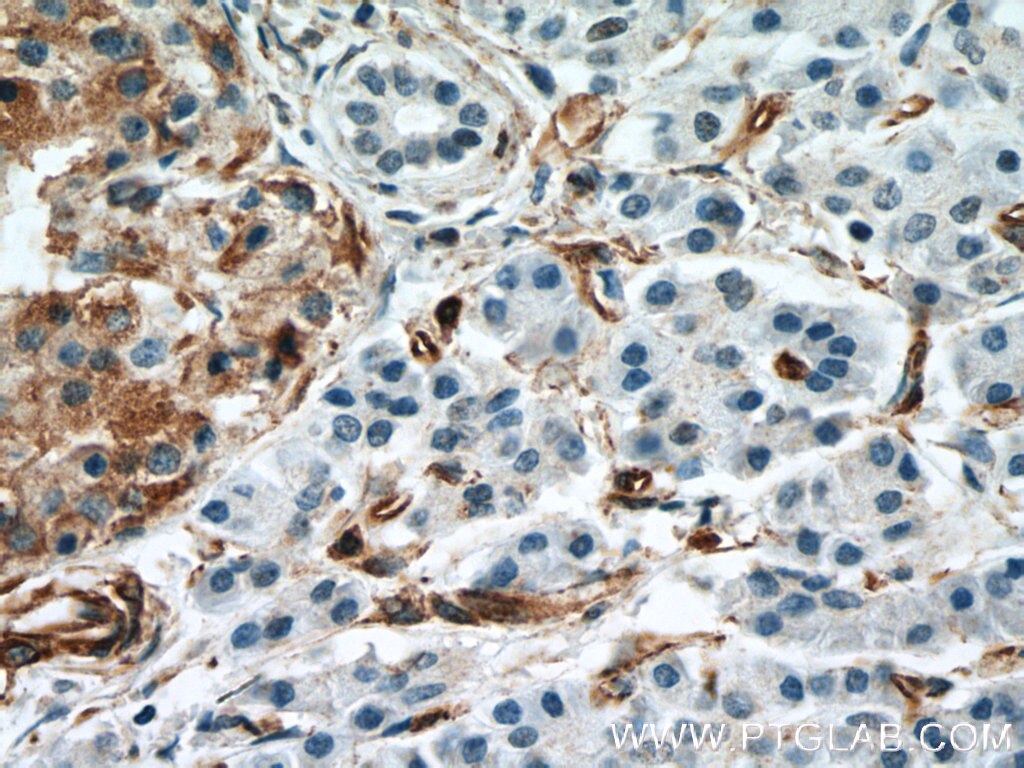
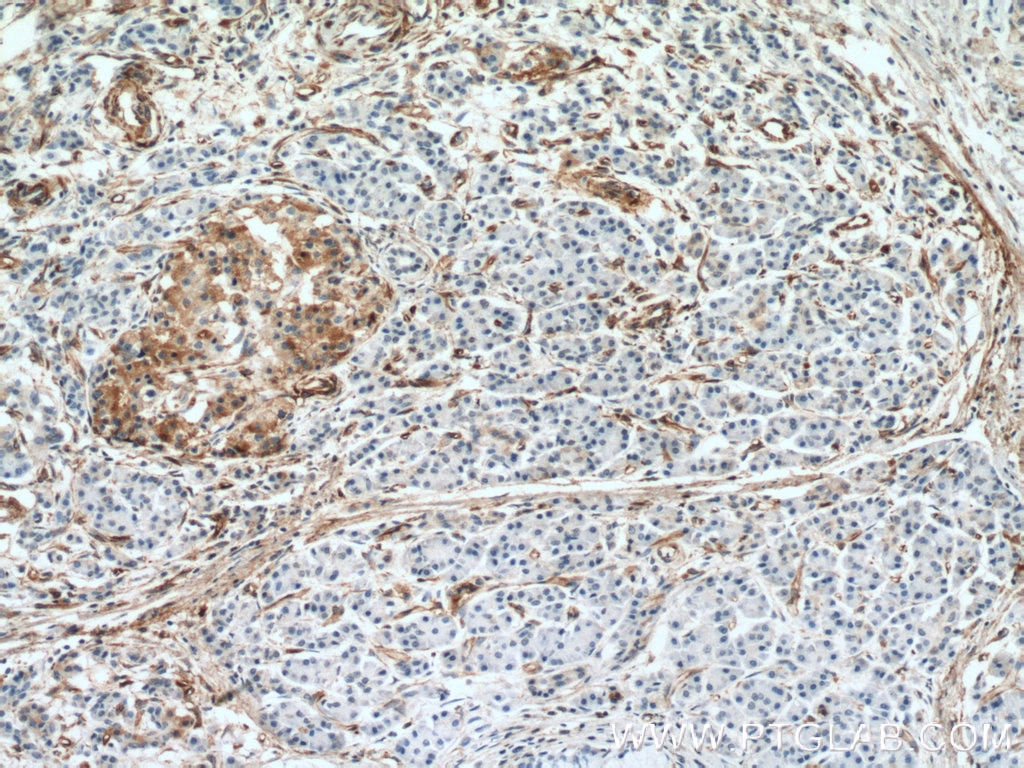
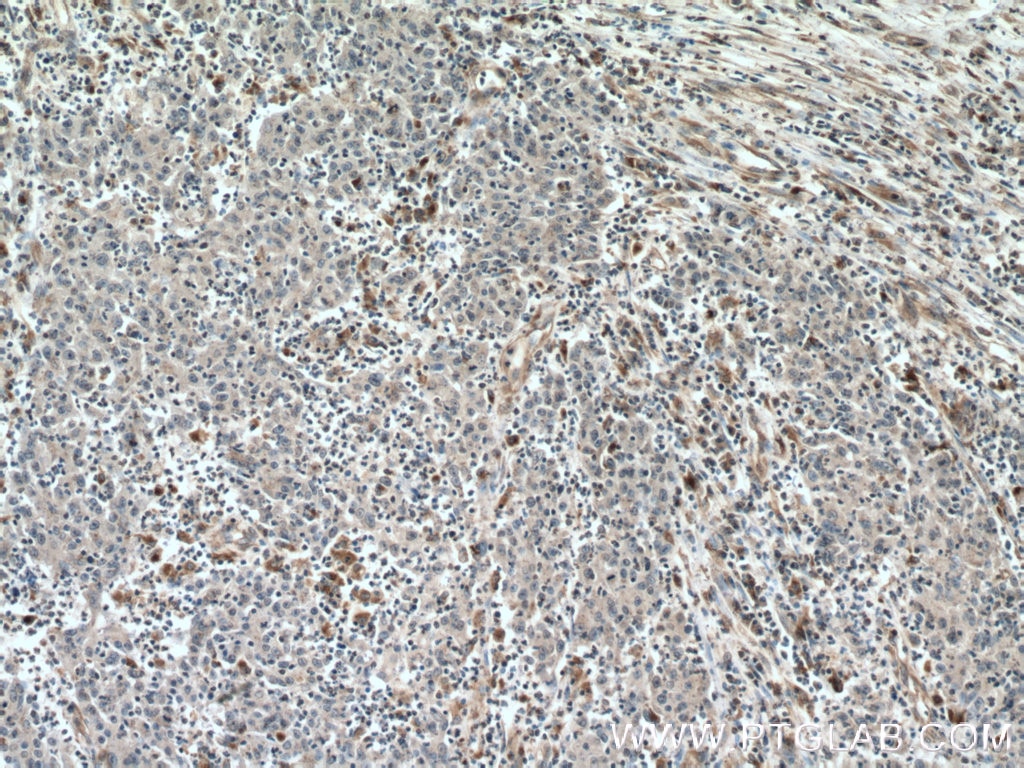
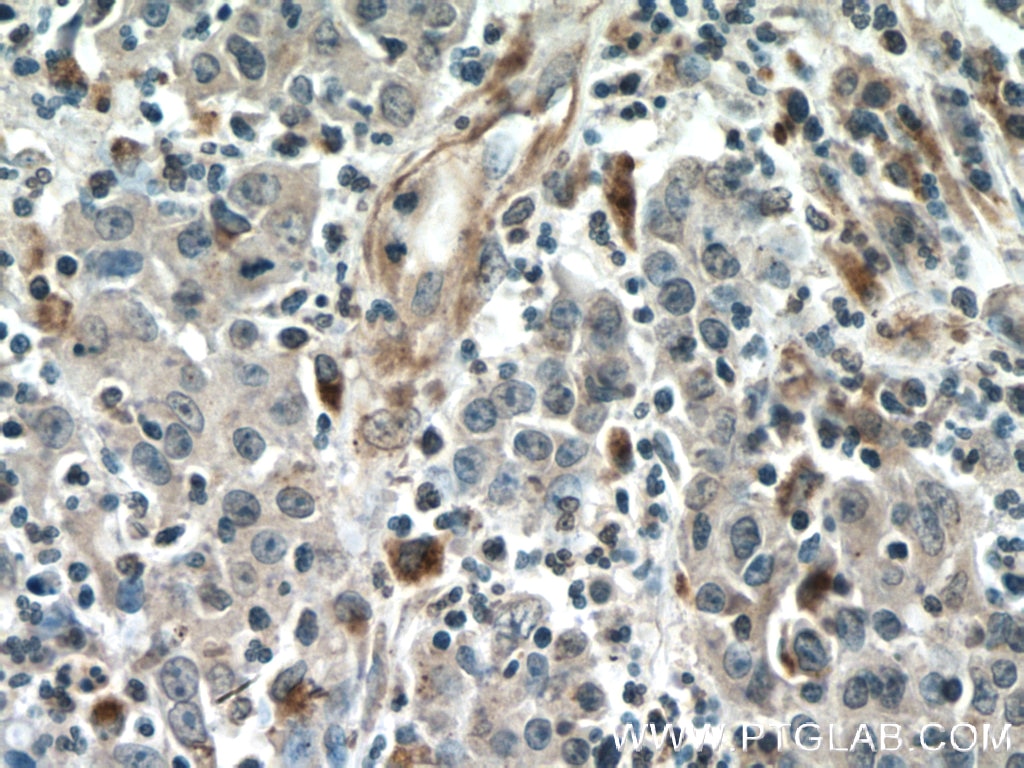
Informations sur le produit
66433-1-PBS cible Amphiregulin dans les applications de WB, IHC, Indirect ELISA et montre une réactivité avec des échantillons Humain, porc, rat
| Réactivité | Humain, porc, rat |
| Hôte / Isotype | Mouse / IgG1 |
| Clonalité | Monoclonal |
| Type | Anticorps |
| Immunogène | Amphiregulin Protéine recombinante Ag8907 |
| Nom complet | amphiregulin |
| Masse moléculaire calculée | 252 aa, 28 kDa |
| Poids moléculaire observé | 50 kDa, 37 kDa |
| Numéro d’acquisition GenBank | BC009799 |
| Symbole du gène | Amphiregulin/AREG |
| Identification du gène (NCBI) | 374 |
| Conjugaison | Non conjugué |
| Forme | Liquide |
| Méthode de purification | Purification par protéine G |
| Tampon de stockage | PBS only |
| Conditions de stockage | Store at -80°C. 20ul contiennent 0,1% de BSA. |
Informations générales
Amphiregulin (AREG) is one of the ligands of the epidermal growth factor receptor (EGFR). AREG plays a central role in mammary gland development and branching morphogenesis in organs and is expressed both in physiological and in cancerous tissues. The AREG protein is synthesized as a 252-amino acid transmembrane precursor, pro-AREG. At the plasma membrane, pro-AREG is subjected to sequential proteolytic cleavages within its ectodomain and is then released as the soluble AREG protein. Depending on the cell type and microenvironment, AREG can be produced in multiple cellular and mature forms using alternative pro-AREG cleavage sites and glycosylation motifs. Post-translastional modfications of 50-kDa pro-AREG produces a major soluble 43-kDa form, 28-, 26-, 16-kDa membrane anchored forms, and soluble 21-, 19-, and 9-kDa forms (PMID: 9642297).


