Anticorps Polyclonal de lapin anti-Angiogenin
Angiogenin Polyclonal Antibody for WB, IHC, Indirect ELISA
Hôte / Isotype
Lapin / IgG
Réactivité testée
Humain, souris
Applications
WB, IHC, Indirect ELISA
Conjugaison
Non conjugué
N° de cat : 18302-1-PBS
Synonymes
Galerie de données de validation
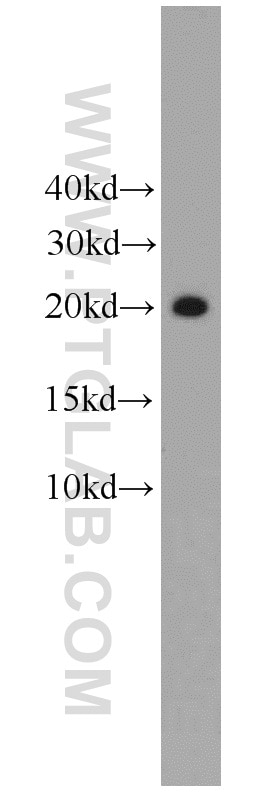
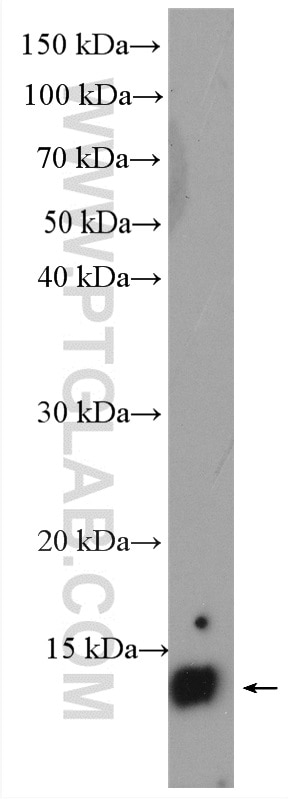
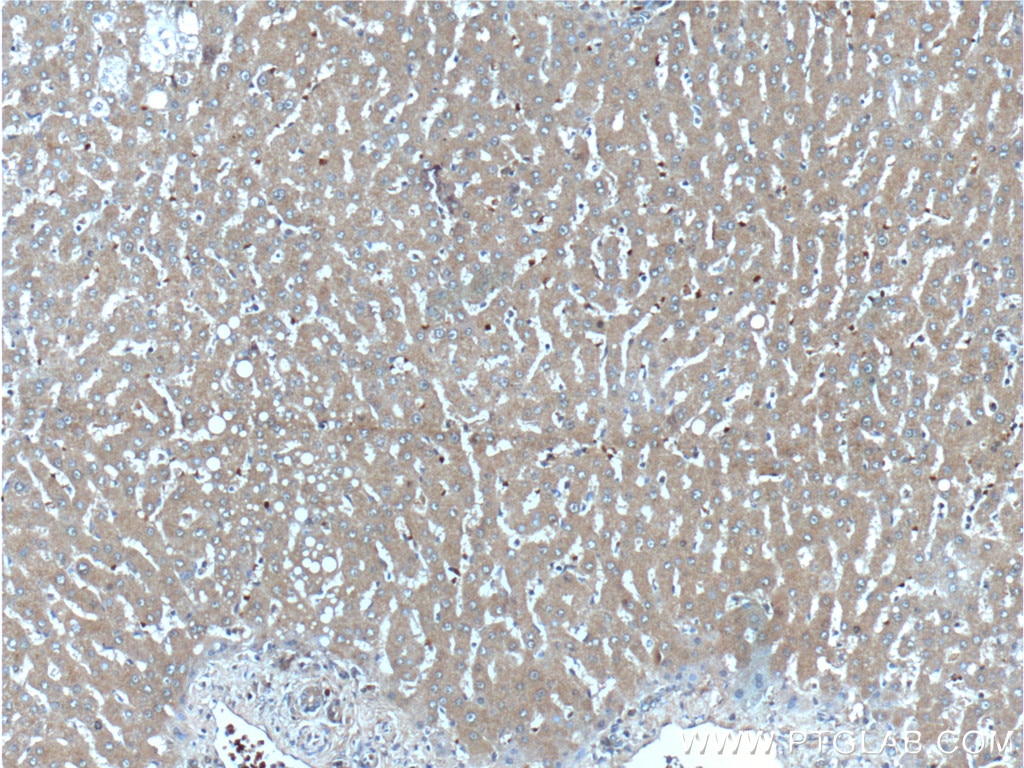
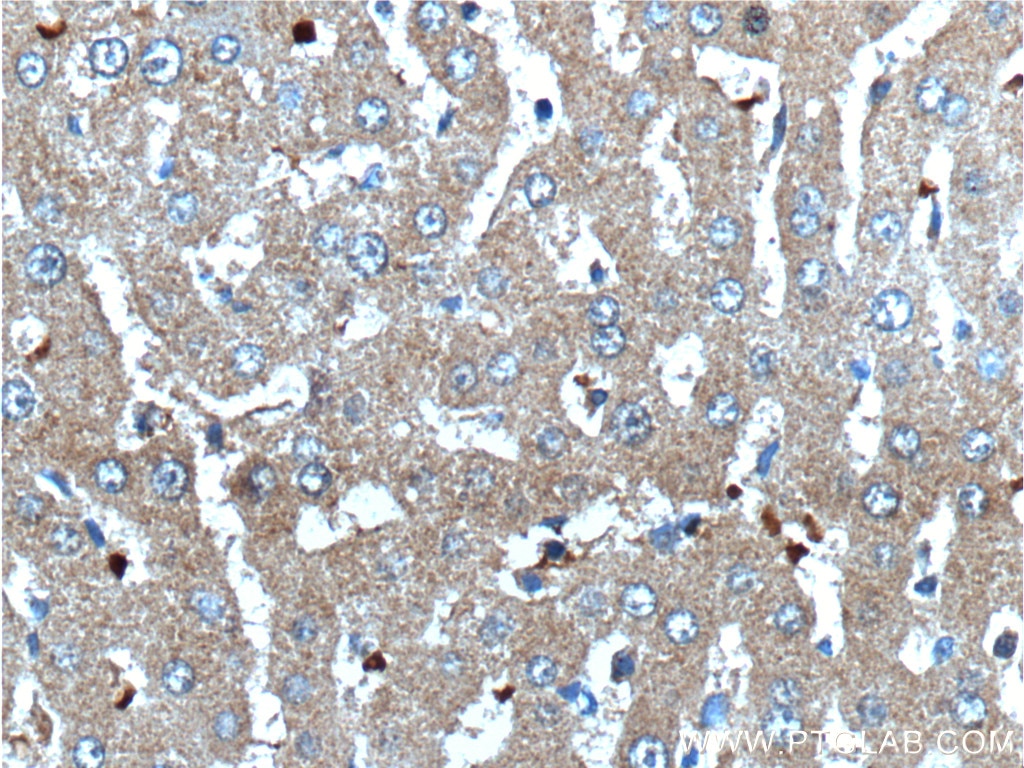
Informations sur le produit
18302-1-PBS cible Angiogenin dans les applications de WB, IHC, Indirect ELISA et montre une réactivité avec des échantillons Humain, souris
| Réactivité | Humain, souris |
| Hôte / Isotype | Lapin / IgG |
| Clonalité | Polyclonal |
| Type | Anticorps |
| Immunogène | Peptide |
| Nom complet | angiogenin, ribonuclease, RNase A family, 5 |
| Masse moléculaire calculée | 17 kDa |
| Poids moléculaire observé | 17 kDa |
| Numéro d’acquisition GenBank | BC054880 |
| Symbole du gène | Angiogenin |
| Identification du gène (NCBI) | 283 |
| Conjugaison | Non conjugué |
| Forme | Liquide |
| Méthode de purification | Purification par affinité contre l'antigène |
| Tampon de stockage | PBS only |
| Conditions de stockage | Store at -80°C. 20ul contiennent 0,1% de BSA. |
Informations générales
Angiogenin (ANG), an angiogenic ribonuclease, is a member of the vertebrate-specific, secreted RNASE superfamily. Angiogenin, originally identified as a tumor angiogenic factor, was related with the growth and metastasis of numerous tumors. Angiogenin has been proposed as a permissive factor for angiogenesis induced by other angiogenic factors, including vascular endothelial growth factor (VEGF), basic fibroblast growth factor, acidic fibroblast growth factor, and epidermal growth factor. Angiogenin production and secretion may be stimulated by hypoxia. Increased angiogenin serum levels have been associated with the incidence and severity of several human tumors, including HCC. It is a 17 kDa precursor which is cleaved to generate the 14 kDa mature protein.


