- Phare
- Validé par KD/KO
Anticorps Polyclonal de lapin anti-BBS4
BBS4 Polyclonal Antibody for WB, IHC, IF/ICC, Indirect ELISA
Hôte / Isotype
Lapin / IgG
Réactivité testée
Humain, rat, souris
Applications
WB, IHC, IF/ICC, Indirect ELISA
Conjugaison
Non conjugué
N° de cat : 12766-1-PBS
Synonymes
Galerie de données de validation
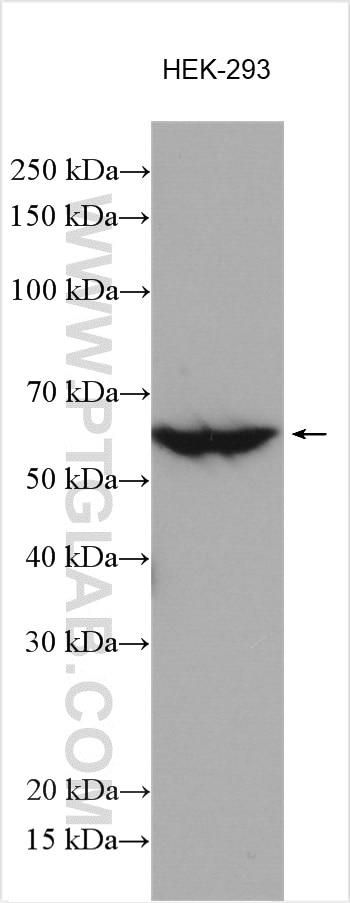
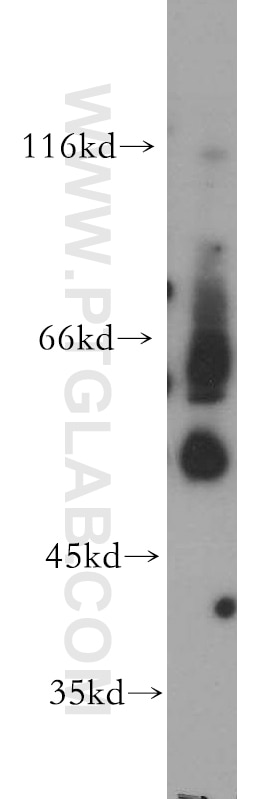
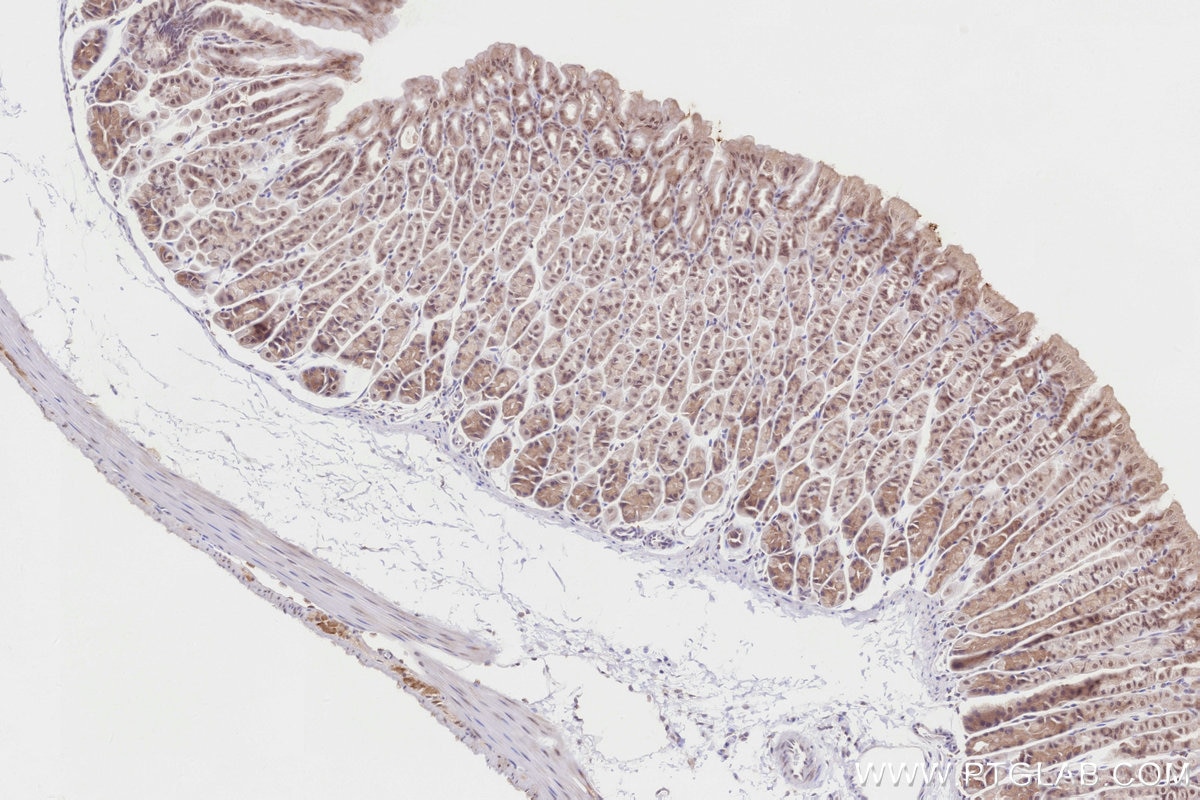
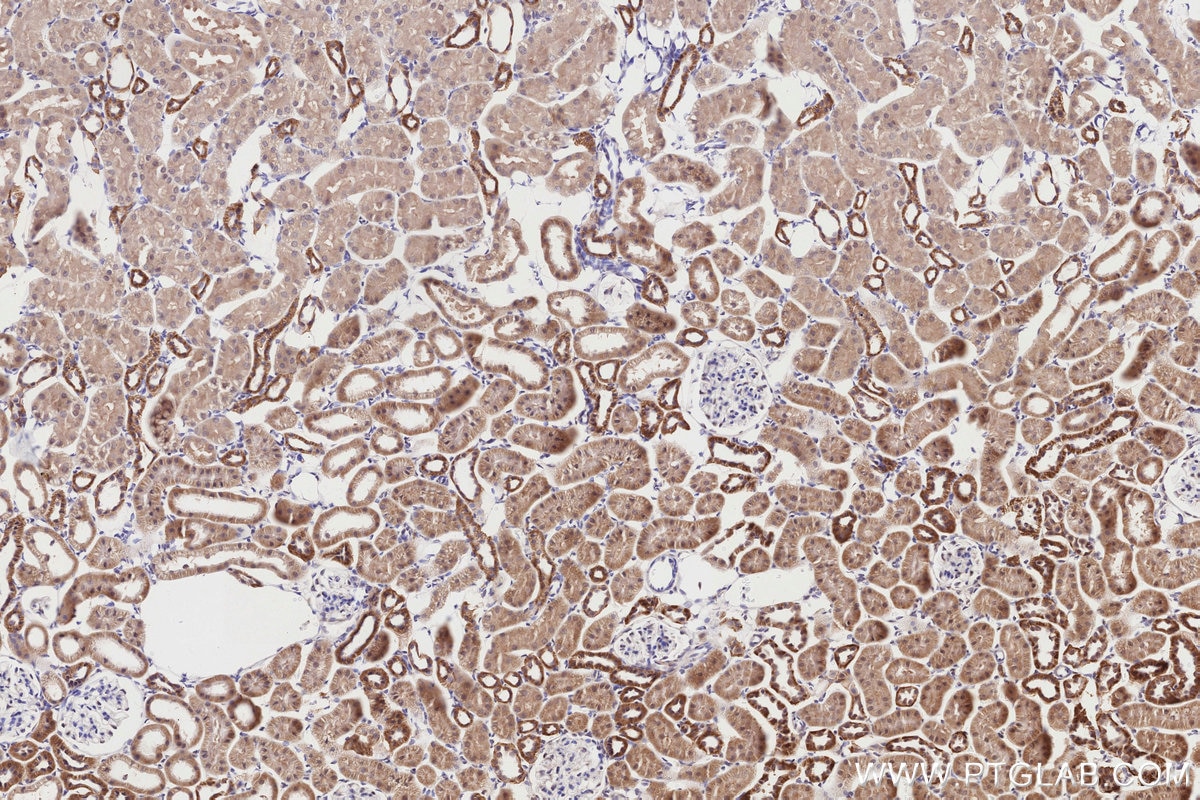
Informations sur le produit
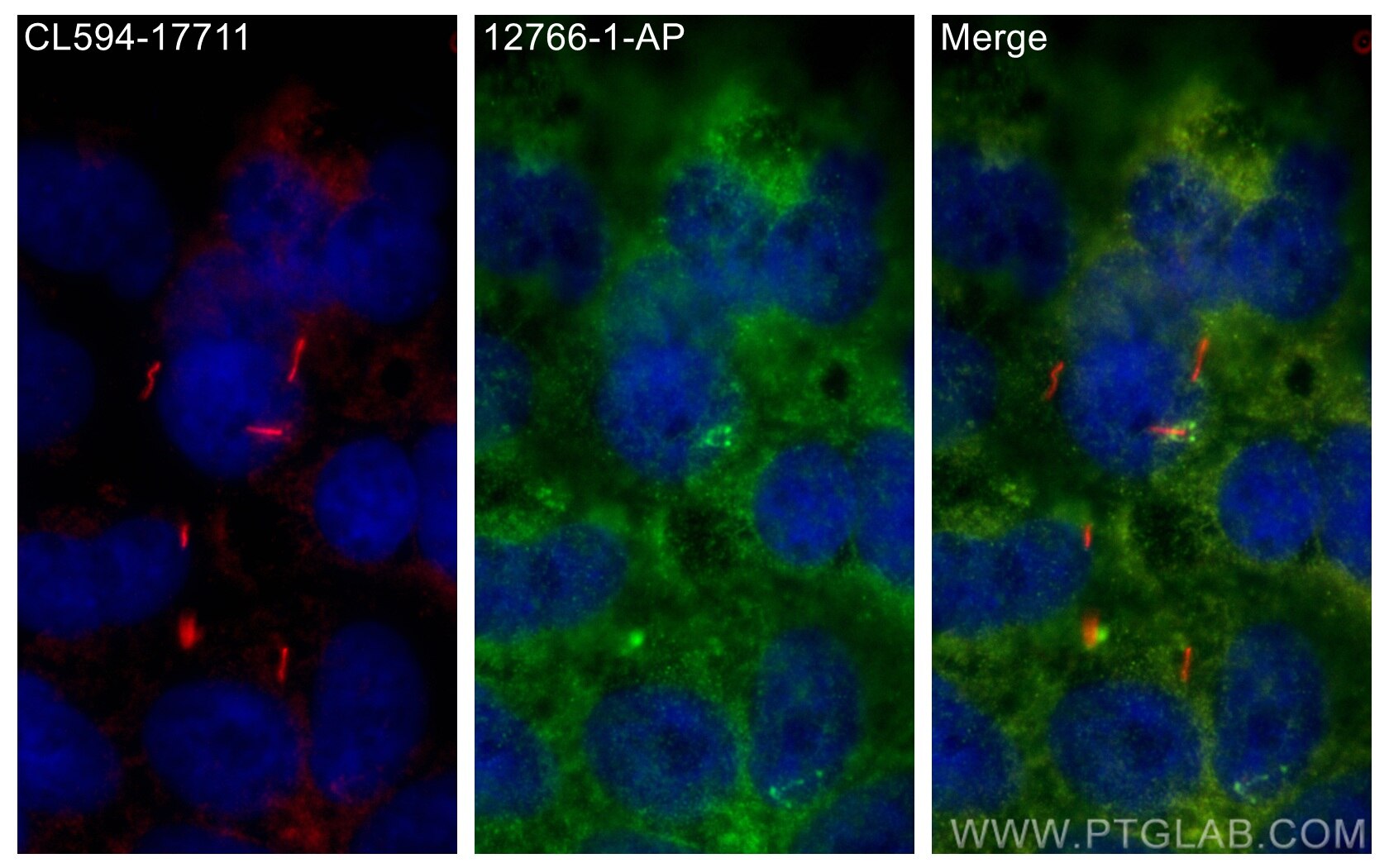
12766-1-PBS cible BBS4 dans les applications de WB, IHC, IF/ICC, Indirect ELISA et montre une réactivité avec des échantillons Humain, rat, souris
| Réactivité | Humain, rat, souris |
| Hôte / Isotype | Lapin / IgG |
| Clonalité | Polyclonal |
| Type | Anticorps |
| Immunogène | BBS4 Protéine recombinante Ag3430 |
| Nom complet | Bardet-Biedl syndrome 4 |
| Masse moléculaire calculée | 519 aa, 58 kDa |
| Poids moléculaire observé | 50-60 kDa |
| Numéro d’acquisition GenBank | BC027624 |
| Symbole du gène | BBS4 |
| Identification du gène (NCBI) | 585 |
| Conjugaison | Non conjugué |
| Forme | Liquide |
| Méthode de purification | Purification par affinité contre l'antigène |
| Tampon de stockage | PBS only |
| Conditions de stockage | Store at -80°C. 20ul contiennent 0,1% de BSA. |
Informations générales
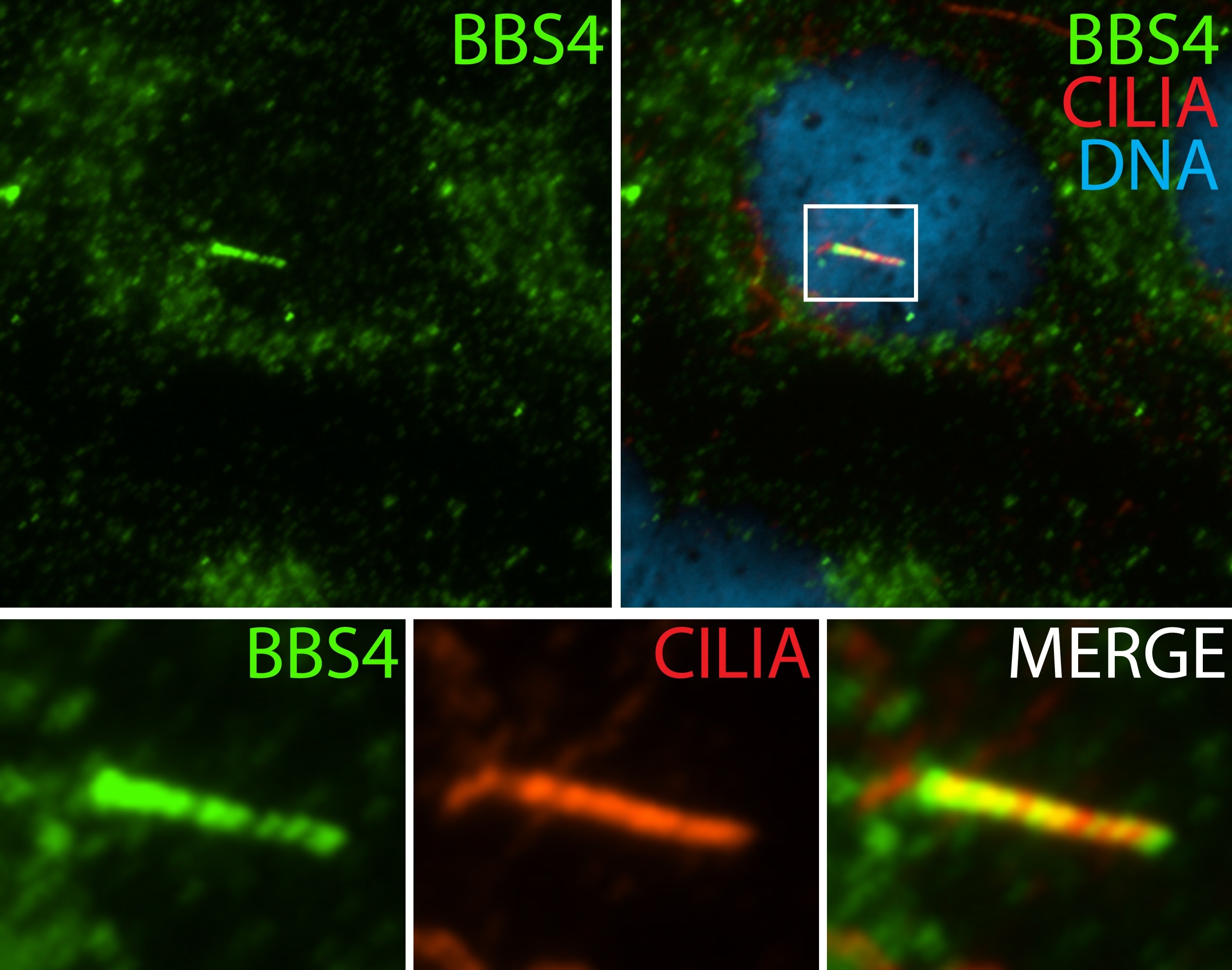
BBS4 (Bardet-Biedl syndrome protein 4) is one of the early BBS proteins discovered, with 35 mutations reported to cause the BBS phenotype (PMID: 26762677). BBS4 undergoes localization to the centriolar satellites of centrosomes and basal body of primary cilia, where it takes part in recruiting cargo to centriolar satellites and allowing the formation of a functional centrosomal microtubule organizing center (MTOC) (PMID: 25860617). Some research has found that BBS4 expression in humans during the development of CNS and sensory organs, concerning the cardinal clinical signs of BBS (PMID: 33860840).


