- Phare
- Validé par KD/KO
Anticorps Polyclonal de lapin anti-BCCIP
BCCIP Polyclonal Antibody for WB, IF/ICC, IP, Indirect ELISA
Hôte / Isotype
Lapin / IgG
Réactivité testée
Humain, rat, souris
Applications
WB, IF/ICC, IP, Indirect ELISA
Conjugaison
Non conjugué
N° de cat : 16043-1-PBS
Synonymes
Galerie de données de validation
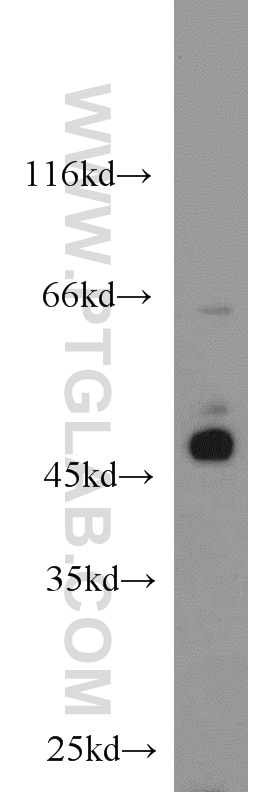
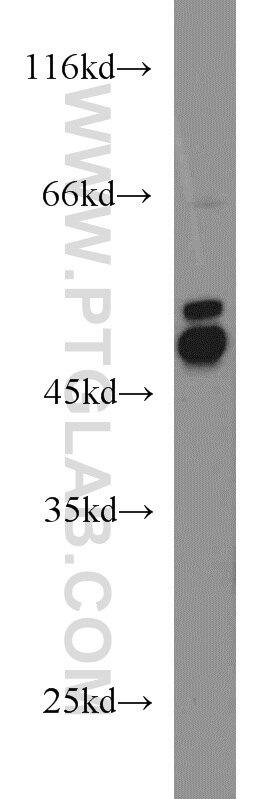
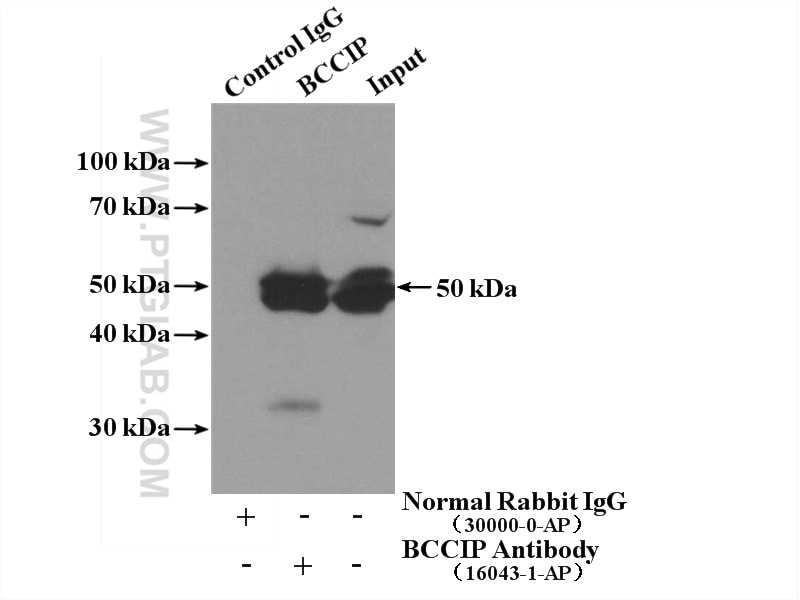
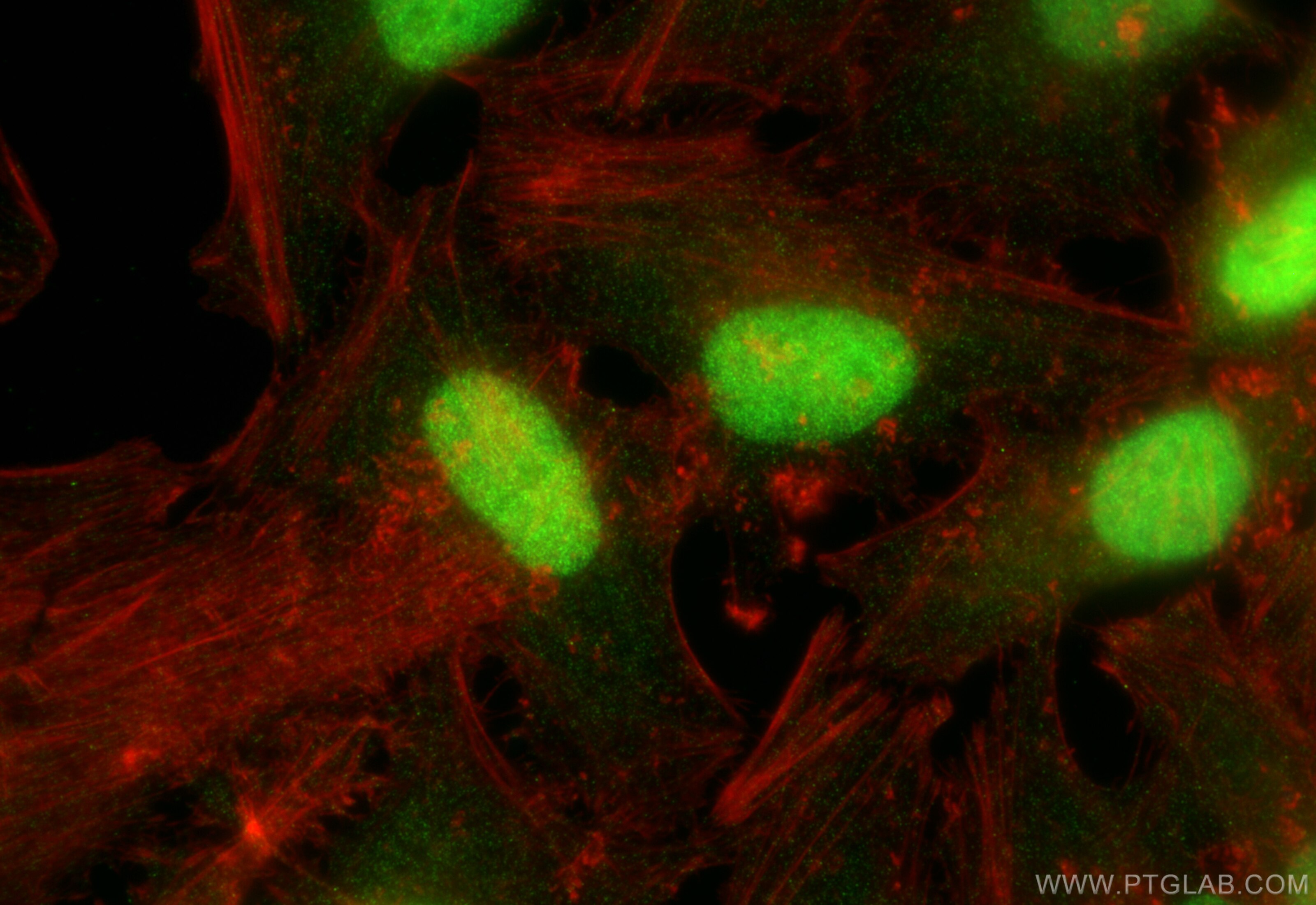
Informations sur le produit
16043-1-PBS cible BCCIP dans les applications de WB, IF/ICC, IP, Indirect ELISA et montre une réactivité avec des échantillons Humain, rat, souris
| Réactivité | Humain, rat, souris |
| Hôte / Isotype | Lapin / IgG |
| Clonalité | Polyclonal |
| Type | Anticorps |
| Immunogène | BCCIP Protéine recombinante Ag8934 |
| Nom complet | BRCA2 and CDKN1A interacting protein |
| Masse moléculaire calculée | 314 aa, 36 kDa |
| Poids moléculaire observé | 50-58 kDa |
| Numéro d’acquisition GenBank | BC009771 |
| Symbole du gène | BCCIP |
| Identification du gène (NCBI) | 56647 |
| Conjugaison | Non conjugué |
| Forme | Liquide |
| Méthode de purification | Purification par affinité contre l'antigène |
| Tampon de stockage | PBS only |
| Conditions de stockage | Store at -80°C. 20ul contiennent 0,1% de BSA. |
Informations générales
BCCIP (or TOK1) is isolated as a BRCA2- and CDKN1A (p21)-interacting protein and is implicated in homologous recombination (HR) pathway and inhibition of DNA replication stress. BCCIP is an evolutionarily conserved nuclear protein with multiple interacting domains. BCCIP deficiency in mice impaired embryonic and postnatal neural development, causing severe ataxia, cerebral and cerebellar defects, and microcephaly, which are associated with spontaneous DNA damage and subsequent cell death in the proliferative cell populations of the neural system during embryogenesis. BCCIP is essential for maintaining the transactivation activity of wild type p53 suggesting a potential role of BCCIP in cancer etiology.


