Anticorps Polyclonal de lapin anti-C19orf63
C19orf63 Polyclonal Antibody for WB, IHC, Indirect ELISA
Hôte / Isotype
Lapin / IgG
Réactivité testée
Humain, souris
Applications
WB, IHC, Indirect ELISA
Conjugaison
Non conjugué
N° de cat : 30844-1-PBS
Synonymes
Galerie de données de validation
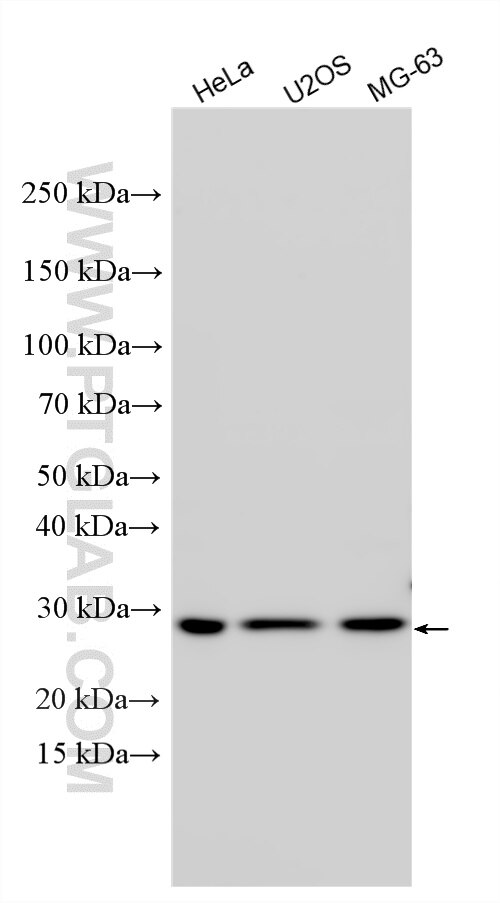
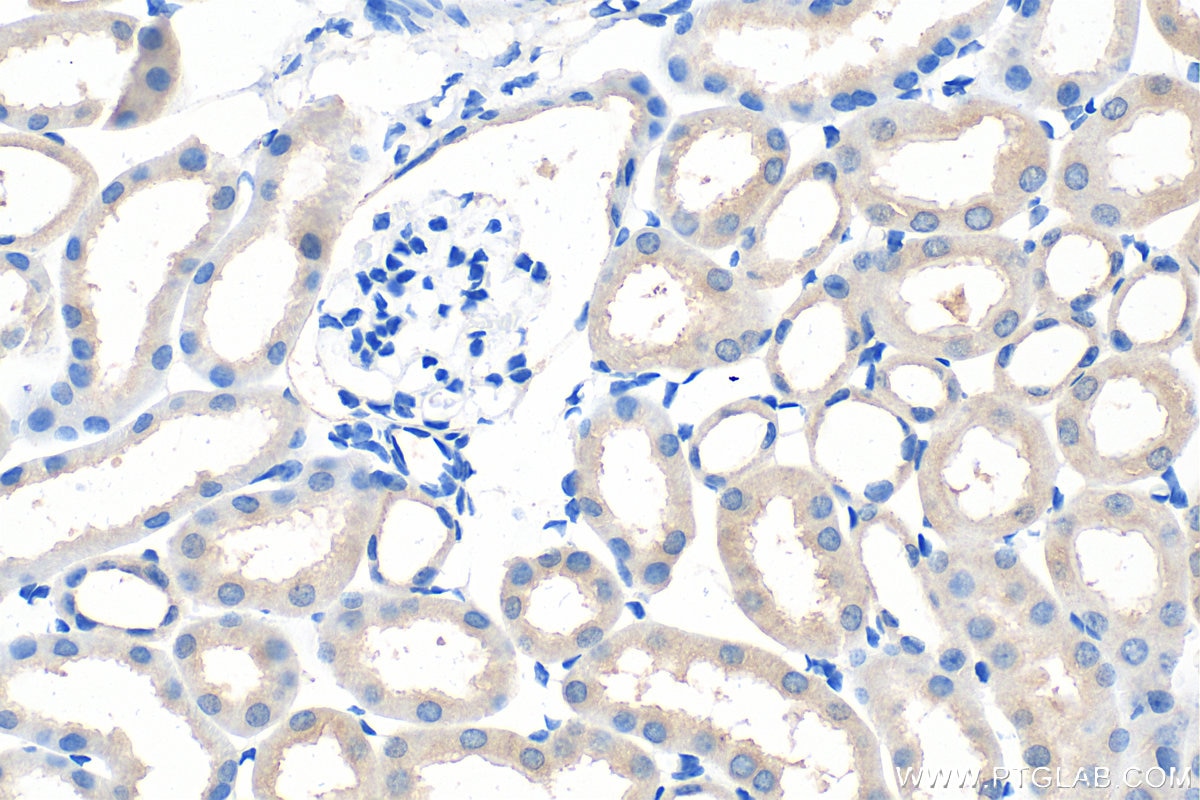
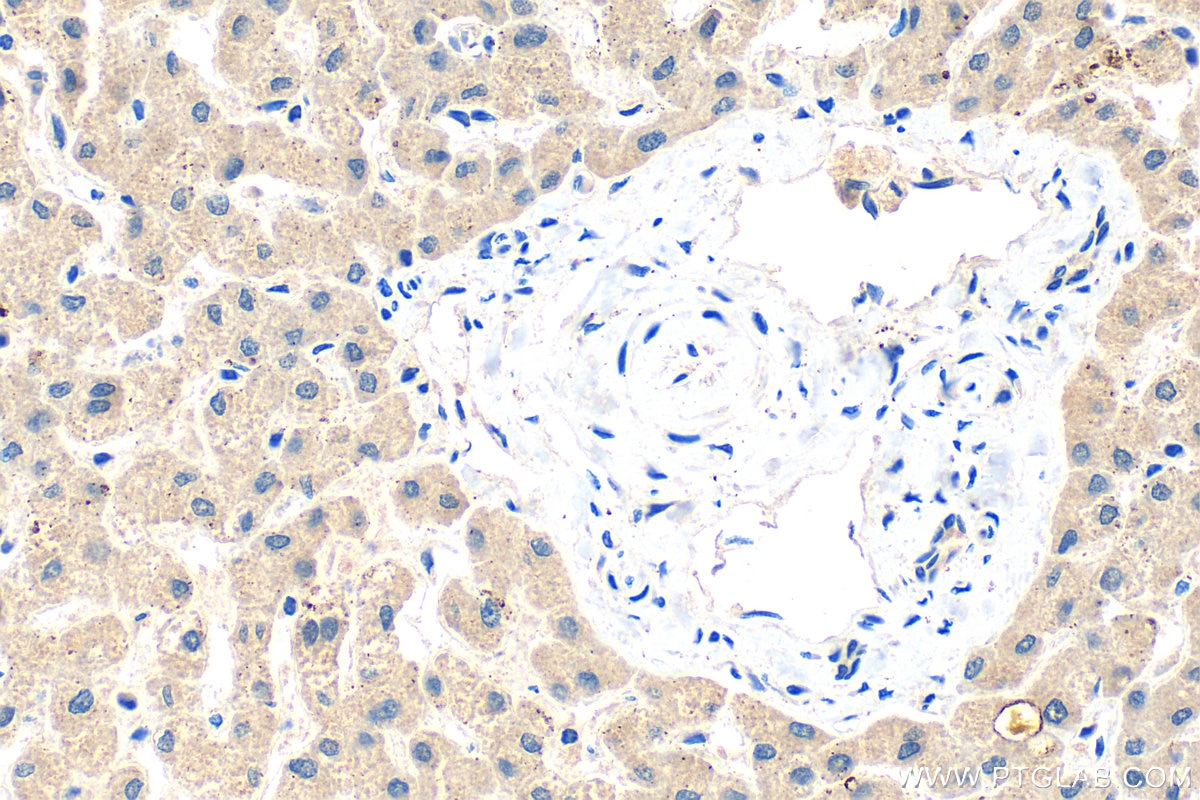
Informations sur le produit
30844-1-PBS cible C19orf63 dans les applications de WB, IHC, Indirect ELISA et montre une réactivité avec des échantillons Humain, souris
| Réactivité | Humain, souris |
| Hôte / Isotype | Lapin / IgG |
| Clonalité | Polyclonal |
| Type | Anticorps |
| Immunogène | C19orf63 Protéine recombinante Ag34064 |
| Nom complet | chromosome 19 open reading frame 63 |
| Poids moléculaire observé | 28 kDa |
| Numéro d’acquisition GenBank | BC035001 |
| Symbole du gène | C19orf63 |
| Identification du gène (NCBI) | 284361 |
| Conjugaison | Non conjugué |
| Forme | Liquide |
| Méthode de purification | Purification par affinité contre l'antigène |
| Tampon de stockage | PBS only |
| Conditions de stockage | Store at -80°C. 20ul contiennent 0,1% de BSA. |
Informations générales
EMC10 (Endoplasmic Reticulum Membrane Protein Complex Subunit 10) is one of the key components of the highly conserved endoplasmic reticulum membrane protein complex (EMC). The core function of this complex is to act as an insertase and chaperone in the endoplasmic reticulum, assisting in the correct folding, assembly, and membrane integration of membrane proteins, and preventing the aggregation of misfolded proteins. Studies have shown that EMC10 plays a dual role in cells: within the cell, it ensures the biogenesis of important membrane proteins such as G protein-coupled receptors (GPCRs); moreover, it can be secreted outside the cell (referred to as sEMC10), where it acts as a novel signaling molecule to activate the hypothalamic-pituitary axis, regulating energy metabolism and body weight in the body, and is closely related to obesity and metabolic diseases.


