Anticorps Recombinant de lapin anti-CD109
CD109 Recombinant Antibody for WB, IHC, Indirect ELISA
Hôte / Isotype
Lapin / IgG
Réactivité testée
Humain
Applications
WB, IHC, Indirect ELISA
Conjugaison
Non conjugué
CloneNo.
250327A11
N° de cat : 85924-4-PBS
Synonymes
Galerie de données de validation
Informations sur le produit
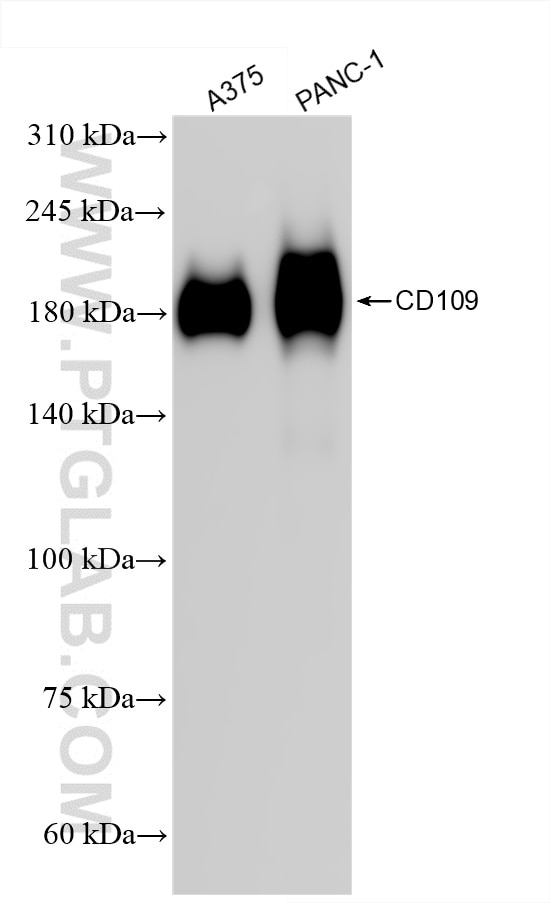
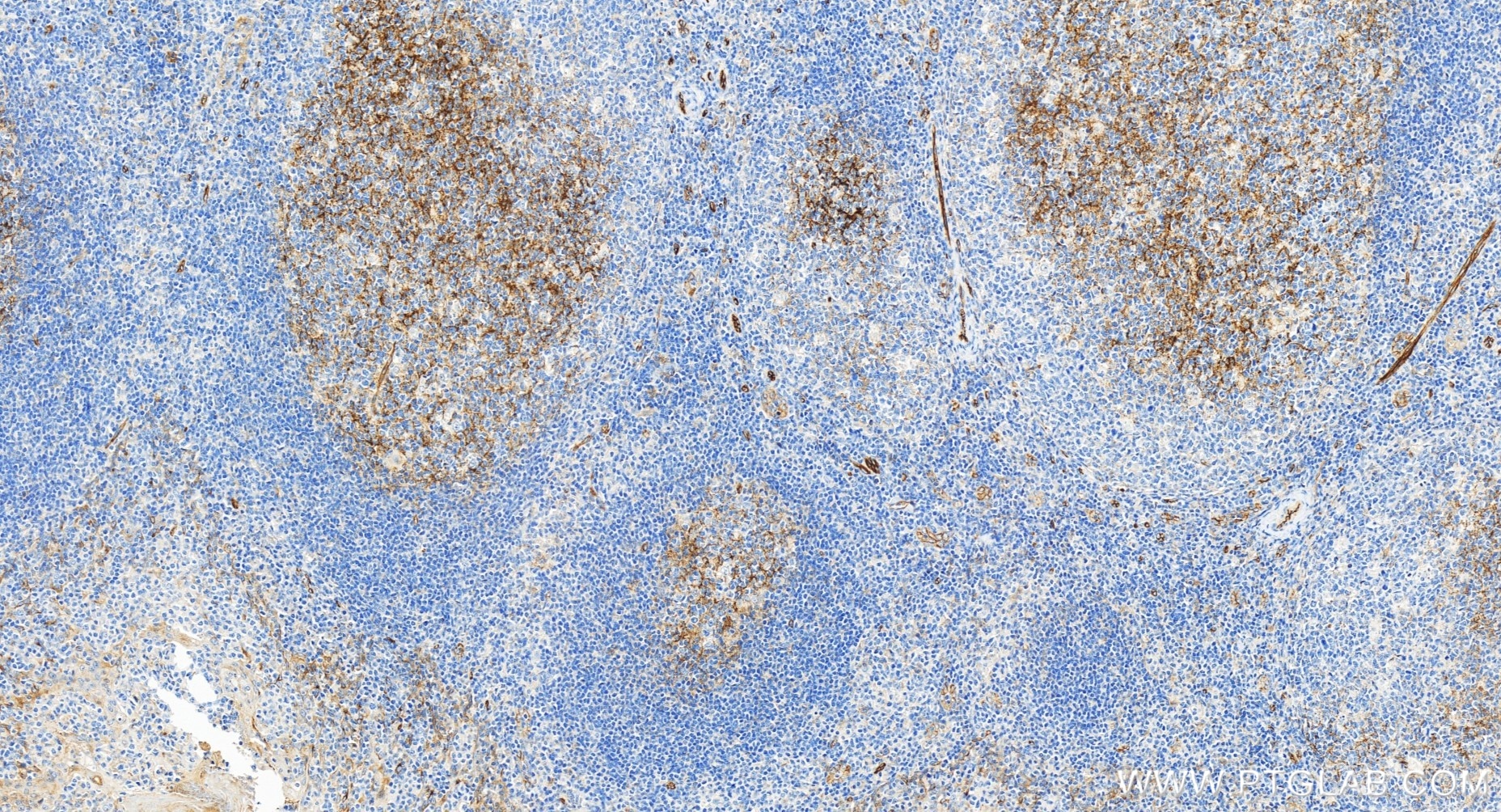
85924-4-PBS cible CD109 dans les applications de WB, IHC, Indirect ELISA et montre une réactivité avec des échantillons Humain
| Réactivité | Humain |
| Hôte / Isotype | Lapin / IgG |
| Clonalité | Recombinant |
| Type | Anticorps |
| Immunogène | CD109 Protéine recombinante Eg2673 |
| Nom complet | CD109 molecule |
| Masse moléculaire calculée | 162 kDa |
| Poids moléculaire observé | 180 kDa |
| Numéro d’acquisition GenBank | NM_133493.5 |
| Symbole du gène | CD109 |
| Identification du gène (NCBI) | 135228 |
| Conjugaison | Non conjugué |
| Forme | Liquide |
| Méthode de purification | Purification par protéine A |
| Tampon de stockage | PBS only |
| Conditions de stockage | Store at -80°C. 20ul contiennent 0,1% de BSA. |
Informations générales
CD109, also named as CPAMD7, is a member of the alpha2-macroglobulin/complement superfamily. It is a glycosylphosphatidylinositol (GPI)-linked cell surface glycoprotein of approximately 170kd which is found on the cell surface of platelets, activated T-cells, and endothelial cells. CD109 binds to and negatively regulates signaling of transforming growth factor beta (TGF-beta). CD109 has been identified as part of the TGF-beta receptor system in human keratinocytes. Up regulation of CD109 expression has been observed in several different types of tumor.CD109 is a glycosyl-phosphatidylinositol-anchored glycoprotein that is a member of the a2-macroglobulin/C3, C4, C5 family of thioester-containing proteins. There're 2 forms of 150 (p150) and 120 kDa (p120) exist due to proteolytic degradation from a 180 kDa form.


