Anticorps Multi-Recombinant de lapin anti-CD9
CD9 Multi-Recombinant Antibody for WB, IHC, IF/ICC, ELISA
Hôte / Isotype
Lapin / IgG
Réactivité testée
Humain
Applications
WB, IHC, IF/ICC, ELISA
Conjugaison
Non conjugué
N° de cat : RMX00018
Synonymes
Galerie de données de validation
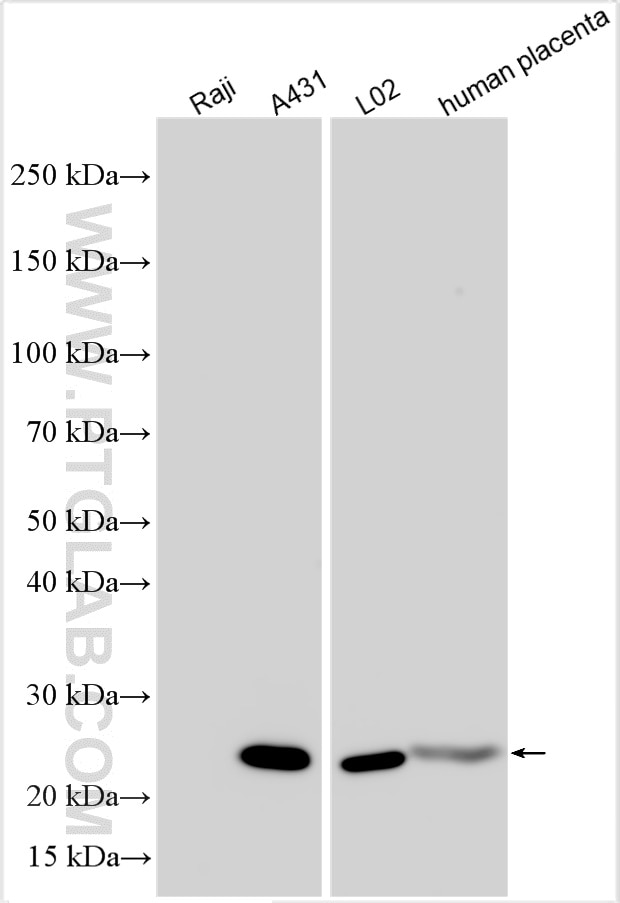
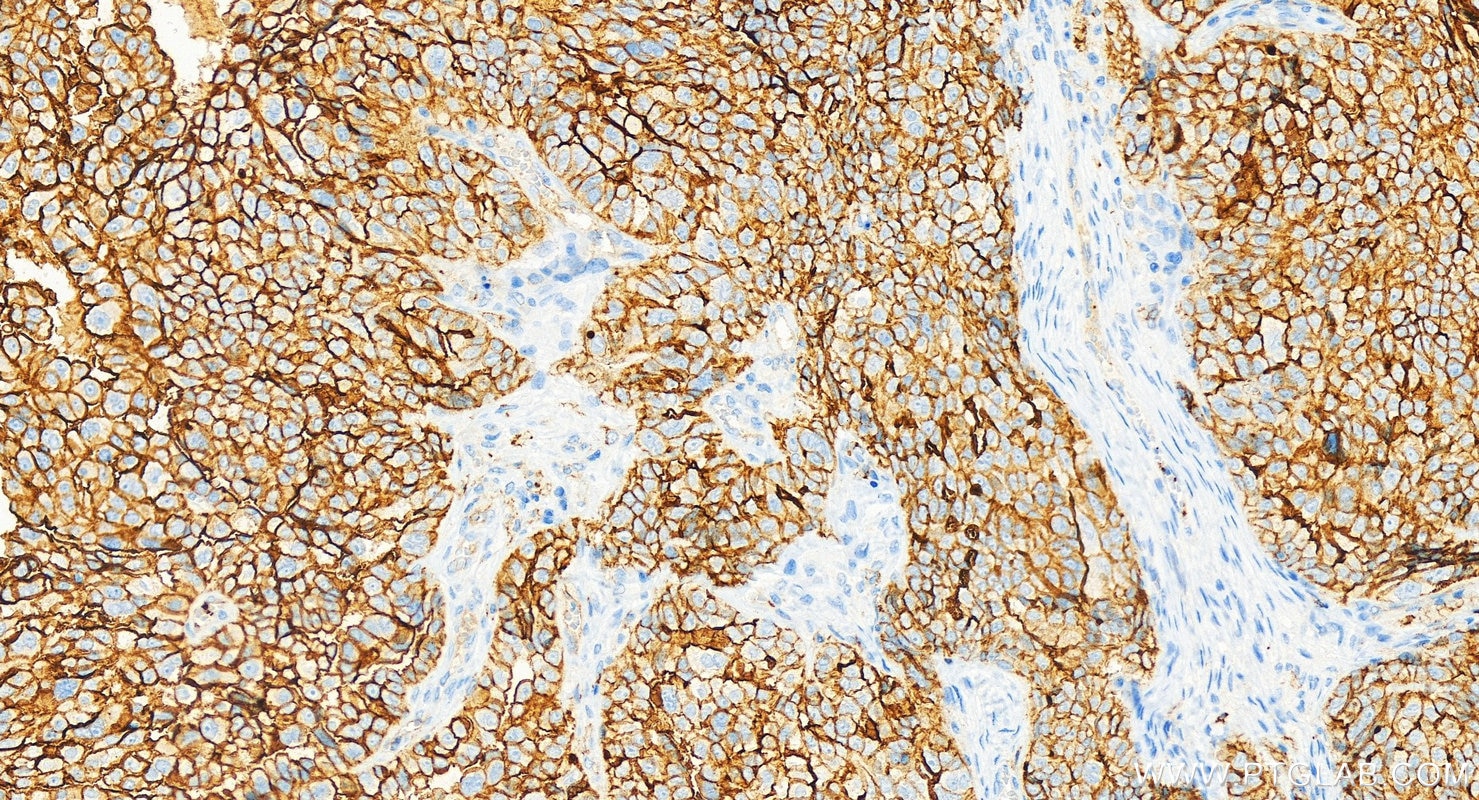
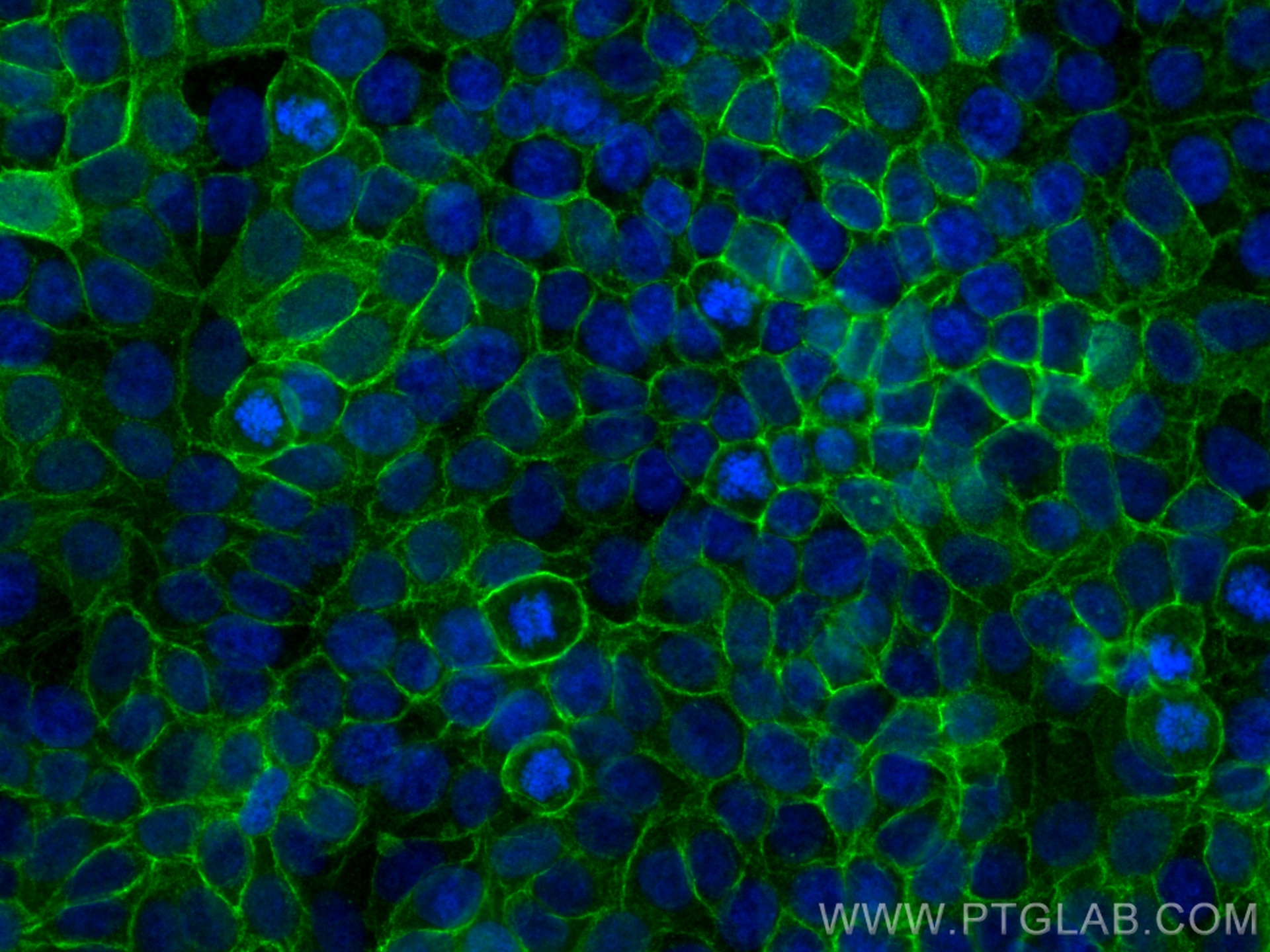
Applications testées
| Résultats positifs en WB | cellules A431, cellules L02, tissu placentaire humain |
| Résultats positifs en IHC | human ovary cancer tissue, il est suggéré de démasquer l'antigène avec un tampon de TE buffer pH 9.0; (*) À défaut, 'le démasquage de l'antigène peut être 'effectué avec un tampon citrate pH 6,0. |
| Résultats positifs en IF/ICC | cellules MCF-7, |
Dilution recommandée
| Application | Dilution |
|---|---|
| Western Blot (WB) | WB : 1:1000-1:8000 |
| Immunohistochimie (IHC) | IHC : 1:500-1:2000 |
| Immunofluorescence (IF)/ICC | IF/ICC : 1:50-1:500 |
| It is recommended that this reagent should be titrated in each testing system to obtain optimal results. | |
| Sample-dependent, check data in validation data gallery | |
Informations sur le produit
RMX00018 cible CD9 dans les applications de WB, IHC, IF/ICC, ELISA et montre une réactivité avec des échantillons Humain
| Réactivité | Humain |
| Hôte / Isotype | Lapin / IgG |
| Clonalité | Multi-Recombinant |
| Type | Anticorps |
| Immunogène | Protéine recombinante |
| Nom complet | CD9 molecule |
| Masse moléculaire calculée | 25 kDa |
| Poids moléculaire observé | 23-30 kDa |
| Numéro d’acquisition GenBank | NM_001769.4 |
| Symbole du gène | CD9 |
| Identification du gène (NCBI) | 928 |
| Conjugaison | Non conjugué |
| Forme | Liquide |
| Méthode de purification | N/A |
| Tampon de stockage | PBS with 0.02% sodium azide and 50% glycerol |
| Conditions de stockage | Stocker à -20°C. Stable pendant un an après l'expédition. L'aliquotage n'est pas nécessaire pour le stockage à -20oC Les 20ul contiennent 0,1% de BSA. |
Informations générales
The cell-surface molecule CD9, a member of the transmembrane-4 superfamily, interacts with the integrin family and other membrane proteins, and is postulated to participate in cell migration and adhesion. Expression of CD9 enhances membrane fusion between muscle cells and promotes viral infection in some cells (PMID:10459022). It is often used as a mesenchymal stem cell marker (PMID:18005405). The CD9 antigen appears to be a 227-amino acid molecule with four hydrophobic domains and one N-glycosylation site (PMID: 1840589). This antibody detects bands of 23-30 kDa, it may be due to the difference of glycosylations (PMID: 8701996).
Protocole
| Product Specific Protocols | |
|---|---|
| WB protocol for CD9 antibody RMX00018 | Download protocol |
| IHC protocol for CD9 antibody RMX00018 | Download protocol |
| IF protocol for CD9 antibody RMX00018 | Download protocol |
| Standard Protocols | |
|---|---|
| Click here to view our Standard Protocols |

