- Phare
- Validé par KD/KO
Anticorps Polyclonal de lapin anti-CDA1
CDA1 Polyclonal Antibody for WB, IHC, IF/ICC, IP, Indirect ELISA
Hôte / Isotype
Lapin / IgG
Réactivité testée
Humain
Applications
WB, IHC, IF/ICC, IP, Indirect ELISA
Conjugaison
Non conjugué
N° de cat : 12087-2-PBS
Synonymes
Galerie de données de validation
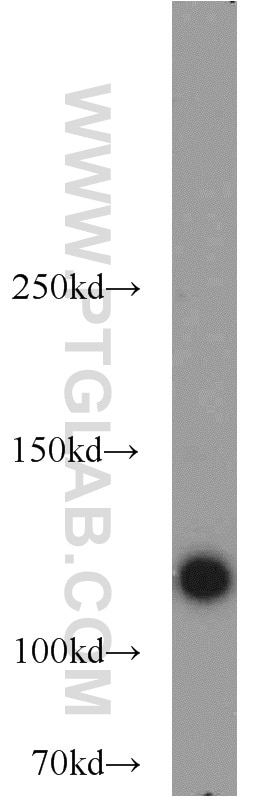
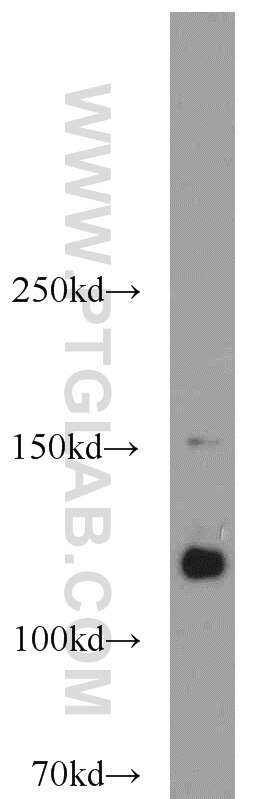
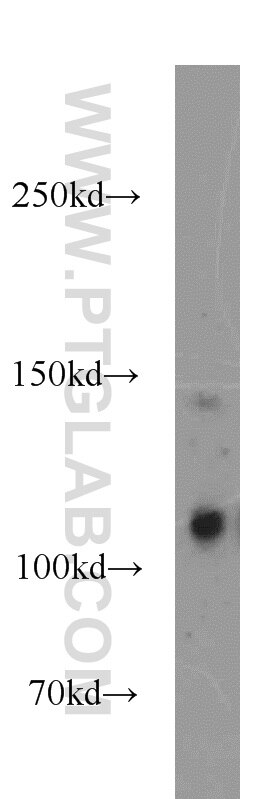
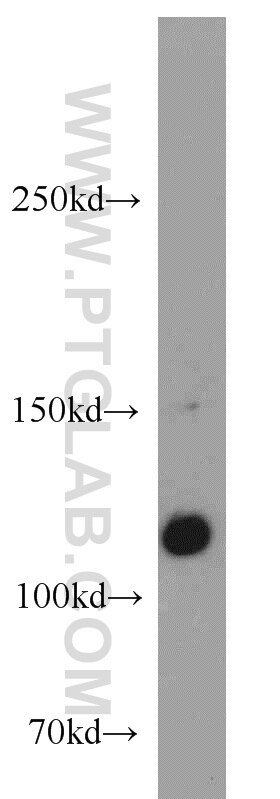
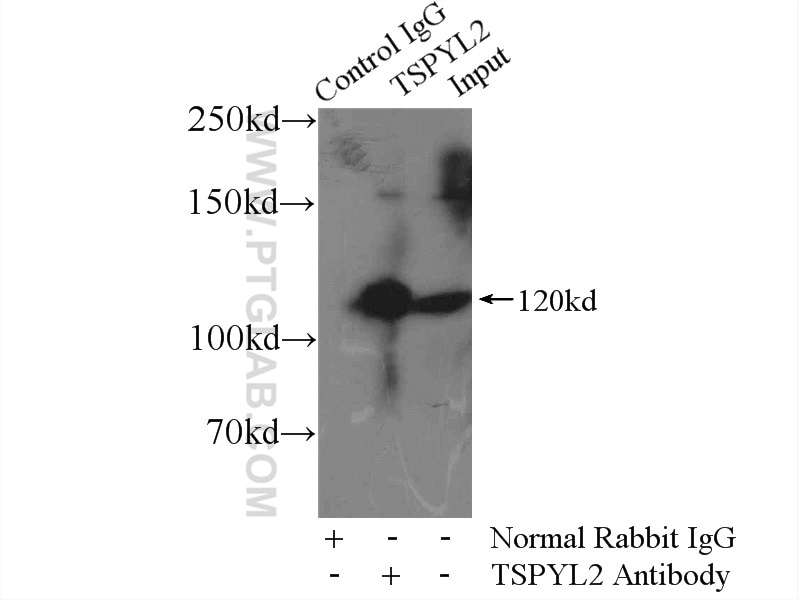
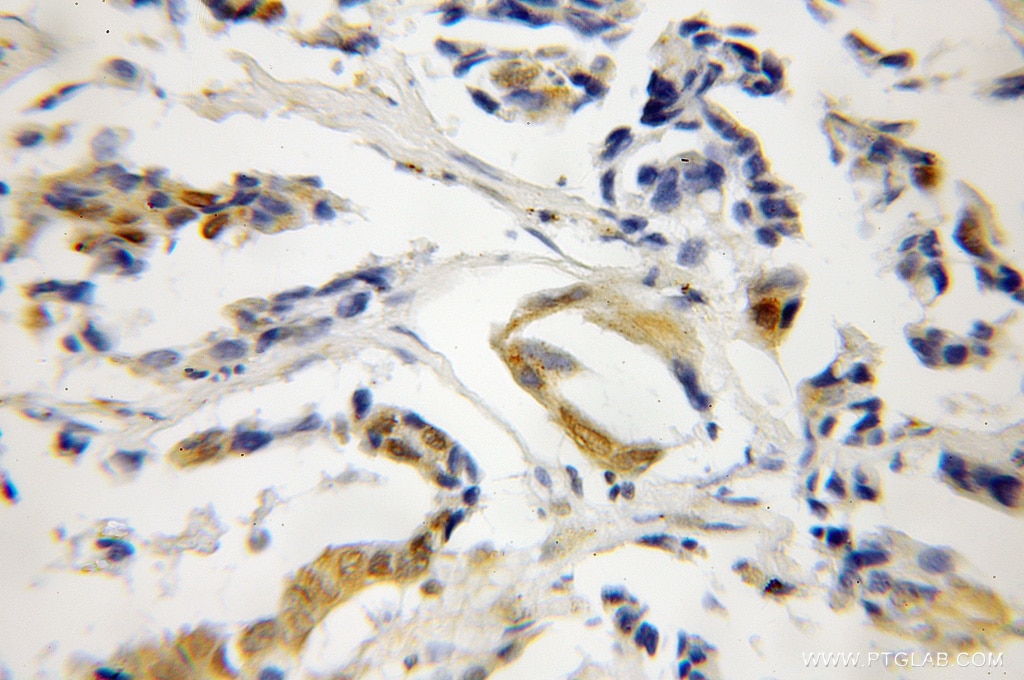
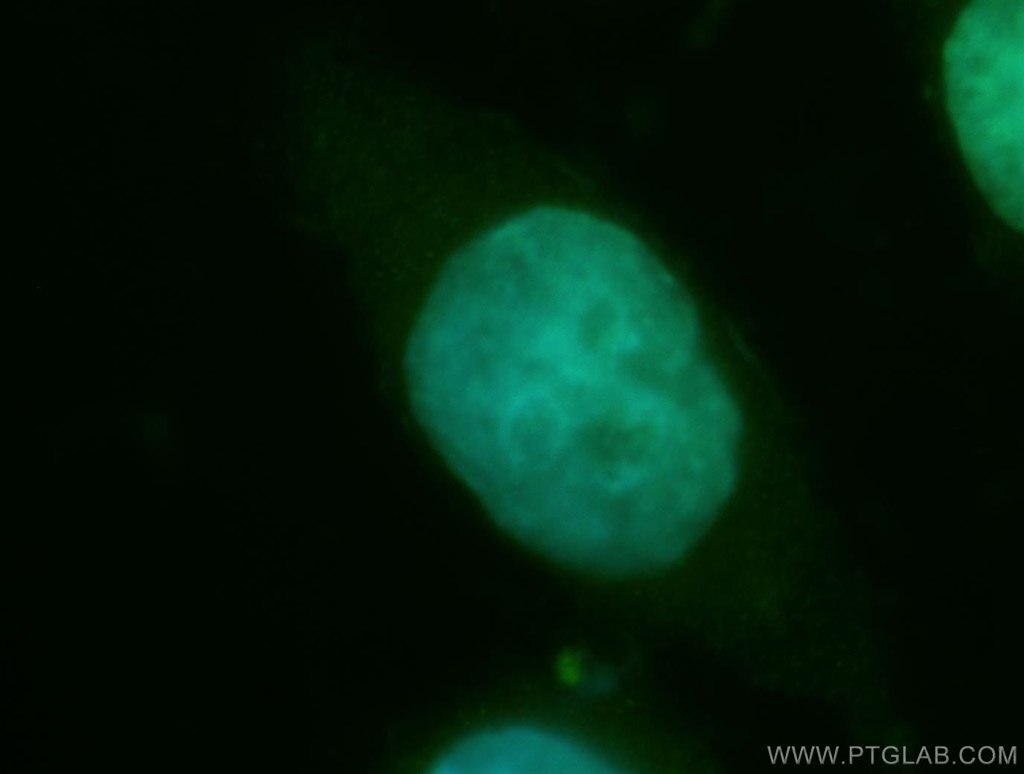
Informations sur le produit
12087-2-PBS cible CDA1 dans les applications de WB, IHC, IF/ICC, IP, Indirect ELISA et montre une réactivité avec des échantillons Humain
| Réactivité | Humain |
| Hôte / Isotype | Lapin / IgG |
| Clonalité | Polyclonal |
| Type | Anticorps |
| Immunogène | CDA1 Protéine recombinante Ag2722 |
| Nom complet | TSPY-like 2 |
| Masse moléculaire calculée | 693 aa, 79 kDa |
| Poids moléculaire observé | 120 kDa |
| Numéro d’acquisition GenBank | BC024270 |
| Symbole du gène | CDA1 |
| Identification du gène (NCBI) | 64061 |
| Conjugaison | Non conjugué |
| Forme | Liquide |
| Méthode de purification | Purification par affinité contre l'antigène |
| Tampon de stockage | PBS only |
| Conditions de stockage | Store at -80°C. 20ul contiennent 0,1% de BSA. |
Informations générales
TSPYL2 (also known as CINAP, CDA1, TSPX or DENTT) is a new member of the nucleosome assembly protein superfamily. TSPYL2 binds histones and facilitates nucleosome assembly. TSPYL2 is expressed in various tissues, highly in the pituitary gland and moderately in the adrenals, brain, testis, and ovary. Immunohistochemical staining analysis for TSPYL2 showed differential cytoplasmic and nuclear staining patterns in several cell types. Downregulated expression of TSPYL2 has been observed in several tumors, which suggests its role as a tumor suppressor. Although it is predicted that TSPYL2 has a molecular mass of 79.43 kDa, it is found that mammalian TSPYL2 appears at a size of 120 kDa by western blot analysis. The abundant acidic amino acid regions in TSPYL2 may cause its aberrant migration. In addition, the TSPYL2 protein is unstable and sensitive to proteasomal degradation.


