Anticorps Polyclonal de lapin anti-CEACAM16
CEACAM16 Polyclonal Antibody for WB, IHC, ELISA
Hôte / Isotype
Lapin / IgG
Réactivité testée
Humain, rat, souris
Applications
WB, IHC, ELISA
Conjugaison
Non conjugué
N° de cat : 32196-1-AP
Synonymes
Galerie de données de validation
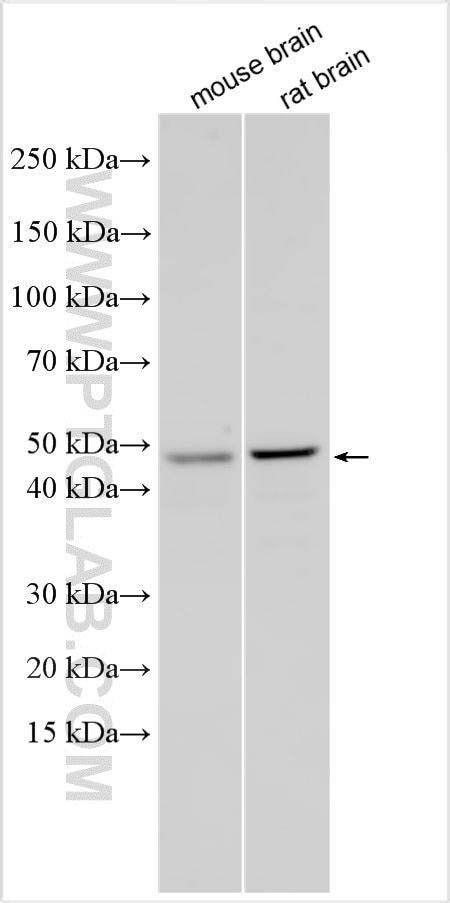
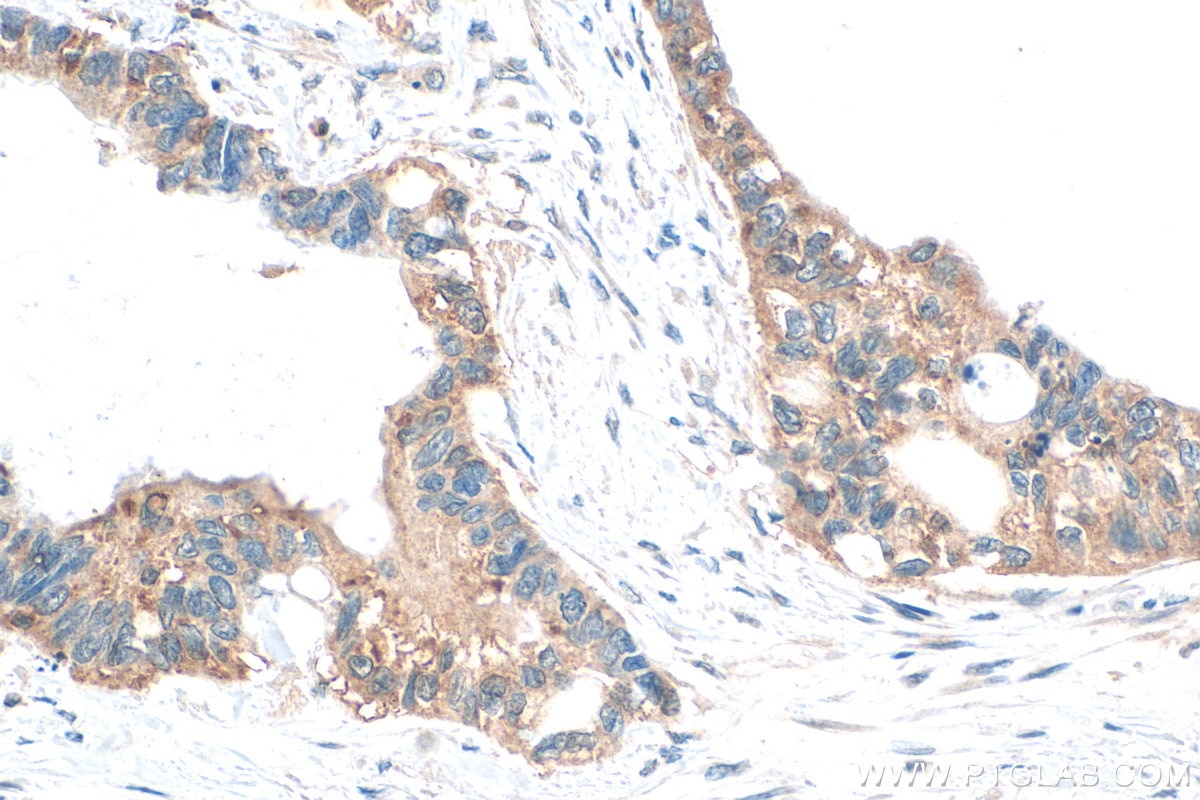
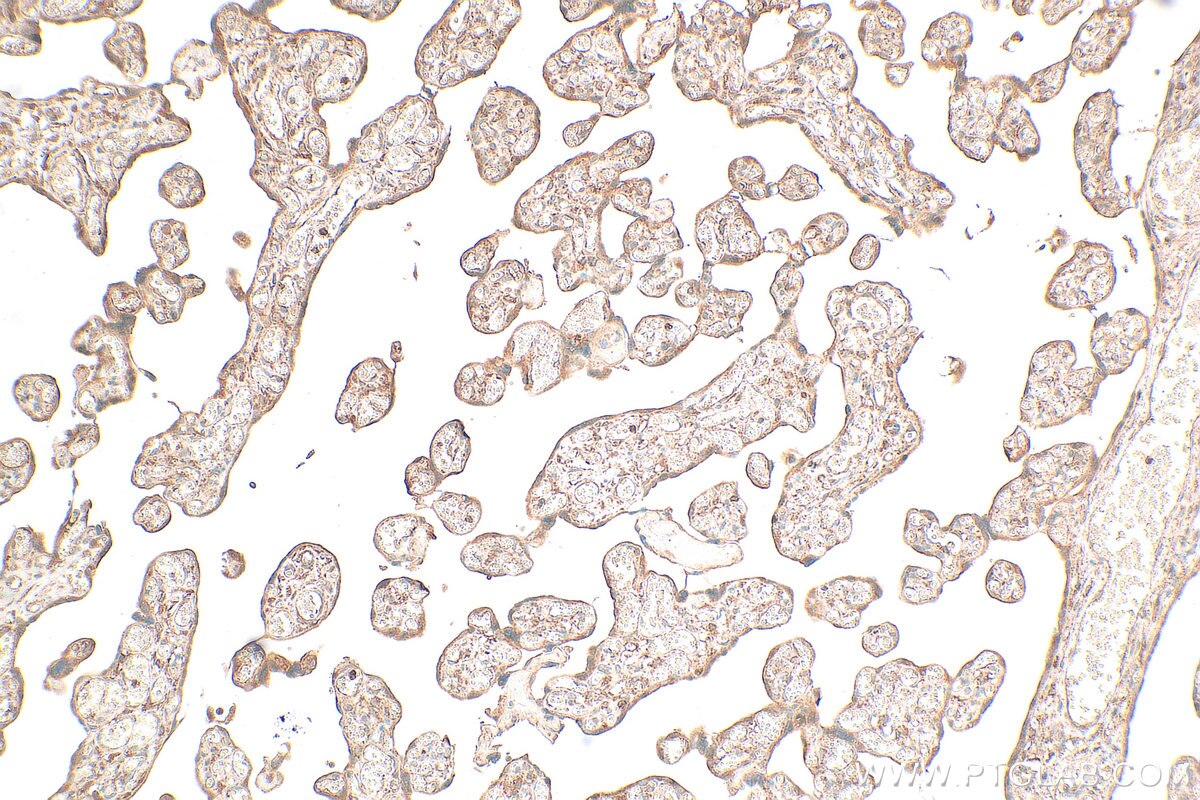
Applications testées
| Résultats positifs en WB | tissu cérébral de souris, tissu cérébral de rat |
| Résultats positifs en IHC | tissu placentaire humain, tissu de carcinome urothélial humain il est suggéré de démasquer l'antigène avec un tampon de TE buffer pH 9.0; (*) À défaut, 'le démasquage de l'antigène peut être 'effectué avec un tampon citrate pH 6,0. |
Dilution recommandée
| Application | Dilution |
|---|---|
| Western Blot (WB) | WB : 1:500-1:1000 |
| Immunohistochimie (IHC) | IHC : 1:50-1:500 |
| It is recommended that this reagent should be titrated in each testing system to obtain optimal results. | |
| Sample-dependent, check data in validation data gallery | |
Informations sur le produit
32196-1-AP cible CEACAM16 dans les applications de WB, IHC, ELISA et montre une réactivité avec des échantillons Humain, rat, souris
| Réactivité | Humain, rat, souris |
| Hôte / Isotype | Lapin / IgG |
| Clonalité | Polyclonal |
| Type | Anticorps |
| Immunogène | CEACAM16 Protéine recombinante Ag37542 |
| Nom complet | carcinoembryonic antigen-related cell adhesion molecule 16 |
| Poids moléculaire observé | 48 kDa |
| Numéro d’acquisition GenBank | BC156855 |
| Symbole du gène | CEACAM16 |
| Identification du gène (NCBI) | 388551 |
| Conjugaison | Non conjugué |
| Forme | Liquide |
| Méthode de purification | Purification par affinité contre l'antigène |
| Tampon de stockage | PBS with 0.02% sodium azide and 50% glycerol |
| Conditions de stockage | Stocker à -20°C. Stable pendant un an après l'expédition. L'aliquotage n'est pas nécessaire pour le stockage à -20oC Les 20ul contiennent 0,1% de BSA. |
Informations générales
CEACAM16 (Carcinoembryonic Antigen-Related Cell Adhesion Molecule 16) is a member of the CEA family of cell adhesion molecules. It is a critical component of the tectorial membrane in the inner ear, playing a significant role in maintaining hearing function. Mutations in the CEACAM16 gene are associated with autosomal dominant nonsyndromic hearing loss (DFNA4B), characterized by progressive high-frequency hearing impairment. Research has shown that loss or dysfunction of CEACAM16 leads to structural abnormalities in the tectorial membrane, thereby affecting hearing. The identification of CEACAM16 has provided important insights into the genetic basis of hereditary hearing loss and has implications for the diagnosis and treatment of hearing disorders.
Protocole
| Product Specific Protocols | |
|---|---|
| WB protocol for CEACAM16 antibody 32196-1-AP | Download protocol |
| IHC protocol for CEACAM16 antibody 32196-1-AP | Download protocol |
| Standard Protocols | |
|---|---|
| Click here to view our Standard Protocols |

